Why a vancouver niche brand became the small-space furniture world's best-kept secret
Official homepage: https://www.expandfurniture.com
In 2012, a Vancouver company launched its first product — a wall bed with a sofa attached, so a bedroom could become a second living room — and uploaded a video of the transformation. The internet caught the business by storm. Fourteen years later, Expand Furniture remains what that video promised: a specialist in furniture that changes shape, built for the era of shrinking rooms, with a hundred-year-old Italian factory among its partners and a warehouse showroom in one of the world's most expensive cities. This review examines the storefront dimension by dimension: the viral origin, the Vancouver laboratory, the engineering catalog, the policy ledger, and the honest physics of furniture that moves.
A MurphySofa, a viral video, and 2012
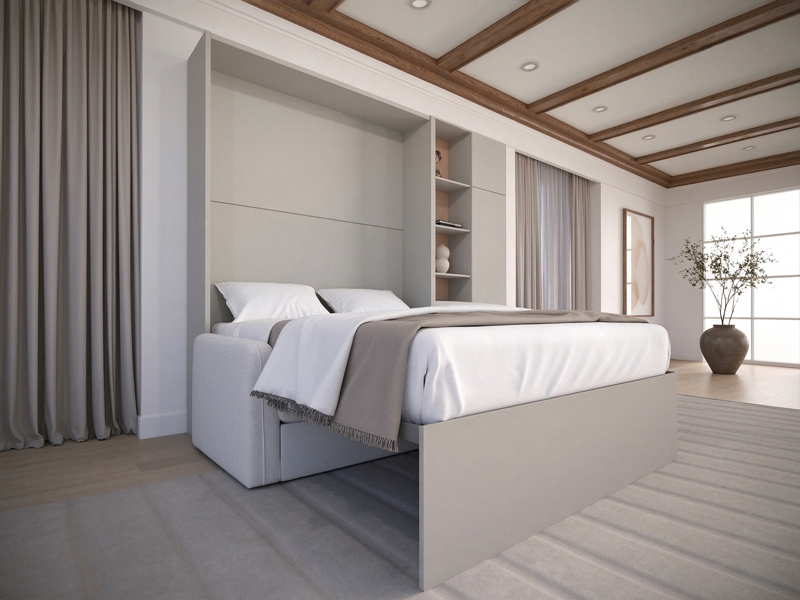
The company's own About page dates the founding to 2012 and tells the origin with pleasing directness: the first product was the MurphySofa wall bed system, a fold-down bed integrated with a sofa that converts a bedroom into a second living room. Shortly after came the transforming coffee-to-dinner table and the Junior Giant console that extends into a full dining table. The internet caught the business by storm — the company's phrase — as the transformation videos went viral, and manufacturing ramped to match. The founding idea was simple in the way good niche theses are: as urban living spaces shrank, the furniture had to absorb the compromise instead of the homeowner.
The timing doubled as strategy. Vancouver's real estate was already among the world's most expensive, its apartments among its smallest, and its residents famously unwilling to leave — the perfect proving ground for furniture whose entire pitch is doing more with forty square meters.
Vancouver, the world's most expensive laboratory
The company's Vancouver page reads like a love letter that doubles as a market analysis: the city is rated among the world's most expensive, the geography forbids endless sprawl, and residents pay the premium for location, beaches, and walkability — so the furniture must return the square footage. The brand's copy even cites the arithmetic of density, noting that New Yorkers' carbon footprints run thirty percent below the American average, framing small-space living as virtue rather than deprivation. Developers have become a distribution channel, integrating wall beds into new buildings and educating buyers on what is possible — a business-to-business leg most furniture brands never touch.
The laboratory framing matters to the store's character: nearly every design in the catalog is described as inspired by Vancouver living and customer requests, a product-development loop where the city's renters function as the R&D department.
A hundred-year-old Italian factory partnership
Around the original designs sits a distribution thesis the company states plainly: a fusion of North American and European design, anchored by partnerships that include a hundred-year-old Italian factory. Most items are stocked in Vancouver for quick shipping; the Italian pieces are custom orders, and the storefront is unusually honest about what that means — full local support from consultation through warranty and installation, but patience required. The Italy connection also functions as a quality signal in a category where wall-bed hardware separates the heirloom from the lawsuit: the brands that survive are the ones whose hinges and pistons were engineered by factories that have been making moving furniture since before the customer's grandparents were born.
The curated-catalog model deserves a sentence: this is not bespoke furniture — buyers choose from engineered, modular solutions — but the engineering is real, and the third-party analysts who review the category single out the mechanics as the reason to pay the premium.
Rotating beds, magnetized joins, and first-to-market design
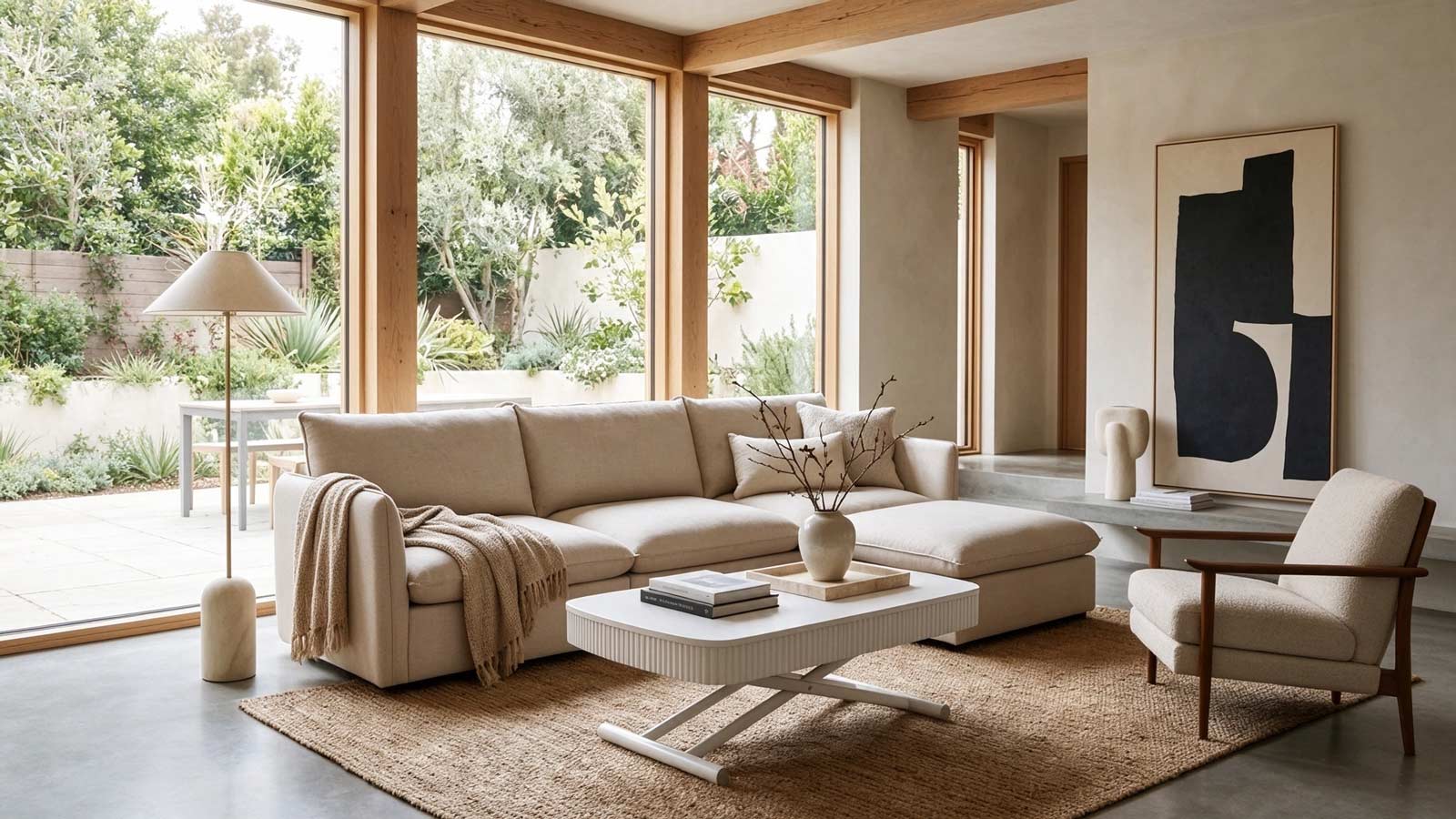
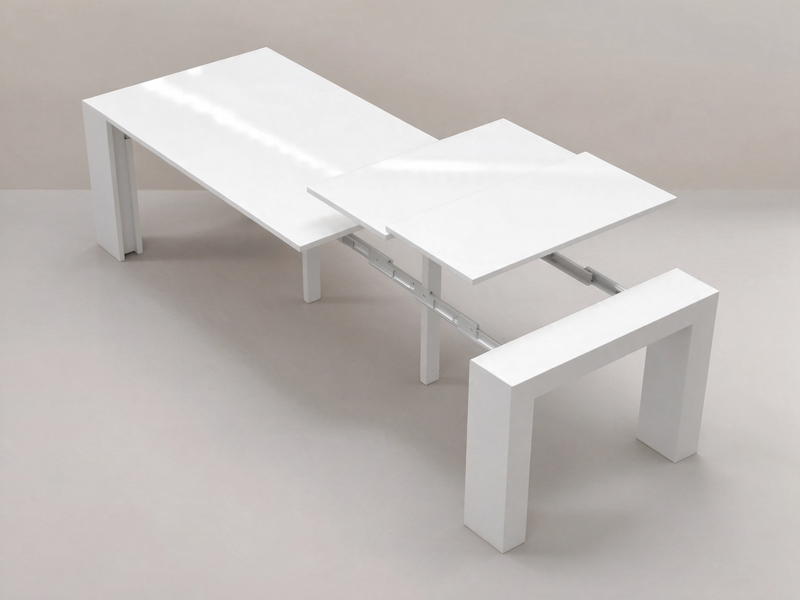
The catalog's flagship trick is rotation. The Compatto Murphy bed carries a full desk on one face and a bed on the other, rotating between them so the desk does not need to be cleared — the analysts' example of a genuine game-changer for studio dwellers and guest-room-offices. The MurphySofa integrates a real sofa with a fold-down bed; the Expanse Inverse was designed, in the company's own words, to be a space-saving bed that does not look like a space-saving bed. The table line extends the same logic: coffee tables that rise and unfold into eight-seat dining tables, console tables that swallow their extension leaves and become desks.
The engineering philosophy, published on the About page, reads like a maker's creed: magnetized table joins that eliminate latches, rotating support bars that get out of the sitter's legs' way, the smoothest mechanics achievable, technically advanced materials for durability, and first-to-market design — iterated every year without exception. It is the rare storefront where the product pages describe mechanisms with the specificity of patent filings.
Price protection and the seven-day ledger
The commercial terms are the store's most honest and most dated passages. On the generous side: thirty-day price protection on every purchase, warranties published per product, delivery teams who will carry pieces inside when ground access or an elevator allows — with stairs flagged in advance for safety surcharges — and a damage policy that promises repair or replacement for anything arriving broken. On the stark side: the return policy for damage and defects runs seven days, which means the practical trial period is the delivery-day inspection itself. There is no hundred-day in-home trial in the model of the sofa brands reviewed in this category; a wall bed is a commitment, sized and anchored and — ideally — loved at first deployment.
The buyer's protocol follows: measure twice with the product-page specifications open, video the unboxing, test every mechanism on day one, and treat the seven-day window as the real deadline it is. The policies page is not hiding this; it simply belongs to an older, specialist-retail tradition than the trial-first DTC wave.
Trees, charity rehomes, and the shipping truth
The sustainability ledger is modest and operational rather than marketed: a tree planted for every product and shipment, returns in functional condition rehomed through charity rather than landfilled, and an online-only model whose stated justification is precisely the carbon and cost arithmetic of showrooms — the one display floor is the Vancouver warehouse, where every piece can be viewed in action. The shipping truth belongs in the same section: most pieces ship from Vancouver stock quickly, the Italian custom orders run longer, and the delivery experience is white-glove-adjacent but staircase-aware — the one variable the storefront cannot engineer away.
Against the recycled-plastic outdoor brand and the certified-factory mattress maker reviewed in this category, the environmental story here is small-batch and process-level — fewer trucks per home served, longer product lifespans through replaceable mechanics, and a rehoming promise for the pieces that come back.
The honest texture of a curated catalog
Three honest cautions complete the picture. First, commitment: a wall bed is semi-permanent architecture — anchoring, clearance arcs, and ceiling heights are the buyer's problem to verify, and the product pages assume a competent reader. Second, curation, not bespoke: the catalog is a well-chosen set of engineered solutions, and buyers wanting custom dimensions or finishes will hit its edges. Third, the specialist's service model: the storefront's support is knowledgeable and human, but the company is a niche operator — response rhythms and parts availability follow niche-operator cadences, not the hundred-person CX floors of the category's giants.
None of these are complaints so much as calibration: the store sells to people who have already decided that square footage is the constraint worth engineering against, and for that buyer the texture reads as competence rather than limitation.
The verdict for the studio and the in-law suite
Expand Furniture's storefront is the small-space category's specialist thesis: founded on a viral video of a bed that hides behind a sofa, matured into a catalog of rotating desks, latch-less extending tables, and wall beds engineered with a century-old Italian partner, all explained with a maker's specificity that treats the buyer as a fellow engineer. The cons are the cons of the specialist: a seven-day ledger instead of a hundred-day trial, freight and anchoring realities no webpage can remove, and a curated catalog that ends where custom begins.
Buy here if a room must be two rooms — studio by day, bedroom by night; office on Tuesday, guest suite on Friday — if you have measured the clearance arc twice and own a stud finder, if the idea of furniture that transforms with a single motion delights you more than a showroom sofa intimidates you, and if a Vancouver warehouse showroom is close enough for a test-drive. Buy the static furniture reviewed across this category if your square footage is already solved. For the studio-dweller and the in-law-suite host, this fourteen-year-old niche remains the most engineering-dense storefront in the category — the one that treats your forty square meters as a design brief rather than a compromise.