Tecovas at eleven: the consultant who cut the cowboy boot's price in half
Official homepage: https://www.tecovas.com
In 2014, a private-equity associate in Greenwich, Connecticut, wanted a pair of ostrich-skin cowboy boots. Getting them required flying to Dallas, visiting stores with grocery-aisle displays and no expertise, and paying six hundred dollars or more — and his Texan's conclusion was an entrepreneur's: this category, unchanged in a quarter century, was ripe. Paul Hedrick emptied his 401(k), moved back to Austin, and in 2015 launched Tecovas, the first direct-to-consumer western brand — cutting the price of a handmade boot roughly in half, selling it from a trunk at farmers' markets, and assembling a board that reads like a direct-to-consumer hall of fame. Eleven years later, the brand counts a million pairs sold per year, more than fifty stores, and the cultural timing of a television western renaissance. This review examines the storefront dimension by dimension.
A consultant in ostrich boots, priced out
The origin frustration is documented in the founder's own retellings with the specifics that make it credible. Hedrick — a Dallas native who had gone east to Harvard, then into management consulting in Greenwich, Connecticut, and finally into private equity at L Catterton — wanted the ostrich-leather boots he had grown up around. In Connecticut that meant a flight to Dallas, and in Dallas it meant what he has described as a frustrating experience: messy grocery-aisle inventory on the floor, no real boot experts to help, and prices running five to six hundred dollars for the good stuff. The business diagnosis followed the shopping trip: the western boot industry had not seen a new brand in twenty-five years, certainly nothing built in the modern era — nothing timeless, affordable, and engineered around high-end service.
The leap was total. Hedrick left the investment job in New England, emptied his 401(k), carried some credit-card debt he jokes still follows him, and moved back to Texas in the summer of 2014. His framing of the year that followed is the founder-myth done honestly: once you take that leap, you are committed, and you will do anything to make it work — a little scary at times.
The name a paleontologist would love
The brand's name carries a childhood inside it. Hedrick wanted something truly representative of Texas that existed for many thousands of years — he was guided, he has explained, by a childhood dream of becoming a paleontologist. The answer was a geological formation: the Tecovas, the red-rock layer at the bottom of Palo Duro Canyon in the Texas Panhandle, named for the Tecovas Creek that runs through it. The name is the founding thesis compressed into two syllables — Texas, ancient, and beneath everything else.
The mission language around the name has remained consistent for a decade: born out of a love for cowboy boots — the time-honored craftsmanship, the rich materials that last, the traditional styling that always looks good — and designed, in Hedrick's phrase, to help you walk taller, a perfect fit for the ranch, the concert hall, or the boardroom. The company likes to call it radical hospitality; the reviewers call it the category's first modern customer experience.
Farmers' markets, and a trunk of boots
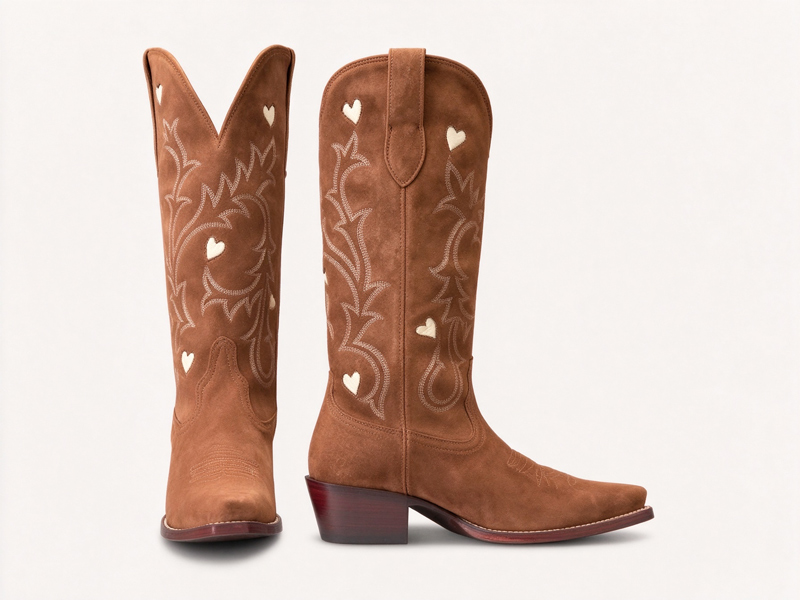
The go-to-market chapter is the anti-launch playbook. With no warehouse and no advertising budget, Hedrick sold boots wherever he could — farmers' markets, local fairs, and, in the detail the company still tells on its own story page, his old elementary school's holiday fair. Every firm handshake and friendly conversation, the page says, reinforced the philosophy: western footwear can be exciting, accessible, and built to last. The factory decision mirrored the sales pragmatism: León, Mexico — long regarded as the cowboy-boot capital of the world — where Tecovas boots are still handmade through more than two hundred steps, Goodyear-welted, from custom-tanned leathers.
The early retail experiment that preceded the store network was equally improvised: the team tried the physical model in its own office space first to confirm that people loved coming in, meeting the team, and seeing the boots — the customer-hospitality instinct that would later define the stores.
Cutting the price of a handmade boot in half
The pricing thesis is the commercial engine. Handmade western boots from the legacy makers — Justin, Tony Lama, Lucchese — ran four hundred fifty to six hundred fifty dollars at mid-grade; Tecovas launched at one hundred ninety-five to two hundred thirty-five, with the full range eventually spanning roughly two hundred to five hundred. The mechanism was the Warby Parker playbook applied to a category that had never met it: design in-house, own the manufacturing relationships, sell direct, and let the middleman's margin fund the price cut. The press shorthand wrote itself — the Warby Parker of cowboy boots — and the founder's own formulation of the gap he filled is the reviewer's favorite line: there hadn't been a brand built for the modern consumer, with the idea of being timeless and affordable and high-end service in mind.
The assortment widened along the same logic: men's and women's boots, then denim, shirts, hats, belts, and bags — accessories now account for roughly twenty percent of sales, per the design-press accounting of the brand's navigation and assortment strategy.
The board reads like a DTC hall of fame
The legitimacy stack assembled early and impressively. The company's board of directors has included Elliott Hill — the former Nike executive who would go on to lead the company — alongside Brian Spaly, founder of Bonobos and Trunk Club; Andy Hunt, co-founder of Warby Parker and of Elephant, the venture firm that led Tecovas's investment rounds; Roy Seiders, co-founder of YETI; and Julie Effron of Elephant. For a boot brand selling from a trunk at farmers' markets, the room was the pitch: the direct-to-consumer establishment certifying that the western category was, in fact, a consumer opportunity worth billions.
The capital followed the room. Reporting on the company's rounds puts total funding north of $120 million, including a $56 million round in January 2022 led by Elephant — capital earmarked for hiring, inventory, and the store expansion that was already underway. The June 2022 succession was handled the way the category's better operators handle it: Hedrick moved to executive chairman, and David Lafitte — then chief operating officer at Deckers, the UGG and HOKA parent — took the chief executive role.
The tailwind of a television renaissance
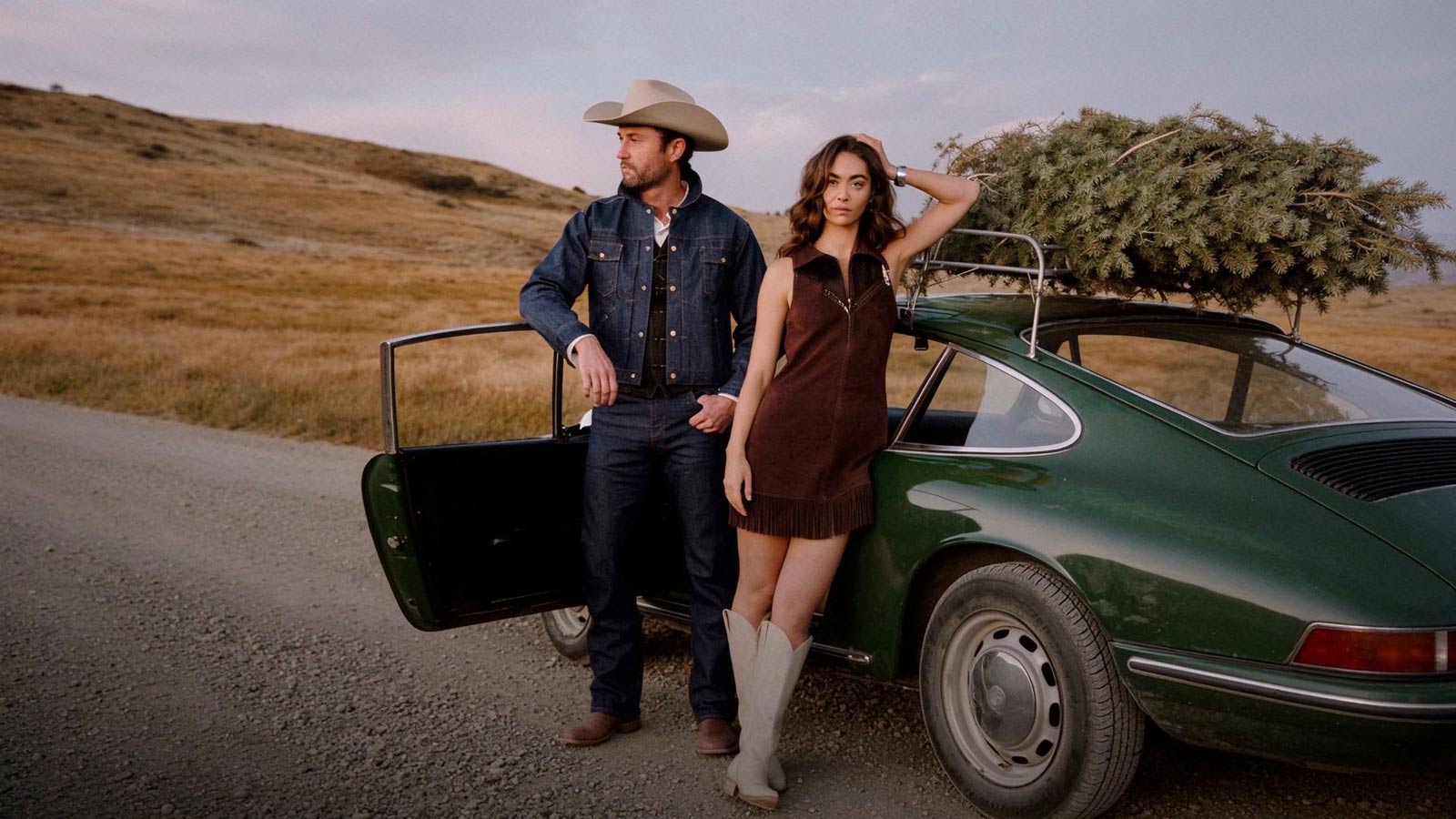
The cultural chapter arrived as if scripted. Western style went mainstream on the runways of Saint Laurent, Celine, and Isabel Marant; Lil Nas X and Beyoncé's Ivy Park carried cowboy culture into pop's center; and the television show Yellowstone built a multi-season audience for ranch aesthetics that spilled directly into boot sales — the brand's own retail coverage credits the renaissance with driving its meteoric rise, and customers now hail from all fifty states, far beyond the Lone Star stereotype. The numbers compounded with the trend: revenue around $10 million in year two tripling in year three, $100 million-plus and the sale of the company's one-millionth pair in the fourth quarter of 2021, growth north of eighty percent that year, and projections past $200 million for 2022 — with the company citing expected sales around $300 million by the mid-2020s and a workforce near 1,400.
The celebrity file runs from custom pairs made for Whoopi Goldberg and Julia Roberts to the anecdote that Reba McEntire owns eighty-plus boots — and the brand's willingness to collaborate with a restaurant chain called Chili's on a limited edition suggests a marketing team that understands the joke and the opportunity simultaneously.
Stores that do not feel like stores
The retail concept is the experience thesis made physical. The first store opened on Austin's South Congress Avenue in 2019, beneath the company's new headquarters, after the office-pop-up experiment proved the hospitality hypothesis; the network grew to roughly twenty stores within three years and to more than fifty by the company's 2026 accounting — 42 by its communications firm's 2026 count, with more opening in historic buildings like Franklin, Tennessee's old bank. The design language, executed with Austin's Michael Hsu Office of Architecture at the Dallas flagship, is western with a modern twist: shoe-shine stations, hide rugs, distressed trunks, a bar with Topo Chico — and maybe beers one day, per the founder — with the explicit goal, stated to the local press, of not making it feel like a store. People come in and spend time; the purchase is the byproduct of the visit.
The hybrid model mirrors Warby Parker's: try on in-store, buy online or in-store, with the physical network functioning as fit confidence and brand theater at once — the irreducible advantage for a product whose sizing folklore once required a boot-fitting uncle.
The honest texture of a trend cycle
Four honest cautions belong in the ledger. First, manufacture: the boots are made in León, Mexico — the right place by craft tradition, but an import supply chain, and a brand whose Texas romance should not be mistaken for Texas production. Second, material: the core product is leather, and the brand's growth in accessories and apparel does not change what the boot is; buyers for whom leather is disqualifying have their answers elsewhere in this category. Third, the growth math: more than $120 million of venture capital carrying expectations of $300 million in sales means the store count, the assortment, and the collaborations will keep compounding whether the cultural moment cools or not — the trend cycle that built the brand can turn. Fourth, price creep: the launch promise was a $235 boot against a $600 legacy; the current range tops out near five hundred, and the definition of affordable drifts with the assortment.
None of these are contradictions; all four are the standard taxes on a category-defining decade. The founder's own summary of the misconception he set out to kill remains the best verdict on the risk: cowboy boots are not a super niche market, not uncomfortable, not intimidating — and the brand that proved all four can also, in a cooler season, feel the wind it rode.
The verdict for the boot-curious non-cowboy
Tecovas' storefront is the Warby playbook run on America's oldest footwear: a consultant priced out of his own heritage who emptied a retirement account to fix it, a brand named for ancient rock, a trunk of boots sold at farmers' markets until the internet took over, a price cut in half that remade a category's economics, a board stacked with the direct-to-consumer establishment, and a television renaissance that carried handmade boots from ranches to runway culture. The cons are the cons of the moment: Mexican manufacture, leather's ledger, venture growth math, and a trend cycle that giveth and taketh.
Buy here if you have always wanted a cowboy boot and never had a boot-fitting uncle, if two-to-three hundred dollars for a handmade, two-hundred-step, Goodyear-welted boot beats six hundred at the legacy counter, if trying boots on in a store that serves Topo Chico sounds like the correct way to buy footwear, and if you would rather ride a cultural wave at its crest than wait for it to pass. Buy the made-in-America classics brands reviewed in this category if domestic manufacture is non-negotiable. For the boot-curious non-cowboy who wants the west without the intimidation, this Austin storefront remains the category's most convincing invitation — eleven years, a million pairs a year, and a bar where the boot shine used to be.