Lake at eleven: the pajama brand new mothers built in savannah

Official homepage: https://lakepajamas.com
Lake Pajamas exists because two new mothers ran out of things to wear. In the sweet, sleepless season of early motherhood, Cassandra Cannon and Anne Read Lattimore spent their days at home in oversized T-shirts and boxers, looking for something more comfortable yet more put-together than what the sleepwear aisle offered — and finding only boxy menswear-style button-downs or lingerie-inspired sets. Then they noticed their babies' clothes were made of Peruvian Pima cotton, the softest fabric they had ever touched, and asked the obvious question: why does no one make this for adults? Eleven years later, their Savannah company has grown organically and without debt, dresses Jennifer Garner and Jenna Bush Hager, and has become the default gift of a certain kind of American womanhood. This review examines the storefront dimension by dimension: the origin, the fabric doctrine, the self-funded growth, and the honest arithmetic of premium pajamas that demand lay-flat care.
Two new mothers and a med-school deferral
The founders' biographies read like a study in roads not taken. Cassandra Cannon grew up in Savannah, majored in biology and psychology at the University of Georgia with a tentative plan for medical school, and back home tried nearly every adjacent door — an anesthesia-assistant graduate program, a year of art classes at the Savannah College of Art and Design, clerical work for her parents' industrial contracting business — before applying to Mercer University's medical school in her mid-twenties. She was accepted. At the same time, her friend Anne Read Lattimore — a Mississippian who had followed her husband to Savannah, where the two women had become close after meeting through their husbands during their college years — was working in the pharmaceutical industry, and the two new mothers were spending their days at home together with their babies.
The business idea took hold precisely where the medicine did not. Being a new parent made Cannon realize medical school was not the right option now, in her words, and she took the leap of faith in her entrepreneurial instincts instead. The division of labor settled naturally: Cannon, the creative vision; Lattimore, the business side — with both doing a little of everything, for the first four years, from home offices with their children running around them.
The epiphany hiding in the babies' clothes
The product insight arrived by observation. Cannon has told the story the same way for a decade: they noticed their babies wore mostly Pima cotton, realized it is the softest thing ever, and decided they should make pajamas out of it for adults. The gap they had diagnosed was specific: all the pajamas they saw were either the traditional, button-down, boxy menswear style or lingerie inspired — nothing comfortable and put together at once. What they wanted, and what they built, was a classic American style with a nautical look, beginning with a simple silhouette and a classic stripe.
The two years between idea and 2014 launch were scrappy in the way founders now describe with amazement: they did not really know how to make clothing, so they searched online for suppliers and drew the designs on paper. It is crazy looking back how we made it all happen, Cannon has said — a scrappiness that produced, in the end, the product thesis the brand still prints on its About page: the most comfortable part of your day should be celebrated.
Instagram was new, and so were mommy blogs
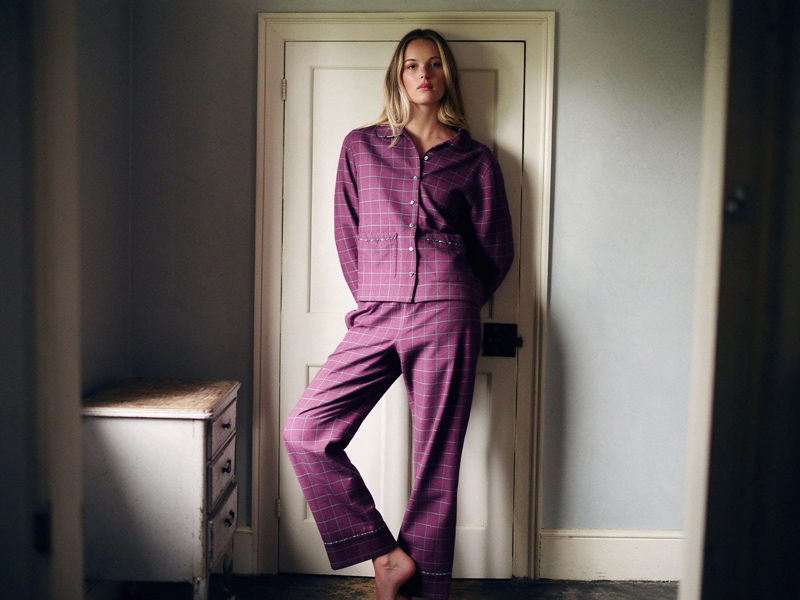
The distribution chapter was timing's gift. Instagram was fairly new when Lake launched, and it allowed the company to connect to an audience inexpensively — Cannon's retrospective on the platform is the textbook description of the 2014-era DTC advantage, before ad costs priced out scrappy brands. The brand worked with a small set of influencers — the mommy-blog economy at its peak — and the pajamas began appearing on celebrities: Jennifer Garner and Jenna Bush Hager are the two names the brand and its press coverage return to most often, both fitting the audience profile the founders had built the product for.
The organic engine compounded: we had a product, and we knew our audience, and we were making it for them, Cannon has said — it grew organically by word of mouth in a way we didn't expect. The company's own decade review confirms the trajectory: year-over-year revenue growth since 2014, with the most recent year jumping fifty percent and the customer base expanding 185 percent — growth that funded the direct-to-consumer business entirely without debt.
The sleep wardrobe as a system
The product doctrine is fabric-first system-building. The founding material is 100 percent Peruvian Pima cotton — soft, durable, breathable, thick enough to feel substantial without clinging — cut into the simple silhouettes and classic stripes that launched the brand. Around it the catalog has grown a fabric family with different jobs: crisp cotton poplin for cool sleepers, DreamModal for a silky drape, cotton gauze for the lightest summer nights, seersucker for texture, and Turkish cotton for robes. The system logic runs through the merchandising: short and long sleeves, pants and shorts, tops and gowns all mix and match within a color palette, so a loyalist's drawer becomes an interchangeable wardrobe — one reviewer notes that her collection assembled itself into a single palette by happy accident, and that the accident was the point.
The brand's own vocabulary names the use-cases: the Weekend short sets for Cannon, the Pointelle pants bundles for Lattimore, the Relax Sets for the hours after work ends — piddle clothes, in Lattimore's phrase — and the seasonal collections that keep the stripe-and-floral register fresh without chasing trend.
Self-funded growth, debt-free, family-first
The operating model is the anti-venture playbook executed to the letter. The company's decade review describes self-funding the direct-to-consumer business without debt, growing responsibly on its own cash flow — a rarity in the apparel DTC wave that burned nine figures of venture capital to reach the same customer. The team has grown to roughly seventy employees in the Savannah headquarters on West Harris Street, a design studio on Broughton Street, and a fulfillment center in Pooler, Georgia; the store network counts five locations — Atlanta and Charleston first, then Charlotte, Palm Beach, and Southampton — chosen for the resort and Southern markets where the brand's recognition runs deepest, with New York, Los Angeles, and Dallas now among the top markets as the footprint nationalizes.
The values are printed as plainly as the growth: one of our core values is family first, Lattimore has said — that is how we personally go through life and what we want for all our employees — the company encouraging coworkers, many of them mothers, to leave work at the office. The Savannah identity is claimed as strategy too: there is an ease and graciousness to this region that ties back to our product — easy, comfortable, incredibly soft and yet still polished.
Camp LAKE, and a scout-camp renovation
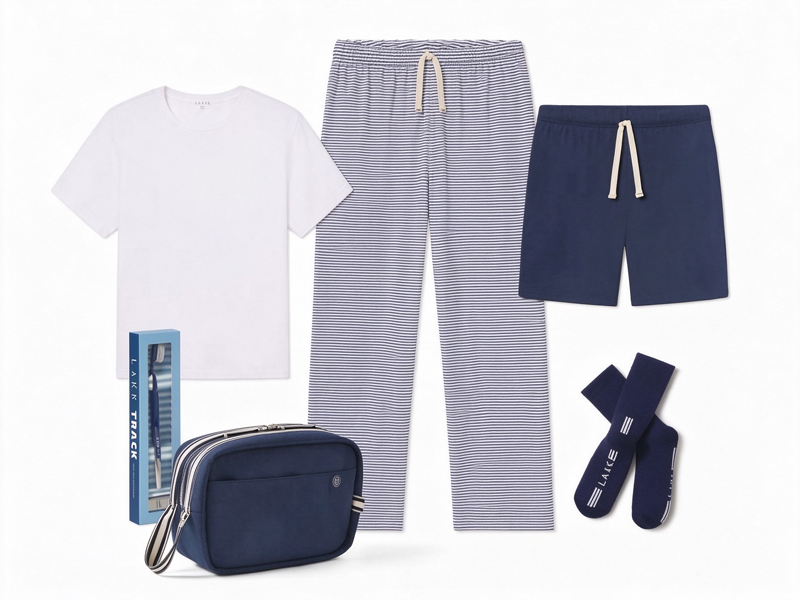
The tenth-anniversary chapter converted brand equity into local infrastructure. For the 2024 milestone, Lake partnered with the Girl Scouts of Historic Georgia on Camp LAKE — a woodsy pattern printed on Peruvian Pima cotton in the kids' sets, with a portion of proceeds funding renovation efforts at Girl Scout camps across Georgia. The logic, as both founders framed it, was identity alignment: we are a business that is primarily of women — women-led, women-owned — so supporting girls will always feel right. The same year, both founders were named to Inc.'s 2024 Female Founders 250, the national list of the year's most impactful women founders.
The recognition shelf rounds out with the lifestyle-press trifecta the brand's customer recognizes instantly: Forbes, Town & Country, Vogue, and The Wall Street Journal have all covered the Savannah phenomenon — coverage that functions, as it did a century ago for other Southern exports, as the outside world's confirmation that the region produced something worth crossing state lines for.
The honest texture of lay-flat care
Four honest cautions belong in the ledger. First, price: premium Pima sets sit well above the department-store pajama rack — the brand's tagline promises the softest pajamas imaginable, and the invoice reflects the claim; this is gift-budget territory, not replacement-tee territory. Second, care friction: the brand instructs machine washing cold and laying flat to dry, discloses minor shrinkage especially in length, and the gauze line carries an absolute prohibition on dryer use — reviewers who tumble-dry anyway report mixed results, and the care ritual is real labor for a garment whose whole promise is ease. Third, catalog breadth: sleepwear-first means the assortment is deliberate and narrow — matching sets, gowns, robes, and the newer loungewear — with dresses and men's pieces as adjacencies rather than a full wardrobe; shoppers wanting one brand for everything will find the store ends at the bedroom door. Fourth, scale: the company is private and small by the industry's inflation-adjusted standards — third-party databases estimate five to ten million in revenue — which caps inventory depth, size runs, and shipping speed relative to the category's giants.
None of these are contradictions; all four are the costs of a self-funded, family-first company choosing to grow at the speed of its own cash.
The verdict for the weekend-worthy pajama
Lake's storefront is the motherhood-origin thesis run as a debt-free business: two new mothers who found the answer in their babies' clothes, two years of paper sketches and online supplier hunts, an Instagram that was new enough to make scrappy brands famous, a fabric doctrine that treats the night's rest as the most comfortable part of the day, and a growth curve funded entirely by the customers who kept gifting the sets to each other. The cons are the cons of the chosen scale: premium prices, lay-flat care, a sleepwear-narrow catalog, and a company small enough to still feel personal in both directions.
Buy here if your pajama drawer deserves better than promotional tees, if a gift that says I love you, rest is exactly the message you want to send, if Peruvian Pima softness and a classic stripe beat trend cycles, and if a women-led, debt-free, Girl-Scout-supporting company from Savannah matches your idea of what a brand should be. Buy the deep-catalog basics brands reviewed in this category if breadth and price tiers outrank bedtime specialization. For the woman who wants pajamas worthy of the weekend she is not getting enough of, this Savannah storefront remains the category's softest argument — eleven years, five stores, and not a dollar of debt.