Is the sill still worth it after betting everything on the great outdoors?

Official homepage: https://www.thesill.com
The Sill began in 2012 when a brand manager from the beauty industry launched a houseplant company from her brother's office — paying the rent in bagels. Eliza Blank's timing was almost comically perfect: Instagram was about to make the fiddle-leaf fig a status symbol, and her media-first strategy turned a $12,000 Kickstarter into the company that taught a generation to call itself a plant parent. Thirteen years and more than a million shipped plants later, the company has closed every store, handed the CEO title to a veteran of the outdoor-tree business, and bet its future on yards instead of window sills. This review examines the storefront dimension by dimension: the bagel-rent origin, the influencer midwifery, the pandemic winter, the education doctrine, and the biggest pivot in the category.
Rent paid in bagels, plants shipped nationwide
The founding details, preserved on the company's own birthday journal, are the good kind of absurd. Blank quit her job at Living Proof in 2012, at twenty-six, and launched from her brother's office — paying him rent in bagels. The budget was roughly $32,000: personal savings plus a $12,000 Kickstarter. Her co-founder departed within six months, and year one ended around $20,000 in sales. The first hire was a marketing intern; the first retail was a hundred-square-foot Chinatown shop financed partly by an $80,000 TruFund small-business loan — an organization serving underserved communities — and partly by trading plant maintenance for a marble countertop. Blank ran retail from a cash box at flea markets, breaking even and learning what customers actually wanted: not rare specimens, but reassurance.
Her mother's biography anchors the brand's origin essay: a nurse who immigrated from the Philippines in her twenties, earned a second degree and an MBA, spent thirty years at one hospital, and kept the very same houseplants from Blank's childhood. The company the daughter built is, in her own framing, that green thumb translated for apartments without backyards.
The plantfluencer midwife, 2012 to 2014
Blank's professional training was brand strategy at Wolff Olins, and her founding insight was phrased in the firm's macro-meets-micro language: "I want more green in my life" was the macro trend; "I don't have a trusted resource for houseplants in the city" was the micro problem. The Sill was the brand that solved both with one truth, printed everywhere since: plants make people happy. With no marketing budget, she cold-emailed editors and gifted plants to writers, rode the Pinterest and Instagram design boom, and set up booths at Refinery29 and DailyCandy markets — earning coverage that bigger competitors would have bought.
The midwifery cut both ways, and Blank has said so publicly: Instagram democratized access to design — the fiddle-leaf fig escaped the Architectural Digest audience — but it also accelerated trend cycles past what growers could supply, a supply-side tension that would define the company's pandemic years.
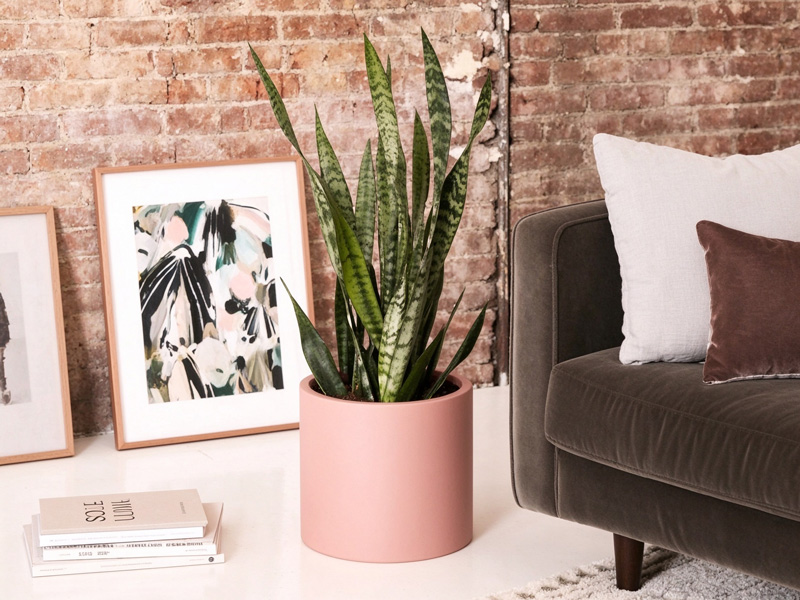
Bootstrapped to a million, then the VC fork
The company crossed a million dollars in annual revenue in 2016 — bootstrapped, a milestone the founder notes only about two percent of women-led businesses reach. In 2017 she raised her first institutional round, $2.5 million led by Brand Foundry Ventures, followed by a $5 million Series A from Raine Ventures and more than $15 million in total. The motivation, she has explained, was structural: the corporate plant-design business — outfitting offices for Google, WeWork, and similar clients — was keeping revenue high but keeping her from building the consumer brand she had pitched on Kickstarter. Venture capital let her shed the service work and focus.
The scale that followed was vertiginous: four-hundred-percent year-over-year growth in 2018, fifty thousand deliveries that year, stores in New York, Los Angeles, San Francisco, and later Chicago, a subscription box, weekly workshops, and a community the company now counts at over a million people. A New York Times feature in 2018 ended with the founder going into labor with her daughter immediately after the photo shoot — the sort of detail the plant-parent community has never let her forget.
The pandemic boom and its eighteen-month winter
The pandemic should have been the company's finest hour, and briefly it was: houseplant demand exploded as the locked-down nation sought something to nurture. Then the supply chain — a living one, staffed by growers rather than factories — buckled for eighteen straight months. Varieties sold out for weeks; customers waited while growers worked additional shifts; some plants were simply unavailable until the next crop finished. Blank has described the period as a "winter" season in the company's life, survived on the founder's habit of rereading a folder of customer love letters — including one from a woman who credited a houseplant with helping her recover from serious illness.
The operational lesson the company took from the winter shaped everything after: live inventory cannot be rushed, and a brand built on a living product must design its promises around biology rather than logistics.
The education doctrine and the no-judgment guarantee
The storefront's deepest asset is pedagogical. The Sill has run plant-care workshops since 2015 — first in stores, now online at ten dollars a class — staffs actual plant scientists whose names the community knows, publishes care guides that beginner blogs cite as lifelines, and partners with plant-care apps to extend its advice beyond the purchase. The commercial expression of the doctrine is the guarantee that reads like brand copy: if your succulent or certain other plants perish within the first year, the company will replace them, without judgment. Blank's own line — everyone on the team has been a plant killer at some point; plants are survivors — is the rare corporate sentence that reduces return anxiety while increasing attachment.
The mission framing completes the picture: biophilic design, connecting people with nature, translated into a store where every product page doubles as a care lesson. In this category, the education is the retention strategy.
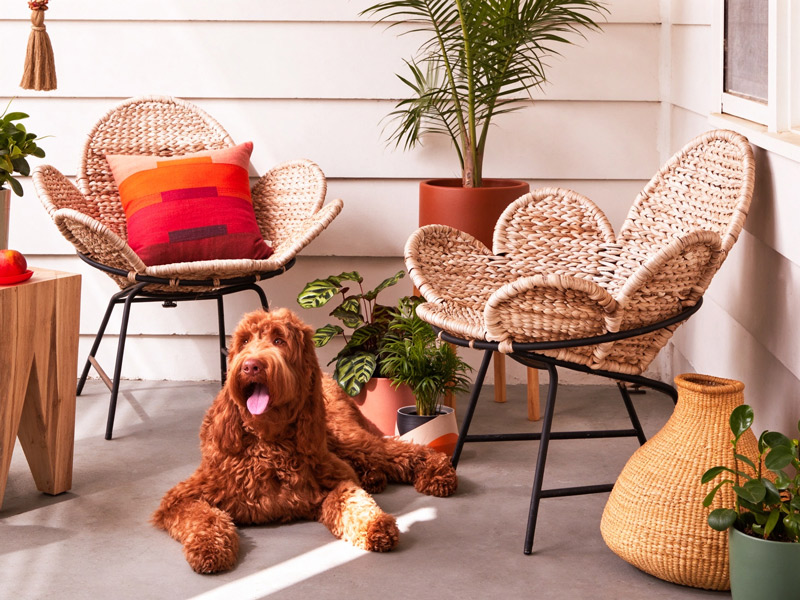
Betting the company on the backyard
The strategic chapter buyers should know arrived in 2025. With the millennial customer base aging into houses with yards, Blank made the call that the houseplant market her company had helped create — roughly a billion dollars, as she once told investors — was the wrong sized pond for the next decade. The outdoor gardening market runs about eleven billion, only ten percent of which happens online today, and the company's own data said the audience was ready: roughly fifty-eight percent of customers already lived in houses, half between twenty-five and forty-four. The pivot brings olive trees and Meyer lemons — giftable, climate-flexible — to the top of the catalog, targets a fifty-fifty indoor-outdoor mix within a year, and uses bigger-ticket outdoor items to raise average order values high enough to defray the brutal shipping economics of live plants, while smoothing the seasonality that made houseplants a holiday-peak business.
The same announcement carried the two boldest structural changes in the company's history: the closure of all twelve retail stores — the workshops, the repotting bars, the hundred-square-foot Chinatown ghost included — and Blank's own decision to step down as CEO, handing the role to Adam Smith, formerly chief executive of the outdoor-tree company Fast Growing Trees. The storefront is now the entire company, which concentrates both the opportunity and the risk the way the EQ3 retreat did for furniture in this category: every customer experiences the brand exactly as the website performs.
The CEO handoff and the store closures
The handoff deserves the reviewer's full attention because it is the rare succession executed in public and on strategy. Smith brings exactly the missing expertise — outdoor trees, e-commerce horticulture at scale — while Blank remains founder and, by every account, brand steward. The store closures read less like retrenchment than like the logical end of the Instagram-era thesis: the workshops moved online, the education became content, and the community the stores hosted migrated to the channels that made the company in the first place. Still, the loss of physical touchpoints matters for a product whose entire promise is living health — a promise harder to keep at porch distance than across a repotting bar.
The honest ledger also notes what the pivot does not fix: live shipping remains fragile in extreme weather, the first-year guarantee covers only selected plants, and a company that rebuilt itself around outdoor gardening has handed its narrative to a new CEO during the transition — three risks a buyer should price, none disqualifying.
The verdict for the aspiring plant parent
The Sill's storefront is the plant category's founding institution — the company that invented the online houseplant store, midwifed the plantfluencer era, wrote the education playbook everyone copies, and survived the pandemic's eighteen-month winter on customer love letters. Its latest chapter is the boldest: trading the billion-dollar market it created for an eleven-billion-dollar one it must now learn, stores shuttered, founder stepped aside, everything riding on the web.
Buy here if you are the aspiring plant parent the brand was built for — if you want a plant curated for apartment survival rather than a botanical gamble, if ten-dollar classes and named plant scientists sound like the support system your history of dead succulents requires, if olive trees on the patio interest you more than another pothos, and if you are willing to bet with the company that the yard is the next window sill. Buy from local nurseries if you want to inspect the living product before it ships, or from the budget marketplaces if price beats pedigree. For the houseplant generation the Sill created — now shopping for its first yard — this founder's office in bagels remains the most instructive storefront in the category.