From the FBI to a perfect shirt: the retail dynasty's second act
Official homepage: https://www.alexmill.com
Alex Drexler grew up the son of the most famous merchant in America — Mickey Drexler, the man who made the Gap cool, founded Old Navy, and rebuilt J.Crew — and he wanted nothing to do with any of it. He aimed for the FBI, lasted less than one semester of law school, and finally surrendered to what he calls the thing in his blood, learning shirtmaking at Steven Alan and Theory before opening a tiny shop on Elizabeth Street in 2012 with one mission: the perfect shirt. Seven years later his father called a former star designer from the Whole Foods checkout line, and the three of them relaunched Alex Mill into what GQ called the brand harvesting J.Crew's organs into a healthier body. This review examines the storefront dimension by dimension: the dynasty's second act, the anti-trend doctrine, the collaboration curriculum, and the honest arithmetic of a family business that refuses to be a family business.
The son who wanted the FBI instead
The heir's resistance is the story's engine. Alex Drexler was born in New York, raised in San Francisco during his father's Gap years, and set the bar for rebellion as high as it could go: he wanted to join the FBI. Law school lasted less than one semester before he admitted that clothing was in his blood — he could not escape it. The apprenticeship that followed was deliberately ground-level: production work at Steven Alan, where the company was making shirts in New York City and he learned how a well-made garment actually gets made, then time with Andrew Rosen, co-founder of Theory. At thirty-two or thirty-three, with the education complete and the perfect shirt nowhere on the market — despite, in his words, all the shirts out there — he opened Alex Mill in 2012, a tiny storefront on Elizabeth Street in Nolita.
The first act was a cult, not a company. The shirts — superb craftsmanship, high-quality fabric, just the right cut, per the mission the brand still prints — developed a following among downtown Manhattanites and the fashion industry, sold at Barneys, Unionmade, and Goop, and won over celebrities without a marketing department. Wholesale carried the brand for seven quiet years while the founder perfected the object the whole business would eventually orbit.
A phone call from the Whole Foods line
The second act began in a grocery queue. Somsack Sikhounmuong — a Parsons graduate from Toronto who had risen from assistant accessories designer to director of men's and women's design across sixteen years at J.Crew and Madewell, where he and Mickey Drexler had built the Madewell phenomenon together — was on sabbatical, standing in the Whole Foods line in the afternoon because he was not working and could be, when his phone rang. It was Mickey. The retail legend, out of J.Crew and weighing advisory offers from several companies, had realized the project he was most excited about was the one he was not officially in talks with — his own son's company. He asked Sikhounmuong to meet Alex. The designer calls him my fairy god agent; the company's own history page says Mickey had a suspicion something really good would come from putting the two minds together.
The three-way partnership closed in 2018 and relaunched in February 2019: Sikhounmuong as co-founder and creative director, Mickey as investor, advisor, and eventually chairman and chief executive, and Alex continuing as founder — the dynasty and its two best lieutenants in one small SoHo office.
The relaunch that harvested J.Crew's organs
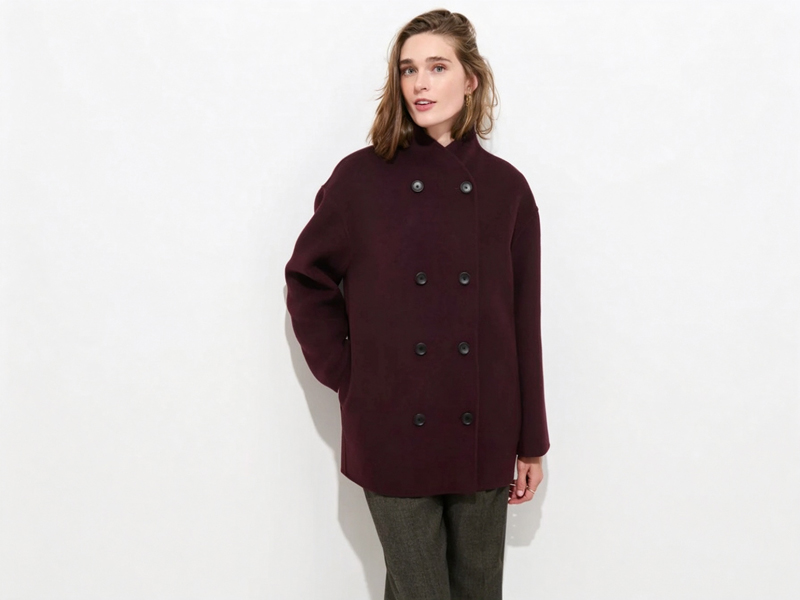
The relaunch's logic was visible in the first collection and named by the press within weeks. The women's line arrived because the data was already there — Goop had been selling Alex Mill's men's shirts, and a number of women had been buying and wearing them — and the womenswear simply made the borrowing official. GQ's profile asked the question the industry was thinking — Can Alex Mill Figure Out What J.Crew Couldn't? — and answered it with the anatomy metaphor: with Sikhounmuong and Drexler senior on board, Alex Mill had harvested the organs of J.Crew and put them in a much healthier body. No legacy debt, no mall anchors, no discount treadmill, a modern direct-to-consumer model, and price tags mostly under two hundred dollars.
The design process embodied the thesis in miniature. Sikhounmuong spent three full days on a single chest pocket — the gentle sloping of the stitch from top to bottom right corner, the button placed just north of center fastening from the side rather than the top, the detail grafted from technical outerwear onto a standard shirt. Classic but still designed — it can't be boring. If we had to manage twenty stores, Alex told GQ, it would be another ballgame; the point was to focus on what they could do best and do it the best they could, even if a pocket takes three days.
The radical act of not changing much
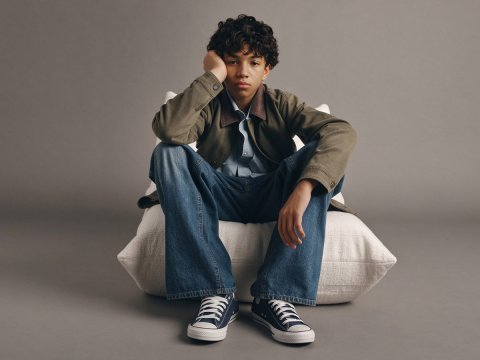
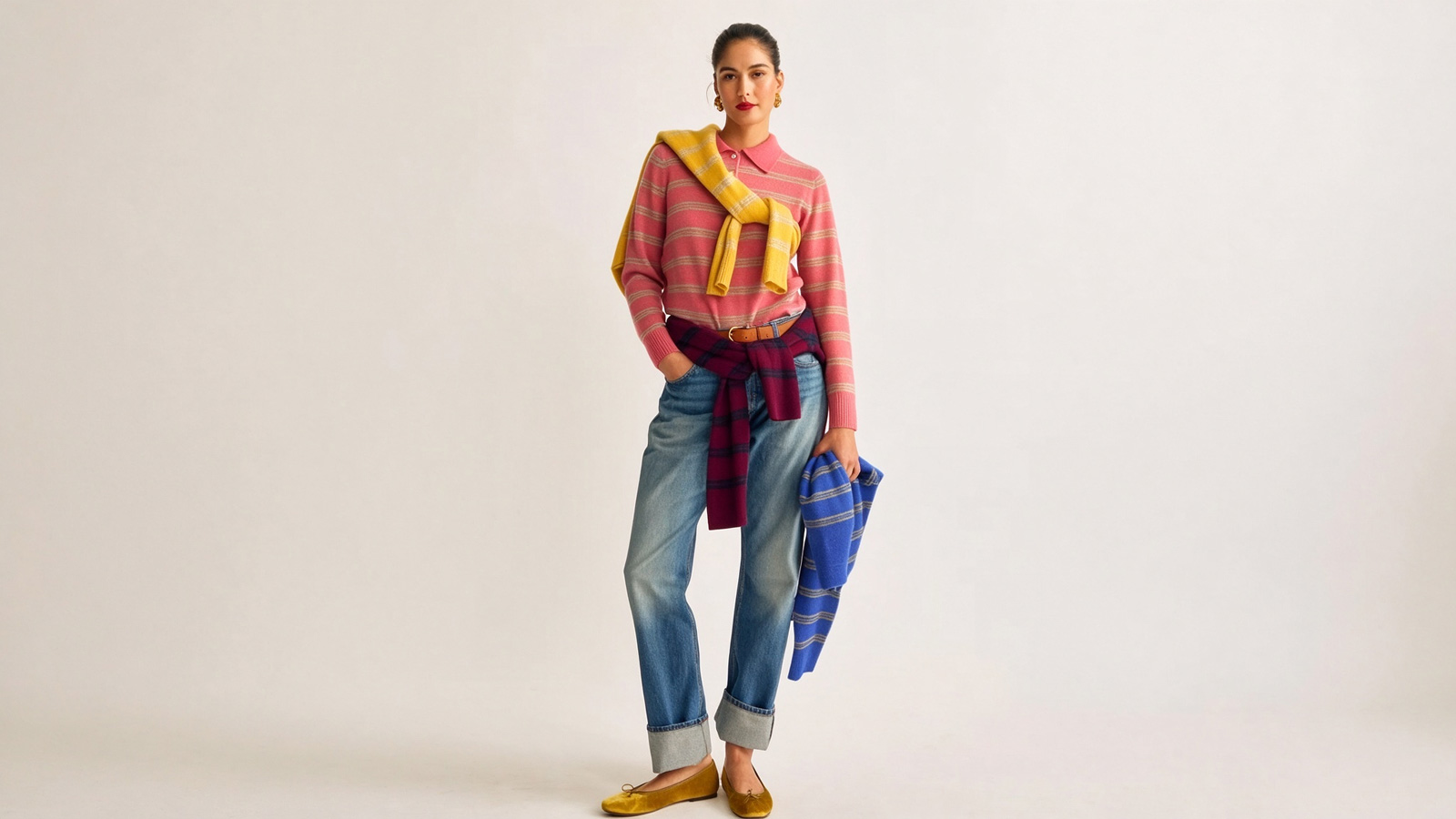
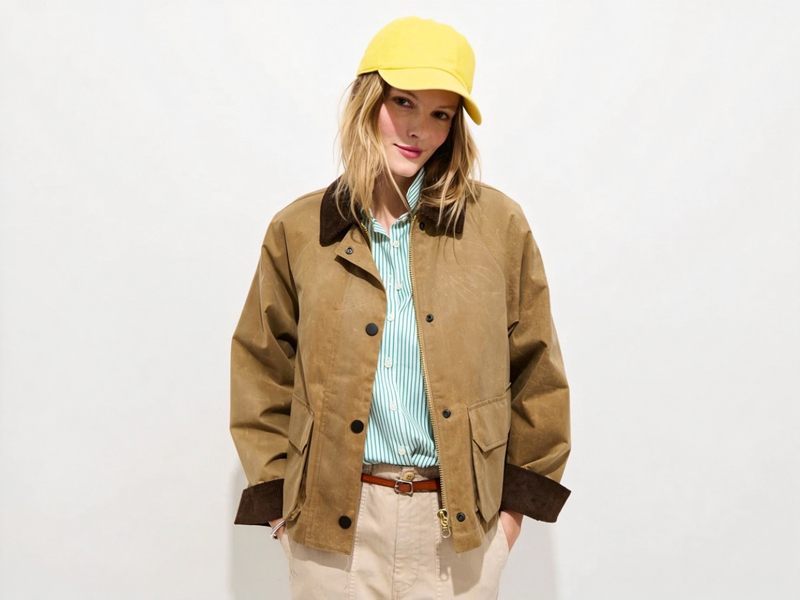
The doctrine, printed on the storefront's About page in a tone no algorithm would generate, is the brand's entire positioning: nobody needs new clothes right now — but everyone needs the right clothes. Timeless, not trendy: take the core styles every person wants and do something radical — don't change them all that much. Preserve what makes them iconic. Wake up, get dressed, don't overthink it. Guaranteed to never go out of style. The capsule register — perfect shirt, field pants, work jacket, cardigan, OCBD, chinos — is deliberately the preppy-Ivy canon, executed with fabric-mill literacy inherited from two generations of Drexler supply-chain relationships.
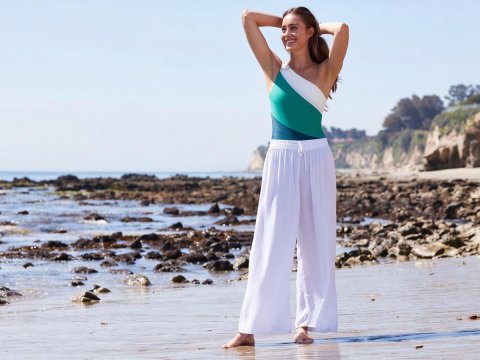
The critics who track the category read the doctrine as the anti-Everlane: where the algorithm-era basics brands optimized for search and practicality until their clothes felt, in one influential reviewer's phrase, a little sad, Alex Mill's pieces carry what the same reviewer called joie de vivre — a full-skirted navy cotton dress, a rainbow-striped linen, color that survives the minimalism. The aesthetic ceiling is real — the brand serves one sensibility, and shoppers outside the preppy canon will not be converted — but within its register the discipline is total.
A curriculum of considered collaborations
The collaboration program functions as the brand's liberal-arts curriculum. The 2020 Jimmy Fallon PJimmies partnership — born at a brainstorming lunch where Mickey interrupted Fallon's pitch ideas with what about pajamas? — launched colorful striped unisex pajamas on The Tonight Show with the entire cast in them, one hundred percent of proceeds to Feeding America. The J.Press collections with Rowing Blazers' Jack Carlson returned the Ivy canon to its Yale-founded source, the rugby shirt as the highlight. Brut, the Paris vintage archive, reworked tent cloth into cropped work jackets alongside a hundred one-off vintage pieces — the first time Brut's archive sold outside France. Thomas Mason, two centuries of British shirting, rewove the Mill Shirt in five fabrics. Palladium made weatherproof boots. And inside the Mercer Street flagship, a botanical dye studio with natural-dye artist Maddie Provost reworks vintage and overstock — the sustainability practice conducted as craft rather than claimed as certificate.
Each collaboration teaches the customer something about the host — archival literacy, fabric provenance, charity mechanics — which is the quietest and most durable form of brand education the category has.
Jewel boxes: small is the new big
The store strategy inverts the father's history. Mickey Drexler spent decades opening hundreds of stores across the Gap and J.Crew empires; at Alex Mill the count stands at a handful, each chosen and sized with surgical care. The Elizabeth Street original gave way to a larger Mercer Street flagship in 2020 — with the dye studio, exclusive art, and hand-selected vintage — then 1182 Madison Avenue on the Upper East Side, then the 2024 Rockefeller Center opening that the fashion trades covered as an event: the landlord, Tishman Speyer's Rob Speyer, called them. Mickey's verdict on the format — small is the new big; I have opened many stores that were too big; I consider this one a jewel box — is the strategy compressed, and his retail habit remains the same as it was in the empire days: he stands in the store, studies the customers' browsing, and polls the associates, each of whom he knows by name, on what shoppers want.
The wholesale half of the business — Nordstrom, Net-a-Porter, Goop, Shopbop — carries the catalog to customers outside the three or four jewel boxes, keeping the direct channel roughly half of revenue and the stores free to function as brand theater rather than inventory clearance.
The CEO who once pumped gas
The succession chapter, executed in May 2023, stayed inside the family the Drexlers built. Roxanne Stahl O'Hara — thirteen years at J.Crew, rising to senior vice president and head of merchandising for women's and kids, then nearly five years as chief merchant of Melissa & Doug — took the chief executive role, while Mickey moved to chairman, Sikhounmuong remained co-founder and creative director, and Ali Dillon continued as president. The detail Mickey tells about hiring her is the chapter's signature: he interviewed her two decades earlier and never forgot the conversation, because when it turned to summer jobs she told him she pumped gas on the dock of a marina in Cape Cod — that was when he knew she was special, his stated hiring doctrine being that he does not judge people by their resumes but looks for true grit, street smarts, and instinct. Her own framing of the appointment was a customer's: she had come in to visit Alex and Som when they were designing their first women's line, immediately fallen in love with the clothes, and become a loyal customer.
For a brand whose story is so dynastic, the CEO search reaching outside the bloodline to a merchandising operator with gas-pump grit is the governance detail worth printing.
The honest texture of a dynasty
Four honest cautions belong in the ledger. First, the dynasty shadow: a brand built by a legend's son, relaunched by the legend himself, designed by the legend's protégé carries a nepotism narrative it cannot shake — and a key-person dependency on an octogenarian chairman whose retail instincts built three empires. Second, scale: three or four stores and a wholesale-dependent model make Alex Mill a boutique with a pedigree, not a category force — the jumpsuit that Glamour called the single best thing bought in 2019 was a moment, not a trajectory. Third, the sustainability file is thin relative to this category's audited leaders: botanical dye studios and vintage rework are real but small, and the material-supply-chain documentation of the supply-chain-audited brands reviewed in this space is absent. Fourth, the aesthetic ceiling: the anti-trend doctrine serves the preppy-Ivy customer completely and everyone else not at all — a feature for the faithful, a wall for the rest.
None of these are contradictions; all four are the costs of a family business that would rather be right than big.
The verdict for the anti-overthinking dresser
Alex Mill's storefront is the dynasty's second act done with discipline: a son who tried the FBI and law school before surrendering to the perfect shirt, a father who made the call from the Whole Foods line, a designer who spends three days on a pocket, a doctrine that radically refuses to change much, collaborations that teach as they sell, jewel-box stores across Manhattan and the Vineyard, and a CEO whose grit was certified at a Cape Cod gas dock. The cons are the cons of the dynasty: the shadow it cannot shake, the boutique scale, the thin audit file, and one sensibility served completely.
Buy here if your mornings need fewer decisions, if the perfect shirt is a quest you understand, if preppy-Ivy classics executed with two generations of fabric literacy beat trend-chasing, if a brand whose promise is guaranteed to never go out of style matches your idea of a vow, and if supporting a business that would rather be right than big feels like the point. Buy the category's giants if breadth, price tiers, and certified supply chains outrank pedigree. For the anti-overthinking dresser who wants the right clothes and nothing more, this Nolita storefront remains the dynasty's most personal answer — wake up, get dressed, don't overthink it.