Two health scares and one wide hopper changed juicing forever
Official homepage: https://namawell.com/
Nama sells cold-press juicers at prices that make shoppers pause — the flagship J2 lists at $599 — and yet more than twenty thousand buyers have rated it 4.8 out of 5 on the brand's own store. The story behind it is unusually human: two men who rebuilt their own health with juice decided the machines of the day demanded too much effort, and spent years engineering the effort away. This review examines Nama from every side: the founders, the hands-free hopper that made it famous, the cold-press science, the warranty math, the four-machine lineup, and whether the price matches the ritual.
Both Founders Turned Health Crises Into a Company
Nama began with two personal recoveries. Founder Dan Sheehan had spent years eating super-processed food until diet-related health scares pushed him toward juicing — and toward the frustration of machines that took so much chopping and feeding that most people quit within weeks. His eventual partner was Joe Cross, the Australian filmmaker whose 2010 documentary "Fat, Sick & Nearly Dead" followed his own 60-day juice reboot and turned him into one of the plant-based movement's most recognizable advocates. The two teamed up to build the juicer they wished they had owned: one that respects the person's time, not just the produce. The original J1 arrived in 2018 and, by the account of reviewers at Homes & Gardens, revolutionized the category; the brand has ridden that momentum ever since.
The Wide Hopper That Hands Back Your Morning
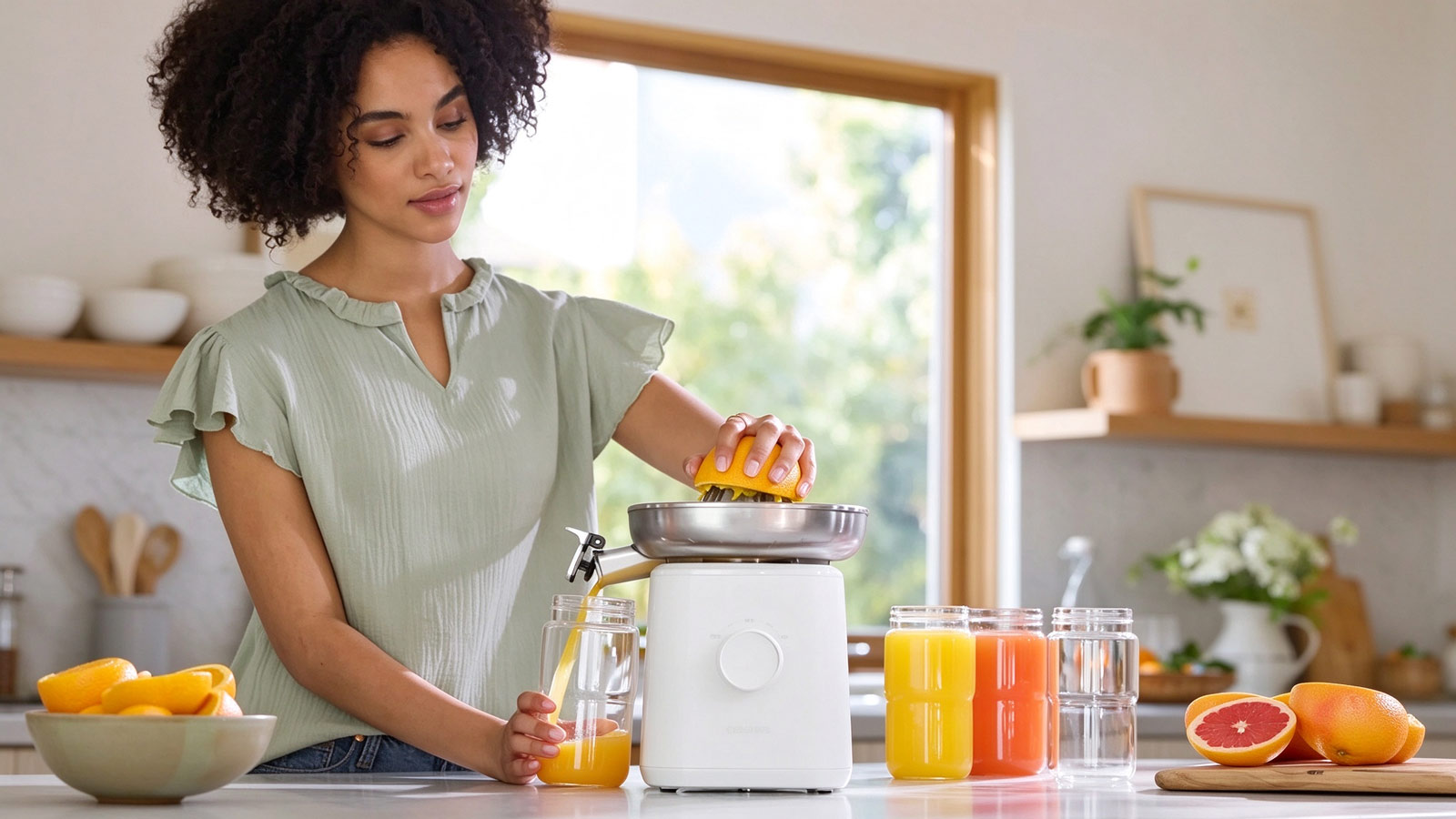
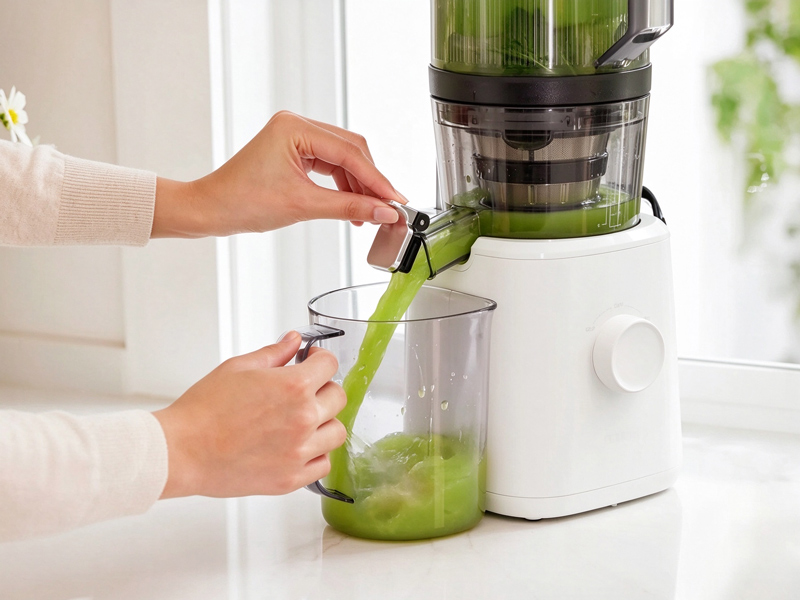
The breakthrough that defines Nama is embarrassingly simple to describe and maddeningly hard to engineer: an extra-wide hopper that accepts a whole serving's worth of fruits and vegetables — whole carrots, cucumbers, un-diced apples — in one load. Instead of standing over the chute feeding pieces one by one, the way every conventional slow juicer demands, you load everything, press start, and walk away. An auger turning at a gentle 48 rotations per minute crushes the contents down on its own, quietly enough that reviewers routinely describe apartment-friendly noise levels. Prep time, the single biggest reason juicers end up in cabinets, collapses from ten minutes of chopping and feeding to a two-minute load. That convenience is why the company calls the J2 the first hands-free juicer, and why so many owners describe daily use where previous machines gathered dust.
Slow Squeezing Keeps the Good Stuff In
The cold-press method is the other half of the pitch, and it holds up under scrutiny. High-speed centrifugal juicers spin blades at thousands of rotations per minute, generating heat and oxidation that degrade flavor and nutrients and leave juice that browns within hours; Nama's slow crush minimizes both, and the company's design documentation claims up to 60 percent more juice from the same produce compared with traditional high-speed machines, with drier pulp as visible proof. The payoff compounds: less produce waste per glass, juice that stays fresh for 48 to 72 hours in an airtight container, and quieter operation across the board. The J2's design earned a Good Design Award in 2022, with judges singling out the concealed safety switches and BPA-free, FSC-certified materials — details that read like a wellness brand's ethos translated into industrial design.
Fifteen Years of Warranty Buys Serious Confidence
Where the store quietly separates itself from every budget rival is after the sale. Every juicer carries a 15-year warranty on all parts — a figure almost unheard of in small kitchen appliances, where three to five years counts as generous — plus a 30-day satisfaction guarantee, free shipping on orders over $100, and three-, six-, and twelve-month payment plans that soften a $599 outlay into something manageable. International buyers in Europe, the U.K., and Australia now get localized pricing and lower shipping rates. These terms matter most precisely because of the price: they convert a steep purchase into a durable one, and the wall of owner reviews — the J2 alone shows more than twenty thousand at 4.8 stars on the brand's store — suggests the company honors the promise.
Four Machines Now Cover Every Kitchen Size
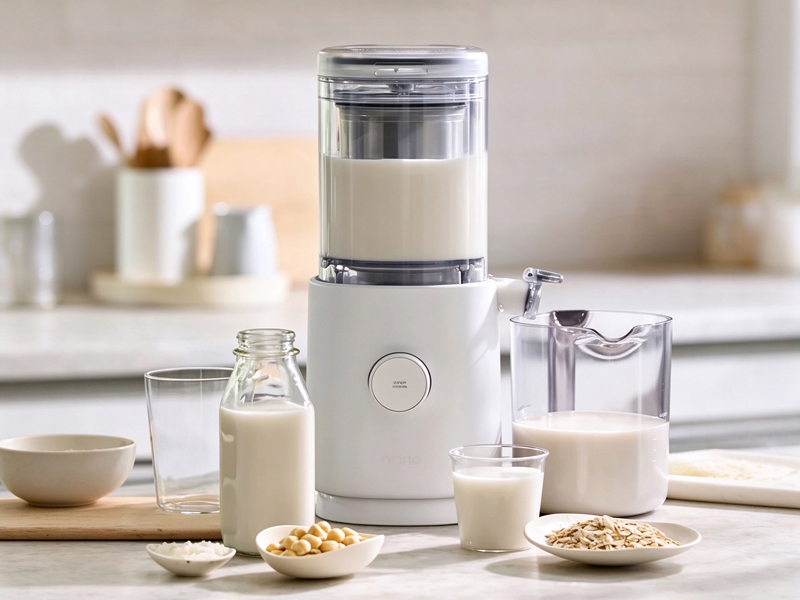
The catalog has matured into a tidy ladder. The original J1, now sold while supplies last, is the entry point for anyone testing the ritual at a lower price. The J2 at $599 remains the signature: the first hands-free juicer, yielding 16 to 32 ounces per load for everyday households. The J2 XL at $749 answers meal preppers with a larger hopper and an included sorbet attachment. The compact J3 at $499, weighing under ten pounds and yielding 8 to 16 ounces per load, targets small kitchens, singles, and travelers. At the top sits the C2 at $935, a two-in-one cold-press juicer and high-speed blender on a single base for people who want the whole plant-based workstation. Around the machines sit accessories, replacement parts for every model, recipes, and layering guides that teach buyers how to stack the hopper for maximum yield — the store behaving like a juicing school as much as a shop.
One Last Look Before You Spend $599
The honest calculation starts with frequency. At $599 the J2 sits at the top of the masticating juicer category, where capable machines run $200 to $700, and cheaper alternatives from brands like Canoly or Kuvings undercut it meaningfully. If juice will be an occasional weekend experiment, that premium is hard to justify. But for the daily juicer — the household doing a 60-day reboot, the parent batch-prepping green juice for the week, the person who has already watched a cheaper machine die or go unused — the math inverts: higher yield means less produce spend per glass, the hands-free hopper means the machine actually gets used, and the 15-year warranty means the purchase amortizes into something like a dollar a month. Nama's store is polished, generous with guarantees, and unapologetically expensive. For its intended customer, it earns every dollar; for the curious beginner, the J1 or a rival is the wiser first step.