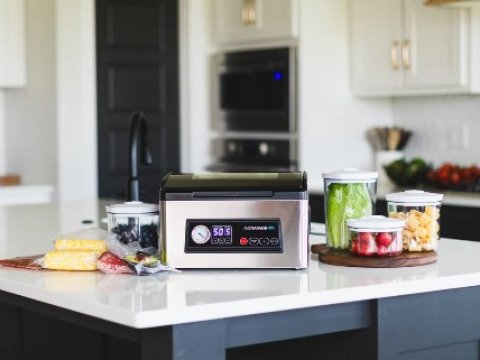
The california store that sells an entire raw-food kitchen
Official homepage: https://tribest.com
Most kitchen appliance stores sell one kind of machine. Tribest sells a philosophy: an entire counter of equipment for people who want to eat food that is fresh, raw, and processed as little as possible at home. From its Southern California base, the company has spent decades building a catalog that runs from twin-gear juicers and low-RPM slow juicers to digital dehydrators, automatic sprouters, and a glass-jar blender. This review examines the store across its history and positioning, the twin-gear technology at its core, the breadth and pricing of the lineup, its unusually strong warranty record, and where it fits beside better-known juicer brands.
A California Company Built Around Healthy Living
Tribest is a Southern California company that has spent more than three decades making appliances for the health-food audience rather than the mass market. Where most kitchen brands chase the everyday smoothie drinker, Tribest built its name at farmers markets, raw-food festivals, and in the kitchens of people who juice daily and dehydrate their own snacks. The machines themselves are largely manufactured in South Korea, a hub of precision juicer production, while design, testing, and support stay in California. That combination — Korean manufacturing depth wrapped in a small American healthy-living brand — explains both the engineering quality and the quirky breadth of the catalog, which includes products almost no mainstream competitor bothers to make, like automatic seed sprouters and manual wheatgrass presses.
Twin Stainless Steel Gears That Crush Like Teeth
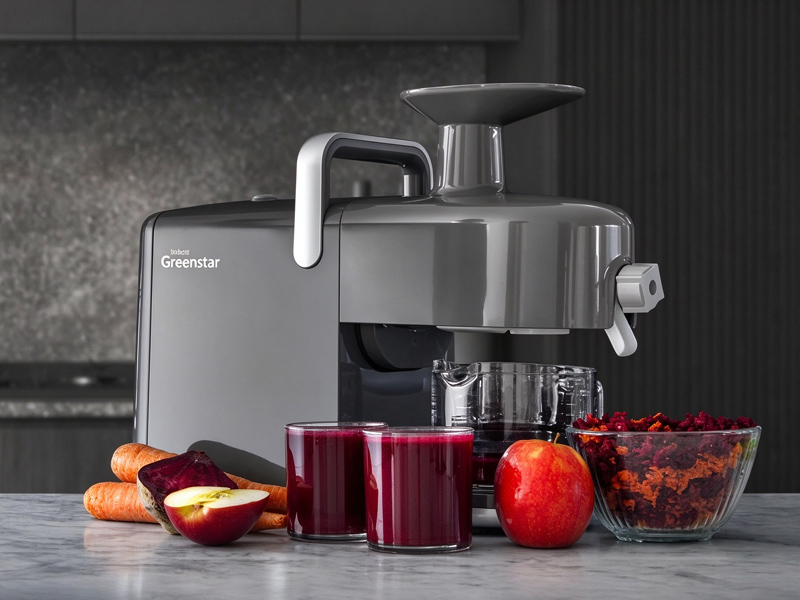
The flagship Greenstar line uses twin stainless steel gears that press produce in stages, mimicking the chewing action of human teeth — a design long marketed as complete mastication. The gears press at a low 110 RPM, with internal magnets and pocket recesses that help condition the produce and, the company claims, keep more of the fragile nutrients intact. Independent juicing specialists consistently rate Greenstar machines at the top for the toughest inputs in the category: wheatgrass, kale, ginger, and fibrous celery, where cheap vertical juicers clog and stall. The trade-off is real too — twin-gear machines weigh in around twenty-plus pounds, take roughly five minutes to clean, and cost several times what a centrifugal juicer does. This is equipment for daily juicers, not for curiosity.
From a $149 Citrus Press to an $850 Flagship
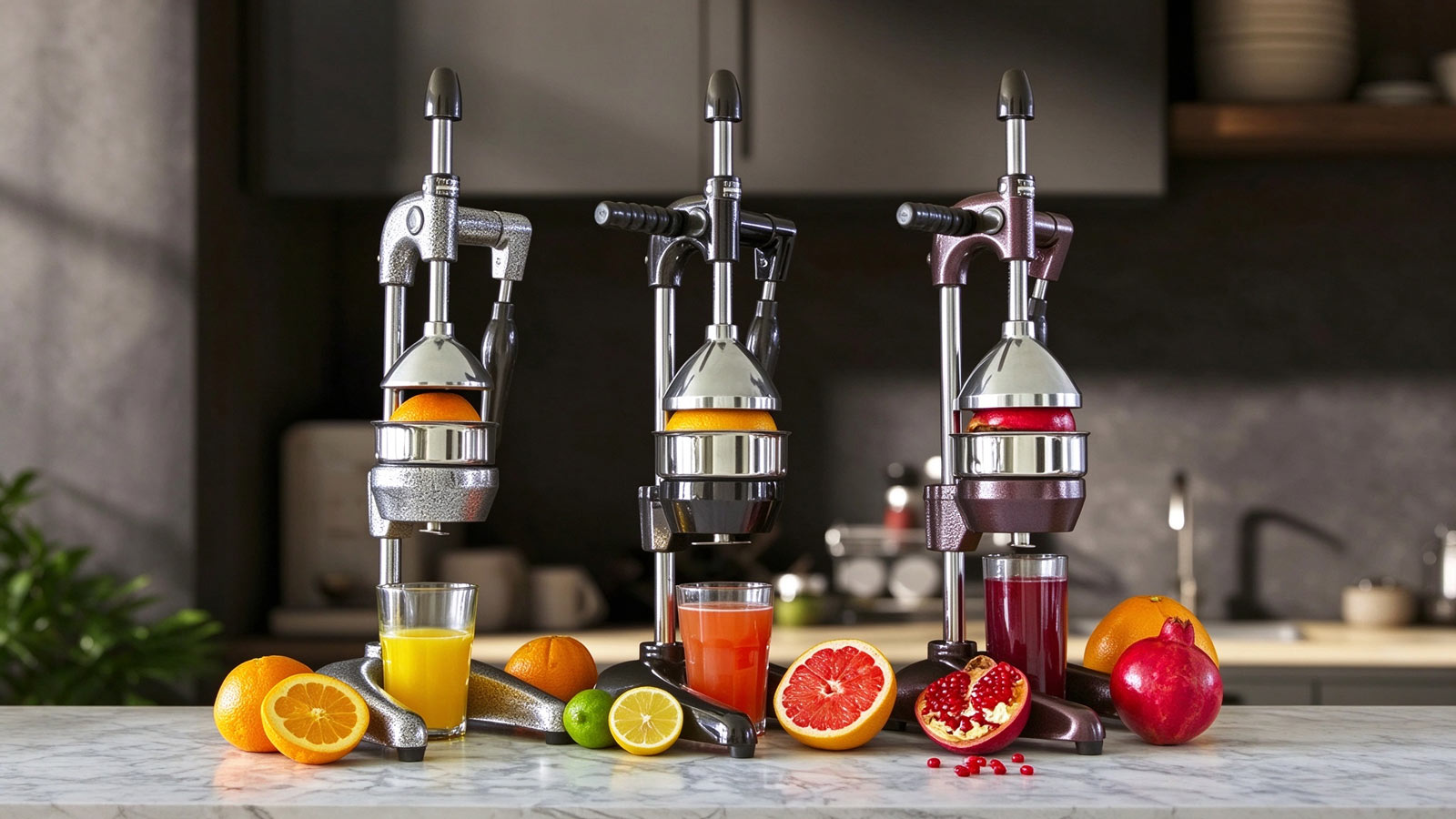
The store's pricing ladder is unusually wide. At the entry sits the Shine cold press at around $149 and the CitriStar citrus press under $50. The mid-range is anchored by the Slowstar vertical slow juicer at roughly $379, which runs at a low 47 RPM with a double-edged Duoblade auger and a ten-year warranty, and by the Solostar 4 horizontal juicer at about $299, notable for a fifteen-year warranty that is among the longest in the entire juicing category. The top of the store is the Greenstar Elite at $549 to $599 and the all-stainless Greenstar 5 at $849.95, with a commercial-certified Greenstar Pro beyond it. Every step of the ladder is clearly differentiated by juicing style rather than by cosmetic upgrades, which makes choosing unusually rational.
The Dehydrator Line That Outspecs Excalibur
Tribest's Sedona dehydrators deserve their own look because they compete head-on with Excalibur, the category's household name, and frequently win on features. The Sedona Express, around $399, packs eleven trays into a counter-friendly box with a hinged glass door, internal LED light, all-digital controls, and a two-stage temperature system that starts hot to speed dehydration and automatically drops to a raw-safe temperature to finish — a feature Tribest calls TST. The Express was the first full-featured dehydrator to reach 167°F, meeting USDA guidance for safe homemade jerky, and it offers continuous operation up to 99 hours with overheat protection. The larger Sedona Supreme adds stainless trays, commercial certification, and a ten-year warranty at about $599. For serious dehydrating households, this is the most spec-dense line in the category.
Twelve-Year Motors and a Glass-Jar Blender
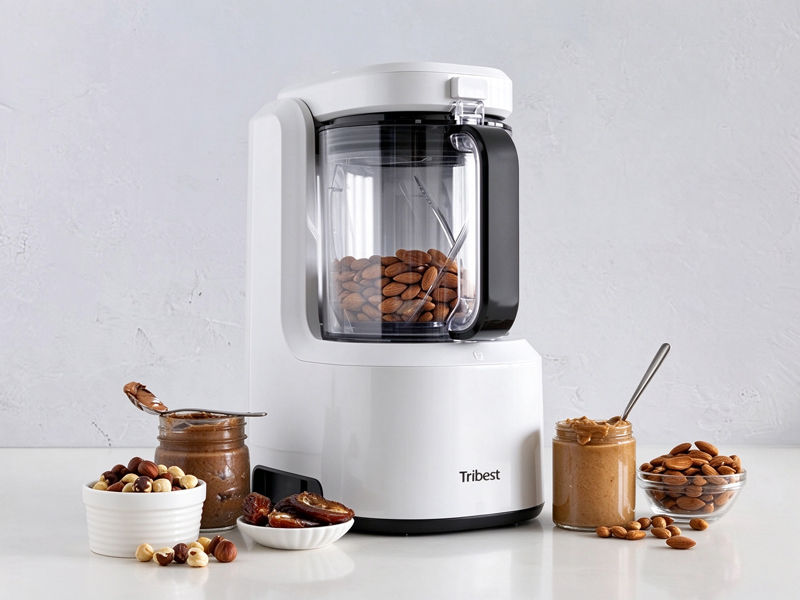
Warranty coverage is where the store quietly separates itself from nearly every competitor. The published household terms run from three years on the entry Shine up to twelve years on the Greenstar Elite's motor and fifteen years on the Solostar 4 — coverage lengths the company extended significantly in 2021 when it raised Greenstar motor coverage from five years to twelve. The dehydrators carry five to ten years depending on model, while the entry personal blender sits at a modest one year, so the record is not uniformly generous and buyers should check the specific model. Materials follow the same health-first logic: stainless steel juicing gears, stainless dehydrator trays, and the Dynablend Clean blender at about $199, which swaps the plastic pitcher of every rival for a tempered glass carafe on a stainless base with a ten-year warranty.
The Raw-Food Toolkit, Not the Mainstream Pick
The honest summary is that Tribest is a specialist's store. It will not beat Omega or Breville on brand recognition, and the twin-gear machines demand more cleaning time and counter space than a casual juicer will tolerate. But for the committed daily juicer, the raw-food cook, or the household that dehydrates in bulk, the combination is hard to match: top-tier performance on the hardest produce, warranties stretching to twelve and fifteen years, and a catalog — juicers, dehydrators, sprouters, glass blenders — that covers the whole raw-food workflow under one roof. As a store, tribest.com is unflashy but thorough, with clear model differentiation and published warranty terms. For its audience, that straightforwardness is exactly the point.