A pressure cooker sold 215,000 units a day, then went bankrupt

Official homepage: https://instantpot.com
Few kitchen appliances have ever become a verb, but "Instant Pot" did — and then its maker filed for bankruptcy anyway. This review examines instantpot.com, the official store of Instant Pot Brands, from every angle: the Canadian engineer who reinvented the pressure cooker, the word-of-mouth machine that sold millions without advertising, the leveraged collapse that nearly killed the company, and the product lineup that emerged from Chapter 11 under new ownership. Whether the second act deserves your money is a more complicated question than the brand's fame suggests.
A Laid-Off Engineer Rebuilt the Pressure Cooker in Ottawa
The company began in 2009 in Ottawa, Canada, when Robert Wang — a computer scientist who had worked at Nortel — teamed up with Yi Qin and Dongjun Wang, veterans of the local tech scene at BlackBerry. After 18 months of development, the first Instant Pot launched in 2010 as a "6-in-1" device combining a pressure cooker, slow cooker, rice cooker, steamer, sauté pan, yogurt maker, and warmer. Wang's insight was software: a microprocessor that managed pressure, timing, and temperature so a home cook could not fail.
Amazon Reviews Replaced Advertising Entirely for Years
Wang refused to buy advertising, calling it a tax on products that should sell themselves. Instead, the team obsessively read Amazon reviews and folded customer requests into each new generation. The strategy produced one of the great organic marketing stories in consumer history: a Facebook community that grew past three million members, 215,000 units sold in a single Prime Day in 2016, and — by Kohl's account in 2018 — sixty pots per minute on Thanksgiving. Word of mouth did what no ad budget could.
A Leveraged Merger, a $345 Million Dividend, and Collapse
The product was fine; the balance sheet was not. In 2019, private equity firm Cornell Capital merged Instant Brands with Corelle Brands in a deal valuing the appliance business near $615 million. In 2021 the owners took out a $450 million loan and used it to fund a $345 million dividend to themselves. When pandemic cooking demand faded — the multicooker category fell from $758 million in 2020 to $344 million by 2022 — the company was carrying roughly $512 million in debt and filed for Chapter 11 in June 2023.
Two Companies Rose From One Bankruptcy Filing
The Chapter 11 process split Instant Brands in two. The housewares side (Corelle, Pyrex, CorningWare) exited separately in February 2024, while an affiliate of Centre Lane Partners bought the appliance division for about $122.6 million in November 2023. The appliance business relaunched in April 2024 under the name Instant Pot Brands, headquartered in Downers Grove, Illinois, with entirely new leadership. In November 2024, a bankruptcy trustee sued Cornell Capital for over $400 million, alleging the dividend had stripped the company of cash it needed to survive.
From Duo to Duo Crisp: One Pot, Endless Variants
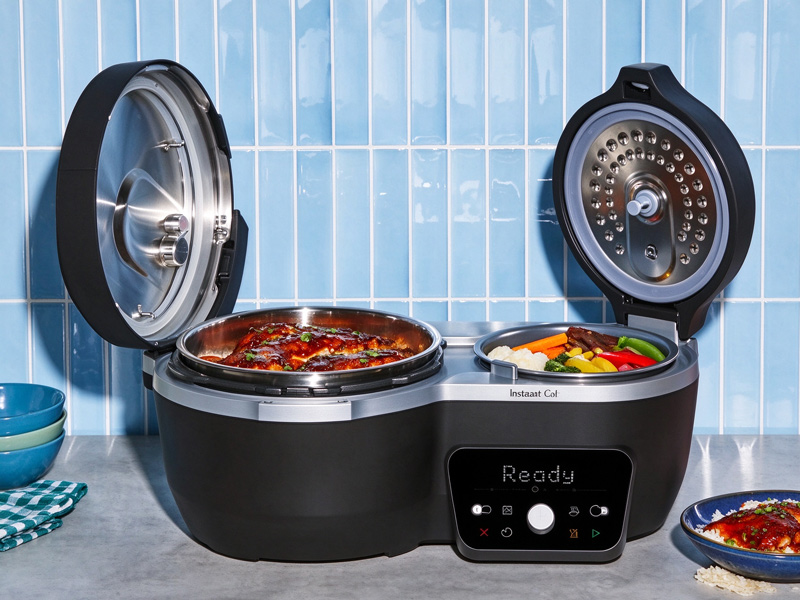
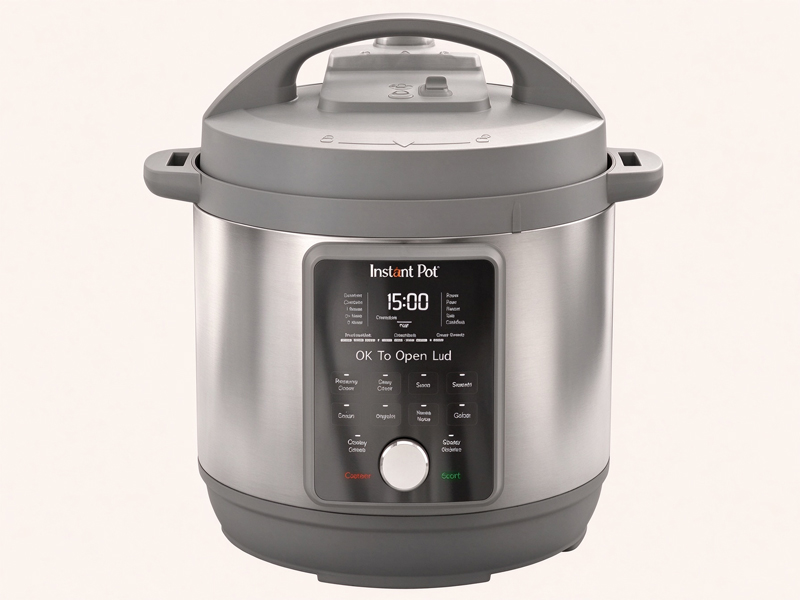
The current store centers on a deliberately tiered multicooker family. The Duo remains the 7-in-1 entry point, the Duo Plus adds a 9-in-1 panel, and the Duo Crisp stacks an air fryer lid for 11-in-1 or 13-in-1 duty. Above them sit the Pro and WiFi-enabled Pro Max with app connectivity, while the Vortex line, Omni toaster ovens, a Dutch oven, and the compact Mini line cover adjacent categories. Machines are currently manufactured by China's Midea Group, carry a one-year limited warranty, and pair with a free app offering hundreds of recipes.
Does the Second Act Deserve Your Countertop Space?
The honest answer involves trade-offs. The brand's safety record is largely strong, though the 2018 recall of about 104,000 Walmart-exclusive Gem 65 units for overheating remains a cautionary episode, and quality consistency under new ownership is still being proven. Buy direct from the official store and you get authentic stock and full warranty registration; the machines themselves remain genuinely capable. The company that invented the modern multicooker no longer owns its own story — but for now, the pots still work exactly as three million Facebook members promised they would.