Three engineers built light panels as a side project; li ka-shing noticed
Official homepage: https://nanoleaf.me/
Nanoleaf made smart lighting an object of interior design rather than an afterthought. Founded in Toronto in 2012 by three University of Toronto engineering graduates working day jobs, the company funded its first bulb on Kickstarter, attracted early backing from Li Ka-shing's Horizons Ventures and Kleiner Perkins, and then reinvented itself — twice — until its modular light panels became the default backdrop of streamers, gamers, and design-conscious living rooms. Here is our review of its store.
Three University Friends Kept Day Jobs for a Year
Gimmy Chu, Tom Rodinger, and Christian Yan met as engineering students at the University of Toronto, graduated into different industries, and spent their first year after school building Nanoleaf only on the side — prototypes after work, messages late at night — before all three quit their jobs to commit. The founding motivation was unglamorous energy economics: incandescent bulbs waste most of their power as heat, and the trio believed folded circuit boards could arrange LEDs without the bulky heat sinks conventional bulbs required. Their first product, the NanoLight, mounted small LEDs on an origami-folded board so the bulb ran cool to the touch, consumed a fraction of the energy, and lasted dramatically longer. The January 2013 Kickstarter asked for $20,000 and closed near $250,000 — a twelve-times oversubscription that financed the move from kitchen-table prototypes to a company with offices in Shenzhen and Hong Kong.
An Origami Bulb Beat Its Goal Twelve Times
The crowdfunding playbook repeated with the Nanoleaf Bloom in July 2014 — another $20,000 goal, another $200,000 raised — but the more important event that year happened off Kickstarter. The early campaigns attracted two names that rarely appear on the same cap table: Horizons Ventures, the investment vehicle of Hong Kong billionaire Li Ka-shing, and Silicon Valley venture firm Kleiner Perkins. That institutional backing let Nanoleaf professionalize quickly — the company consolidated its headquarters in Toronto in January 2015, launched in Europe and Australia in 2017, and opened a Paris office in April 2018. By then the team had concluded the future was not a better bulb but a departure from the bulb entirely, and they carried that thesis to the 2016 Consumer Electronics Show with a product nobody else was showing.
CES Revealed the Product That Made the Brand
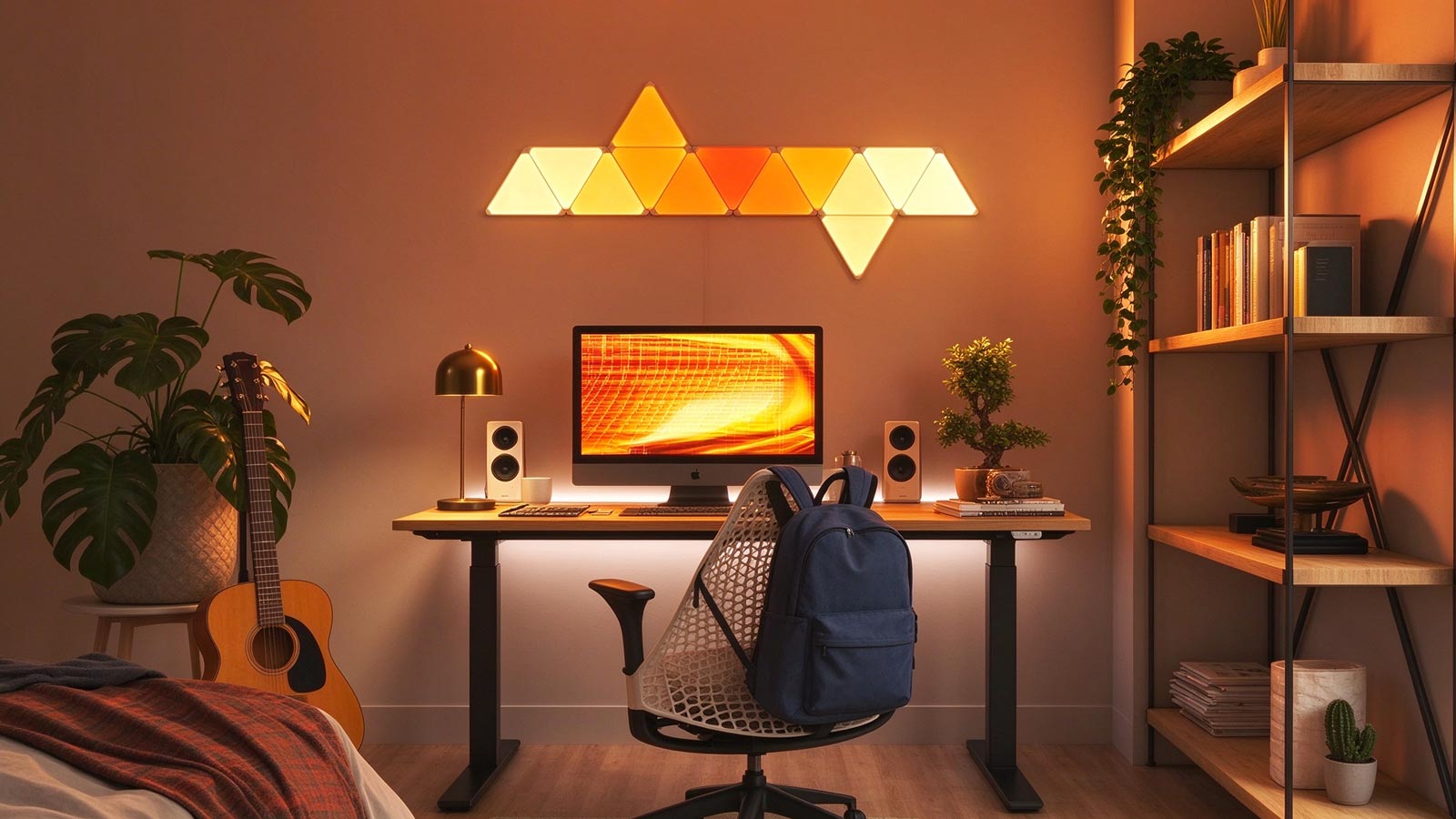
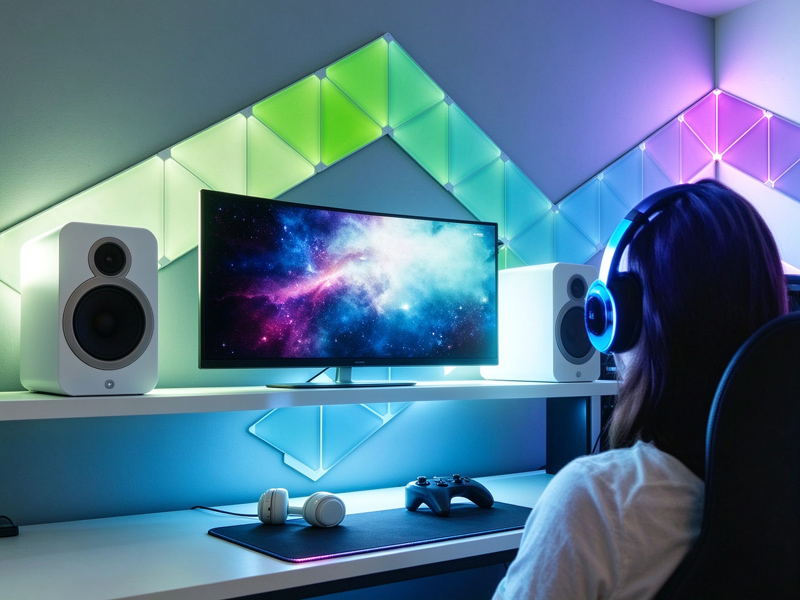
The Aurora, revealed at CES in 2016 and named for the northern lights, was the first modular smart lighting kit: nine triangular panels in a starter kit, each emitting the full color spectrum, snapping together into shapes that were mirrored in the companion app, where users designed layouts, scheduled scenes, and later added touch controls, music-reactive rhythm modes, and ambient animations the founders described as music for the eyes. Pricing was deliberately accessible for a design object — $199.99 for the nine-panel kit and $59.99 for three-panel expansions — which turned bedroom walls into a self-reinforcing hobby: customers posted configurations online, friends bought kits to copy them, and Aurora quietly colonized gaming setups and stream backdrops as the visual signature of a generation of content creators. The panels also established the ecosystem logic that defines the store today — WiFi-first, no hub required, voice assistant compatible, and designed so each generation of hardware still talks to the last.
Triangles Gave Way to Hexagons, Lines, and Matter
Aurora was retired into a full product family the company now calls Shapes: Canvas brought square panels, Shapes added hexagons and mini triangles, Elements took the same intelligence and wrapped it in a wood-look finish for grown-up interiors, and Lines — slim light bars with connectors — leaned into the gaming and music-sync market that had adopted the brand. Underneath the hardware, the platform strategy matured: the Smarter Series app became a full scene library, and the company pushed early into open standards — Thread radios in its Essentials bulbs and lightstrips, and Matter support across the range, so Nanoleaf gear works natively with Apple Home, Google Home, Amazon Alexa, and Samsung SmartThings without a proprietary hub. More recently the company has described itself as an AI-driven consumer electronics brand, extending its design language into beauty tech — a sign the Toronto lab thinks of itself as a product studio rather than a lighting vendor.
The Store Sells Scenes, Sync, and Expansion Economics
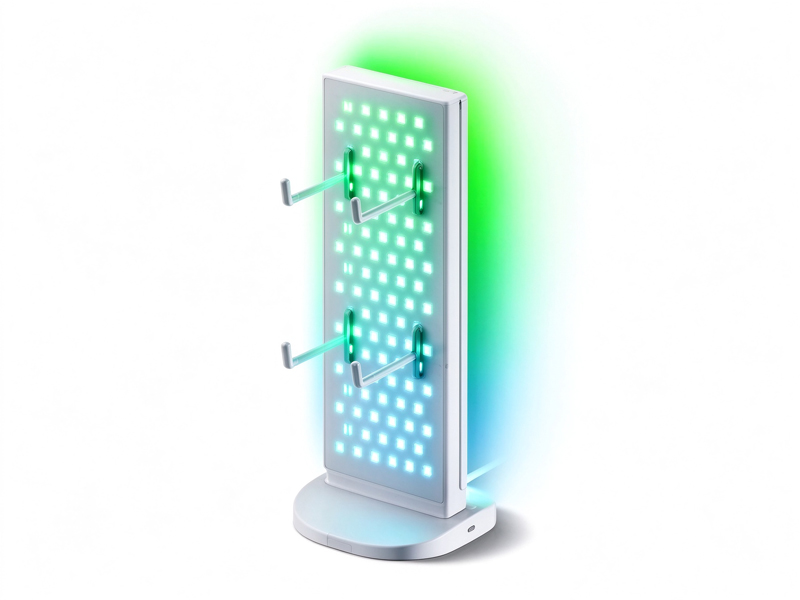
What nanoleaf.me offers today is a kit-and-expansion business. Starter kits — Shapes, Lines, Elements, or Essentials — anchor the purchase, and the margin lives in expansions: extra panels, flex linkers, mounting options, and the app's scene ecosystem that makes each additional panel feel earned rather than indulgent. The pricing ladder runs from sub-hundred-dollar Essentials bulbs to several-hundred-dollar Shapes bundles, with the product pages doing the merchandising work — layout builders that preview designs on a wall, compatibility tables that confirm Matter and voice-assistant support, and a steady drumbeat of limited editions that turn panels into collectibles. For a store whose products are inherently visual, the site is appropriately image-led, though shoppers should note that the real-world wow factor — how panels bloom across a wall at dusk — is something photography approximates better than any spec sheet can.
Our Last Word on Canada's Light Lab
Nanoleaf's store remains the most credible one-brand answer to the question of what smart lighting should look like when it stops pretending to be a bulb. The honest caveats are familiar ones in this category. The panels are a premium aesthetic purchase that many households will admire once and then leave on a static scene, which makes the fully animated experience more aspirational than lived; the category it created now faces credible rivals from Govee and Twinkly at aggressive price points, so the brand's moat is its app maturity, scene library, and Matter-first openness rather than exclusivity; and with AI now in the company vocabulary, the next chapters could take the store far from the wall panels that made it famous. For shoppers who want lighting as furniture — configurable, music-reactive, and genuinely beautiful — this remains the benchmark the rest of the category is chasing.