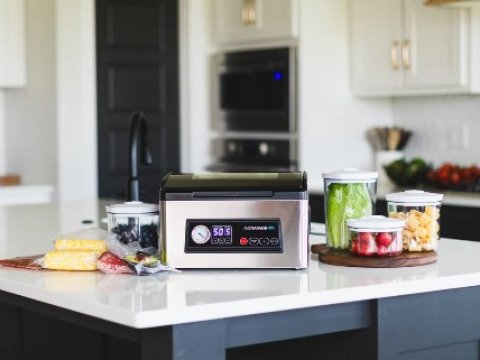
The sous vide store that thought past the water bath

Official homepage: https://vestaprecision.com
Vesta Precision is what happens when a company decides that sous vide is not a gadget category but a complete way of cooking — and then builds a store around every step of it. Behind the quiet brand sits Precision Appliance Technology, a company whose name states its mission outright, and a catalog that runs from a $149 entry circulator to chamber sealers, compostable bags, and a chef-designed commercial cart. This review examines Vesta Precision from every angle: the company behind it, the wand lineup, the sealing ecosystem, the unusual bag story, its chef collaborations and prototypes, and whether it deserves a place beside Anova and the other names shoppers already know.
A Parent Company Named for Its Own Mission
Vesta Precision is the consumer face of Precision Appliance Technology Inc., and the corporate name tells you more about the brand than any slogan could: this is a company organized around precise temperature control as a discipline, not a trend. Chief executive Bob Lamson has spoken publicly about the company's product-development philosophy, and the store's structure reflects that engineering-first temperament. There is no celebrity founder story here, no crowdfunding saga — just a specialist manufacturer that watched the sous vide market consolidate around a few big names and concluded there was still room for a company that takes the whole workflow seriously, from the water bath to the bag to the seal. That makes Vesta a different kind of store: quieter, more technical, and aimed at cooks who already know why a tenth of a degree matters.
Wands From $149 to a Foldable Four-Hundred-Dollar Flagship
The circulator ladder is tidy and clearly tiered by power. The entry Imersa wand, around $149, brings 900 watts of heating with app connectivity for weeknight cooks getting their first immersion circulator. The Imersa Pro line steps up through a 1200-watt model to the SV91 Pro thermal circulator at 1500 watts, rated for baths up to 50 liters — restaurant-scale volume in a home-friendly form. At the top sits the Imersa Elite SV320, a roughly $399 flagship with the same 1500-watt muscle and a foldable flip-up display that keeps the control panel above the waterline and out of the steam. Every model pairs WiFi app control with touch panels, so the phone is a convenience rather than a requirement. Across independent reviewers, the line is typically described as spanning about $149 to just over $600 depending on configuration — squarely in Anova territory, with more power at the top end.
Seal It Tight: Handheld to Chamber to Vertical
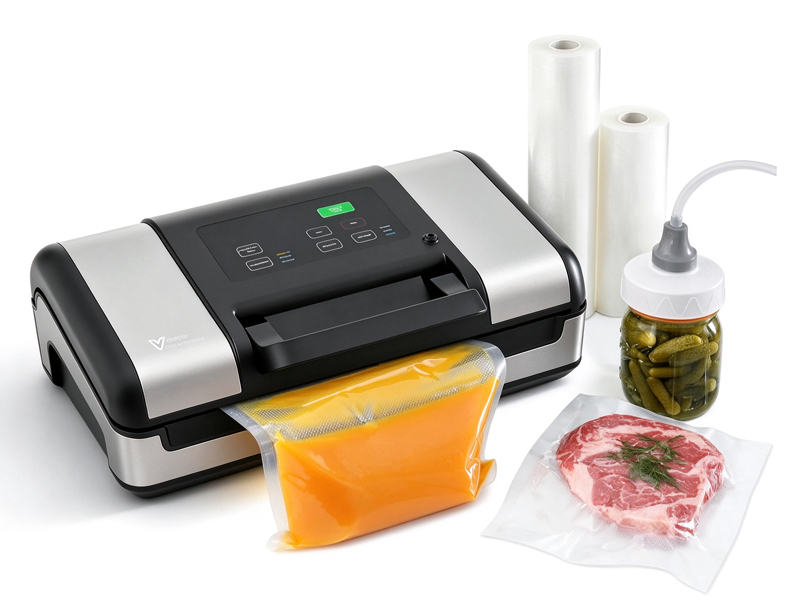
Where Vesta starts separating itself is the vacuum side, because sous vide is only as good as the seal. The $30 Vac 'n Seal handheld unit handles quick jobs and small bags, and drew outside validation when Food & Wine put it through testing. The real story begins higher up: chamber vacuum sealers starting around $319 pull liquid marinades, soups, and sauces into a bag without the suction-phase mess that defeats external sealers — the reason chamber machines dominate professional kitchens. Above even those sits the Vertical Vac Elite, a vertically oriented chamber sealer built around the awkward truth that most of what home cooks want to seal is wet. For shoppers who have lost a marinade to a failed external seal, this trio — handheld, chamber, vertical — is the most complete sealing shelf in the consumer sous vide market, and it turns the store into a one-stop workflow shop rather than a single-product stand.
Bags That Compost After Dinner Is Done
The quietest innovation in the catalog is also the most principled. Vesta's VestaEco vacuum bags are compostable, made from yard-waste-based materials rather than petroleum plastic, and were among the first vacuum bags certified for commercial composting. For a cooking method whose one environmental black mark is the single-use plastic bag, that is a meaningful answer — every cook ends with the bag in the compost instead of the landfill. The store backs the bags with rolls and pre-cut sizes across its machines, so the eco option is not a niche SKU but a first-class citizen. It is the sort of unglamorous product decision that tells a shopper the company has thought about the full life cycle of its own cooking method, not just the sale.
When a James Beard Chef Joins Your Roadshow
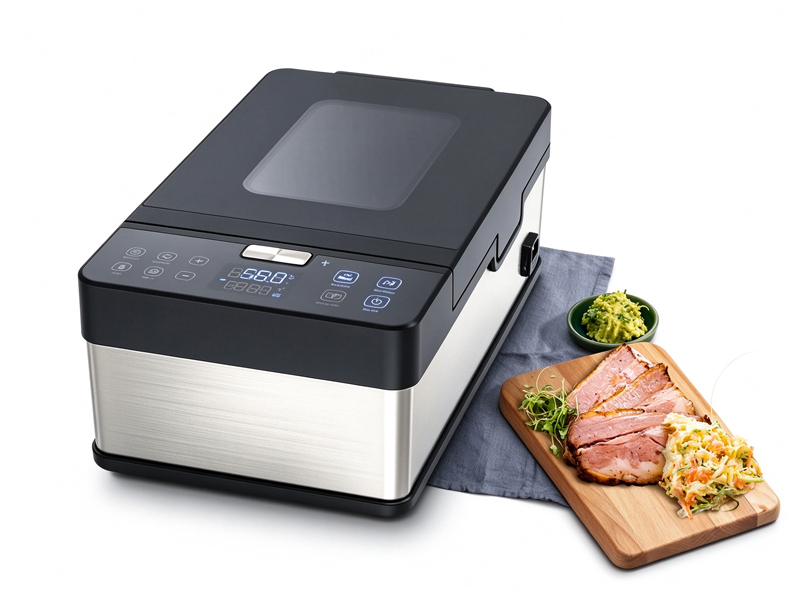
Vesta has always been willing to leave the spec sheet. In 2019 the company unveiled the sousVcart, a commercial sous vide station developed with James Beard Award-winning Seattle chef Jason Wilson, at the National Restaurant Association show — a direct bid for professional credibility rather than pure retail shelf space. The same era brought a portable blast chiller for rapid post-cook cooling, and a VacuPot prototype that aimed to cook sous vide without any plastic bag at all, circulating water around the food in a purpose-built pot. Not every experiment reached mass production, and prototypes should be read as intent rather than inventory. But the pattern is clear: this is a store whose ambitions include changing how the technique itself is practiced, not merely how it is sold.
Where Vesta Stands Against Anova and the Rest
The honest comparison runs against Anova Culinary, the Breville-owned Joule line, and the value challengers covered elsewhere on this site. Vesta will not win on brand recognition — it is the smallest name in that lineup by a wide margin, with a smaller owner community and fewer tutorial videos clogging the internet. What it offers instead is completeness and power: more watts per dollar at the top end, a sealing ecosystem that rivals simply do not sell, compostable bags, and a genuine professional track record through the Wilson collaboration. The trade-offs are real too: a narrower catalog focused almost entirely on one technique, less polished software ecosystems than the market leaders, and a brand whose support network is thinner. For the committed sous vide cook who wants the whole workflow from one store, Vesta Precision is the most complete specialist in the category. For the curious beginner, a $149 wand anywhere is still the right first step.