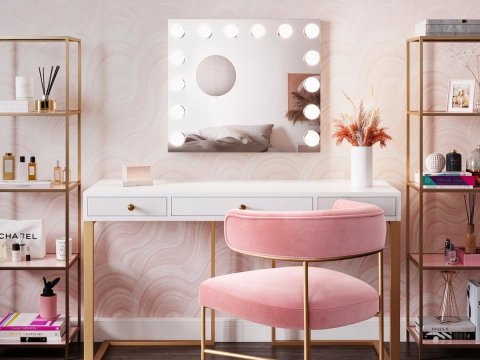
The solar string lights that quietly conquered a million american backyards
Official homepage: https://brightech.com
Brightech has spent fourteen years doing one thing loudly enough for a million customers and quietly enough that most of them could not name the company: making affordable LED lighting — string lights for patios, magnifying lamps for craft rooms, floor lamps for rentals — through the same factories that supply traditional retailers, minus the markup. Founded in Los Angeles in 2012, the brand claims the industry's first solar string lights and its first USB-charging lamps, backs everything with a five-year warranty, and built itself primarily on Amazon. This review examines the storefront dimension by dimension: the markup thesis, the testing ledger, the warranty claim, the niche shelves, and what it means to buy from an Amazon-native brand's own flagship.
Los Angeles, 2012, and a markup rebellion
The company's own story page compresses its founding into a thesis rather than a narrative: great design should not be available to a select few, and quality should not require compromise. Founded in Los Angeles in 2012, Brightech began with LED string lights — the blog traces the lineage precisely: LED string lights from day one, solar versions added in 2018, color-changing RGB strings only in 2026. The About page, unusually for this category, names no founders, dates no garage, and tells no immigrant or athletic saga; the biography is told entirely through numbers — one million customers served, more than one hundred thousand five-star product reviews, a decade and counting in business.
For a store review, that omission is itself information in both directions: this is a product-led merchant with no mythology to protect, and equally a brand whose accountability rests on reviews rather than reputation. The category's heritage brands tell stories; Brightech tells specs.
The factories you already know, minus the markup
The commercial thesis is printed plainly on the story page: Brightech uses the same factories as the customer's favorite traditional retailers, but the direct-to-consumer model bypasses what it quantifies as a three-times traditional retail markup, passing the savings down. It is the Everlane-style argument transplanted to lighting — and, like every such argument, its truth is verifiable only at the product level, where independent testing either finds the construction or does not.
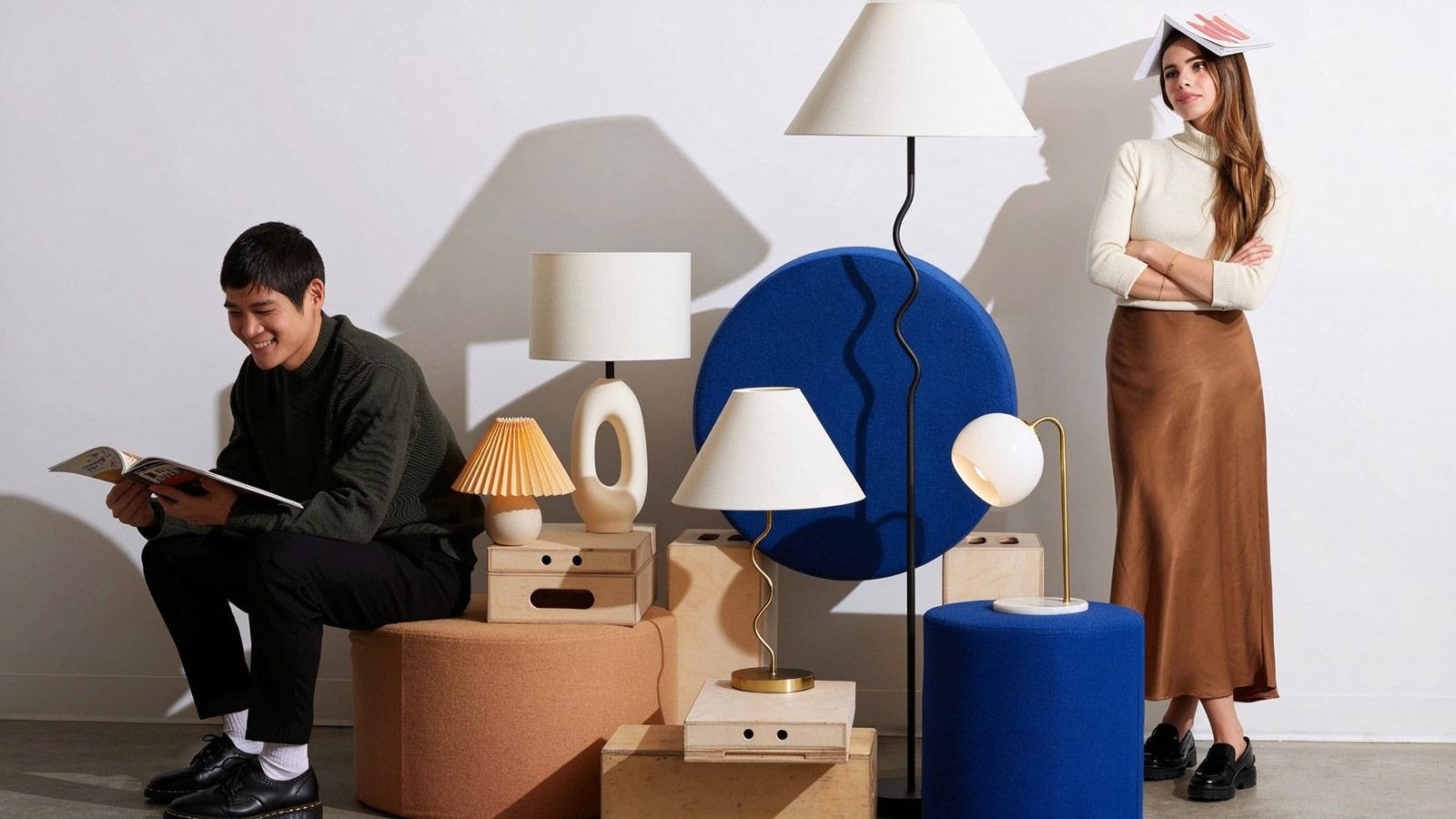
The categories the thesis covers are deliberately unglamorous: string lights indoor and out, floor and table lamps, magnifying task lamps, grow lights, torchieres, and the USB- and wireless-charging lamps the brand claims to have pioneered. The aesthetic register is accessible-modern — brass accents, Edison bulbs, tripod silhouettes — priced for apartments and first homes rather than design galleries.
Bob Vila's top pick and the testing ledger
The independent testing record is stronger than the brand's mall-adjacent positioning suggests. Bob Vila's product-testing team named the Ambience Pro solar string lights its top overall pick after testing the category head-to-head, crediting the heavy-duty hardware, the mature Edison-bulb aesthetic, and the installation flexibility — individual hanging loops per socket, an adjustable-angle solar panel with stake, clamp, and screw-mount options. The specification sheet behind the praise is honest in both directions: six hours of direct sun for a full charge, and up to six hours of runtime — shorter than some rivals, sufficient for an evening, and stated without inflation.
The magnifying-lamp line earns the same pattern of reviews from the craft community: crocheters, beaders, and pattern-writers praise the LightView's 2-in-1 floor-to-desk conversion, the 225-percent magnification lens marketed as the widest viewer in its class, and the nine-watt LED rated to a hundred thousand hours. Across both product families, the consistent testing verdict is that the build quality exceeds the price point and the documentation understates nothing.
First to solar, first to USB, or so they claim
The innovation claims deserve the conditional voice the store's own marketing avoids. Brightech states it was the first to make solar string lights — solar string lighting existed in various forms before 2018, though the brand may fairly claim primacy in commercial-grade solar Edison strings at mass pricing — and the first to add USB and wireless charging to lamps, a claim that holds up better in the record. The company's blog treats the 2026 arrival of RGB color-changing strings as a fourteen-year-belated line extension, which reads as candor about a conservative product cadence rather than a confession.
The pattern across the catalog is disciplined incrementalism: same forms, better components, occasional genuine firsts. Nothing about the storefront chases trends, and in a category where lighting brands frequently pivot entire identities per season, that conservatism is a feature reviewers implicitly reward with repeat purchases.
The five-year warranty, measured against the industry
The warranty claim is the store's loudest number after the review count: five years, styled as industry-leading. Measured against the lighting category, where one-to-two-year warranties remain the mass-market norm and premium designer lighting often carries similar short terms, five years is genuinely competitive — though buyers should note the store's own metric page presents it alongside marketing statistics rather than legal terms, so the exclusions page deserves a read before checkout.
The claim functions less as legal protection than as confidence signaling: a brand whose LEDs are rated to twenty-year lifespans and whose products sell at prices where replacement is sometimes cheaper than repair is betting that most buyers never file — and earning the ones who do.
The craft-room corner: magnifiers and grow lights
Two shelves reveal the customer base more precisely than any demographics page. The magnifying-lamp line — the LightView family with its pivot-anywhere arms and rim-mounted dimmers — serves the needlework, jewelry, and model-building communities, whose bloggers produce an outsized share of the brand's long-form reviews. The grow-light shelf serves the houseplant boom with clamp-on and floor-standing full-spectrum fixtures. Neither shelf is fashionable; both are the kind of unphotogenic utility that Amazon's review economy rewards with depth and honesty.
For the storefront, these niches are strategic: they generate the hundred-thousand-review corpus the homepage cites, and they insulate the brand from the trend cycles that periodically gut decorative-lighting sellers.
Amazon first, flagship second: the channel truth
The channel reality shapes every recommendation. Brightech built its volume on Amazon — where the vast majority of its hundred-thousand-plus reviews live — and the Shopify flagship operates as one front among several, with pricing that occasionally drifts from the marketplace's and no exclusive product line to anchor loyalty to the direct channel. Buyers who comparison-shop will frequently find the same lamp cheaper on the marketplace; buyers who value the brand's own documentation, warranty registration, and bundle pricing will find the flagship worth the delta.
The honest framing for the reviewer's ledger: this is not a DTC brand that happens to list on Amazon, but an Amazon-native brand operating a direct storefront — and the shopping protocol follows accordingly: research on the flagship, verify the final number across channels, and buy from the seller whose post-purchase machinery you trust.
The verdict for the layer-it-bright household
Brightech's storefront is the lighting category's honest middle: no founder theater, no designer collaborations, no heritage claims — just spec sheets that survive third-party testing, a five-year warranty that beats the industry's norm, a review corpus deep enough to drown the noise, and prices that make outfitting a patio or a craft room a single-cart decision. The cons are the cons of the model: the solar runtime is honest but bounded, the flagship is not always the cheapest door, and the brand that will not tell its story asks buyers to trust its numbers instead.
Buy here if you want proven, tested, affordable lighting without a design tax, if a five-year warranty and a hundred-thousand-review safety net matter more than a logo, and if you will compare the flagship's price against the marketplace before checkout. Buy designer lighting if the fixture itself is the room's statement. For the household layering light the way it layers everything else — piece by piece, season by season — this quiet Los Angeles merchant is the category's most dependable default.