The serial inventor with 250 patents who refused lukewarm coffee
Official homepage: https://ember.com/\
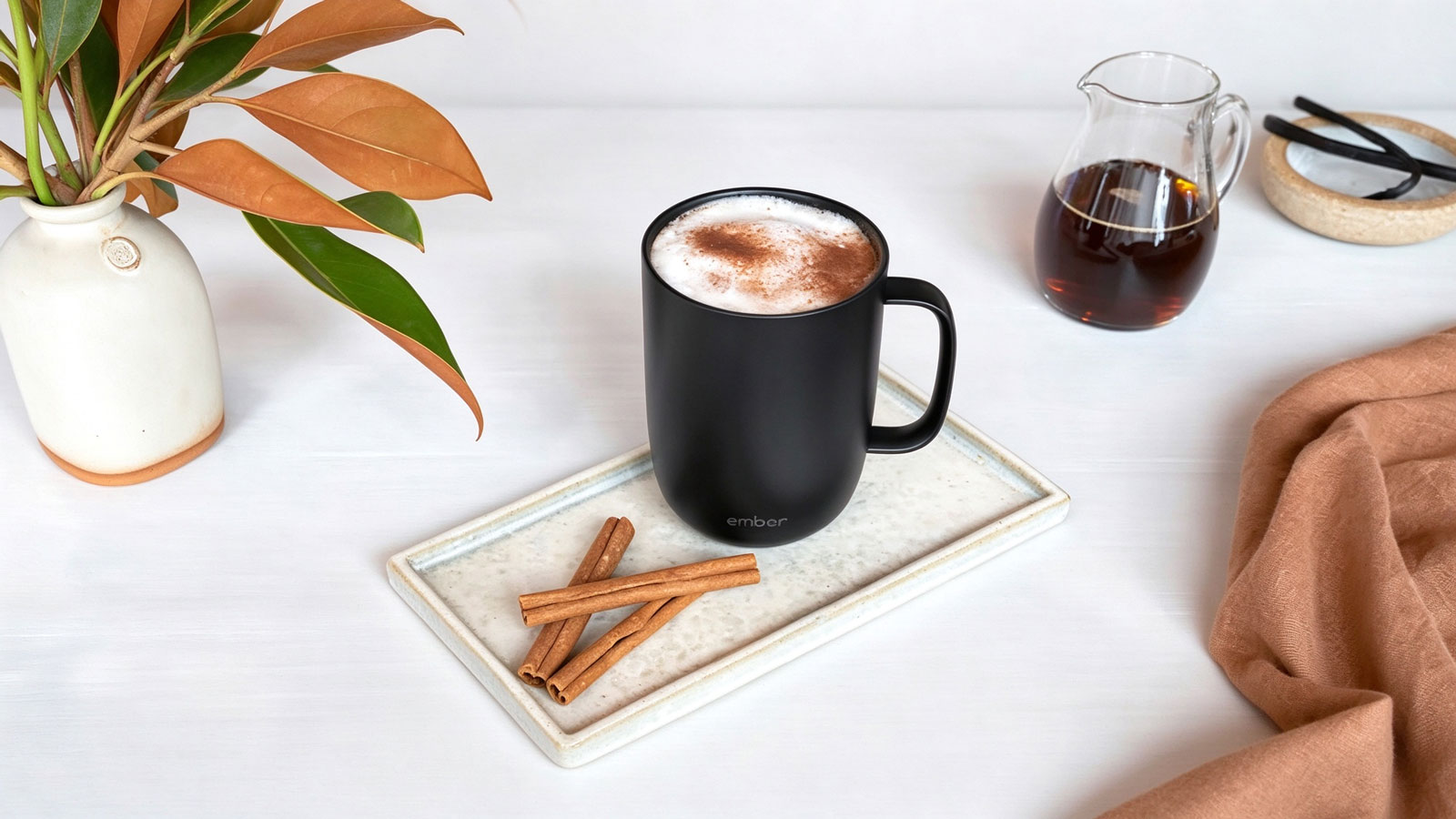
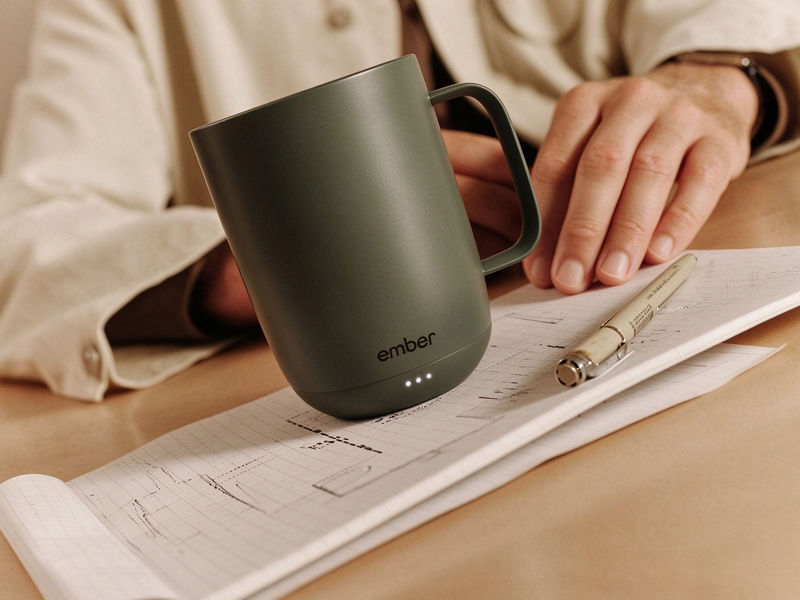
Ember sells a mug that refuses to let your coffee go cold — a battery-powered, app-controlled cup that holds any drink between 120°F and 145°F, sip after sip. Behind it sits Clay Alexander, a serial inventor with more than 250 patents who spent twenty years designing things for Disney, Universal Studios, and General Electric before turning his obsession to temperature. This review walks the store end to end: the founder's winding road, the celebrity-funded launch, the retail empire, the battery math every owner should understand, and the surprising healthcare turn.
Twenty Years of Inventions Before the Mug
Clay Alexander did not arrive at the mug by accident. He began his career in 1999 with Radiance Lightworks, a lighting design firm serving clients like Disney and Universal Studios, then founded Journée Lighting in 2005, where he developed the GE Infusion LED light bulb that General Electric commercialized. Through those years he kept returning to a single irritation — hot drinks going lukewarm — and to the physics he believed could fix it. Ember Technologies was founded in Westlake Village, California in 2012 around one conviction: temperature control is a transformative, underexploited technology. The mug that eventually emerged was designed in partnership with Ammunition, the San Francisco studio co-founded by Robert Brunner, the industrial designer behind some of Apple's most iconic hardware — which explains why the first Ember looked less like a gadget and more like a ceramic cup.
Demi Lovato and Star Power Funded the Prototype
The early funding story reads more like Hollywood than hardware. Before institutional money arrived, Ember pulled together $8.5 million across its first five years from a roster of CEOs, athletes, producers, directors, and musicians — multi-platinum singer Demi Lovato among them. A 2015 Indiegogo campaign for the travel mug proved people would pay for the idea, and in November 2016 the first Ember Mug launched into Starbucks stores and on Amazon, becoming, by the company's account, the world's most precise temperature-controlled mug. The home-focused Ceramic Mug followed in 2017, backed by a $13 million Series C round that funded the second generation. The celebrity capital bought something money usually cannot: the patience to refine heating physics while half of Silicon Valley chased apps instead.
Apple and Starbucks Put It on Shelves
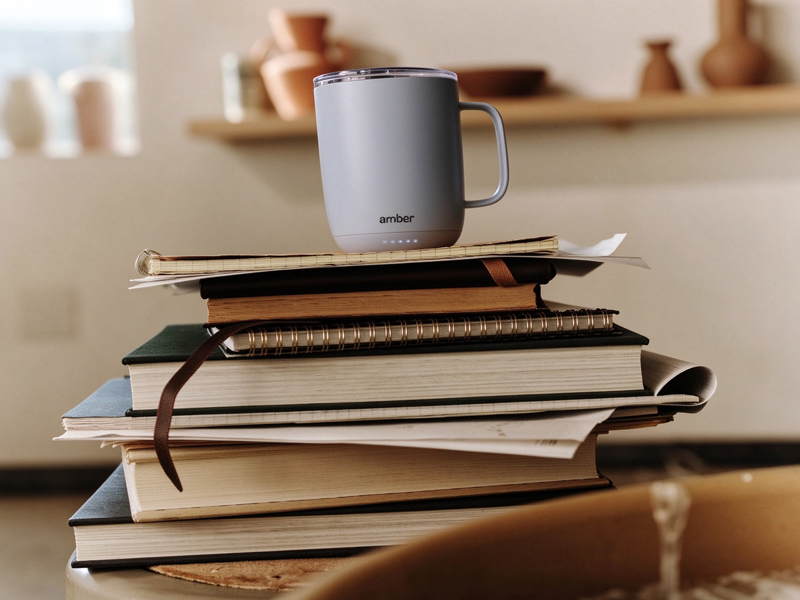
Distribution became the quiet moat. Ember products now sit in more than 7,600 retail locations across 27 countries — Starbucks, Apple Stores, Best Buy, and Amazon among them — a footprint most kitchen startups never approach. The direct store mirrors that polish: the Mug 2 in two sizes, the Travel Mug 2, the larger 16-ounce Tumbler, plus the accessories that make the system work — sliding lids around $15, replacement charging coasters under $30, and bundle discounts that soften list prices that rarely dip below $100. Around the hardware the company has built small rituals of loyalty: a well-regarded app with presets and timers, color options that shift seasonally, and Find My integration on newer models so a misplaced mug can beep from an iPhone.
Degrees Matter More Than Hours Off Battery
The technology earns its premium at the desk and earns its criticism everywhere else. Inside the Mug 2, a heating element and lithium battery hold a set point between 120°F and 145°F with per-degree accuracy — independent testers consistently call the temperature control spot-on — while the mug sleeps when empty and wakes when poured. The limits are equally consistent across reviews: the 14-ounce model manages about 80 minutes off its coaster, the 10-ounce around 90, so it is a desk appliance, not a travel companion. The sealed battery degrades noticeably for many owners within one to two years of daily use, and there is no user-replaceable path. It is hand-wash only, and without the app it defaults to a fixed 135°F. Buyers who accept those terms get the best heated mug on the market; buyers who cannot will find cheaper rivals like the Nextmug or longer-running options like the Cauldryn more honest fits.
From Coffee Mugs to Drug Shipping Boxes
Alexander's temperature obsession did not stop at beverages. In 2020 Ember integrated with Apple Health to log caffeine and hydration; in 2022 it launched a Baby Bottle System that warms milk to body temperature on demand; and in 2024 it partnered with Cardinal Health on the Ember Cube — a self-refrigerated, cloud-connected shipping box for temperature-sensitive medications, aimed at the pharmaceutical cold chain. A line of self-chilling cans and drinkware arrived in 2025. Whether this diversification is vision or distraction is the open question around the company, but it does mean the mug buyer is funding a broader thermal-technology laboratory — and that the founder's 250 patents are still compounding.
The Honest Math Behind a Hundred-Dollar Mug
Walking the store today, the proposition is unusually clear. The 14-ounce Mug 2 lists around $150 and sells nearer $100 through Amazon and the company's own refurbished channel — where a 30-day warranty replaces the full year on new units, a trade-off worth weighing. The customer who wins with Ember is the desk-bound slow sipper: the remote worker, the long-meeting professional, the person who microwaves the same mug twice every morning. The customer who loses is the commuter, the dishwasher loyalist, or anyone who keeps gadgets for five years and resents a sealed battery with a built-in expiration date. Ember does one thing better than anyone alive, charges accordingly, and is honest about the physics. Buy it for the desk, with eyes open about the battery, and it is the rare hundred-dollar kitchen gadget that earns its counter space.