The fixed-gear bike brand that quietly became america's e-bike giant
Official homepage: https://aventon.com
Most riders know Aventon as an e-bike company, but the brand spent its first five years racing fixed-gear criteriums before electricity rewrote its future. Founded in California by a Chinese-born engineer who once resourced goods online to pay for college, Aventon now owns its own factory, sells through more than 1,800 US dealers, and fields a lineup from $1,199 commuters to $5,999 full-suspension machines. This review examines the store from every angle — its unusual origins, vertical manufacturing, warranty terms, safety record, and whether the direct-to-consumer pitch holds up.
From Reselling Goods to Building Fixed-Gear Frames
Jianwei "JW" Zhang grew up in China, where he built his own bicycles, and depended on a bike again after moving to California for college at CSU Long Beach. To support himself, he resold Chinese-made goods through e-commerce, then drifted into assembling customized bicycles for a small online community of fixed-gear fans. That side business became Aventon, founded in 2013 with the Mataró — a lightweight, aerodynamic steel frame aimed at city riding and track racing.
One Barcelona Race Win Put Aventon on the Map
The brand's early credibility came from the race circuit, not advertising. In 2015, Aventon's team won the Red Hook Crit in Barcelona, the most prestigious fixed-gear criterium in the world, putting a tiny American frame builder in front of an international audience. The victory anchored the brand's identity: frames with real geometry, considered design, and a clear purpose. That racing DNA still shows in the aggressive stance of models like the Soltera, even though the company now serves commuters rather than crit racers.
The 2018 Pace 500 Rewrote the Company Entirely
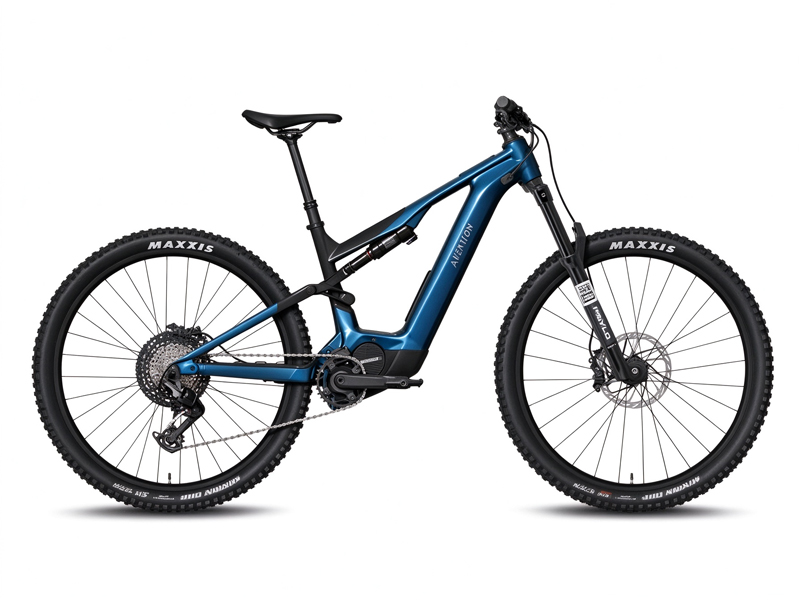
The pivot came in 2018 with the Pace 500, Aventon's first electric bike and, by the company's account, the first e-bike that genuinely looked like a sleek traditional bicycle. Sales took off almost immediately; by 2020 Aventon had stopped making conventional bikes altogether and committed fully to electric. The gamble built one of North America's most widely distributed e-bike brands — an estimated 350 employees worldwide and a dealer network that has grown from roughly 200 shops in 2021 to more than 1,800 retail partners today.
Owning the Factory, From Welding Through Painting
What separates Aventon from most direct-to-consumer rivals is vertical integration. Rather than ordering from anonymous OEM factories, Aventon owns its manufacturing plant about 200 miles southeast of Shanghai, handling virtually every step in-house — welding, painting, polishing — with final assembly and inspection in California. Zhang, who was born in an industrial region and understood injection molding, stamping, and forging, has cited this control as the reason Aventon can hold competitive prices while specifying touches like torque sensors, integrated turn signals, and UL 2849-certified electrical systems across the lineup.

Two Years of Coverage, Lifetime on the Frame
Under warranty terms refreshed for 2026, Aventon covers the frame for two years — upgraded to lifetime if the bike is registered within 90 days — and electrical components, including the motor, controller, display, charger, and battery, for two years. One clause daily riders should note: the battery is covered for two years or 300 charge cycles, whichever comes first. The free Aventon app adds ride tracking, Strava and Apple Health sync, maintenance logs, and speed adjustments, making the ownership experience feel closer to a connected device than a dumb appliance.
What the Recall Record Says About This Brand
Aventon's safety record holds up well against the e-bike industry's. Its single federal recall — CPSC #24-075, announced January 4, 2024 — covered about 2,300 Sinch.2 folding bikes that could accelerate unexpectedly, with six reports and no injuries. The telling detail is how it was handled: Aventon notified the CPSC when the problem was discovered, shipped a free controller software update, and updated all warehouse inventory before the public announcement. Buyers should still weigh the trade-offs — bikes are heavy, mid-drive models push past $2,800, and recent new ownership-era quality is still accumulating real-world proof — but the official store pairs competitive pricing with a dealer network most online-only rivals cannot match.