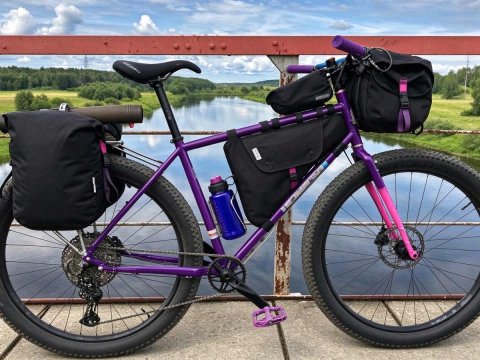
Inside sim works, the parts brand built entirely from other companies' factories

Official homepage: https://sim.works
Most component brands build their own factories. Sim Works took the opposite route: it borrows the best ones. Born inside Circles, an influential bicycle shop in Nagoya, Japan, the brand has spent nearly two decades convincing legendary manufacturers like Nitto and Panaracer to build small, beautiful runs of parts under a shared name. In 2018 the operation crossed the Pacific, setting up a tiny warehouse inside Chris King's Portland factory to run the American web store. The result is a shop that feels less like a retailer and more like a cultural bridge with a checkout page. This review looks at the collaborations, the frames, the pop-ups, and the trade-offs of buying charm by the gram.
A Nagoya Bike Shop That Became a Parts Label
Sim Works did not start as a company so much as a conversation in a mechanic's bay. The brand grew out of Circles, the celebrated Nagoya shop founded by Shinya Tanaka, where mechanics spent their downtime talking about the parts they wished existed. Even the name is a mechanic's joke: "sim" and "shim" are used interchangeably, and just as a shim adjusts and helps between two parts, the founders liked the idea of a brand that adjusts and helps between cyclists and the things they ride. That shop-floor origin explains the whole catalog, which has never tried to cover every category. Every product is something the Circles crew genuinely wanted on their own bikes, specified with unusual stubbornness and made in small numbers.
Born from the Death of a Salsa Stem
The founding story of the brand's manufacturing model is wonderfully petty. When Salsa abruptly discontinued its chromoly stem, which the Circles crew considered the best stem ever for building cool, affordable steel bikes, Tanaka decided the world had to be put right. He asked Nitto, the Tokyo handlebar and stem institution, to make a replacement. They said no. He asked again, this time proposing a collaboration to show at Interbike in the United States, and Nitto finally agreed. That partnership produced the Rhonda and Tomboy stems and opened a template the brand still follows: identify a part you love, find the best factory to build it, and release it under both names. Nearly everything in the store is co-branded this way, from the current Gettin' Hungry stem carrying a Sim Works by Nitto badge to pedals made with MKS.

The By-Nitto, By-Panaracer Approach to Making Things
Because Sim Works outsources production to specialists, the product pages double as a tour of Japanese manufacturing. The Super Yummy tires are built by Panaracer in Sakai: a 2.22-inch all-terrain tread with an aramid bead, Panaracer's ZSG natural compound, tubeless compatibility, and the brand's signature peanut-butter-colored sidewalls, priced at $72. Reviewers consistently praise them as a sweet-spot tire that rolls fast on pavement and survives rough gravel, with one commenter calling them perfect for touring, if a little sketchy on technical terrain. The same pattern holds across the range — stems and handlebars from Nitto, pedals from MKS, small parts from workshops the brand clearly loves talking about. Buying here means buying the story as much as the spec sheet.
Moving into Chris King's Factory to Reach America
In February 2018, after a visa process that took more than a year, Rie Sawada launched SimWorks USA with a 650-square-foot space inside Chris King's Portland factory, handling customer service, inventory, shipping, and pop-up events single-handedly at first. The arrangement was deliberately symbolic: two companies that believe in longevity and in-house manufacturing sharing walls. The stated mission is a two-way bridge — introducing exceptional Japanese craftsmanship to American riders while bringing outstanding American craftsmanship back to Japan. That is a genuinely unusual goal for an online bike store, and it shows in where the shop spends its energy: less on advertising, more on events, stories, and relationships with framebuilders, shops, and brands on both sides of the Pacific.
Custom Doppo Frames and the Circles Mothership
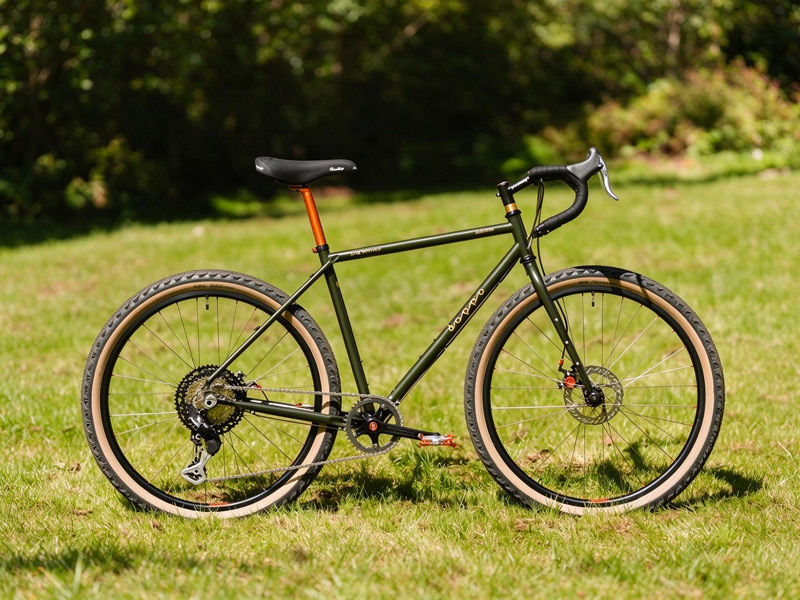
Under the Sim Works umbrella sits Doppo, the original frame line built at Circles by the shop's chief mechanic and wheel builder, Makoto. Doppo frames — including the ATB model that regularly appears in the brand's lookbooks — are handbuilt, made-to-order machines, the kind a customer specs over email and waits for patiently. The web store itself focuses on parts, accessories, apparel, and curated goods, so the custom frame program lives partly in the real world: through the Nagoya mothership, through pop-ups, and through the relationships the team builds at events. The practical takeaway is that this is a parts store with a framebuilding soul, not a framebuilder with a parts side hustle.
Pop-Ups, Tacos, and Stationery Next to Handlebars
The storefront experience matches the brand's omnivorous personality. Alongside stems and tires you will find limited-edition color runs, collaboration apparel, and pop-up collections of Japanese stationery and lifestyle goods, because the team treats a web store as just another place to gather. The news section is full of human stories rather than press releases, like the tale of a vegan taco caterer in Los Angeles who became a fixture at their American pop-ups and inspired a TACOS stem collaboration. Limited runs such as the orange-anodized Sunrise edition sell the way concert tickets do. None of this is efficient retail, but efficiency is clearly not the point: the store is a clubhouse that happens to process orders.
Where Charm Collides With Shipping Reality
The trade-offs are real. Nearly everything is imported, prices sit at the premium end of their categories, and small production runs mean popular items sell out and stay out. Tire and handlebar choices lean niche by design, which rewards riders who know exactly what they want and punishes browsers hoping to compare twenty options. The custom and frame-adjacent parts of the business move at the pace of relationships and inboxes rather than automated confirmations, and the lifestyle crossovers that delight fans will strike pragmatists as clutter. If you need a part tomorrow, this is the wrong store; if you want the part, the wait is part of the ritual.
Who Gets the Most From This Little Bridge
Sim Works makes the most sense for a specific rider: someone building a steel or all-terrain bike with intent, who cares where a stem was brazed and who made their tires, and who enjoys owning things with stories attached. The store rewards that rider with products genuinely hard to find elsewhere, co-branded with the actual factories that define Japanese component craft, and wrapped in a community that treats buying a stem as joining a conversation. For everyone else, the prices and the waiting will be hard to justify. But as an example of what a small brand with strong taste can build without owning a single factory, this shop is close to sui generis.