The 90-year-old british bag maker that outlived every trend it ignored

Official homepage: https://www.carradice.co.uk
Long before bikepacking had a name, cyclists in the north of England were strapping hand-sewn cotton bags to their saddles and disappearing into the hills. The company behind those bags is Carradice, founded in 1932 by Wilf Carradice in the Lancashire mill town of Nelson, and still manufacturing on the same street nearly a century later. While the industry chased welded seams and ultralight laminates, Carradice kept sewing waxed cotton duck, one bag at a time. This review looks at the history, the materials, the modern web store, and the lifetime warranty behind a catalog that treats every product like an heirloom.
Wilf Carradice Sews One Bag and Starts an Institution
The story begins, as the best ones do, with frustration. Wilf Carradice was an avid Lancashire cyclist who could not find luggage sturdy enough for his journeys, so in the early 1930s he sewed himself a saddlebag from the toughest fabric he could source. Other riders noticed, orders followed, and by 1932 a workshop was born. Nearly a century later the company is still in Nelson, still family-guided — current custodian David Chadwick personally test-rides every prototype until the design is right — and still anchored by the same insight: bags for people who depend on their equipment daily. The brand's 2014 Queen's Award for Enterprise and collaborations with names like Fred Perry and Dr Martens only confirmed what Rough-Stuff Fellowship members had known since the 1930s.
Cotton Duck, the Two-Hundred-Year-Old Fabric That Beats Coatings
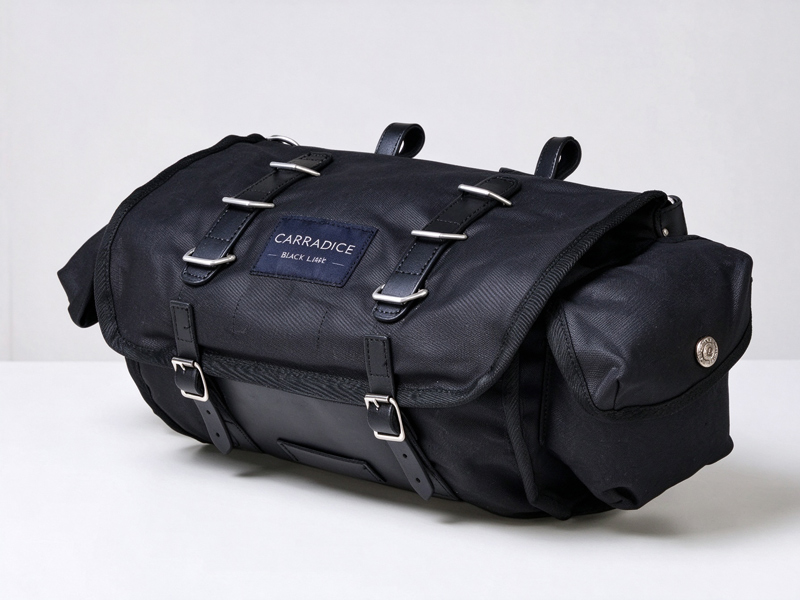
The heart of every classic Carradice bag is cotton duck, a densely woven canvas supplied by Halley Stevensons of Dundee, who have been making it for over 150 years. The physics are elegant: when rain lands on dry cotton, the outer filaments swell and close the weave around the stitching, while a paraffin wax finish beads the rest away. There is no PU coating to peel, nothing to delaminate after a season — the fabric breathes, can be re-proofed, and can be patched rather than replaced. Straps are chromed leather, buckles are metal, and each classic bag is cut from 18-ounce duck. Riders in a synthetic age sometimes mistake this for nostalgia; decades of muddy audaxes suggest it is simply engineering that refused to become obsolete.
A Factory That Still Signs Every Single Bag
Quality control here is not a department, it is a signature. Each bag leaving the Nelson works is checked and then personally signed by the maker who built it — reviewers routinely name their bag's creator with affection. The production line itself reads like a museum that never closed: skilled machinists sewing fabric older than most bike companies, leather components paired with brass and steel hardware, and a workflow where R&D happens metres from the sewing stations. That proximity matters: when real cyclists report a flaw, the design is tweaked and back in production quickly, which is how a 1930s saddlebag pattern quietly accumulates a century of improvements without ever changing its silhouette.
From Royal Mail Rounds to Rough-Stuff Fellowship Epics
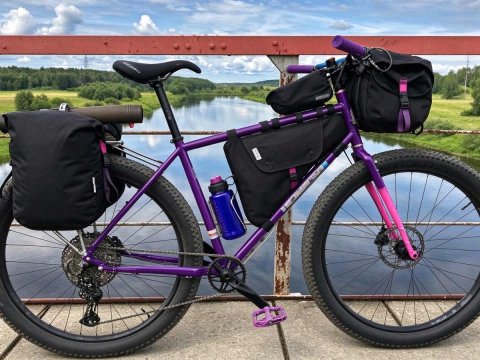
The catalog's resume extends far beyond club riders. Carradice built the panniers carried on the Royal Mail's Pashley Mailstar delivery bicycles and still manufactures Moulton's Day Bag, Touring Bag, and transport sleeves. Generations of Rough-Stuff Fellowship members loaded Carradice bags for off-road journeys across the British Isles, and the same patterns sailed through the touring boom, the mountain bike era, and the modern bikepacking revival with minimal changes. That continuity is the brand's quiet argument: if a bag design has carried post, groceries, camping kit, and continents of luggage since before the Second World War, perhaps it does not need a redesign every product cycle.
Reading a Catalog Wider Than Its Reputation Suggests
The modern web store organizes the range into sensible families: the Originals line (Nelson, Nelson Longflap, Barley, Camper) in waxed cotton; Super C for heavier-duty cotton duck expeditions; Carradry and Carradura collections for fully waterproof welded-laminate needs; a newer Bikepacking collection with frame bags and seat packs; plus clothing, caps, racks, and mounting hardware. The Nelson Longflap, at roughly 15 litres expanding to 18, remains the cult object — designed for overnights, beloved by commuters. What stands out is how conservative the catalog is: no gimmicks, no seasonal churn, just models refined over decades, each photographed plainly with its capacity and materials stated. It is a shop that assumes you know why you are here.
A Lifetime Warranty That Actually Means Lifetime
Every Carradice bag carries a lifetime guarantee against defects in materials and workmanship — not a marketing number, but a promise from a company whose products routinely outlast their first owners. The practical side is equally straightforward: orders ship directly from the UK factory, with EU orders fulfilled from a French warehouse and US orders from a California stock, all by tracked mail or courier. Because the company controls its own manufacturing, a failed buckle or torn strap is a repair conversation with the people who built the bag, not a replacement cycle with an offshore supplier. For luggage that often carries sleeping bags, tents, and the means of self-rescue, that chain of accountability is worth real money.
Where Tradition Turns Into Waiting Lists and Quirks
The same stubbornness that makes the bags immortal creates friction. Handmade production runs are finite, popular models sell out, and colors skew conservative — blacks, greens, and the occasional burgundy. Leather straps and metal buckles are beautiful but slower to open than modern clips, and a loaded Longflap genuinely wants a Bagman support rack, an extra purchase and a few hundred grams. Cotton duck needs occasional re-proofing and dries slower than laminates, and the classic aesthetic will never appeal to the ultralight spreadsheet crowd. None of this is hidden; the store wears its limitations as proudly as its stitching.
The Verdict for Riders Who Pack Once and Ride Far
Carradice's web store is the digital front door to a working museum, and it behaves like one: no flash sales, no influencer campaigns, just a catalog of bags that were right decades ago and remain right now. You buy here because you want luggage sewn by a named person, from fabric with a 150-year pedigree, guaranteed for as long as you ride. The prices are fair for what they are, the fulfillment is sensible, and the product you receive will likely be serviceable by your grandchildren. Few online stores can make that claim with a straight face.