Sensate: the pebble on your chest promising calm in ten minutes
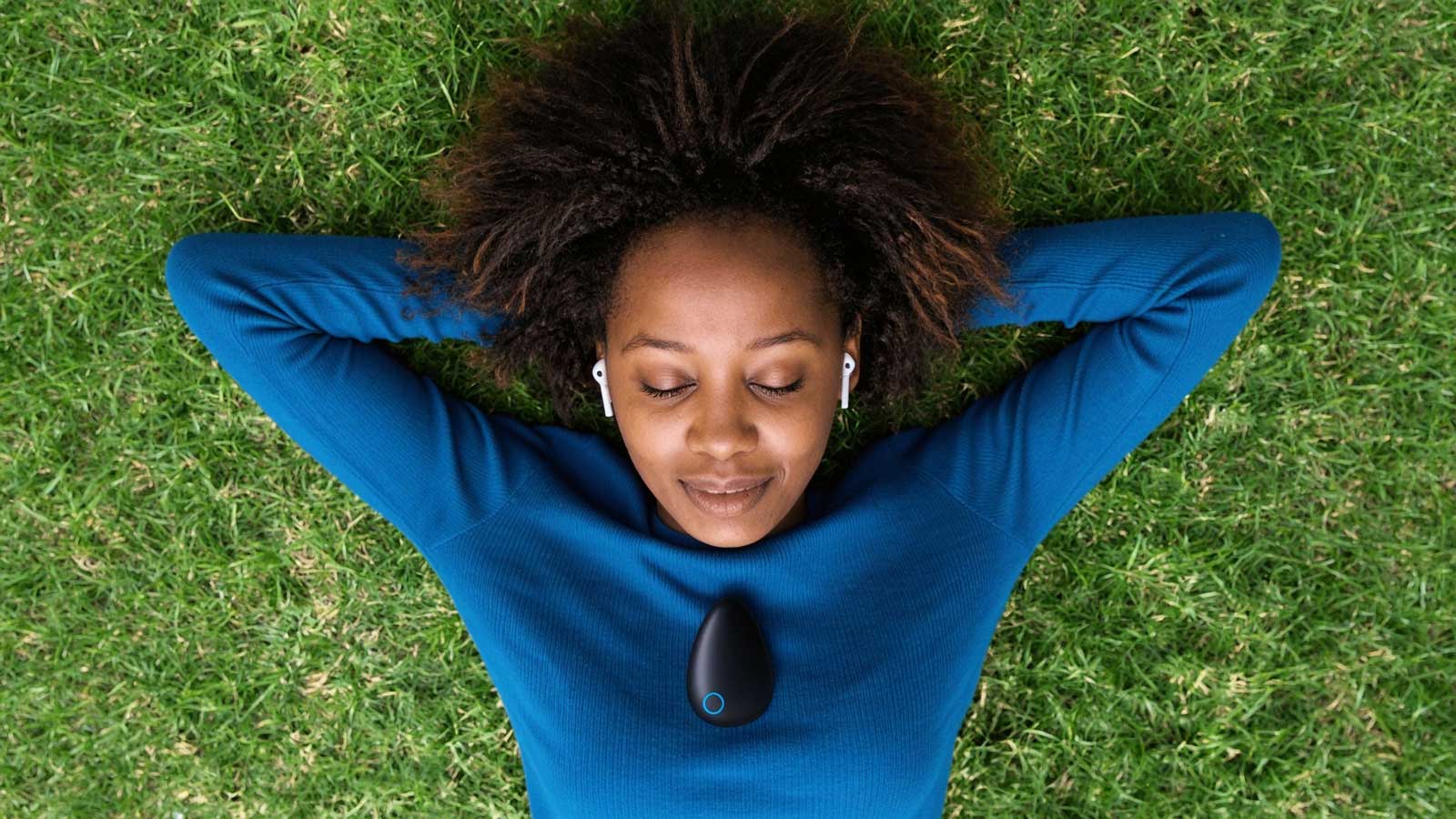
Official homepage: https://getsensate.com
Sensate is the calm store for people who cannot meditate. A palm-sized pebble rests on your sternum, humming infrasonic frequencies through your breastbone while synchronized soundscapes play through your headphones — no technique, no focus, no practice required. Founded by the son of a meditation teacher after three decades in healthcare, it promises the brain state of long-term meditators in ten minutes. This review examines the Somacoustics mechanism, the small-pilot evidence ledger, and the service record behind the ninety-day promise.
A meditation teacher's son and a twenty-year quest
Sensate's founder, Stefan Chmelik, learned meditation from his father at age six or seven and spent roughly thirty years in healthcare before founding Bioself Technology in 2016 — a background he describes as essential context for what the device tries to deliver. In 2020, veteran high-tech executive Anna Gudmundson joined, and the consumer brand was established as its own entity, headquartered in Los Angeles with teams across the UK, Europe, and Argentina. The hardware moved fast: a British manufacturing partner collaborating on the project describes taking the device from development start to market launch in about three months, after the community's crowdfunding pre-orders funded production. The brand's promise crystallized in a single sentence that still anchors the storefront: calm in ten minutes, no technique required.
Infrasound through the breastbone, headphones required
The ritual is deliberately passive. You lie down and rest the pebble on your sternum — the body's natural resonance chamber — or hang it from a lanyard, then put on headphones and press play in the app. Sessions run ten to thirty minutes. The device emits low-frequency infrasound, in the register of a purring cat, conducted through bone into the thoracic cavity, while the app plays soundscapes engineered to synchronize with the vibration. The company's framing, trademarked as Somacoustics, insists neither element works as well alone: sound you feel, sound you hear. The positioning earned a spot on Time's Best Inventions of 2022 and coverage in Forbes, the Financial Times, and Men's Journal.
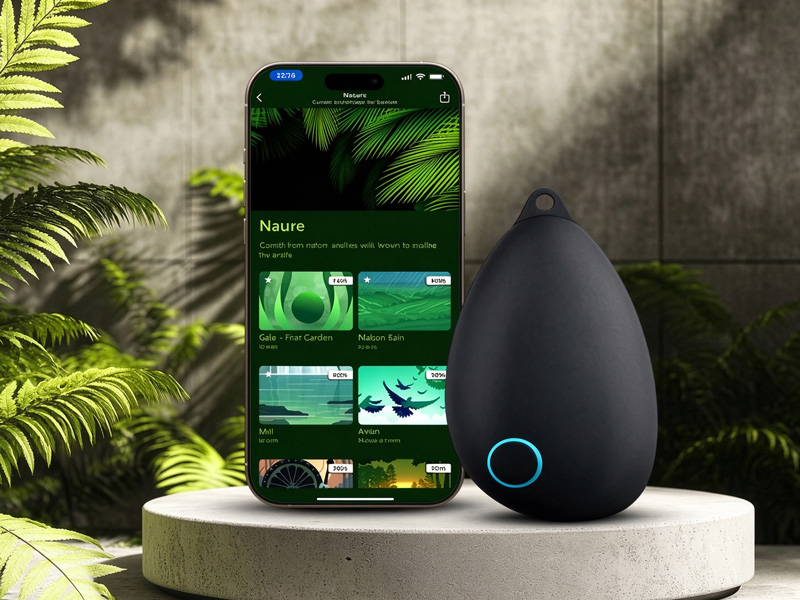
Somacoustics, and the non-electrical distinction
The company's most defensible scientific claim is a negative one: Sensate is non-electrical, delivering no current, no magnetic field, and no biometric tracking. That separates it cleanly from electrical vagus-nerve stimulators like Nurosym and Pulsetto, which deliver actual nerve stimulation and carry corresponding clinical conversations. Sensate instead claims acoustic resonance — sound pressure reaching vagal branches in the chest — a mechanism that is physically real in its delivery even if its neurological effects remain under-validated. The wellness category's light regulation applies: everything the company claims is presented as research-backed marketing rather than medical fact, and the store's HSA and FSA eligibility, processed through Truemed with an average savings quoted around thirty percent, threads the wellness-medical needle without crossing it.
Small pilots, no randomized sham control
The evidence ledger deserves precision. The storefront cites a study showing brain activity measurably similar to long-term meditators within ten minutes, a sleep pilot recording fifty-five extra minutes per night, a fifty percent faster time to fall asleep, and a forty-eight percent stress reduction in twenty-eight days. Independent analysts who audited those citations describe the Maastricht and Lisbon reports as small pilots with no randomized fake-device comparison and no verified peer-reviewed publication, all company-linked. Users have logged sixteen million Sensate minutes, and the testimonials are plentiful — but the honest summary is that this is promising, self-reported, and unreplicated science. The contrast with the tag's other calm devices is instructive: weaker evidence than clinical neuromodulators, stronger mechanism than magnetic-signature claims.
The phone problem, and the app that gates everything
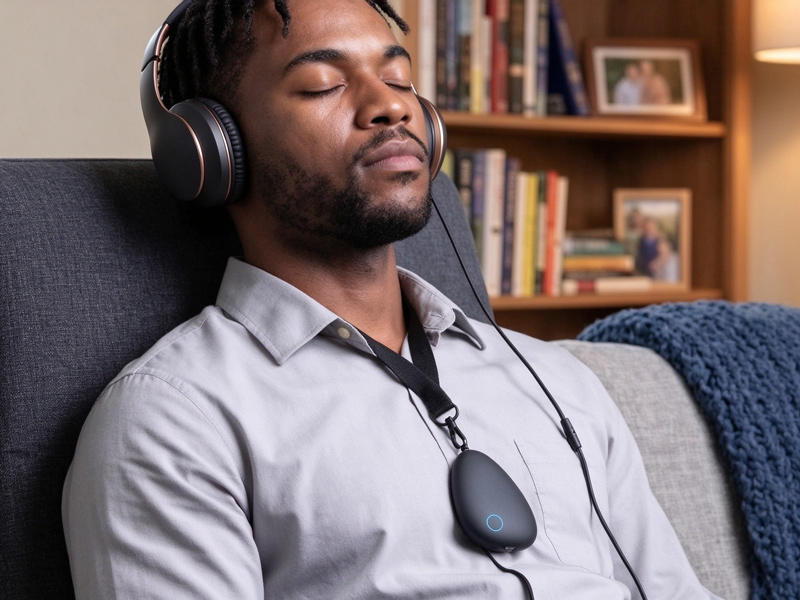
Every serious review converges on the same dependency: the pebble does nothing alone. It requires a paired phone, the app, and headphones to run any session — a fact reviewers flag for nighttime users who do not want to wake a glowing phone at 3 a.m., and for anyone who has suffered the app's reported connection unreliability. The subscription layer is gentler than some rivals: a foundational soundscape library ships free with the device, and the Sensate Plus tier — fifty-plus premium soundscapes at $49.99 per year, auto-renewing — is optional. Even that drew criticism, though, with reviewers judging the premium library too thin to justify renewal and asking for occasional free tracks. The device charges over Micro-USB, which one long-term review called dated, though battery life runs about a week.
Ninety days to decide, two weeks for a reply
Service is where the reviews split. The storefront advertises a ninety-day money-back guarantee, free shipping, and 5,000-plus five-star reviews; Trustpilot sits at 3.9 across more than 1,600 entries, and Amazon's 400 reviews break down as 76 percent four-or-five-star with 18 percent one-or-two — strikingly, with complaints centered on customer service and malfunction rather than ineffectiveness. The sharpest recent example, from February 2026, came from a post-surgery customer whose device connected but stopped vibrating: her Trustpilot review quoted the company's note that a response would take two weeks, to which the team replied with an apology and a business-hours explanation. Slow refunds despite the guarantee window recur across reviews. The pattern is a company whose product most owners love and whose support infrastructure strains under them.
The last hum from the Sensate pebble
Sensate's store sells the most polished no-effort calm on this tag: a pebble, a pair of headphones, and ten minutes that ask nothing of you but presence. Its ledger is equally clear: small self-linked pilots rather than sham-controlled trials, an app the hardware cannot live without, a support queue that the happiest five-star reviewers never meet, and a ninety-day guarantee that functions as the only honest evaluation instrument. For the meditation-curious who have failed at meditation — athletes unwinding after training among them — it is the gentlest on-ramp money buys. Test it inside the window, keep it only if your nervous system votes yes, and let the pebble hum only as long as it earns its place.