Playermaker: the boot sensors FIFA approved for match play, backed by wenger
Official homepage: https://www.playermaker.com
Playermaker is the soccer store hiding a four-year regulatory saga behind a consumer gadget. Founded by a former Israeli navy officer and his partner, it straps motion sensors to football boots — measuring every touch, stride, and impact at a thousand samples a second — and in September 2023 became the first foot-worn device FIFA ever certified for official match play, with Arsène Wenger among its investors. This review traces the Motionize pivot, the FIFA odyssey, and the two-hundred-dollar consumer kit whose subscription quietly renews.
An Israeli navy officer and a motion-tracking pivot
Playermaker began in 2014 under a different name and a broader ambition. Guy Aharon, a former Israeli navy officer, and Yuval Odem founded Motionize to track human movement in general, and pivoted to football only after watching data transform professional sport. The insight was positional: chest straps and wristbands had dominated player tracking for years, but they guessed at what mattered most. As Aharon told Sifted, 'We're not trying to guess from the hand what the foot is doing.' Maccabi Tel Aviv became the first client, and the company's squad systems — priced from around ten thousand dollars — spread to more than 150 elite academies and professional teams. Arsène Wenger, FIFA's head of football development, invested in 2019 and called the technology 'the future of performance measurement.' By 2023 the company had raised $45 million from ADvantage, Ventura Capital Group, and others.
One thousand samples per second on your laces
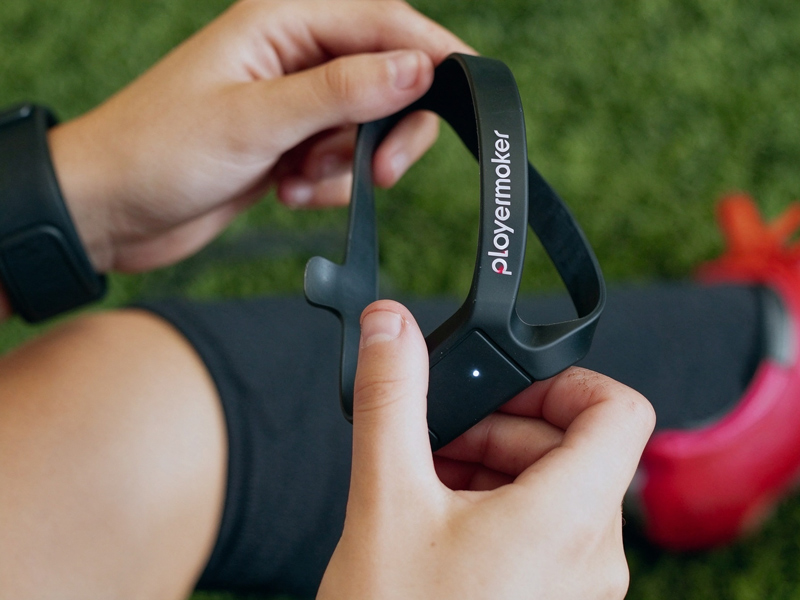
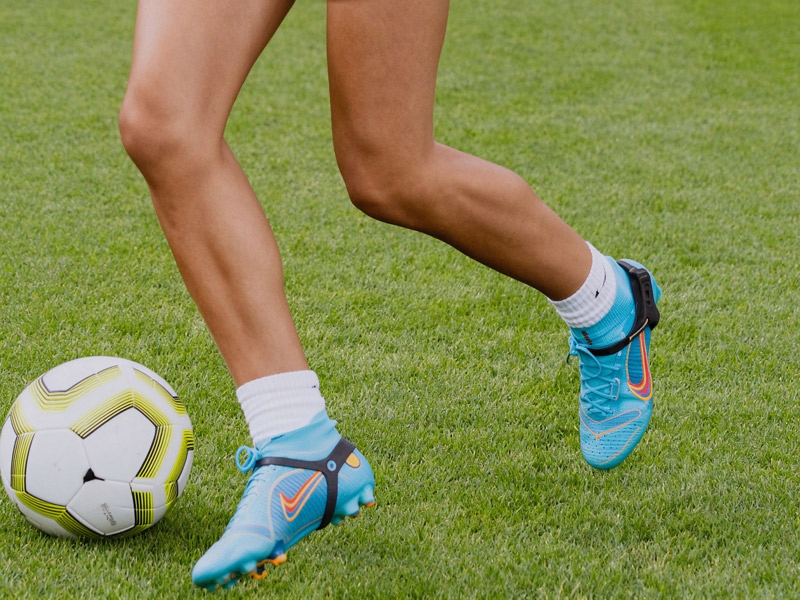
The hardware is deceptively simple: two lightweight six-axis motion sensors in soft silicone straps that lace onto either boot, sampling a thousand times per second. That resolution captures step-level mechanics — ground-impact forces, foot rotation, gait symmetry — and touch-level events, classifying every contact with the ball. The sensors are waterproof, work identically indoors and out, and dock into a charging case that automatically syncs each session to the app. The strap position is not just technical but regulatory: an independent sports-science review noted that wrist wearables are routinely banned by attentive referees and can endanger teammates, while an ankle-mounted sensor sits out of harm's way and measures stride and striking data no chest strap can reach.
Forty-six thousand sessions without an injury
The match-approval story is the company's crown jewel. Playermaker entered FIFA's Innovation Programme in 2021 as the first wearable accepted, then spent years in the testing gauntlet: benchmark trials against existing electronic performance tracking systems in Seville, usability work with the English FA and Leeds Beckett University, and a safety study spanning 46,600 individual training and match sessions across two seasons — not one injury attributable to the devices. In September 2023 FIFA awarded the Electronic Performance Tracking Systems Quality certification, making Playermaker the first foot-worn tracking device legal in official match play, with IFAB's blessing. The testing concluded at 'well above' industry standard. For a category where the wrist and chest were the only sanctioned real estate, the boot itself had become infrastructure.
Fifteen metrics and the two hundred dollar kit
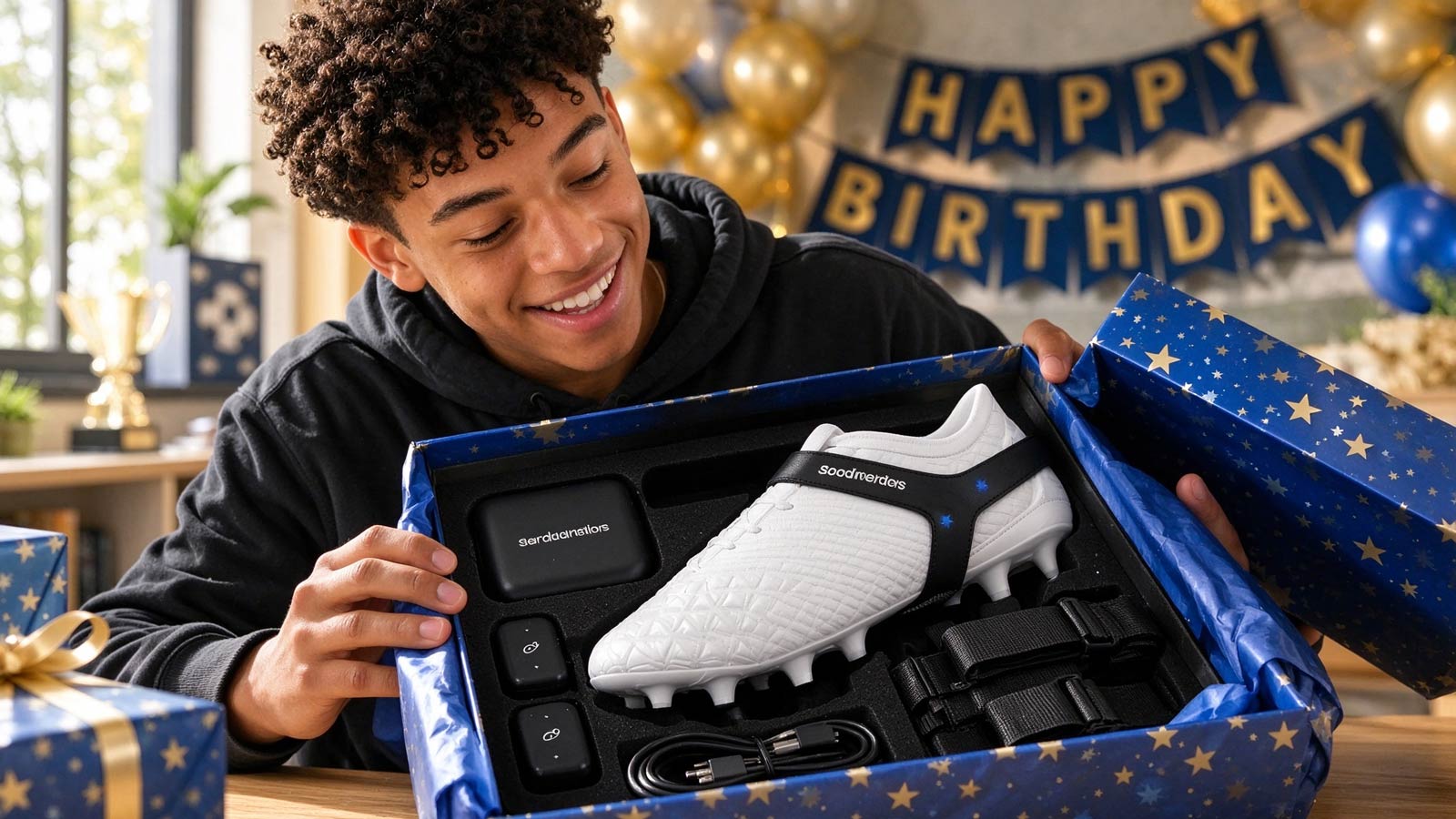
The consumer line descends from the squad platform. The current Playermaker 2.0 kit lists at $199 — down from the original UNO's $249 — and bundles both smart sensors, silicone straps, the auto-syncing case, a travel bag, USB-C cable, and a replacement warranty that stays active with the membership. The app tracks fifteen-plus soccer-specific metrics: touches and possessions, distance and top speed, sprint counts, leg balance, weak-foot usage, and striking data. Ownership carries the now-familiar subscription shape: membership activates with the sensor and renews automatically at $149 per year unless canceled. Around the core, the store sells CITYPLAY bundles, replacement straps, and team programs, with free shipping and a 30-day money-back guarantee framing the risk.
A hundred thousand players and the leaderboard
Adoption breadth is the consumer story. The storefront claims more than 100,000 players using the system, an average rating of 4.5, and benchmarks against academy and professional data so youth players can see where they stand. A global leaderboard turns training into competition, weekly targets adapt to your trend line, and the app can share reports with coaches, parents — and scouts. That last feature matters commercially: the company has built a vast database of youth soccer performance, and recruiters have taken notice. The professional halo persists in the branding — Manchester City, Glasgow Rangers, and the Argentine national team have used the squad platform, and Liverpool's Harvey Elliott served as brand ambassador.
Ninety days, thirty-four percent more involvement
The efficacy claims deserve the same honesty as the engineering. The storefront reports average improvements among users within ninety days — thirty-four percent more game involvement, twenty-seven percent more shooting power, eighteen percent higher top speed, forty-five percent more weak-foot usage — figures that are company-reported rather than independently audited. Independent reviews land in the same measured territory: a detailed player review called the kit pricey but worth it for soccer-specific data no generic tracker offers, with the one-year warranty and money-back guarantee easing the premium; a sports-science review valued even the basic distance and speed metrics at the sub-$170 shipped price, while noting the device is a tool for self-determination, not a requirement for improvement. The honest summary: the metrics genuinely motivate, the subscription is the real long-term cost, and no sensor replaces a good coach.
The last touch of the match, measured
Playermaker's store sells the only wearable in football that regulators trust on the pitch itself: a boot sensor born from an Israeli motion-tracking pivot, validated across nearly forty-seven thousand sessions, blessed by FIFA and funded by Wenger. Its trade-offs are legible — a $149 annual renewal behind the $199 kit, gains that are self-reported, and a sport-specific focus that ends at the touchline. For youth players chasing development data and parents who want receipts for the academy dream, it is the most credible tool on this tag. The ball has been tracked for a century; Playermaker finally tracked the foot that kicks it.