POLYWOOD at thirty-five: how a milk-jug adirondack became a half-billion-dollar american factory
Official homepage: https://www.polywood.com
In 1990, two high-school friends in Syracuse, Indiana, extruded recycled milk jugs into a board and did not know what to build with it — until one of them stood before an Adirondack chair in Boston and had the light-bulb moment that created an entire category. Thirty-five years later, POLYWOOD recycles roughly four hundred thousand milk jugs a day, runs two American factories, backs its lumber with a twenty-year warranty, and passed through two private-equity owners on its way to a billion-dollar valuation. This review examines the Shopify storefront of the recycled-plastic furniture pioneer: the garage origin, the vertical-integration thesis, the warranty physics, the vast catalog, and the honest trade-offs of plastic lumber.
A television ad, a garage, and a Boston chair
Doug Rassi dates his environmental conviction to the 1970s Keep America Beautiful advertisement — the one with a single tear rolling down a Native American actor's face as trash lands at his feet. Curbside recycling followed, and by the 1980s mountains of post-consumer high-density polyethylene were piling up with nowhere honorable to go. Rassi and his high-school friend Mark Phillabaum worked out of a garage to develop a lumber substitute extruded from those jugs — and then got stuck, prototyping everything from decks to agricultural equipment without finding the application.
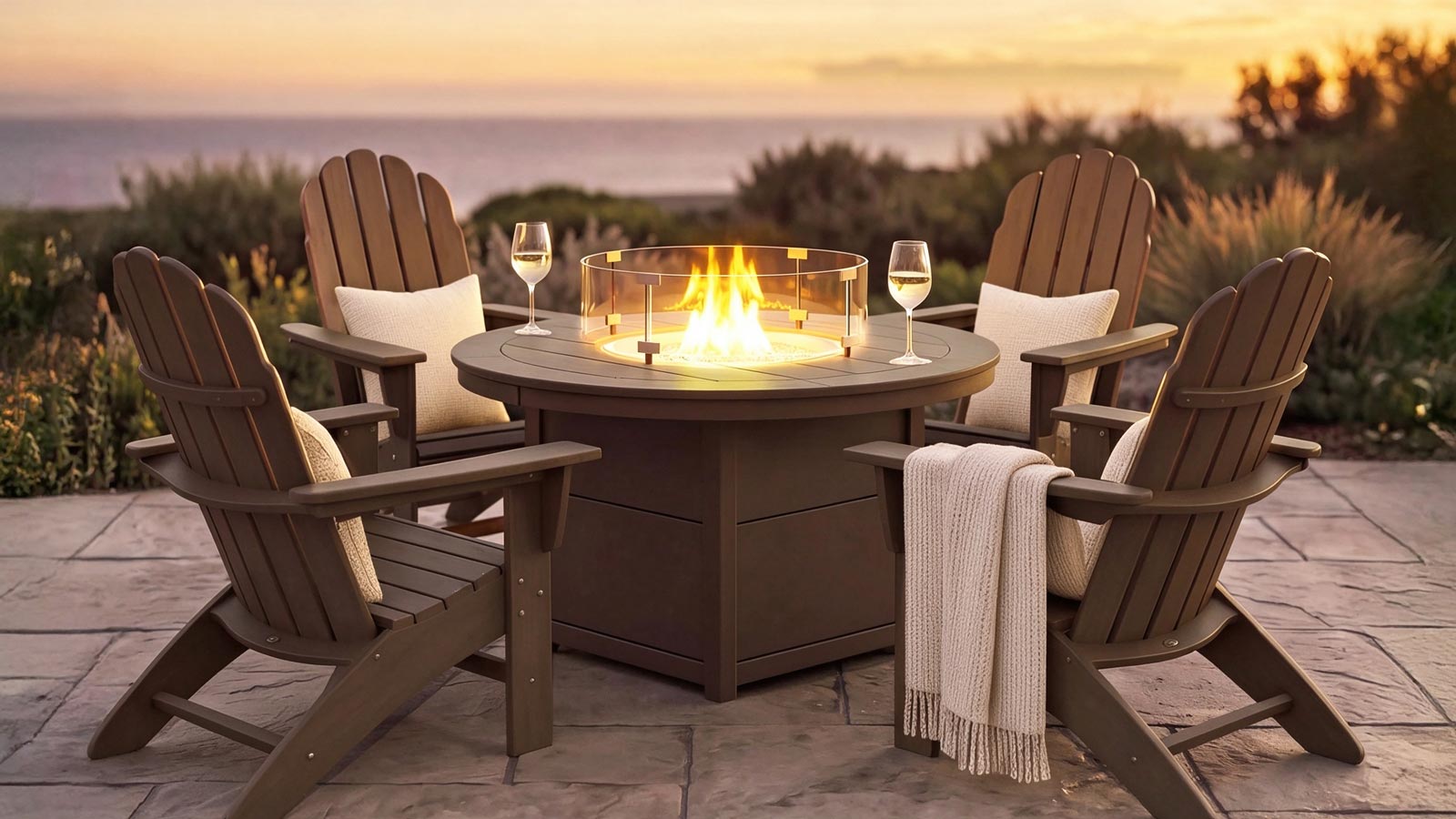
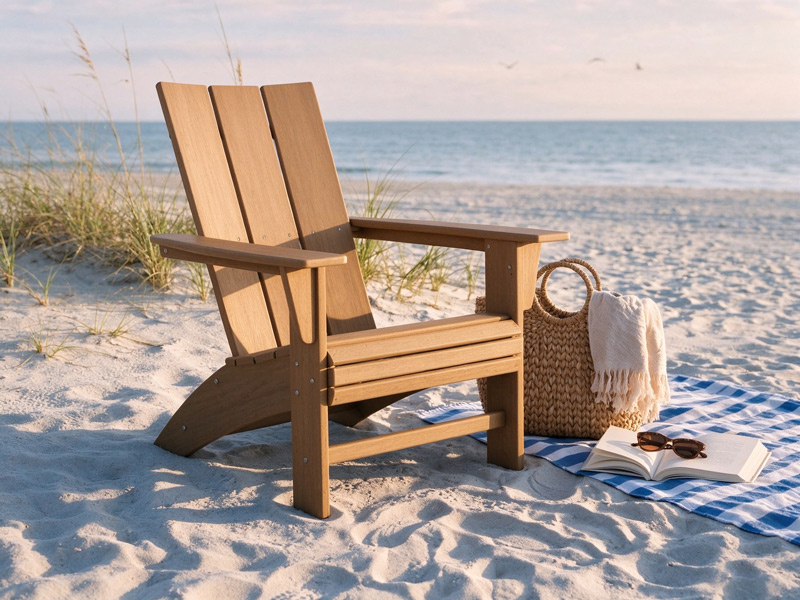
The answer arrived on a trip to Boston, where Rassi found himself staring at an Adirondack chair and recognized the perfect match: a piece of furniture whose entire failure mode — rot, splinter, refinishing, weather storage — was precisely what the plastic lumber eliminated. The first POLYWOOD Adirondack launched in 1990 and, in the company's telling, marked the creation of an entire category in outdoor furniture — a claim the copycat industry that followed validates.
The vertical integration thesis: jug to chair in one zip code
The manufacturing story is the store's deepest moat and its favorite subject. POLYWOOD recycles an average of four hundred thousand milk jugs per day — more than two hundred million containers a year — at its own on-site recycling plant, then extrudes the cleaned HDPE into lumber at the same campus, then cuts, assembles, and ships finished furniture from the same complex. The company describes the loop as circular and ninety-nine percent waste-free, with production scrap and returns reprocessed back into lumber that is itself infinitely recyclable. Two campuses anchor the operation: Syracuse, Indiana — including a 369,000-square-foot facility added in 2021 — and Roxboro, North Carolina, opened in 2018 with a full reclamation center and expanded in 2025 with a $61.6 million investment and three hundred new jobs.
The build-to-order model is the retail-facing consequence: rather than forecasting demand for twenty-five thousand product options across sixty-plus Adirondack styles alone, the factories cut to order and ship most pieces next day — an inventory-light, waste-light structure that also means the colorway you want is rarely out of stock. Approximately 1,650 employees work across roughly two million square feet of manufacturing space, and revenue estimates for 2025 run between four hundred and twenty and five hundred and ten million dollars.
Two private equity chapters and a billion-dollar price
The ownership record belongs in any honest review. Private equity firms Cardinal Equity Partners and Oxford Financial took majority stakes in 2015, keeping management as significant shareholders. In late 2023, Reuters reported the company was exploring a sale at a valuation near one billion dollars on roughly one hundred million in annual EBITDA — and in March 2024, an investor group led by Arsenal Capital Partners with BayPine LP completed the acquisition. Founder Doug Rassi remained chief executive through both transitions, and the company's statement framed the deal as fuel for the next growth chapter rather than an exit.
For storefront reviewers, the PE era cuts both ways: it funded the capacity that makes next-day build-to-order possible, and it means today's buyer is dealing with a billion-dollar portfolio company whose margins answer to fund timelines. The twenty-year warranty, examined below, is the term where that tension becomes concrete.
The twenty-year warranty and the fade physics
The warranty is the store's loudest promise: twenty years on the lumber, covering splintering, cracking, chipping, peeling, and rotting in residential use. The physics behind it is color-throughout construction — UV-inhibiting pigments are blended into the molten plastic rather than applied as a coating, so scratching the surface does not reveal a different color underneath and fading is bounded by warranty language rather than left to marketing. Independent long-term owners by and large confirm the claim: a decade-old chair looks like a dirty version of a new one, and soap-and-water restores it.
The honest asterisks are three. The warranty is limited and residential — commercial buyers get shorter terms. Hardware, cushions, and the comfort elements wear on a different clock than the lumber itself. And the warranty, however long, is only as strong as the company honoring it across two private-equity ownership regimes — a risk most buyers will never test, but one that the category's graveyard suggests keeping in the ledger.
Sixty Adirondack styles and twenty-five thousand options
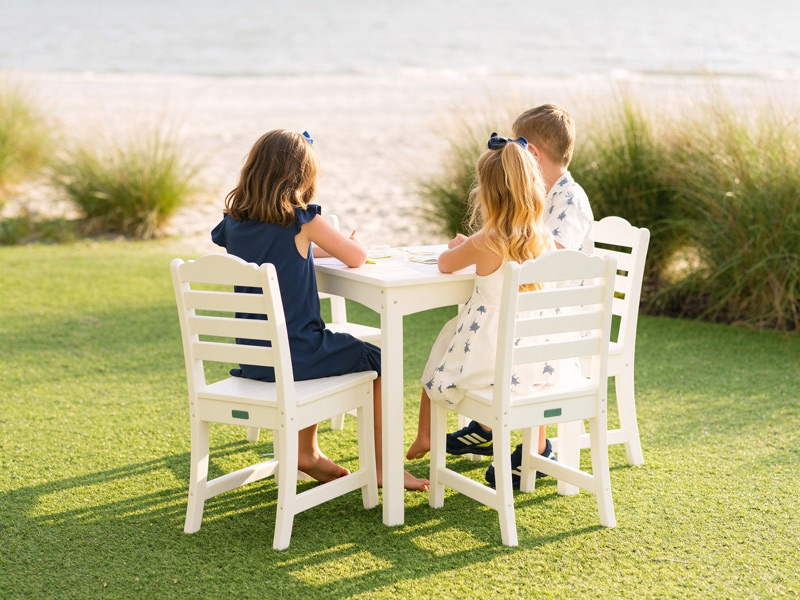
The catalog's breadth is its own section because it is genuinely disorienting: more than sixty Adirondack chair variants alone, plus rocking chairs, benches, swings, dining sets, deep-seating collections, fire tables, chaise lounges, in-pool furniture, planters, mailboxes, and children's pieces — over twenty-five thousand unique product options in total, most in a dozen-plus colors that can be mixed across pieces. The collections map to recognizable outdoor-living archetypes — the Vineyard dining family, the EDGE line, the presidential-rocker tradition — and the storefront's filters do serious work keeping the sprawl navigable.
For 2025, the thirty-fifth-anniversary year, the brand launched POLYWOOD Select, a premium lumber line with enhanced textures and finishes aimed at buyers who want the maintenance-free physics in a more furniture-forward register. It is the clearest signal that the company knows its classic Adirondack silhouette, however iconic, anchors it to a casual aesthetic some buyers age out of.
Select, collaborations, and the Trex sibling
Around the core catalog sit two expansion strategies worth noting. The collaboration program brings outside brands into the POLYWOOD manufacturing system — a Country Living collection with Hearst spanning dining, lounge, rockers, and swings, and Martha Stewart-branded lines — the same play that the cookware brands reviewed in this site's other categories use to borrow lifestyle credibility wholesale. And the corporate family includes Trex Outdoor Furniture, a sister brand built on the same HDPE lumber science, which means POLYWOOD's own showroom competes with its sibling for the same patio budget.
Distribution follows the omnichannel pattern: the Shopify flagship, Amazon, Target, Home Depot, Wayfair, a dealer network, and hospitality programs — cruise ships and hotels buy the same chairs consumers do, which functions as a stress test no laboratory replicates.
The honest physics of plastic lumber
The trade-offs deserve plain language. Weight: recycled-plastic lumber is heavy, and a POLYWOOD dining set is a commitment to a location — moving it seasonally is a two-person operation. Heat: dark colors in direct sun absorb it, and the brand's own guidance steers hot-climate buyers toward lighter shades. Aesthetics: the material never pretends to be wood up close, and the faux-wood debate — honest plastic versus disguised plastic — is the one design criticism the catalog cannot engineer away. Upfront price runs above comparable wood sets, though the total-cost arithmetic over a wood set's refinishing and replacement usually favors the plastic. And buyers in windy exposures learn that even hundred-pound furniture appreciates being anchored.
Against the premium outdoor category reviewed in this space — the Santa Monica brand selling feather-soft sectionals with built-in rain covers — POLYWOOD occupies the opposite pole: casual furniture that never comes inside, never needs the cover, and never asks to be thought about at all.
Parting advice for the leave-it-out buyer
POLYWOOD's storefront is the most industrial story in this category told in the friendliest packaging: a 1990 garage, a Boston chair, four hundred thousand milk jugs a day, two factories, two private-equity chapters, and a twenty-year promise on the material itself. The catalog's sprawl is navigable, the build-to-order logistics are best-in-class, and the environmental ledger — waste-free loops, ocean- and landfill-bound feedstock, infinitely recyclable output — is audited by scale rather than adjectives.
Buy here if your furniture lives outside year-round, if maintenance freedom outranks cushion plush, if made-in-America manufacturing and two-decade warranties are the premium you are paying for, and if the Adirondack silhouette — in any of its sixty forms — is the posture your porch calls for. Buy aluminum and performance fabric if weight matters, real teak if the patina of wood is the point, or the premium-soft category if the outdoor room is a second living room. For the buyer who simply wants to stop thinking about outdoor furniture, this thirty-five-year-old factory is the answer it has been refining since the milk-jug days.