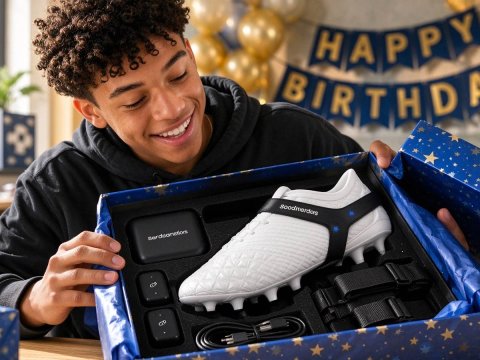
Pavlok will shock you for your own good, and it might work

Official homepage: https://pavlok.com
Pavlok is the wearable store built on an 80-year-old behavioral trick: pair the bad habit with an unpleasant sensation, and let classical conditioning do the rest. Founded by a blogger who famously hired a woman to slap him for using Facebook, it won a Shopify competition before flaming out on Shark Tank, and it now sells shock-enabled alarm clocks and habit-breaking wristbands to heavy sleepers and nail-biters. This review examines the spectacle, the science, and the fine print.
Kara the Slapper and a modified dog collar
Maneesh Sethi had a resume unusual even by founder standards: he wrote a bestselling programming book at fourteen, was the brother of finance guru Ramit Sethi, and ran a Tim Ferriss-adjacent personal-development blog. What made him famous was an experiment. In 2012, chronically distracted and averaging 35 to 40 percent productivity, he hired a woman from Craigslist — Kara — for eight dollars an hour to sit beside him and slap his face every time he opened Facebook. His productivity hit 98 percent. The viral blog post led to a modified dog collar and then to a wristband that would do the slapping for her. The 2014 Indiegogo campaign raised $284,027 from more than 1,700 backers, and Pavlovian conditioning — a technique dating to the 1890s — finally got a consumer gadget.
Mark Cuban's con artist and a $15.9 million ask
The company's most public moment remains its worst. On Shark Tank's seventh season, Sethi asked for $500,000 in exchange for an oddly precise 3.14 percent — a $15.9 million valuation — citing $800,000 in sales, most of it pre-orders. Mark Cuban called him a 'con artist' to his face; Kevin O'Leary cursed when the demonstration zap hit; no deal was made. The aftermath was uglier than the edit: Sethi has said sales tanked, Amazon ratings dropped, his phone number leaked, and death threats followed. He rebuilt through the MassChallenge accelerator and a second crowdfunding campaign that passed five hundred percent of goal. The redemption footnotes are real: Pavlok won Shopify's Build a Business competition in 2015 — earning a Necker Island trip alongside Richard Branson, Tim Ferriss, and Seth Godin — and the founder later appeared in a Netflix standup special about exactly this kind of audacity.
Fifty to four hundred fifty volts of persuasion
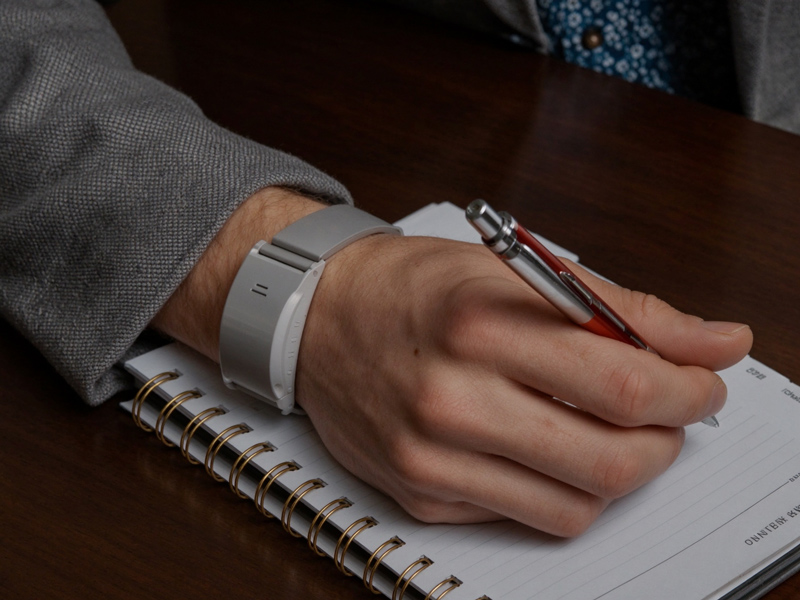
The mechanism is deliberately unglamorous aversion therapy. A New York Times reviewer described the adjustable zap as ranging from a strong vibration at fifty volts to 'getting stung by a bee with a stinger the size of an ice pick' at four hundred fifty — context being that a police Taser delivers roughly fifty thousand. Users self-administer the shock when the habit fires, or configure automatic triggers; the app claims detection of nail-biting and face-touching, which one long-term review found imperfect but workable. The scientific posture deserves care: conditioning works, but skeptics note the device is ultimately a high-tech rubber band, and the company's cited smoking study — fifteen of twenty chain smokers allegedly quitting within ten days — was uncontrolled marketing research, not peer review.
Jumping jacks, QR codes, and the snooze tax
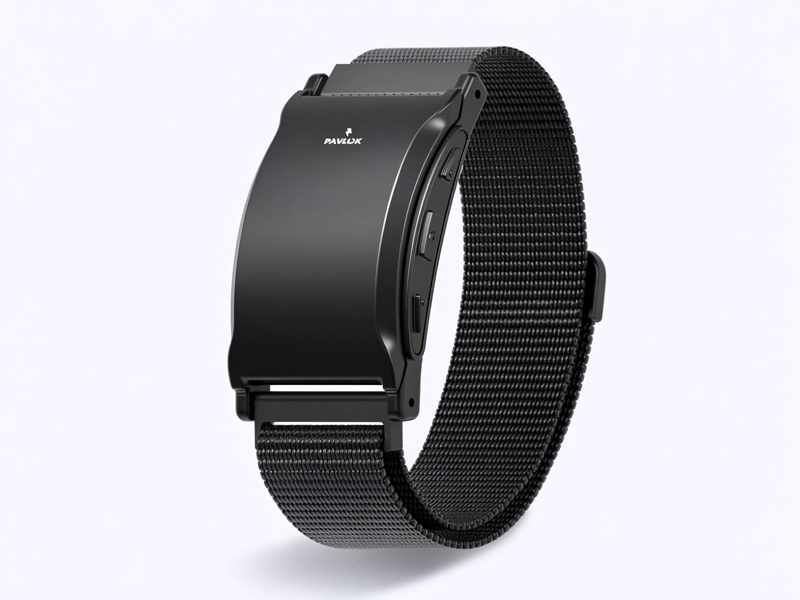
The product line has matured into two families. The Shock Clock 3, around $159.99, is a waking device first: vibration, beep, then zap escalation, with app-controlled tasks — jumping jacks, math problems, or scanning a QR code you hide across the room — required to silence it. It is silent, waterproof, and marketed at heavy sleepers and couples tired of one alarm waking two people. The Pavlok 3 Pro, at $184.99, adds three programmable buttons, sleep tracking, a 5-to-7-day battery, and IP67 water resistance, aimed at habit correction: doom-scrolling, nail-biting, overeating, procrastination. Newer entries include a Shock Clock MAX flagship, a Pavlok Ring, and a Dream sleeping-mask accessory, while every Pavlok 3+ ships with the Pavlok Plus membership layer.
A buggy app and a two-hour hack
The honest engineering record is mixed. An independent developer's review documented Android pairing failures, app crashes, a sleep tracker that reported data he knew to be wrong, and face-touch detection that misfired occasionally — alongside genuine affection for the platform's openness: within two hours he had written a third-party app that zapped him whenever he visited Facebook or YouTube, and his usage dropped sharply. IFTTT and Zapier integrations extend the trick — one alerts when you approach a favorite fast-food restaurant. Long-term guides flag battery degradation after twelve to eighteen months of daily charging and Bluetooth dependency as the device's structural weaknesses.
HSA-approved zaps and a $19-a-month trial
The storefront mechanics have evolved well beyond the Kickstarter era. The current catalog carries a 40-percent-off Black Friday posture, a 180-day money-back guarantee, HSA and FSA eligibility on the Pavlok 3, a $19-per-month subscription trial for the Shock Clock 3, and the Pavlok Collective program for group accountability. Store ratings sit at 4.3 out of 5 across 2,300-plus reviews for the Pavlok 3, with the Shock Clock 3 holding a 3.9 average across roughly a thousand on Amazon — respectable for a device whose core function is mild discomfort. The medical disclaimers deserve the same attention as the marketing: guides and reviews consistently caution against use for people with anxiety disorders, PTSD, or heart conditions, noting the risk of conditioning stress around waking.
The last zap on the Pavlok strap
Pavlok's store sells the most literal product in wearables: discomfort, on demand, in service of self-mastery. Its origin story is internet folklore of the best kind, its Shark Tank flameout is a case study in valuation theater, and its gadgets genuinely help the people they fit — heavy sleepers, chronic snoozers, and biters of nails who have tried everything softer. Its catches are equally clear: an app ecosystem that has struggled with reliability, battery wear that shows within two years, contraindications for anxiety and heart conditions, and a science that predates the gadget by a century and needs no gadget at all. For the stubborn sleeper or the habits that mock willpower, it remains the most honest tool on this tag. Just know what you are buying: a very committed rubber band — with a store that finally learned how to sell it.