Ortlieb bike bags review: are these the last panniers you will ever buy?
Official homepage: https://www.ortlieb.com
Some brands chase trends; Ortlieb outlasts them. Since 1982, this Franconian manufacturer has made one uncompromising promise — welded, genuinely waterproof bags — and turned it into a global standard that bike tourers, bikepackers, and commuters now treat as the default answer to a simple question: how do I keep my stuff dry? This review walks the official store end to end: the origin story, the welding technology, the product range and pricing, the warranty and repair operation, the sustainability program, and whether premium German pricing still makes sense in 2026.
Soaked on a British Hillside, Watching a Truck Drive Past
The story the company still tells on its own pages begins in the spring of 1981, when founder Hartmut Ortlieb — then a young cyclist with a packed bike — spent days riding through continuous rain in southern England, watching his gear get wet inside every bag he owned. A truck rumbled past, its cargo bone-dry under a coated tarpaulin, and the idea landed: bags should be built like truck tarps. Back home in Nuremberg, he sewed the first panniers himself on his mother's sewing machine from red truck tarpaulin, added hooks from a hardware store, and tested them with friends on self-organized cycling and climbing trips. In 1982, Ortlieb Sportartikel GmbH was officially founded. The original machine and an early Bike-Packer pannier still sit on display at the factory today — a rare case where the founding myth is documented, dated, and physically preserved.
Stitched Seams Leak: Why Welding Won the Waterproof War
The decisive move came about two years in. Taped seams were merely "almost" leakproof, so the company committed to high-frequency welding — physically bonding coated fabric together with radio-frequency energy so there is no stitch hole to seal at all. Every waterproof product in the range is still built this way at the Heilsbronn factory, where the company relocated in 1997, roughly 25 kilometers west of Nuremberg. The other pillar is the closure system: the roll closure that replaced lid designs in the mid-1980s, later joined by waterproof zippers, Velcro, and sliding seals. Many of these features are patented, and the classic hardware — the self-locking Quick-Lock mounting hooks that snap a pannier onto a rack one-handed — became an industry shorthand; the current QL2.1 system remains the reference point against which rival mounts are judged. The practical claim behind it all: fabric and closures rated far beyond ordinary rain, with bags commonly certified to IP64, dust-tight and protected against water from every direction.
From Back-Roller Classics to Gravel Bikepacking Kits
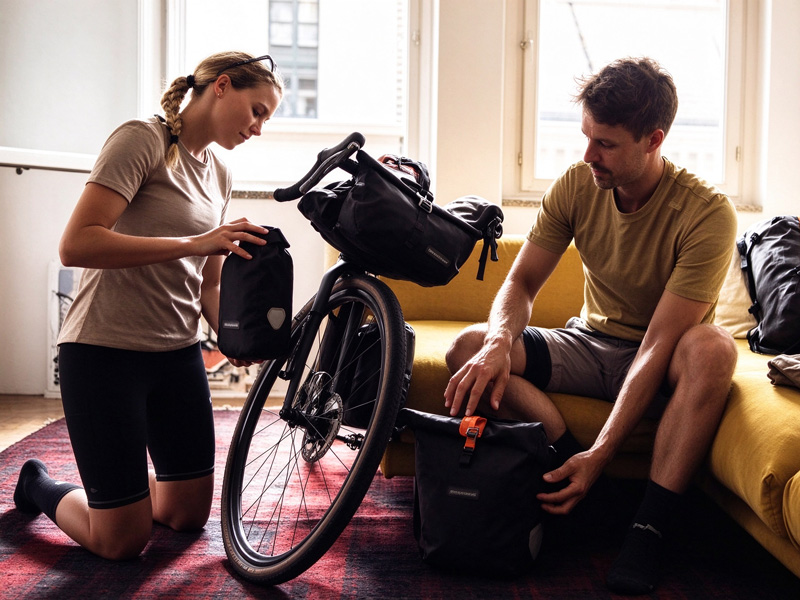
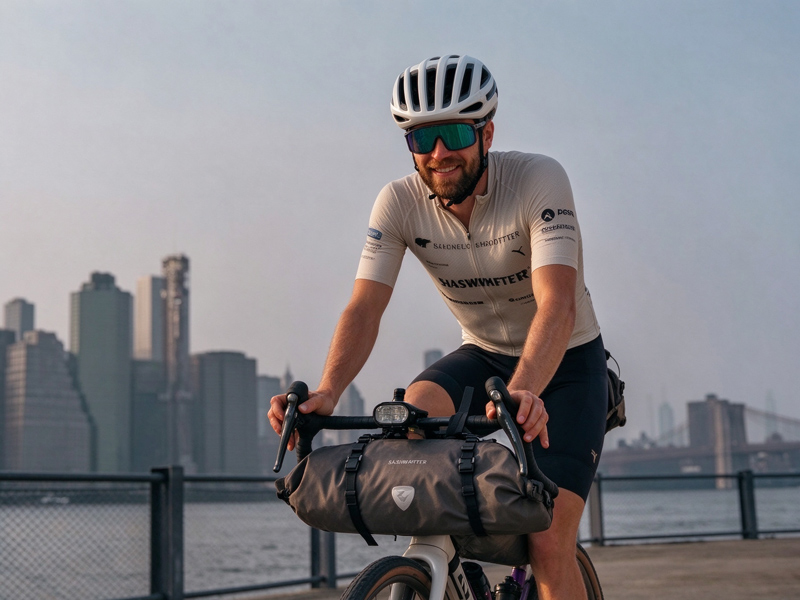
The catalog now runs to more than 500 products, but the spine of the store is the pannier wall. The Back-Roller Classic — the direct descendant of those first tarp bags, 40 liters per pair, roll closure, 3M Scotchlite reflectors — lists around $200 for the pair at US retailers. The newer Gravel-Pack pannier set runs about $195 to $215, squarely aimed at the bikepacking boom, alongside the Frame-Pack top-tube bags and the Seat-Pack in both strap and quick-release versions (the 13-liter Seat-Pack QR, with its molded internal plate, retails around $190). Beyond bike luggage, the same welded architecture extends to travel duffles, expedition dry bags, waterproof backpacks like the Velocity, and messenger gear — which is why kayakers, motorcyclists, and expedition photographers show up in the same store as cyclists. Product pages carry verified buyer star ratings, spare-part compatibility charts, and downloadable datasheets; the site also funnels buyers to a country-specific storefront covering more than a dozen regions rather than running one global cart.
Five Years of Warranty, Ten of Spare Parts
The after-sales terms are where Ortlieb quietly separates itself from fashion-forward competitors. Every product carries a five-year manufacturer's warranty against material and workmanship defects, worldwide, whether bought from the web shop, an online dealer, or a local bike shop. Beyond that, the company guarantees spare-parts availability for at least ten years after a product leaves the collection. Repairs are handled in-house at Heilsbronn — around 18,000 of them globally per year, with welded patches replacing holed fabric — and the service network extends to trained specialist dealers in numerous countries, so a bag can often be fixed locally instead of crossing an ocean. In 2022 the company formalized this into a standing repair service, and in 2023 it began running "repair weeks" offering 40% off fixes for products outside the warranty window. For a product category notorious for landfill endings, this is unusually concrete lifecycle support.
Solar Panels Over the Franconian Welding Lines
Sustainability claims here are structural rather than decorative. Roughly 70% of raw materials are sourced within Germany, keeping the supply chain short and legible. The Heilsbronn campus — about 11,500 square meters of factory and headquarters — runs on its own photovoltaic installation, which already covered around a third of electricity needs, with a 2023 expansion pushing that figure toward 60%, and a stated goal of energy independence by 2030. The company has been a member of the European Outdoor Conservation Association since 2008, publishes product-level carbon footprint figures, and its core design philosophy — repairable, replaceable, welded-to-last bags — is itself the greenest claim on offer. Employing roughly 300 people and shipping to distribution partners in 30-plus countries, Ortlieb positions itself as the global market leader in waterproof bicycle panniers, a claim that independent gear tests have repeated for decades.
The Honest Math of Never Replacing a Bag
The case against is mostly arithmetic and ergonomics. A $200 pannier pair costs several times what a casual rider needs for fair-weather trips; the roll-closure classics offer one cavernous compartment, so organization requires packing cubes or pouches bought separately; and the same bombproof fabric that shrugs off river crossings adds weight that ultralight bikepackers will notice on climbs. Rivals like Restrap or Apidura sell lighter, prettier, more compartmentalized options for the gram-conscious. But the value equation flips with use: a bag welded in Germany, repaired for free or cheaply for years, backed by a five-year warranty and a decade of parts, amortizes to very little per rainy commute. Buy Ortlieb if your riding regularly involves weather, distance, or the word "expedition" — and buy something cheaper if it does not.