No venture capital built europe's cheapest smart home empire

Official homepage: https://shelly.cloud/
Shelly built one of Europe's rare publicly listed unicorns without a single euro of venture capital. The Bulgarian company behind it spent its first decade as an SMS ringtone provider, went public for €2.2 million, and only then stumbled onto the tiny WiFi relay — the Shelly 1 — that makers on YouTube turned into a cult product. Today, with revenue above €149 million, 2.7 million cloud users, and a market capitalisation past €1 billion, it is Europe's quietest smart home success story. Here is our review of its store.
An SMS Ringtone Company Became a Relay Maker
The company's first life was mobile telecom. Dimitar Dimitrov — an entrepreneur with more than twenty-five years across telecom and robotics — founded Teracomm Ltd in Sofia in 2003, offering mobile services, marketing, and notifications, later launching cable television and technology periodicals along the way. Co-founder Svetlin Todorov joined the business, and by 2010 the operations were consolidated into the Allterco holding. The pivot began in 2013 with a basic smart home system, followed by a 2015 spin-off — Allterco Robotics — dedicated to designing consumer IoT products. In 2019 the company sold five mobile service subsidiaries to Norway's Link Mobility for €7.9 million and reinvested every euro into IoT research, a divestment that converted the startup's past into the hardware maker's future.
An IPO Worth Two Million Euros, No VCs
While every hardware startup of the era was raising venture rounds, Allterco went the other direction: in December 2016 it listed on the Bulgarian Stock Exchange at €0.74 a share, raising €2.2 million with zero venture capital on the cap table. The capital-markets route became a signature — a Frankfurt listing followed in 2021, and in 2024 the holding rebranded entirely as Shelly Group, reflecting that the Shelly brand had become essentially all of the business. In June 2025 the share price passed €49, taking the market capitalisation past €1.1 billion and making Shelly one of Europe's few publicly traded unicorns — and only Bulgaria's second ever, with insiders still holding roughly 59 percent of the company. The stock's trajectory, from €0.74 to a February 2026 high of €71.60, is the capital-market footnote to a decade of organic growth.
The Shelly 1 Sold Itself Through YouTube Makers
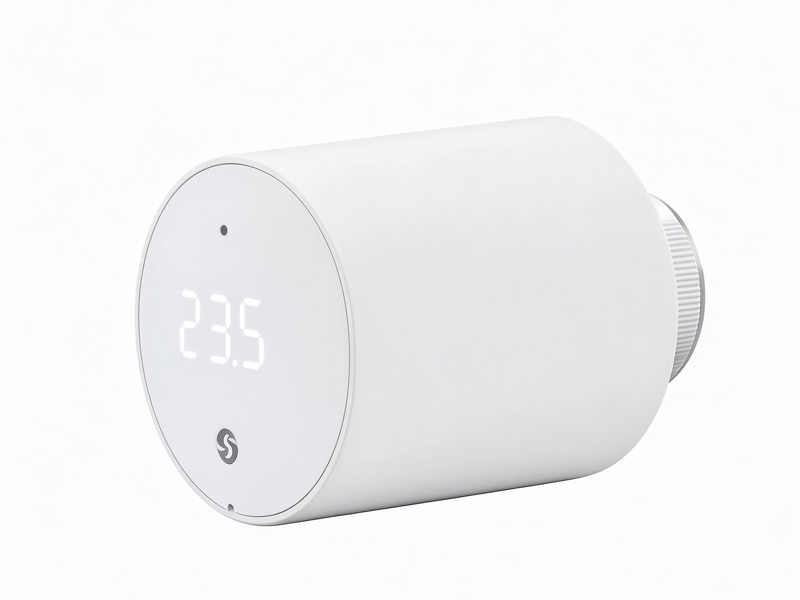
The product that changed everything launched in August 2018: the Shelly 1, a palm-size WiFi relay that hides inside a wall box behind an existing light switch and makes it smart without rewiring — controllable by app, schedule, or voice, with an open API, native MQTT support, and full local operation that keeps working even if the internet does not. The maker community and YouTube reviewers found it immediately, and sales exploded without an advertising budget. The philosophy hardened into a doctrine: open by default, cloud optional, local control guaranteed, and priced at a fraction of proprietary rivals — up to fifty percent cheaper than comparable competitors, with entry devices around €15. That openness made Shelly the default recommendation in Home Assistant and Homey communities and turned the community into the sales force.
Energy Management Is Where the Money Moved
As the catalog grew from relays into plugs, power meters, and DIN-rail controllers, the revenue center of gravity shifted toward energy management — a category elevated energy prices made suddenly mainstream. By 2025, more than thirty solar and energy storage manufacturers recommended Shelly products, in many cases as the only compatible solution, and the company sealed the positioning with co-branding alongside EcoFlow, integrating the Shelly Plug S Gen3 and the Pro 3EM energy meter into EcoFlow's software for bidirectional control of generation, storage, and consumption. The financials rewarded the focus: revenue rose 43 percent to €107 million in 2024, then grew another 40 percent to €149.7 million in 2025 — with gross margin near 58 percent, an adjusted EBIT margin of 25.3 percent, and a 2026 guidance of €195 to €205 million. Third- and fourth-generation devices — Matter, Zigbee, Bluetooth, and KNX support included — grew from 20 to 60 percent of revenue in a single year.
Locks, Cameras, and Five Thousand Installers
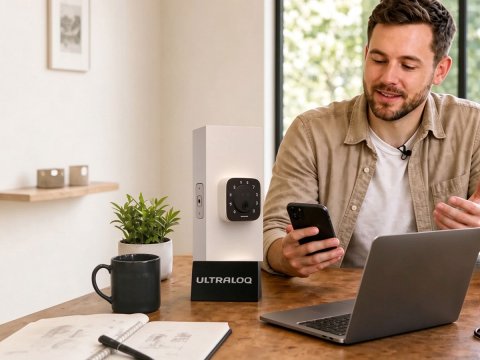
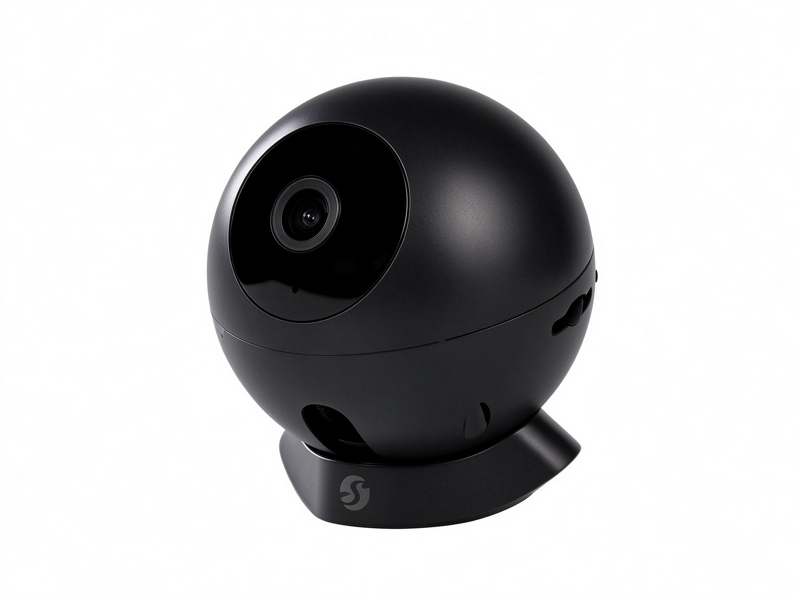
The professional segment is the newest growth lever. An installer network launched in April 2024 grew from 900 registered professionals to more than 5,300 by the end of 2025, now generating an estimated 35 percent of revenue through project business and higher-margin DIN-rail and metering lines. The 2024 acquisition of Dutch lock maker LOQED extended the platform into access control: the first thousand smart locks sold out on delivery, the next four thousand pre-sold before arrival, and new lock variants, cameras, and smart circuit breakers anchor the 2026 roadmap. Community retention underwrites all of it — repeat buyers accounted for 57 percent of cloud device additions in 2025, averaging 4.4 devices per buyer, while 2.7 million cloud users across an estimated 5.6 million households produced a Net Promoter Score of 56. A premium app tier, €4 per month with near-100 percent gross margin, grew subscribers 61 percent to 38,000, and the Shelly AI Assistant now reasons about a building's energy physics rather than merely accepting commands.
Our Last Word on Europe's Quietest Unicorn
What shelly.cloud sells is the anti-platform smart home: locally controlled, cloud-optional, open by default, and priced to be installed by the thousands rather than admired in a showroom. The honest caveats are the flip side of the same choices. The catalog rewards technical confidence — a Shelly relay installs behind mains wiring, so nervous DIYers should budget for an electrician or the installer network; WiFi as the backbone invites the congestion problems that mesh networks solve unevenly; and the premium app, while growing fast, is still a small business next to hardware, meaning the open-architecture promise remains the real product. The company's own candor — public post-mortems when things break, firmware that can be swapped without voiding warranty — has earned unusual trust, and the capital structure lets it think in decades rather than rounds. For households and installers who want automation that outlives the cloud, this store remains the most serious answer in Europe.