Museum mile's best kept retail secret hides inside a carnegie mansion

Official homepage: https://shop.cooperhewitt.org
New York's Museum Mile holds the Met, the Guggenheim, and the Frick — but the most quietly authoritative design store on the strip belongs to the museum most tourists walk past. SHOP Cooper Hewitt, the retail arm of Cooper Hewitt, Smithsonian Design Museum, occupies a purpose-built space inside the Andrew Carnegie Mansion at 2 East 91st Street, free to enter without a ticket, and sells design the way the museum teaches it. Behind it stands an institution with an unmatched claim: 215,000 objects spanning thirty centuries, the first Smithsonian museum outside Washington, and a founding story involving three sisters, a near-death experience, and a court battle. This review measures the store across eight dimensions — the century of history, the $91 million renovation that built it, the catalogue, and the fine print that runs at museum tempo.
Three sisters and a museum born in 1897
In 1895, Eleanor, Sarah, and Amy Hewitt — granddaughters of industrialist Peter Cooper — petitioned Cooper Union's trustees for a museum of decorative arts modelled on Paris's Musée des Arts Décoratifs, where students could study objects directly rather than from drawings. The board granted them the fourth floor of the Foundation Building, and in 1897 the Cooper Union Museum for the Arts of Decoration opened three days a week. The sisters ran it until 1930. Survival was never guaranteed: in the 1960s a financially struggling Cooper Union voted to abolish it, and only a five-year campaign led by collector Henry F. du Pont — resolved through the New York courts — saved it, transferring the collection to the Smithsonian in 1967. It was renamed several times and finally became Cooper Hewitt, Smithsonian Design Museum in 2014.
Smithsonian rescue in 1967 and the mansion move
In 1969 the Smithsonian leased, then acquired, the Andrew Carnegie Mansion — a 64-room Beaux-Arts pile completed in 1902, steel-framed and centrally heated, one of the most technologically advanced private homes of the Gilded Age — and the museum moved in, opening to the public in 1976. By the 2000s the venue was straining, the New York Times calling it an almost impossible place to stage exhibitions on modern design. That pressure set up the most consequential event in the shop's history: a $91 million renovation, begun in 2011, with Diller Scofidio + Renfro designing the galleries and — critically for this review — the new SHOP Cooper Hewitt retail space, conceived as a contemporary interpretation of Carnegie's former Art Gallery and designed so the store itself functions as an exhibition of design. The museum reopened on December 12, 2014.
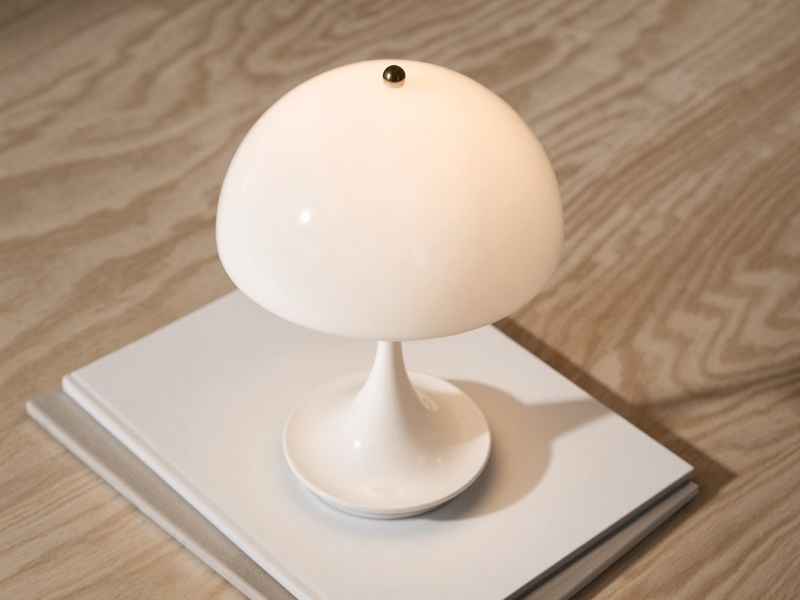
Ninety one million dollars and a shop reborn in 2014
The 2014 reopening matters to shoppers because the shop was designed as seriously as the galleries. Working with Pentagram on the institution's new identity, the retail space received the same curatorial treatment — flexible casework, a considered position on the visitor route, and a mandate to sell design the way the museum teaches it. The shop is free to enter without a museum ticket, one of the few places on Museum Mile where a passerby can walk in off the street and buy something. Its mission line says it plainly: a true design destination where every purchase supports museum operations. And the online store is older than the renovation — it opened in 2012, two years before the new physical space, on the Shopify platform it still runs today.
A true design department under one mansion roof
The catalogue is a genuine design department: jewelry beside home accessories, stationery, prints, toys and children's design, exhibition catalogues across every discipline, gift certificates, and small-run objects from independent makers — with an open submission process inviting designers to pitch products to the museum's retail buyer (unsolicited samples are discarded unopened, a detail that tells you both the volume of pitches and the seriousness of the review). Membership brings a ten percent discount, in-store and online, with exclusions. Price points run from a few dollars for cards and pencils to four figures for design objects. The assortment logic follows the collection logic: objects that teach. This is less a gift store than a circulating library of design you can keep.
Twice weekly shipping and the fourteen day window
The operational fine print is where institutional gravity meets institutional pace. Orders placed online are processed and shipped at least twice a week — not next-day, not even daily — with the store candidly warning that tracking numbers can precede the package actually reaching FedEx. Returns run fourteen days from delivery; refunds come back at the original purchase price minus shipping, to the original payment method, in original condition with a receipt. Defective or incorrect items must be reported within three days of receipt by email to arrange an exchange. All discounted, marked-down, and display items are final sale. Against the urgency of modern e-commerce, the cadence reads like what it is: a museum's retail arm, run at museum tempo.

International orders ride with a third party partner
International customers get a separate lane with a third-party driver. Rather than shipping abroad itself, the shop partners with GlobalShopex, which processes international payments and delivers orders to the door; once an international order is complete, all inquiries — order status, problems, everything — route to the GlobalShopex customer service desk, not to the museum. For a buyer in London or Sydney this means the store you are buying from and the company responsible for your delivery are two different organizations, with the accountable one an intermediary most customers have never heard of. It is a common pattern for American cultural institutions, but it is the single weakest link in the Cooper Hewitt shopping experience: a museum that controls every detail of its story hands its international customers to a contractor.
The pen the API and a fully digitized collection
The institution behind the shop is, by any measure, the most design-literate in America. The collection holds more than 215,000 objects spanning thirty centuries — product design, decorative arts, drawings, textiles, wallcoverings, digital works — fully digitized, searchable online, with a public API for developers. Visitors explore galleries with the Pen, a stylus that saves objects to interactive tables for later study. Bill Moggridge, the IDEO co-founder who designed the first laptop, served as director. The museum charges admission — a loophole in its Smithsonian charter permits it — with pay-what-you-wish evenings daily from five to six. For the shop, all of this functions as certification: the buyer deciding what sits on these shelves has 215,000 objects of institutional memory behind the decision. No other store reviewed in this series can say that.
Who should buy from the nations design museum
The Cooper Hewitt shop is for a specific buyer: the design student who wants the exhibition catalogue, the New Yorker hunting a hostess gift with a doctorate, the maker who dreams of pitching a product to the Smithsonian, and the tourist who would rather carry home a print from the nation's design museum than a Times Square souvenir. For that buyer it is arguably the most authoritative design store in America. It is not for the urgent, the international, or the return-heavy: twice-weekly shipping, a fourteen-day window with shipping deducted, three-day defect reporting, and the GlobalShopex layer for overseas orders form a service envelope that trades speed and flexibility for institutional gravity. The trade is visible, it is honest, and it is written into the FAQ in plain English. A museum that has spent 129 years deciding what design is will not hurry for anyone — least of all a delivery carrier.