Is the best design shop in london hiding inside a free museum?
Official homepage: https://designmuseumshop.com
London's design pilgrims know a secret the tourists miss. Behind the hyperbolic-paraboloid roof of the Design Museum on Kensington High Street — past the free exhibitions, past the Vespa and the first Macintosh in the permanent collection — sits what may be the most quietly complete design store in Britain. The Design Museum Shop is not a gift shop in the usual sense: it is a department store with a curatorial thesis, three physical locations, and a founding pedigree no competitor can match — it was created by Sir Terence Conran, the same man who built the Conran Shop. This review measures it across eight dimensions, from the 1940s banana warehouse where it all began to the fourteen-day clock that governs its click-and-collect counter.
A banana warehouse on the Thames becomes a design institution
The origin story is itself a piece of design history. In 1981, Conran — already a restaurateur and retailer — helped stage the Boiler House exhibition of modern design in the V&A's basement. Eight years later, in 1989, he took the idea independent and opened the Design Museum in a converted banana warehouse on Shad Thames, steps from Tower Bridge. The mandate was radical for its era: to argue that everyday objects deserve the same reverence as fine art. That mandate eventually outgrew the warehouse, and with it came the question every museum faces — how does an institution devoted to design behave when it becomes one of the world's most visited design destinations. The answer would take nearly three decades and eighty-three million pounds.
Eighty three million pounds and a John Pawson roof
In 2016, the museum moved into the former Commonwealth Institute on Kensington High Street — a 1960s Grade II* listed building — after an £83 million transformation by minimalist architect John Pawson that tripled the exhibition space. The retail program grew with it: the Design Museum Shop, designed by Pawson himself, opened as the museum's first standalone store on the high street weeks before the museum did. Its interior of stained oak and terrazzo prefigured the museum's own; its shelves were built from Dieter Rams' Vitsoe 606 system and Vitra fixtures. The museum's director called it the museum's ambassador on the high street. There are now three shops — the high street storefront, the Atrium Shop inside the entrance, and the Gallery Shop beside the exhibitions — each drawing a different crowd.
Books, fashion, kids, home, and vinyl in one basket
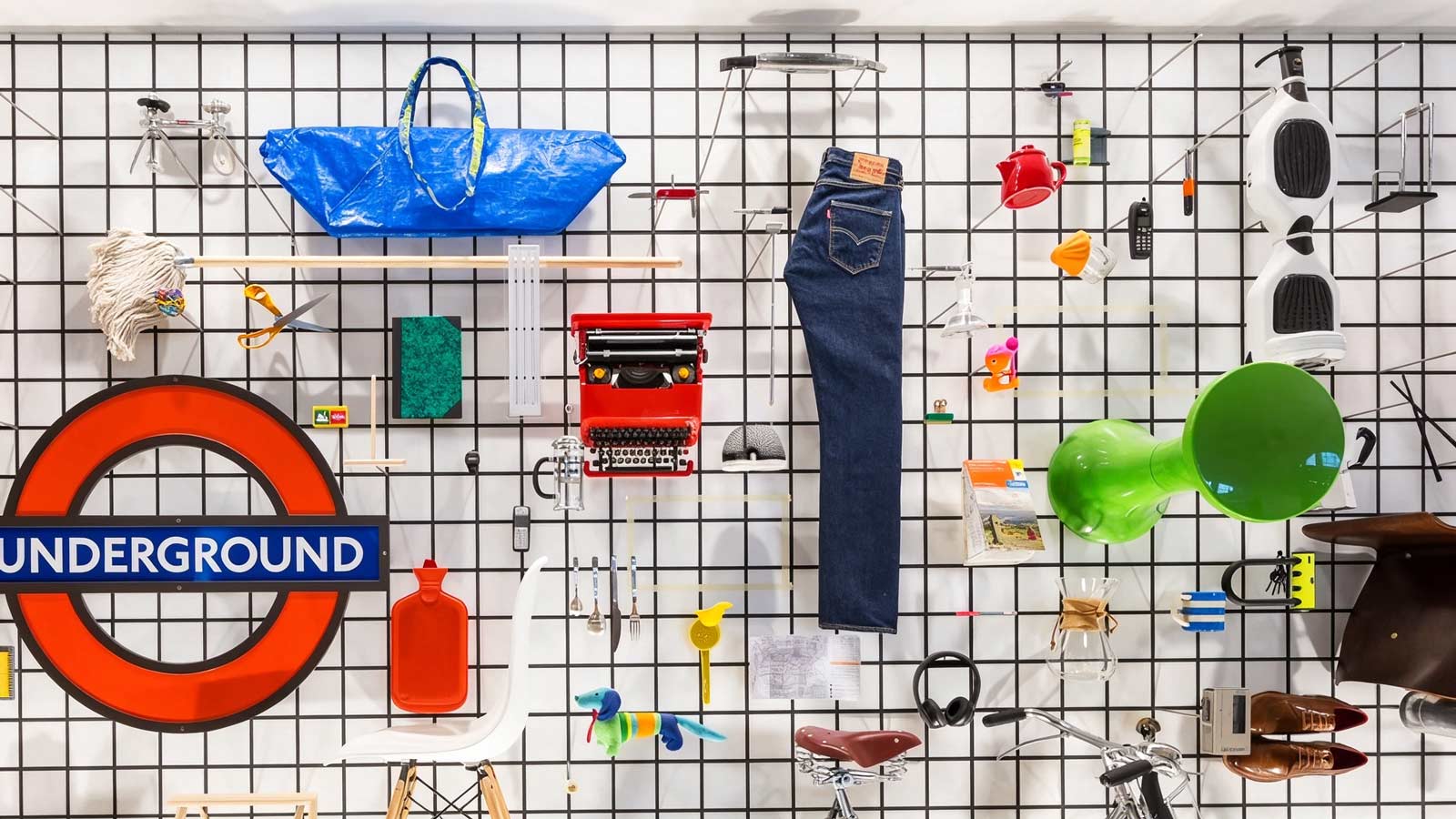
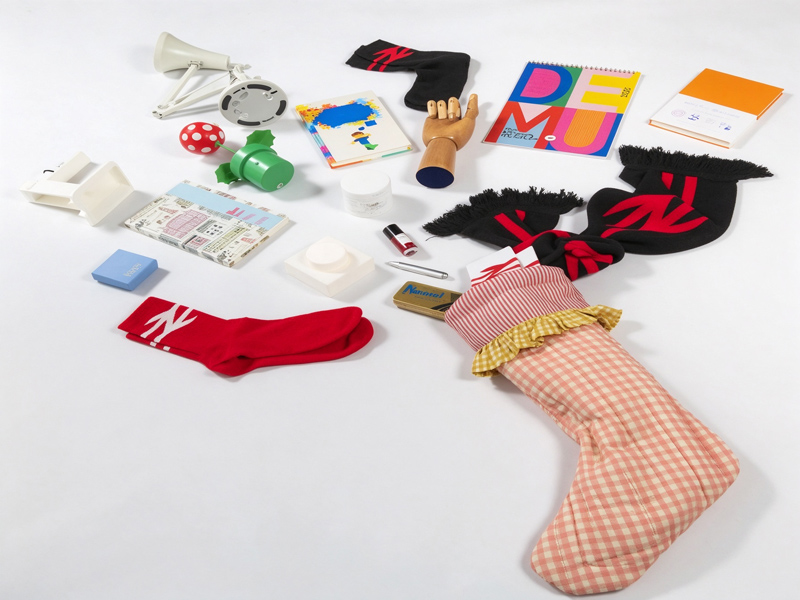
The catalogue is the widest assortment this review series has examined from a single museum. Books span a dozen disciplines from architecture to typography to wellbeing; children's books, toys, puzzles, and craft activities fill a full department; home and garden covers kitchen and dining, candles, bathroom, technology, vinyl, DIY and crafting supplies, and garden and outdoor; fashion includes clothing, bags, and jewellery; and there are prints, posters, and gift guides sorted by the recipient's profession — for architects, fashion designers, foodies, gadget lovers, photographers, product designers, young designers. The brand wall reads like a design-history syllabus: Hay, Vitra, Alessi, Anglepoise, Stelton, Darkroom, with pieces by Eames, Starck, Girard, and Paul Smith. Prices span a few pounds for cards to £1,450 for a coat stand and Vitra miniatures of canonical chairs. It is, functionally, a department store with a thesis.
The exhibition shop that changes with every show
What distinguishes it from every other shop reviewed here is that the assortment is alive. Each major exhibition rewrites part of the store: Ai Weiwei homeware and prints when his show ran, Offbeat Sari textiles for that exhibition, Tim Burton catalogues and tees while his retrospective drew the queues, Enzo Mari and Wes Anderson collections alongside theirs. During lockdown, the high street store was transformed into Supermarket: Creativity is Essential, a Camille Walala-designed installation stocked with artist-packaged essentials, all proceeds funding the museum's Emerging Designer Access Fund. A shop whose inventory rotates with the curatorial calendar never goes stale — and never lets a customer assume they have seen it.
Click and collect with a fourteen day clock
Fulfilment is museum-polite. The Atrium Shop serves as the click-and-collect point, with orders ready for pickup against a confirmation email and ID. But the collection window is strict: orders must be collected within fourteen days of the ready notice, and orders left uncollected for fourteen days after placement are refunded and cancelled unless the customer has arranged an extension. The store also runs a pre-order system for high-demand exhibition merchandise, reserving stock before it arrives with status updates along the way. International customers get a checkout that supports dozens of currencies across six continents — genuine worldwide demand for catalogues and prints.
Returns by UK law and the uncollected order clause
The returns regime rests on the floor of UK law: online orders carry the statutory fourteen-day cooling-off right, with the shop's refunds FAQ handling the mechanics for damaged and faulty goods, and consumer law additionally covers misdescribed items with repair-or-replace remedies. What is harder to find is enthusiasm beyond the legal minimum — no extended holiday windows, no free returns, no loyalty perks are advertised. And the strict uncollected-order clause on click-and-collect shows where the store's priorities sit: inventory discipline and till efficiency over customer flexibility. That is the texture of a retail operation that answers to a museum's finance department, not a venture-backed growth team.
A charity shop with a curation doctorate
Reputation is split in an instructive way. On consumer review platforms, the shop barely registers — there is no meaningful Trustpilot corpus, and what exists online are visitor reviews of the museum itself, where the shop is repeatedly described as a destination. On the institutional side, the credentials are unimpeachable: the world's leading museum devoted to contemporary design, hundreds of thousands of visitors a year, a permanent collection running from the Vespa to the first Macintosh, and a founding figure who built one of Britain's great retail names. The shop is a charity retail operation — proceeds fund the museum — meaning every purchase is a donation with a gift attached. And there is a generational sweetness in the fact that this shop and the Conran Shop, both founded by the same man, now coexist as elder and younger statesmen of British design retail.
Who should fill a gift list from this shop
The Design Museum Shop is for a specific buyer: the design-literate gift-giver, the parent raising a visually literate child, the exhibition-goer who wants the catalogue, and the London visitor who would rather carry home a design book than a snow globe. For that buyer it is arguably the best museum shop in the world — because the institution behind it has spent thirty-five years doing nothing but deciding what good design is. It is less suited to the service-sensitive online shopper: returns are legal-minimum, the click-and-collect clock is unforgiving, and the review record is too thin to verify the fulfilment experience. But for its core mission — converting curiosity about design into objects worth living with — no store carries more authority per square shelf.