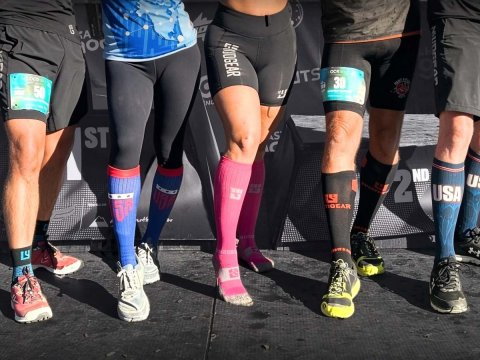
A podiatrist's side project became the green insert in every runner's shoe
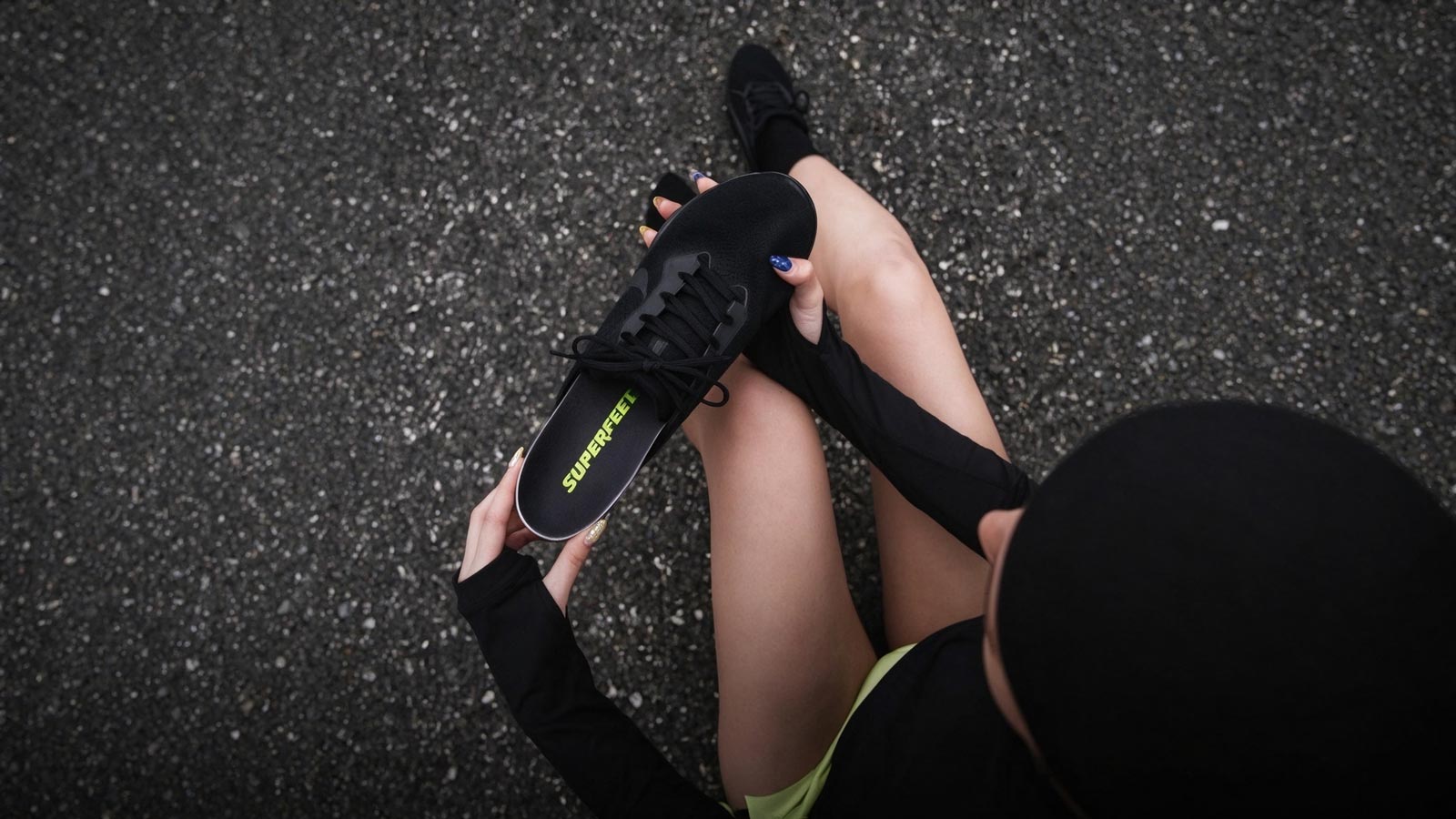
Official homepage: https://www.superfeet.com
Every runner eventually pulls a shoe apart looking for the source of the pain — and finds the same green insert staring back. Superfeet's product is so ubiquitous that the brand has become invisible, the way Hoover became invisible to vacuum cleaners: the green insole is simply what a shoe insert is. That is a remarkable fate for a company that began in 1977 as the side project of a podiatric laboratory in Blaine, Washington, where a podiatrist and an inventor asked a radical question — why should orthotics be medical devices only the injured can afford. Their answer became one of the longest-running product legacies in athletics: forty-eight years, nearly three million insoles a year, and a sixty-day guarantee that doubles the industry's default. This review measures the operation across eight dimensions, from the ski-boot origins to the private-equity chapter the company does not hide.
A podiatric laboratory in Blaine, Washington
Superfeet began as a side door of a medical practice. In 1977, the podiatrists and technicians at Northwest Podiatric Laboratory — a custom orthotics shop crafting devices for patients one foot at a time — spun off a consumer arm with a radical premise: the same biomechanical principles that fixed a patient's gait could be mass-produced at a price the general public could afford. The founding pair, described in the company's own materials as a podiatrist and an inventor, started with what the lab knew best — ski boots — and built the original shape for the contours of winter feet. The lab story has become one of the most quietly ubiquitous product legacies in athletics.
Orthotics for everyone, not just patients
The founding insight was that most feet do not need a cast; they need a shape. A contoured foundation with structured heel cup, stabilizer cap, and the right arch geometry could deliver most of the benefit of custom work at a fraction of the price, in a trim-to-fit package the buyer could drop into any shoe. Custom orthotics of the era cost what a month's rent cost; Superfeet's answer was an over-the-counter biomechanical insole, a category the company states plainly it popularized, and the claim survives scrutiny — before Superfeet, the term was largely unknown to consumers.
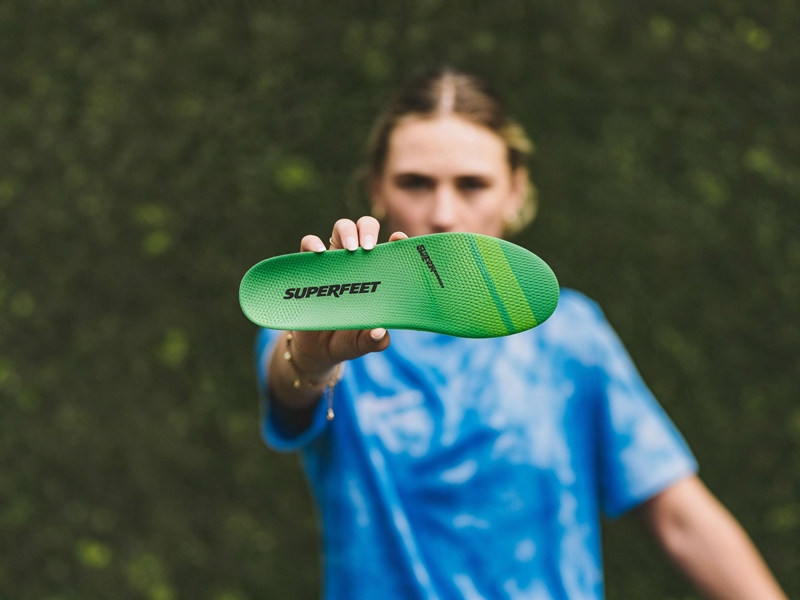
The green insole's forty eight year reign
The green insole became the product that defines the category the way Hoover defines vacuum. The original Green — deep heel cup, medium-high arch, the stiff plastic base visible at the edges — became the default answer to the question every runner eventually asks: my feet hurt, what do I do first. Its reign is measured in units — nearly three million insoles shipped in a single recent year — and in cultural penetration: the green insert is the object a runner pulls out of a new shoe to show a friend, the baseline against which every competitor is compared. The catalogue now organizes by need as much as by sport, with the Insole Finder quiz and the retailer's gait check serving as the fitting room.
From ski boots to marathon finish lines
Running is the flagship category, and the company treats it that way. The current running line spans the classic Trim-to-Fit shapes in multiple arch heights, a low-profile Race line for tighter shoes, and the newer premium tiers built on carbon fiber and supercritical foam — materials borrowed from the running-shoe arms race and folded into the insole itself. The most technically ambitious program is personalization: ME3D insoles, built from a three-dimensional foot scan, bring a taste of the founding lab's custom work to the mass market, with scanning kiosks rolled out to specialty retail through a partnership with HP and Volumental. The company also serves as an official supplier to professional athletes — the Professional Women's Hockey League wears its insoles — and its recovery-footwear line extends the brand beyond the shoe.
Employee owned, then professionally owned
The ownership story has two chapters worth telling straight. Superfeet became a partial employee stock ownership plan in 2006 and fully one hundred percent employee-owned in 2015 — an unusual destiny that made Outside Magazine's Best Places to Work list twice. In June 2021, the employee-owners sold a majority stake to Westward Partners, a Seattle private equity firm — a transition the company describes as seamless, with employees allowed to reinvest their proceeds and many doing so. The practical effect for shoppers is subtle: the values-driven culture survived the transaction publicly, but the accountability now runs to a fund as well as to the workforce. Four decades of employee-written core values — ethics, honesty, responsibility, sustainability — are tested against growth targets in real time.
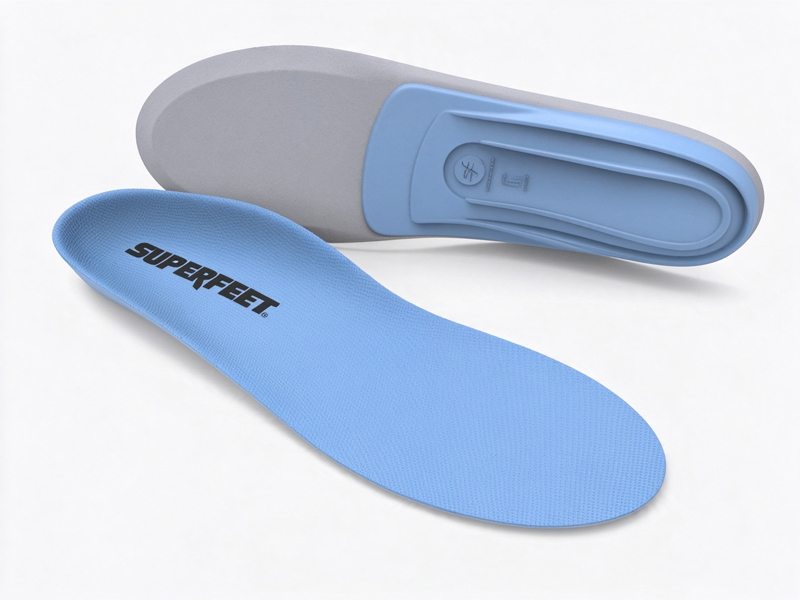
Sixty days to change your mind
The consumer terms are among the strongest this review series has documented. Superfeet offers a sixty-day return and exchange window — double the industry default — through a dedicated returns page with order tracking. Insoles are priced at roughly forty-five to sixty dollars for the trim-to-fit range, with premium and personalized tiers running higher, and the company backs the products with a fit guarantee that reflects its confidence in the shape. A store locator covers run specialty across the serviced countries, and the site layers in foot-health education and guides that read like the lab's old patient handouts made public. The texture is of a medical-adjacent manufacturer that learned direct retail without losing its clinical manners.
One percent and the Great Place awards
The social texture is unusually well documented for a company its size. Superfeet donates one percent of annual sales to nonprofits improving access to movement — not one percent of profits, sales — and grants employees two paid days a year for service projects, visible in the company's annual giving fair photo galleries. Its Ferndale headquarters runs a Great Place to Work certification with ninety-one percent of employees endorsing it, and the company's pandemic pivot — retooling lines to produce more than forty thousand masks — was chronicled in the local press. The verified record here is deeper than most brands reviewed in this series: decades of Outside placements, certification bodies, and local journalism rather than the usual single founder profile.
Who should slip the shape inside
Superfeet in 2026 is for a specific runner: the high-mileage athlete whose arches have begun to complain and wants the fix before the injury; the marathoner rebuilding from plantar fasciitis with a physical therapist who mentioned the green insert by name; the multi-sport household that wants one brand from ski boots to hockey skates; and the values-driven buyer who checks the giving page before the price. For that runner, Superfeet offers the rarest combination in the foot category — forty-eight years of podiatric engineering, a sixty-day trial, one percent of every sale going out the door to someone else's feet, and a retail presence that makes trying the shape as easy as walking into a running store. It is less suited to the runner who wants a single-sport startup's passion or the minimalist who suspects any insert is an answer to a question shoes should solve: the brand is multi-sport, professionally owned, and proudly conventional, and its icon is literally designed to be invisible. But the lab in Blaine that decided everyone's feet deserved orthotics made a bet in 1977 that the running world has been paying off ever since — one green insert at a time.