Material kitchen at seven: the design-led cookware brand that out-curated its rivals
Official homepage: https://materialkitchen.com
Material Kitchen launched in the spring of 2018 when two New York corporate executives — Eunice Byun, a Revlon vice president, and Dave Nguyen, a Chanel director of retail planning — resigned their jobs on a pact to stop eating so much takeout and start making the kitchen tools they could never find. Seven years later the brand has landed in Nordstrom nationwide, earned an Oprah's Favorite Things nod, and built one of the most design-obsessed storefronts in cookware. This review examines the store dimension by dimension: the founders' pedigree, the edit-first philosophy, the signature products, the community commitments, and the honest limits of a tools-first catalog.
Two corporate quitters and a Brooklyn pact
The origin story begins with exhaustion. Byun had climbed from Goldman Sachs through consumer startups to become Revlon's head of global digital marketing; Nguyen had built a decade in luxury supply chains at Valentino and Chanel. Both were children of immigrant families — hers Korean, running a restaurant in San Diego; his Vietnamese — for whom cooking was the family love language. Their complaint, repeated across every early interview, was a market gap with no middle: a $300 chef's knife was intimidating, a $20 knife was landfill, and a decade after graduation they still hadn't found tools they loved.
At the end of 2017 they resigned together and spent evenings and weekends blueprinting a brand. A crucial early move was partnering with a supply-chain expert carrying twenty years of kitchenware manufacturing experience — the founders' own words — to avoid rookie mistakes. The pedigree shows in the storefront's discipline: two people trained in luxury operations built a store that behaves like a curated boutique rather than a category firehose, which is either its greatest strength or its ceiling, depending on the buyer.
The Fundamentals launch: three knives, one stand
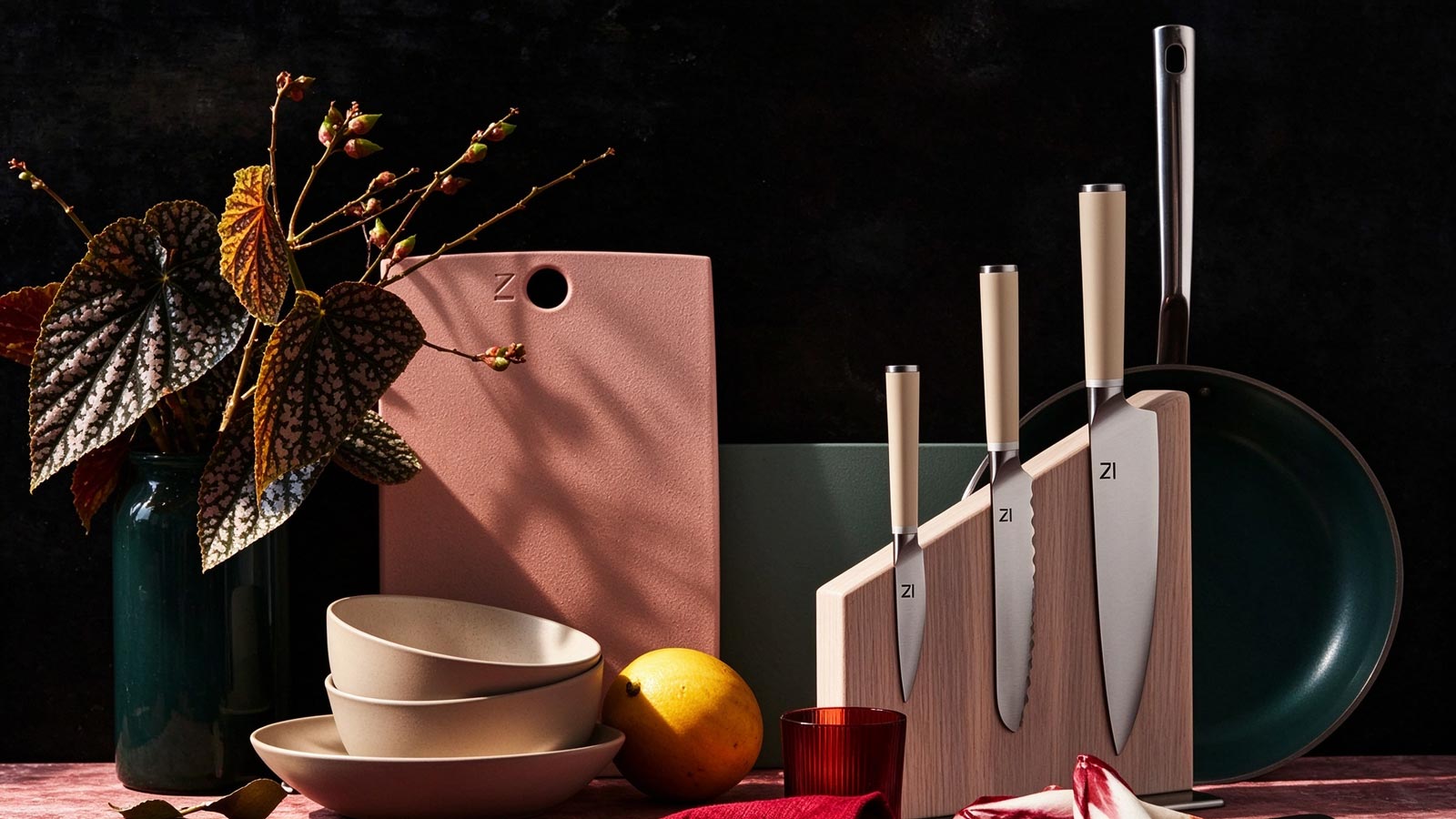
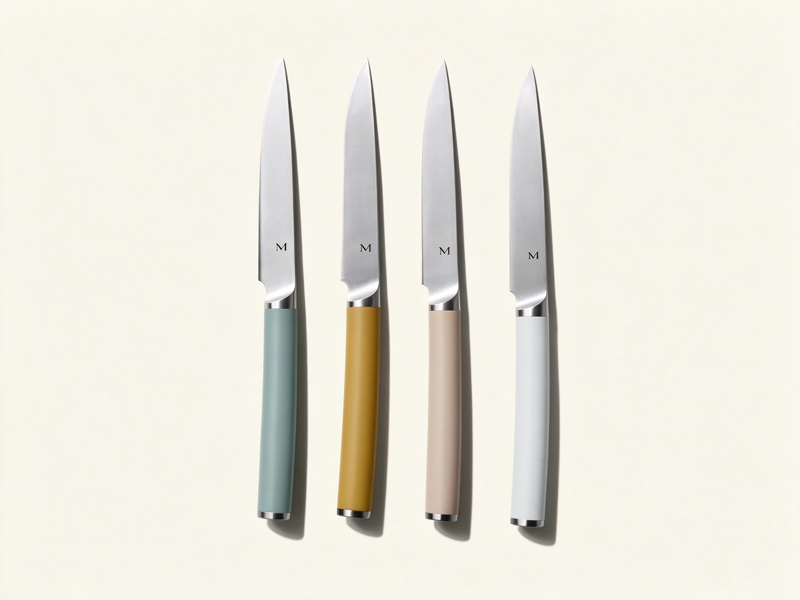
Material's first product was not a pan but a philosophy made physical: The Fundamentals, a collection of three knives and a magnetic stand. Byun has said the inspiration came from a drawer overstuffed with registry gifts that were beautiful but unused and daily tools that were merely adequate. The "Holy Trinity" — a chef's knife, a serrated knife, and a paring knife in Japanese stainless steel — was engineered to retire every other knife in the kitchen, and the set appeared in Oprah's Favorite Things in 2021.
The knife line expanded into what the brand now calls the Iconics: tongs that unlock and widen when held pointed down, a soft-edged silicone turner with a beveled blade for egg work that has been described as constantly selling out, wooden spoons, whisks, and shears. The through-line is industrial-design thinking applied to objects most brands treat as commodities — in-house designers, patentable details, and a tightness of range that makes the store browsable in a single sitting.

The Coated Pan and the design philosophy
When Material finally made cookware, it made one pan — deliberately. The Coated Pan, priced around $95 at launch, pairs a stainless body with a copper core and a ceramic nonstick surface in the brand's signature matte colors. The product page pitch is almost anti-cookware: buy one beautiful pan instead of a fourteen-piece set of mediocre ones. Reviewers have praised the weight balance, the pour spouts, and the handle ergonomics; the ceramic coating performs well out of the box and carries the same honest asterisk every ceramic nonstick carries — slickness measured in years, not decades.
Around it, the cookware offering has grown slowly: a saucier, a roasting pan, a wok-inspired skillet, a Dutch oven in the same color discipline. The store's philosophy, stated plainly by Byun, is that objects you touch every day should be "beautiful, durable, and made to last a lifetime" rather than replaced every couple of years. In a category where rivals compete on piece counts, Material competes on subtraction — a genuinely different bet on how people want to shop.
The reBoard: sustainability as a design spec
Material's most quietly influential product is a cutting board. The reBoard, launched after more than a year of development, is made from 75 percent post-consumer plastic scraps gathered from kitchen tool manufacturing and 25 percent sugarcane, priced at $35 and dishwasher-safe. Epicurious praised it as a new favorite kitchen tool, and the sustainability logic is worth stating precisely: the board exists because the founders were, in Byun's words, "conflicted about putting yet another plastic cutting board out into the world."
The detail reveals the store's broader method. Sustainability at Material is not a marketing wrapper but a design constraint — recycled inputs where they work, FSC-certified wood where it doesn't, minimal packaging throughout, and a kids' line of correctly sized whisks and spatulas born from Byun watching her daughters cook during lockdown. For buyers fatigued by green claims without engineering behind them, the reBoard functions as a proof artifact: this brand's ethics run through its spec sheets.
Kinder Kitchens and the AAPI commitment
Material's community ledger predates its scale. Its annual Kinder Kitchens campaign has raised close to $200,000 for organizations that use food to serve underrepresented communities — long-term partners named publicly include Heart of Dinner, Drive Change, and Star Route Farms. In March 2021, as anti-Asian hate crimes spiked, Byun published a personal essay and put the company's platform behind the response: an all-female AAPI creative team produced a launch whose first-week profits were donated fifty percent to the #hateisavirus campaign.
None of this is philanthropy-as-PowerPoint. Byun speaks about running the business with deliberate vulnerability — the unpolished version of entrepreneurship — and the storefront carries that voice into its copy, its founder emails, and its community page where customers' own kitchens are the marketing. In a category of faceless marketplaces, the store's personality is arguably its most defensible asset, and it compounds: word of mouth, not a firehose of ads, is how the founders say they actually grew.
Alison Roman, Oprah, and the retail expansion
The brand's authority stack assembled the indie way. Food writer Alison Roman advises the company. Oprah's Favorite Things elevated the knife trio. Editorial coverage runs from Vogue and Bon Appétit to the New York Times. And by its seventh year, Material had crossed from DTC into physical retail — Nordstrom stores nationwide, Bloomingdale's, The Container Store — with earlier placements at West Elm and Anthropologie. Web traffic data from the brand's early growth years showed nearly 95,000 monthly visits accelerating at over 140 percent quarter over quarter, among the fastest of any kitchen DTC at the time.
For a store review, the retail expansion cuts both ways. It validates the products — department stores vet hard — but it changes the Shopify storefront's role from the only shop to the flagship: the full color range, the bundles, the gift sets, and the brand voice all live online, while the physical shelf handles discovery. Buyers who prefer touching a knife before buying now have that option; buyers who want the complete curated experience still start here.
The honest limits of a tools-first catalog
Fairness requires stating what this store is not. It is not a full cookware house: the skillet-and-saucepan range is shallow beside GreenPan or Caraway, both reviewed elsewhere in this category, and a cook outfitting a kitchen from scratch will need to supplement the edit. The coated pan sits in the ceramic nonstick category, which means its slickness obeys the two-to-five-year physics no brand has escaped — and $95-plus for a ceramic pan invites direct comparison with cheaper rivals whose coatings age identically. Frequent sellouts of hero accessories like the soft-edge turner, charming as scarcity is, frustrate buyers on a schedule.
Provenance is also quieter than the heritage brands reviewed in this category: manufacturing is offshore through vetted partners, with no made-in-USA or made-in-France story to lean on. None of these are failures; all are the honest trade-offs of a boutique strategy — curation over completeness, design over provenance, community over scale.
Final notes for the design-conscious home cook
Material Kitchen's storefront is the most coherent answer to a specific question: what would a kitchenware store look like if it were run by two people who trained in luxury fashion operations and cared more about the objects than the categories? The answer is a tight, beautiful, slightly stubborn edit — knives that anchor a kitchen, one pan done properly, a cutting board with a recycled conscience, and a community ledger that predated the profits.
Shop here if you are outfitting a small urban kitchen, buying a gift that must look considered, or replacing commodity tools with a few objects you'll keep for years. Supplement elsewhere if you need a full cookware range, want provenance theater, or are shopping strictly on price per pan. Seven years in, the bet of two corporate quitters has held: in a category drowning in stuff, the store that peels away the excess keeps winning the customers it was built for.