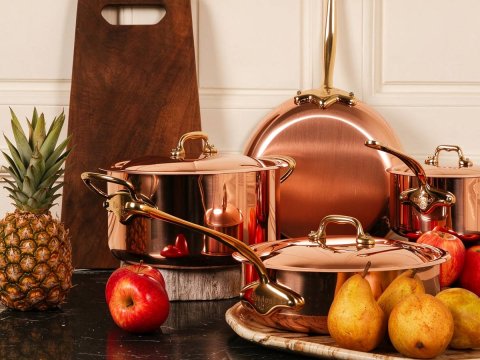
Hestan: the cookware brand built by an engineer and trusted by michelin chefs
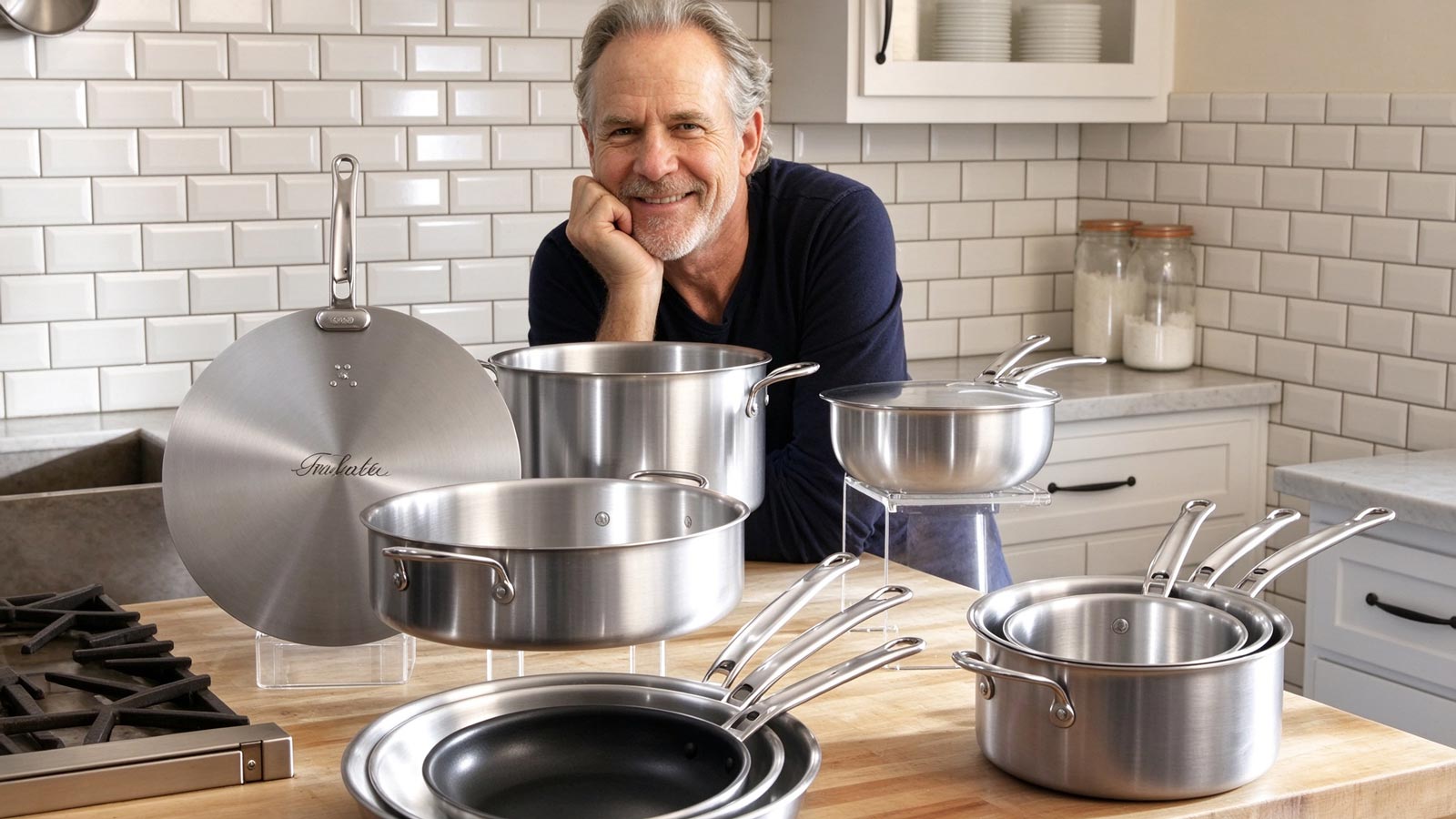
Official homepage: https://hestanculinary.com
Hestan was founded in Napa by Stanley and Helen Cheng — the name a fusion of their first names — but its credibility comes from Stanley's other biography: the mechanical engineer who spent decades pioneering bonded cookware at Meyer before deciding to build one brand with no compromises. A decade in, Hestan runs its own Italian factories, holds fourteen global patents on its molecular titanium NanoBond surface, and counts Thomas Keller among its design collaborators. This review examines the Shopify storefront behind the engineering: the founder's pedigree, the NanoBond and CopperBond technology stack, the Keller Insignia collaboration, the made-in-Italy provenance, and the price of admission.
An engineer's second act in Napa
Stanley Cheng trained as a mechanical engineer and spent the formative decades of his career inside Meyer, the cookware giant whose consumer brands he helped create and scale — the same industry that made anodized aluminum mainstream. Hestan, launched in the mid-2010s alongside the Chengs' Napa winery and outdoor-appliance businesses, was explicitly the no-compromise project: premium materials, owned factories, chef collaborators, and engineering problems nobody in the commodity market would pay to solve. The brand name itself is a marriage — He from Helen, Stan from Stanley.
That pedigree explains the store's personality better than any mission statement could. Product pages read like spec sheets written by someone who has poured pans for fifty years, because their author has. When the site claims its ProCore aluminum conducts thirty-five percent better than typical clad cookware, the claim carries the credibility of a founder who has measured it — and the burden of proof that comes with charging All-Clad-plus prices for the result.
NanoBond: molecular titanium and fourteen patents
The flagship technology is NanoBond: a cooking surface in which titanium-based layers are bonded at the nanoscale to 18/10 stainless steel, producing a finish the brand describes as four hundred percent harder than stainless — resistant to scratching, staining, and salt pitting, tolerant to 1050°F, and utterly nonreactive. The brand's patent portfolio around the fit and finish runs to fourteen global patents, and independent reviewers consistently describe the surface as the closest thing to nonstick behavior that contains no coating at all: eggs release with butter, steel wool doesn't scar it, and dishwashers don't dull it.
The honest caveats are two. First, the performance claims are the brand's own measurements, and NanoBond is priced accordingly — a ten-piece set has been known to list near two thousand dollars before sales. Second, "easier release than stainless" is not "nonstick": cooks who skip fat still meet sticking, and the pan forgives technique, not ignorance. Within the store's own comparison pages, NanoBond is positioned as the heirloom flagship, with ProBond below it for buyers who want the engineering without the titanium.
CopperBond, ProBond, and the forging trick
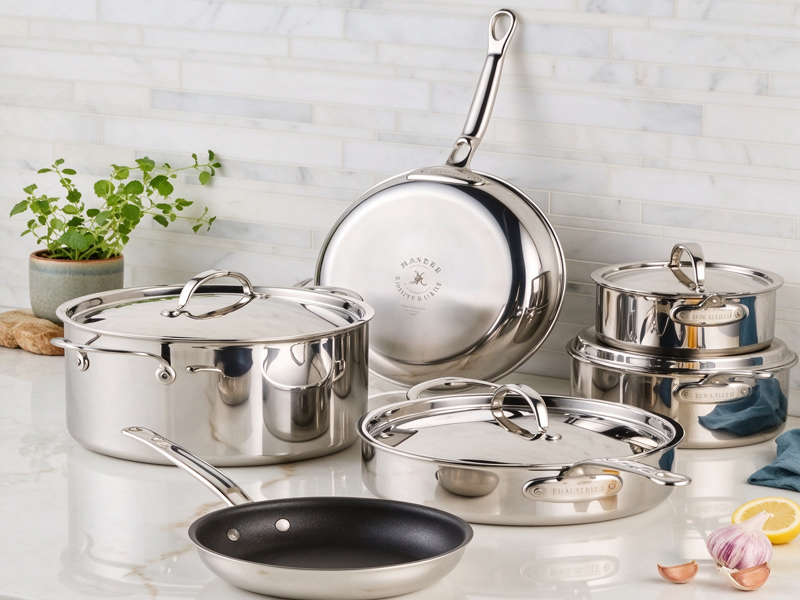
The rest of the Italian-made stack fills out the engineering portfolio. CopperBond wraps a pure copper core in five bonded layers — including a wraparound magnetic base that solves the induction problem which, as the Mauviel review in this category noted, plagues classic copper — with an Aura variant that bonds 1.5mm of pure copper directly to stainless for maximum responsiveness. ProBond, the workhorse line, applies the founder's favorite metallurgical trick: cold-forging a flat disk into a pan with a thick base, thin sidewalls, and a thick rim, cutting weight where it impedes handling while keeping durability where it matters. Sealed rims keep dishwashers from ever leaving a sharp edge, and flush interior rivets eliminate the grime ring that classic rivets collect.
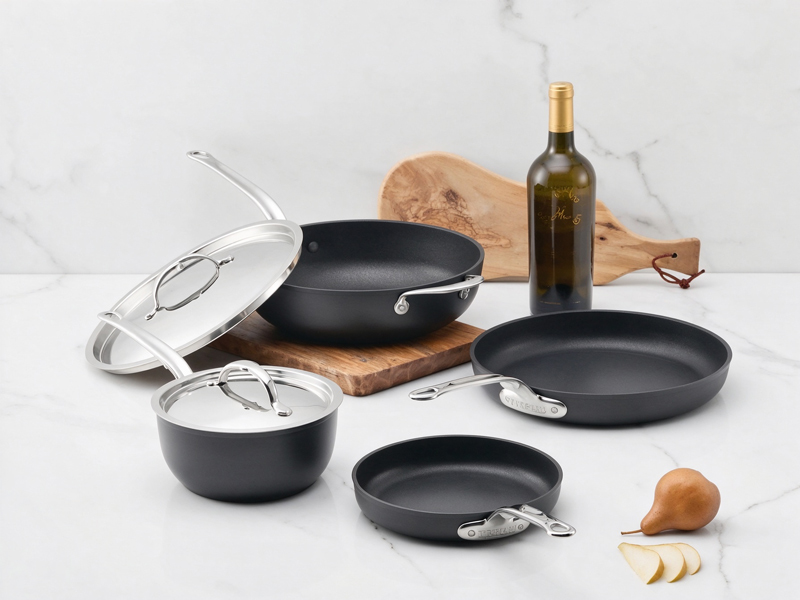
Two secondary lines complete the shelf with the candor the store is known for: TITUM, a titanium-and-diamond-reinforced nonstick for buyers who genuinely want a coating, and Provisions, a more accessible range the store openly notes is manufactured in China — the rare premium brand that prints the geography of its cheaper line rather than hiding it.
Thomas Keller, universal lids, and the Red Dot
The Thomas Keller Insignia collection is the store's prestige tier and its most instructive design story. Keller — whose kitchens at the French Laundry and Per Se run on stainless — came to Hestan with a restaurant's complaints: rivet heads that trap food, lids that clutter shelving, handles that transfer heat. The resulting line is rivetless inside, with a seamless handle vented to stay cool, and ships with two universal lids designed to fit every vessel in the collection — a manufacturing-waste reduction Keller requested as much as a storage convenience. The collection took a 2022 Red Dot Product Design Award, and it anchors the storefront's chef testimonials alongside Corey Lee of Benu and Timothy Hollingsworth of Otium.
The collaboration matters to store reviewers for a structural reason: it demonstrates what the brand is for. Hestan's chef network is not a celebrity-endorsement flywheel of the sort HexClad runs — it is a product-development pipeline whose outputs (rivetless interiors, universal lids, vented handles) ship in the consumer catalog. Buyers are purchasing the byproducts of working-kitchen R&D, which is precisely the premium the price encodes.
Made in Italy, owned by Hestan
Provenance at Hestan is vertical in a way few premium brands match. The cookware is designed and manufactured in the company's own Italian factories in the Bergamo and Bologna regions — tooling, techniques, and standards developed in-house — with the founder citing the facility's automated high-tech processes as the reason Italian manufacture beats outsourcing. The exceptions are labeled without embarrassment: Provisions comes from China, OvenBond bakeware from Thailand, each held, the store says, to the same performance standards.
For buyers weighing the premium, that ownership chain is the argument: no contract foundry, no batch variance between seasons, and a single engineering culture from furnace to storefront. The counterargument is equally clear — Italian manufacture at this level is expensive, and the price sheet reflects it — but at least the premium is traceable to a map pin rather than a logo.
The premium price and what it excludes
Honesty requires pricing this store accurately. Individual skillets run in the low-to-mid hundreds, sets into four figures, and even the entry lines undercut All-Clad only modestly. The lifetime warranty covers material and manufacturing defects with the standard exclusions — normal wear, overheating damage, and, notably, dishwasher-caused discoloration, which buyers who love the dishwasher-safe claim should read twice. Reviewer nits recur around the handles: the large hanging loop at the end of every handle is awkward to grip, and the polished finishes show hairline scratching that the brushed lines hide.
The deeper question is structural: at these prices, Hestan competes less with Made In and Misen — both reviewed in this category — than with All-Clad and Demeyere for the serious-cook wallet. The store's answer is differentiation that is genuinely technical rather than cosmetic: a surface that is not a coating, a copper core that works on induction, a forging profile that reduces weight without thinning where it counts. Whether that engineering is worth the delta is a question the store's documentation equips buyers to answer — the collection-comparison pages are among the best in premium cookware.
Closing take for the engineering-minded cook
Hestan's storefront is what happens when a career cookware engineer gets a blank sheet and an unlimited materials budget: fourteen patents, two Italian factories, a Keller-designed line, and a product architecture — NanoBond above CopperBond above ProBond — that reads like a curriculum vitae in metal. It is the most technically serious store reviewed in this category, and its documentation respects the buyer's intelligence to match.
Buy here if you want stainless performance without coating anxiety, if copper-on-induction has been your unsolved problem, if universal lids and rivetless interiors sound like relief rather than luxury, and if you prefer spec sheets to lifestyle photography. Buy All-Clad or Made In if the premium doesn't fit the budget — the cooking will be closer than the prices suggest. Either way, read the comparison pages first: this is one store where the marketing and the engineering were written by the same person.