Kickstarter rejected them, so they crowdfunded their own way in

Official homepage: https://scoutalarm.com/
Scout Alarm began with a Chicago founder who tried to buy a home security system and walked away angry. The industry, he concluded, was twenty years behind the times and so expensive that most American households simply went without. In February 2013 his team launched a pre-sale campaign on its own website after Kickstarter turned it down — and still raised roughly $200,000 from hundreds of backers. More than a decade later, Scout sells a full wireless security line with month-to-month plans starting under ten dollars. Here is our review of its store.
Buying a Security System Started This Company
The origin story is unusually literal: one of Scout's founders moved into a new house in Chicago, went shopping for a security system, and discovered an industry frozen in amber — long contracts, dealer installations, and price tags that explain why the company's research found 83 percent of American homes go without protection. His answer was not a cheaper version of the old model but a redesign of the product itself: a clean, wireless, renter-friendly system that packs up and moves with you, assembled by co-founders Daniel Roberts — a designer with a Master of Design from IIT's Institute of Technology and founder-in-residence experience at Chicago incubator Sandbox Industries — and David Shapiro, who met Roberts while working inside that incubator. Design-led, contract-free, and urban-renter-first was the positioning from day one.
The Crowdfunding Platform Said No Thanks
The launch itself became part of the legend. In February 2013 the team applied to Kickstarter and was rejected — the platform judged the product too early in preproduction to list. Rather than wait, Scout built its own crowdfunding page using open-source code released by Lockitron, the smart-lock maker that had pioneered the independent pre-sale, and within a month had gathered nearly 600 backers pledging over $159,000. That total climbed past $200,000 as the campaign closed, and VentureBeat reported the company believed it was among the most successful independent crowdfunding efforts of its era. The first systems shipped in August 2013, and the campaign's ethos — customers, not investors, funded the company — still shows in the store's transparent, build-your-own pricing.
A Hub That Refuses to Go Offline
The hardware philosophy centers on one device: the Scout Hub, a $120 control panel that every sensor in the system communicates with over Zigbee. The hub matters because it carries the two backups that define Scout's reliability pitch — an internal battery that keeps the system running through a power cut, and an optional 4G LTE cellular connection that keeps it reporting even if an intruder cuts the internet line or it simply fails. That cellular path is what separates Scout from pure WiFi alarm kits: when the system triggers, it can still send alerts and reach the monitoring center without broadband. Both self-monitoring and professional monitoring plans ride on the hub, and third-party reviewers consistently single out the cellular backup on the self-monitoring tier as something most competitors reserve for their premium plans.
Self-Monitoring That Costs Less Than Streaming
Scout's pricing has stayed deliberately gentle for a security company. Self-monitoring runs $9.99 a month in 2026 — it was $5 at launch and $10 through the mid-2010s — and professional 24/7 monitoring through a licensed third-party central station runs $19.99, both strictly month-to-month with no long-term contract. The self-monitoring tier is more capable than the label suggests: cellular backup, phone and text alerts that reach any handset including basic phones, and app control. The honest asterisk, and it is a significant one, is that a Scout system does not truly function without some plan attached — the hub needs the subscription link — so budget for at least the $9.99 tier when comparing against free-standing kits.
Full Equipment Shelf, Priced Per Piece
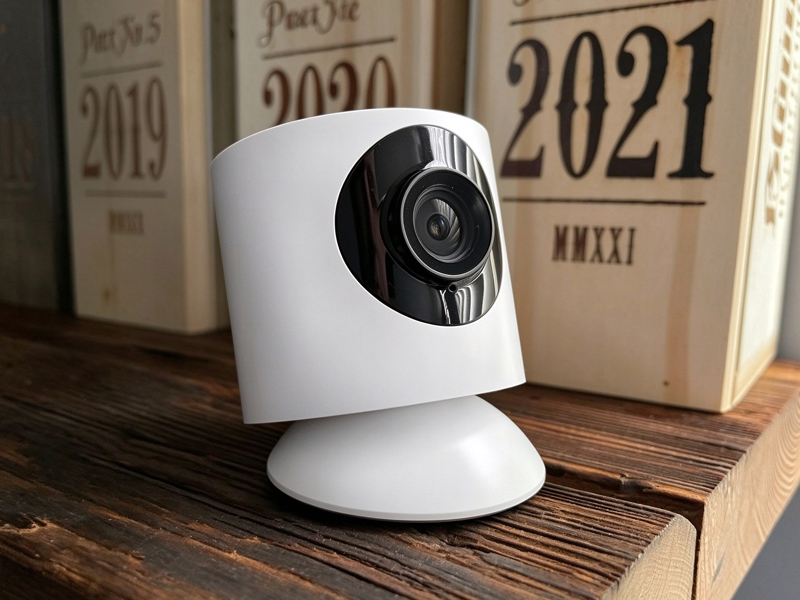
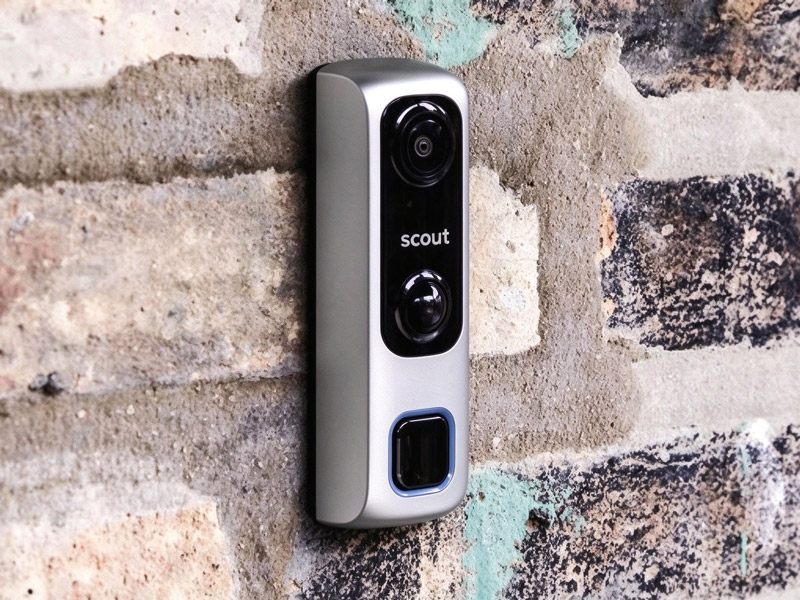
The store's catalog has quietly grown into one of the more complete DIY security shelves. Individual pricing is posted openly, no quote required: the hub at $120, door and window access sensors at $20, motion sensors at $30, a smoke and carbon-monoxide detector at $47, a water sensor at $30, glass-break sensors at $50, keypads at $50, and panic buttons at $20. Cameras arrived later in the company's life — an indoor camera at $99 and a video doorbell at the same price — alongside a $249 smart door lock, remote controls at $20, and novelty-cheap accessories like $2.49 RFID stickers and $4.99 key fobs. Everything pairs with the hub over Zigbee, works with Amazon Alexa and Google Assistant, and integrates with IFTTT, though Apple HomeKit is absent. Starter packs bundle the essentials at a modest discount for anyone who does not want to assemble a system piece by piece.
The Last Word on Scout for Renters
Scout occupies a specific and defensible corner of the security market: the renter, the small apartment, the household that wants professional-grade sensors and a real monitoring center without signing a three-year contract or drilling into a landlord's walls. The system's wireless, move-with-you design remains its clearest differentiator a decade on, and the cellular backup is genuinely rare at its price. The trade-offs are equally clear: there is no free tier of any kind, camera offerings are basic compared with camera-first brands, and anyone wanting deep smart-home automation will find the integrations thinner than bigger ecosystems. For the audience it was designed for, though, the store still delivers exactly what the founders set out to sell — modern security without the industry's old baggage.