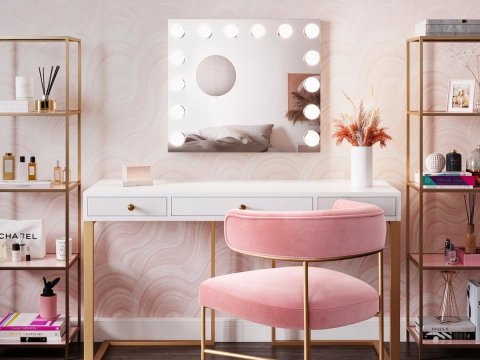
Is thuma's tool-free joinery bed worth the premium price?
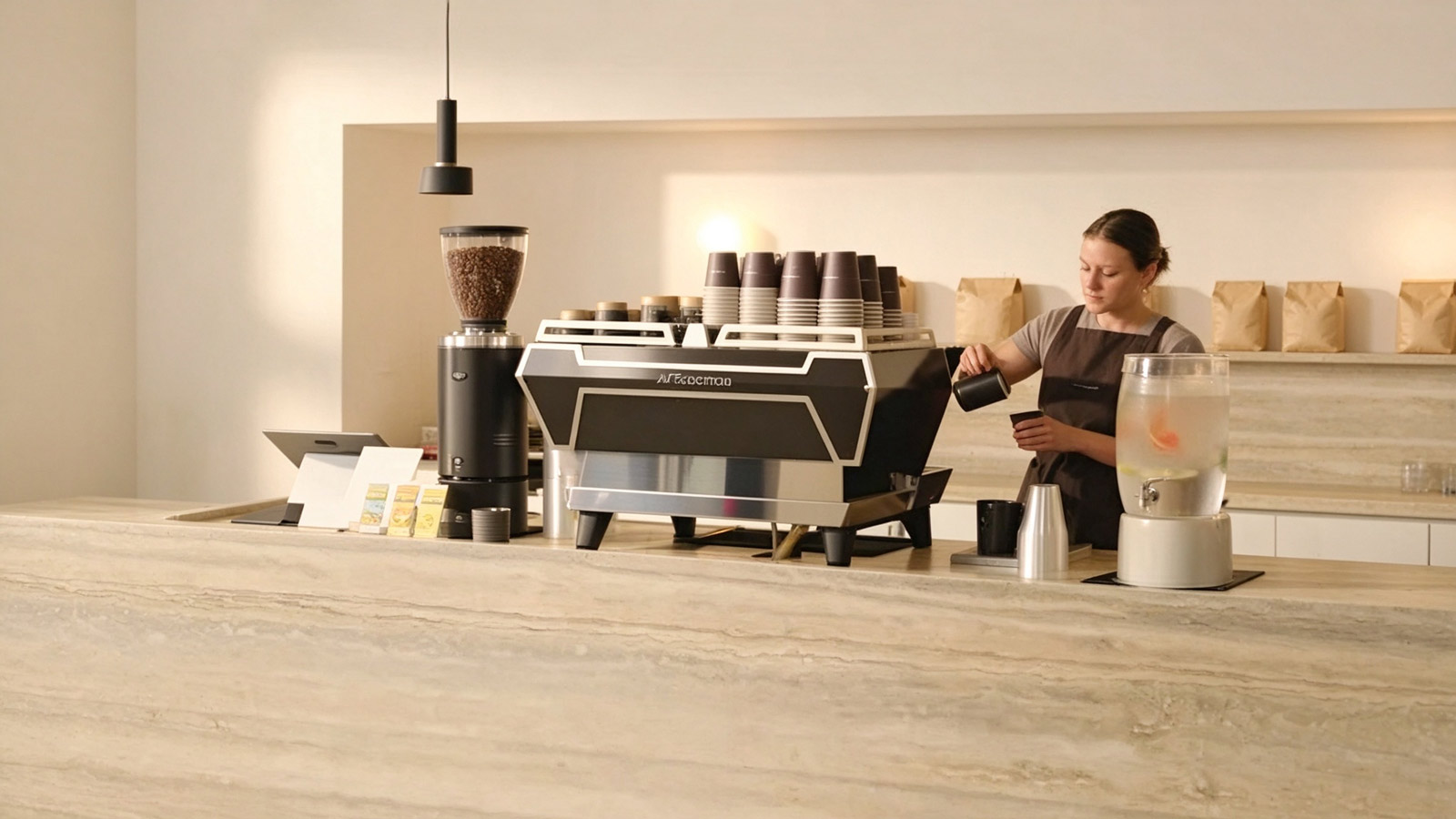
Official homepage: https://www.thuma.co
Thuma launched in 2016 as two Silicon Valley founders' answer to a specific indignity: the particleboard bed frame that dies in every move. Its single product — a platform bed of upcycled rubberwood assembled with Japanese joinery and two hand-tightened screws — has since collected more than ten thousand five-star reviews, spawned nightstands, dressers, and an upholstered Signature line, and turned "Thuma dupe" into a genre of competitor marketing. This review evaluates the Shopify storefront dimension by dimension: the joinery engineering, the materials ledger, the certifications and warranty, the expanding bedroom ecosystem, and the fine print in the felt.
Two Silicon Valley vets and a 2016 founding
Founders Douglas Shumway and Reed Kamler started Thuma in 2016, betting that the direct-to-consumer playbook could work on bedroom furniture — a category their contemporaries were avoiding in favor of sofas and mattresses. The Bed arrived in 2018 to a market suddenly ready for it: the Japandi aesthetic was cresting, urban renters were churning through apartments, and the incumbent options split neatly into landfill particleboard and heirloom pricing with nothing engineered in between. Thuma positioned itself as the third option, selling to what its early marketing called indoor enthusiasts — people who intended to spend a third of their lives on this purchase and resented being offered staples and glue.
The positioning was unfashionable in a second way: where DTC furniture brands celebrated one hero product, Thuma declared the whole bedroom its niche, a throwback to the matched-set furniture store rebuilt with modern materials, sustainability vocabulary, and tech-industry polish. A decade later the bet reads as discipline: the catalog remains stubbornly bedroom-only, and the brand ranks among the most recognized names in its single category.
Joinery, velcro, and two hand-tightened screws
The engineering signature is Japanese joinery adapted for flat-pack shipping. Four rails lock into the legs through shaped, compression-fit joints with no bolts, cam locks, or Allen keys; the brand's own assembly literature promises five minutes, and reviewers at outlets from Gear Patrol to USA Today's Reviewed consistently land between five and twenty minutes solo. The entire tool inventory consists of two hand-tightened screws on the center slat support — the one concession where compression alone would not do. Because the joints hold by geometry rather than hardware tension, they do not loosen with seasonal wood movement, which is the mechanical reason owners report silent operation years in where hardware-built beds have begun to creak.
The disassembly symmetry matters as much as the assembly: the frame breaks down as fast as it goes up, survives repeated moves without degrading joint fit, and ships in three boxes sized for narrow doorways and apartment elevators. One honest ergonomic note from long-term reviews: an assembled Thuma bed is heavy and awkward to slide — the joints that make it rigid make it a unit, and moving it assembled means moving it whole.
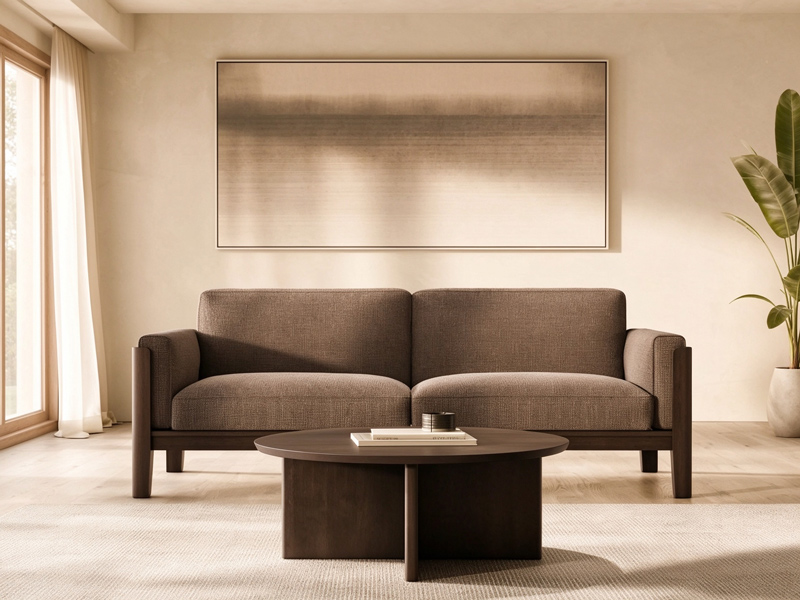
Rubberwood: the tree that gives twice
The material choice is the brand's quiet masterstroke. Rubberwood comes from Hevea brasiliensis trees that have finished their latex-producing lives — roughly thirty years in, when plantations would otherwise burn or chip them — so every frame is effectively a second harvest. The wood is a genuine hardwood at roughly 960 on the Janka scale, comparable to cherry, kiln-dried to single-digit moisture content for dimensional stability, and finished with oil-based coatings. Each piece carries the natural variation of its previous life: grain, knots, and subtle color shifts the brand celebrates rather than veneers over.
Competitors have noticed. Rival brands have publicly dinged rubberwood as a mid-density, less-expensive species assembled from smaller glued pieces — a technically fair description that misses the point: the question is not whether the wood is walnut, but whether the frame performs, and at a 1,500-pound rated capacity with sub-three-inch slat spacing — the gap foam-mattress warranties require — the specification sheet answers on Thuma's behalf. The felt wrapping those slats is itself recycled plastic, and the leg caps are cork.
Ten thousand five-star reviews and the waitlist
The social proof is outsized for a bedroom-only brand. The company reports more than ten thousand five-star reviews on The Bed alone, editorial coverage runs from Forbes — which interviewed its senior director of product and industrial design, Quentin de Coster, on the design process — through Business Insider, Gear Patrol, and Remodelista, and the demand pattern has been periodic sellouts with waitlists, the founding DTC rhythm the brand has never entirely outgrown. The press engine runs on the product's photogenic minimalism: the low platform profile, the three-box unboxing, and the five-minute assembly video make the bed as shareable as furniture gets.
The storefront converts that attention with textbook discipline: size and stain configurators, bundle pricing against the headboard and storage add-ons, financing, and a review wall dense enough to function as a secondary product page. The shopping experience is arguably the catalog's strongest asset — everything the bed promises is demonstrated before checkout.
PillowBoards, nightstands, and the dresser system
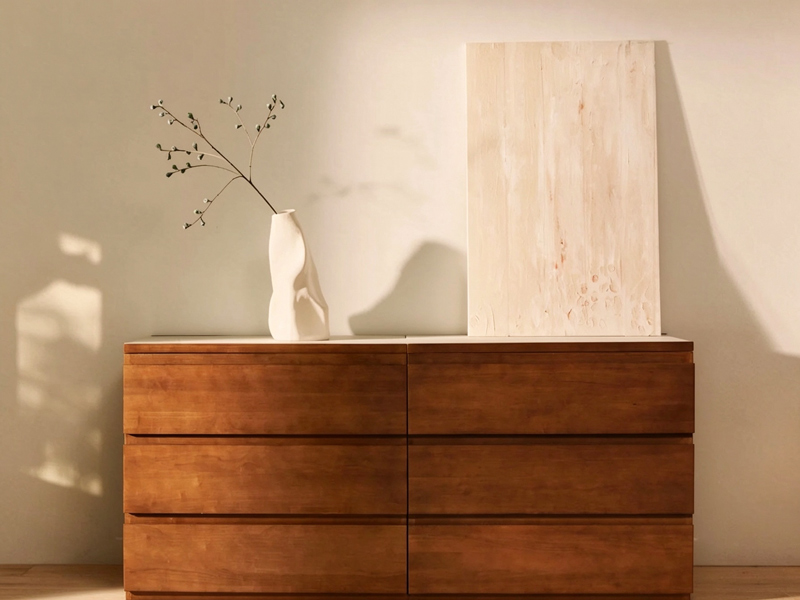
The ecosystem logic shows in the accessories. The PillowBoard — a padded, linen-wrapped backrest that leans between wall and mattress rather than bolting to the frame — is the most divisive design decision in the catalog: reviewers either find its floating minimalism brilliant or spend their first week nudging it straight. The wood headboard option attaches properly for buyers who want permanence. The Nightstand and Dresser extend the same grammar — solid rubberwood, hand-tightened screws, nesting frames — and the Dresser's open-drawer stacking system, whose central engineering challenge de Coster described as keeping stackability without sacrificing assembly ease, shows the design team solving second-order problems rather than reissuing the hit.
The Signature line, launched in 2025, moves upmarket: fully upholstered frames concealing the joinery, stain-resistant linen blends certified to OEKO-TEX Class 2, and wool-felt options woven from 100 percent recycled fiber including 70 percent post-consumer wool. It is the clearest signal of where the brand intends to spend its next decade — from minimalism for renters toward furnishing for keepers.
Certifications, warranty, and the fine print
The credential stack is third-party where it matters. The Bed is GREENGUARD Gold certified for low chemical emissions, the foam in soft goods is CertiPUR-US, and the textile lines carry OEKO-TEX certification — meaningful because each is an independent audit rather than a self-declared adjective. The commercial terms follow the DTC premium playbook: free shipping, a 100-day return window, and a lifetime warranty on the frame that the company leans on heavily in its marketing.
The fine print, however, deserves its own paragraph, because the single most serious owner complaint lives inside it. The felt wrapped around the slats — the recycled-plastic felt that keeps the bed silent — can trap moisture in humid climates, and documented owner reports describe mold developing on slats within one to two years in unventilated bedrooms. That failure mode is excluded from the lifetime warranty under its humidity and ventilation clause. The mitigation is simple — air the slats, run a dehumidifier, choose the storage-bed configuration's airflow — but a warranty that names the flaw and declines to cover it is a term buyers should meet before purchase, not after.
The mold clause and the low profile
Two further honest notes round out the ledger. Height: the slats sit 7.5 inches off the floor, which with a standard ten-inch mattress puts the sleeping surface around seventeen to eighteen inches — deliberately low, close to Japanese floor-sleeping tradition, and genuinely difficult for anyone with limited mobility or a taste for tall beds; accessibility reviewers flag it explicitly. Support: the company's post-purchase help runs primarily through email and self-serve content, and independent reviews have criticized response delays and the absence of phone or chat — the standard trade of a lean team, felt most acutely when a freight box goes missing.
None of these are hidden — the height is in every spec table and the felt clause is in the warranty text — but they define the realistic buyer: young, mobile, design-led, in a climate-controlled apartment, buying for a primary bedroom rather than a guest room or an elder's room.
Final call for the design-led sleeper
Thuma's storefront is the most disciplined niche store in furniture e-commerce: one room of the house, one material philosophy, one assembly experience refined for a decade until it became the category's reference. The joinery engineering is real, the rubberwood ledger is honest, the certifications are audited, and the ten-thousand-review wall is earned. The premium over particleboard alternatives buys silence, longevity, and a five-minute move-day reassembly that competitors have spent years trying to duplicate.
Buy here if you are a serial mover who wants a bed that moves with you, if low minimalism is your aesthetic and 7.5-inch slat height is compatible with your knees, if your bedroom is climate-controlled or you are disciplined about airing the slats, and if one well-designed room outranks a houseful of compromises. Buy a taller, ventilated, bolted frame if you need accessibility, live in serious humidity, or want to spend half as much. For its intended sleeper, though, this store's promise is as solid as the joints that built it.