Is hexclad's hybrid nonstick really the last pan you'll ever buy?
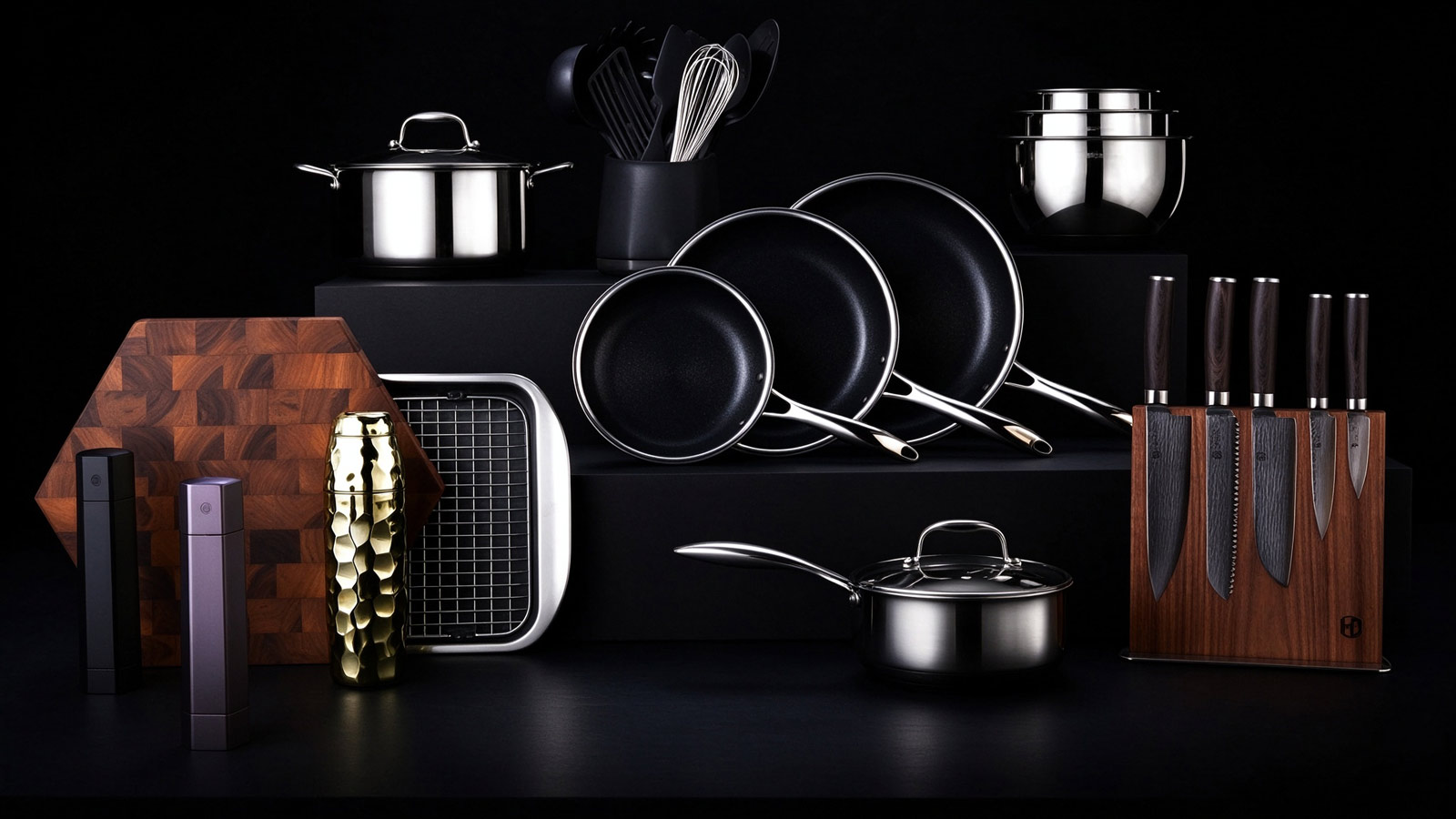
Official homepage: https://hexclad.com
HexClad sold its first pan in November 2016, built from a laser-etched hexagon technology its founders discovered at a 2015 trade show in China. Nine years later the Los Angeles brand generates roughly half a billion dollars in annual revenue, carries a billion-dollar valuation backed by Gordon Ramsay's own money, and became the first cookware company ever to advertise during the Super Bowl. This review examines the Shopify storefront behind the hype — the hybrid technology, the Ramsay flywheel, the 2023 marketing lawsuit and its settlement, owner complaints, and whether the pan justifies its premium price.
An actor, a juicer flop, and a laser
Daniel Winer came to cookware through failure. A New York University graduate who spent years chasing an acting career in Los Angeles, he spent a decade in the cookware industry before his first entrepreneurial swing — a cold-press juicer — collapsed almost immediately, costing him his retirement savings. At a 2015 trade show in China he encountered a laser-etching process invented for Korean barbecue grills, and the question that became HexClad formed on the spot: why couldn't the same technique marry stainless steel's searing power with nonstick's convenience in one pan?
He and partner Cole Mecray launched with roughly $20,000 in personal savings — maxed cards, drained accounts — and sold their first pan in November 2016. The early days were roadshow economics: the two assembled packages in their backyards and hand-delivered them, and a live Costco demonstration in November 2017 produced $5,000 in a single day, proving the product could sell when a human being seared a steak in front of a crowd. The Shopify storefront was the scale play: DTC cookware was still a joke to investors in 2016 — "everybody laughed at us," Winer later recalled — which meant no outside money and total control.
The hexagon explained: peaks, valleys, and TerraBond
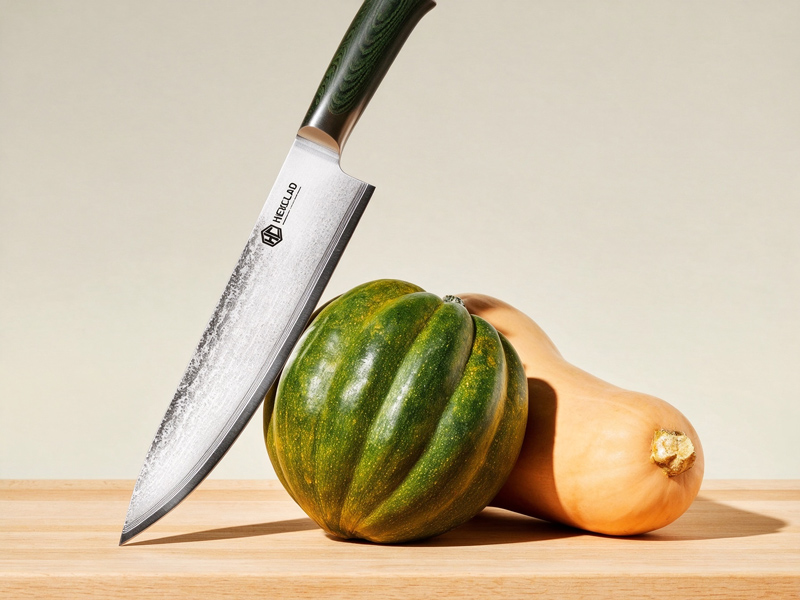
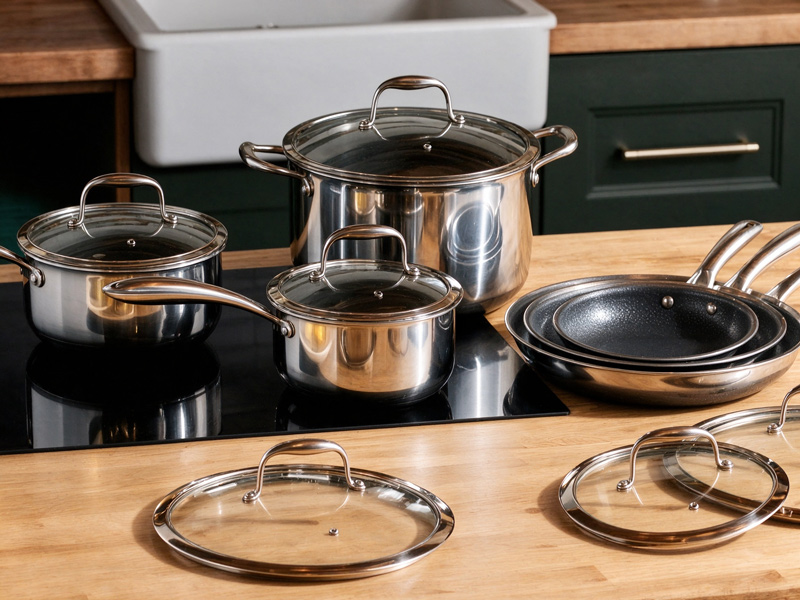
The product is a tri-ply pan — magnetic stainless base, aluminum core, stainless cooking surface — whose face is laser-etched into a hexagon lattice. The raised stainless peaks take the abuse of metal spatulas and provide the sear of bare steel; the recessed valleys carry the nonstick coating, so food releases where it touches and the coating is protected from utensils. It is induction-ready, dishwasher-safe, oven-rated to 500°F, and covered by a limited lifetime warranty.
The coating story carries an important asterisk. Original HexClad pans used a PTFE-based nonstick through roughly 2023; in the second half of 2024 the brand introduced TerraBond, a ceramic nonstick formulation it describes as PTFE-free and PFAS-free. Buyers today get the ceramic formulation, but the older pans still circulating on resale platforms and in second kitchens are the PTFE generation — and the marketing language that described those pans is precisely what landed the company in court.
From Costco roadshows to a billion-dollar valuation
The growth curve is among the steepest in consumer hardware. By mid-2021 HexClad had sold over a million units in North America; cumulative sales passed $500 million in 2023 across more than thirty countries; and in July 2024 Studio Ramsay Global — the joint venture between Gordon Ramsay and Fox Entertainment — invested $100 million at a valuation Bloomberg reported near one billion dollars. Revenue for 2024 reached approximately $550 million with a three-year growth rate around 541 percent.
Distribution followed the same omnichannel logic throughout: the Shopify flagship and Amazon handle online, while Costco remains deliberately the only wholesale account — Winer has called Costco "a unique animal" where the parking lot mixes Rolls-Royces with $3.50 hot dogs, ideal for roadshow storytelling. Regional storefronts now serve the UK, Canada, Japan, Australia, Mexico, and the EU, with a Dubai launch event in December 2025 opening the Gulf. In 2025 the brand became the first cookware company to buy a Super Bowl ad, running its deliberately absurd "unidentified frying object" spot — a level of marketing spend no kitchen brand had attempted before.
Ramsay's equity deal and the chef flywheel
The Gordon Ramsay relationship is the rare celebrity endorsement that is also a cap table entry. Ramsay found HexClad on Instagram in the summer of 2020, requested pans through a direct message, and became lead ambassador and equity partner in July 2021 — reportedly declining a quoted two-million-dollar commercial fee in favor of ownership. He uses the pans in his restaurants and television productions, joined founder Danny Winer at the Dubai launch, and speaks about the pans as "the Rolls Royce of pans."
The flywheel has since widened. HexClad maintains a Culinary Council of professional chefs and added Clare Smyth — named the World's Best Female Chef in 2018 — as a partner in 2025. The strategic logic is visible: the pans are priced at premium stainless levels, and the only way to charge All-Clad money for a hybrid nonstick is to borrow Michelin credibility wholesale. For buyers, the practical effect is a brand whose marketing engine is chef-validated but whose claims deserve the same scrutiny as any paid endorsement — which the next section makes concrete.
The lawsuit that changed the marketing language
In 2023 a class action — Cliburn v. One Source to Market, LLC, the parent entity — alleged that HexClad's advertising described its PTFE-coated pans as non-toxic and chemical-free in ways that were misleading. The company settled for $2.5 million and, as part of the settlement, updated its marketing language around product materials. The suit did not find the pans unsafe, and modern HexClad uses the PTFE-free TerraBond coating — but the episode matters to store reviewers for what it reveals about the brand's marketing metabolism: aggressive claims, corrected under legal pressure.
That metabolism shows elsewhere. The brand's paid-media machine is famous in DTC circles for its scale, and the Super Bowl spot plus relentless retargeting have made HexClad simultaneously the most visible and the most advertised cookware brand in America. Buyers who prize calm, factual product pages should know the storefront sits atop one of the loudest growth-marketing operations in the category — the product pages themselves are polished, the claims now more carefully worded.
Weight, discoloration, and the nonstick fine print
Owner reviews converge on a consistent pattern. Strengths: genuinely even heating, excellent sear, metal-utensil and dishwasher durability, and cleanup easier than bare stainless. Weaknesses: the pans are heavier than standard nonstick; rainbow discoloration appears on the cooking surface after several uses and requires vigorous cleaning (harmless but cosmetic); stuck-on food in the hexagon valleys demands more scrubbing than marketing implies; the short, round handles can rotate in a loose grip; and the hybrid surface rewards a learning curve — preheat properly, use a little fat, season the pan before first use.
The deepest criticism is categorical: the hybrid is not truly nonstick in the way a dedicated nonstick pan is, and reviewers who expected eggs to glide without oil report disappointment. HexClad occupies a middle category — closer to easy-clean stainless than to Teflon — and buyers who understand that calibration love the pans, while buyers who wanted pure nonstick sometimes feel the marketing oversold. The lifetime warranty covers defects, but coating wear from normal use is a gray zone in every nonstick warranty, HexClad's included.
How HexClad compares with Misen and Caraway
Positioning against its DTC neighbors clarifies the value case. Against Misen — the Brooklyn brand reviewed previously — HexClad costs significantly more for a similar Chinese-made, American-designed pan, but offers the hybrid surface Misen's pure stainless lacks and a louder durability promise. Against Caraway, reviewed elsewhere on this site, the difference is philosophy: Caraway sells ceramic-coated aluminum for gentle everyday cooking, while HexClad sells clad steel for high-heat searing; they barely compete for the same pan. Against All-Clad, HexClad trades fifty years of restaurant provenance for a nonstick convenience All-Clad purists would call cheating.
The honest verdict: HexClad is the right pan for the home cook who sears hard weekly, hates stuck eggs, wants one pan to do everything, and will pay premium prices to avoid owning both a stainless skillet and a nonstick one. It is the wrong pan for gentle-cooking minimalists, for buyers allergic to heavy marketing, or for anyone expecting literal nonstick behavior without fat.
The verdict for high-heat everyday cooks
HexClad's Shopify storefront is the retail front of one of the great American DTC success stories: an actor-turned-salesman, a borrowed laser technology, a roadshow grind, and a chef partnership that turned a pan into a billion-dollar brand. The store itself is polished, internationalized across dozens of markets, and backed by a lifetime warranty — and it sits on top of a marketing machine with a documented history of claims that needed a lawsuit to correct.
Buy here if you cook hard and often, want metal-utensil freedom with easier cleanup than stainless, and are comfortable paying a premium for convenience. Buy from Costco if you want the same pans with the warehouse's return policy behind them. And temper the Super Bowl hype with the owner's own advice: preheat, use a little fat, and treat the hybrid like the high-performance compromise it is — not magic, and not quite the last pan you'll ever buy, but for many kitchens, close enough.