How a maryland parts shop became the guardian of old-school touring bikes

Official homepage: https://velo-orange.com
Velo Orange opened in 2006 on a side street in Annapolis, Maryland, when founder Chris Kulczycki turned what was meant to be a retirement hobby into a full-time hunt for new-old-stock parts from European and Japanese warehouses. When those stockpiles ran dry, the company did something unusual: instead of chasing trends, it started designing its own racks, fenders, handlebars, and frames around the same classic principles. Sold to two longtime employees in 2017, Velo Orange still runs more like an oversized workshop than a marketing department. This review examines its catalog, storefront experience, owner feedback, warranty terms, and the trade-offs of buying into a philosophy this stubborn.
From an Annapolis side street to a global parts shelf
The origin story has become cycling-retail folklore. Kulczycki founded the company partly as a retirement project, reselling NOS components mainstream shops had abandoned. As those sources dried up, Velo Orange pivoted into private-label racks, handlebars, fenders, and eventually complete frames. In February 2017, longtime employees Igor Shteynbuk and Adrian Nelson bought the company along with its house brands, Grand Cru Components and Dajia Cycleworks. Both brought long touring resumes, which is why the catalog reads like a packing list for a loaded tour rather than a race spec sheet. Nearly two decades in, it remains rooted in Maryland with its workshop-first attitude intact.
A catalog that treats chrome, cork, and canvas as engineering choices
Browsing feels different from a mainstream component giant. The Grand Cru line covers cranks, sealed headsets, quill and threadless stems, rims, and leather-topped saddles, while accessories run from hammered-alloy fenders to cork grips and waxed-canvas bags. The import side keeps classic French and Japanese components alive, and the most telling shelf has nothing to do with bikes at all: the shop sells Savon de Marseille soap and Opinel knives, complete with a lovingly written essay on hard-milled soap. Newer additions like the Equal cable-actuated hydraulic disc brakes prove the brand isn't frozen in amber — owners praise them as a serviceable middle ground between finicky hydraulics and weak mechanical discs. Pricing sits honestly in the middle: small parts from about $10 to $80, framesets historically under $1,000, complete builds roughly $2,200–$3,100.
The homepage reads like a workshop manifesto, not a sales funnel
The storefront itself is half the appeal. No countdown timers, no spinning discount wheels, no pop-ups. The homepage opens with editorial photo essays under headers like "Built for the Long Haul" and "Change Your Bars, Change Your Life," a Bike Build Ideas section walking through complete commuter and tourer builds, a VO Voices area collecting customer stories, and the VO Bulletin newsletter promising news rather than daily blasts. Near the bottom, a review widget draws on more than five thousand published owner reviews. The entire experience assumes you own hex keys and read instructions — and treats that as a compliment.
What more than five thousand owner voices keep repeating
The feedback loops back on a few themes so consistently they become the brand's real product. Owners of old steel bikes show up constantly: one reports a Grand Cru headset keeping a 1986 Schwinn on the road, another praises 10-tooth pulley wheels quieting a 1997 Shimano drivetrain, a third finishes a freshly powder-coated 1973 Peugeot with hammered fenders. The Equal brakes earn unusually technical praise — power and modulation matching the best hydraulic systems, while remaining trivially serviceable. Shipping speed gets repeated shout-outs. Criticism is scarce, though one fender buyer admits the instructions were "a little hard to understand" before it clicked. The near-five-star average barely wavers across products.
Steel frames designed for racks, fenders, and the next twenty years
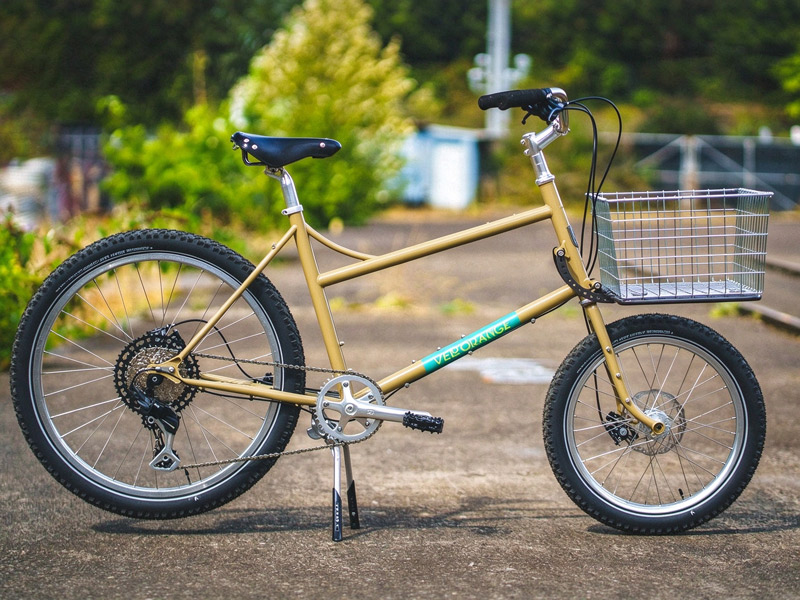
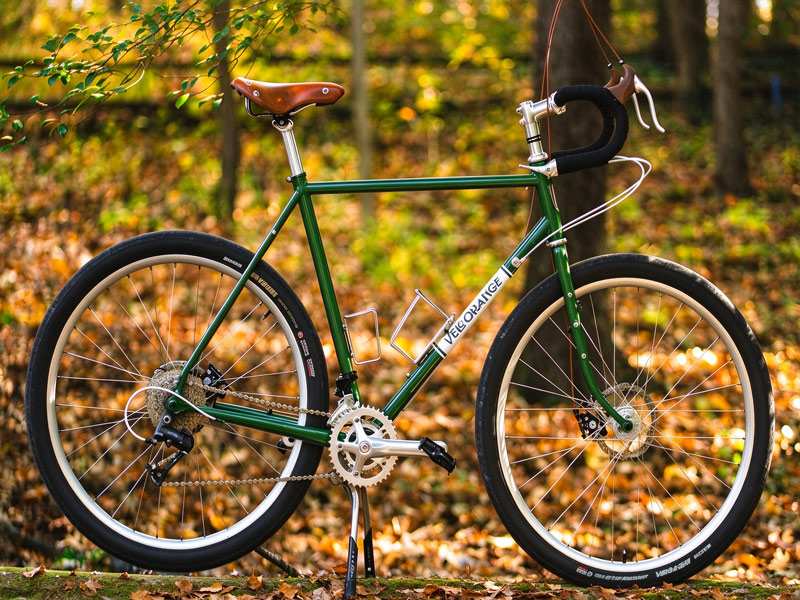
The frames are where charm becomes practicality. The Polyvalent is the centerpiece: 4130 double-butted chromoly, disc brakes, clearance for 650b x 47mm tires, and enough mounts to dizzy a bikepacker. Its step-through sibling, the Low Kicker, was tested by cycling publications at around $3,070 complete, with framesets hovering near $925. The Piolet takes the same logic onto 29-inch trail terrain, the Camargue targets expedition touring, the Pass Hunter covers randonneuring, and the Neutrino mini-velo is pure workshop whimsy. Details matter: double eyelets, triple bottle bosses, lowrider rack braze-ons, full-length fender clearance as standard — and complete builds even ship with fenders and pedals fitted. These are frames meant to be repaired and repainted in twenty years, not replaced.
Sixty days to change your mind, three years on a frame
The fine print is refreshingly direct. Buy direct and you get 60 days to return unused, uninstalled items in original packaging; the store asks for trackable insured shipping and allows about two weeks to process refunds. Sale items are final unless obviously defective. Parts and accessories carry a one-year defect warranty; frames and forks get three years against manufacturing flaws for the original purchaser — keep that invoice email. Items bought through dealers are handled by those dealers, which is standard but worth knowing. The paperwork, including a return form in the printable "Customer Service Compendium," matches the rest of the operation: no apps, no portals, just forms and email.
Where the niche charm starts costing you patience
None of this is free. Classic aesthetics mean classic weights — complete builds around 28 pounds are normal, and gram-counters will bounce off immediately. Stock is eccentric: popular frame sizes sell out, and the import side means occasional gaps on long-tail components. Printed instructions assume mechanical confidence, so first-time wrenches may need YouTube companions. Shipping terms are clearly built around the domestic US market, and international buyers should budget duties and patience. And if you want an app, live chat, or buy-back program, none exist. Velo Orange sells parts to people who intend to keep them.
Our closing word for the rider building one forever bike
Velo Orange isn't trying to win the whole cycling market, and that focus is precisely its value. If your ideal machine is a steel frame you can still repair in 2045 with a hardware-store toolkit, this is one of the few stores on the internet built entirely around that premise — from the $11 block of Marseille soap to the $3,000 loaded tourer. The employee buyout kept the soul intact, the review history backs the quality claims, and the warranty is fair without being flashy. A rare case of a store that knows exactly what it is.