How a 130-year-old tennessee foundry became america's online cast iron default
Official homepage: https://www.lodgecastiron.com
Lodge Cast Iron has poured skillets in South Pittsburg, Tennessee since 1896 — the only American cast iron foundry of its era still operating. It invented factory seasoning in 2002, acquired the boutique brand FINEX in 2019, opened a cast iron museum in 2022, and now runs a Shopify storefront alongside every major retailer in America. This review evaluates that online store dimension by dimension: the 130-year manufacturing story, the product catalog from $20 skillets to the Blacklock line, the honest geography of its enamel, the storefront's role against Walmart and Amazon, and what enthusiasts still complain about.
From a burned foundry to a family empire
The company's own history page begins with a fire. Joseph Lodge settled in South Pittsburg — a town of roughly three thousand people on the Tennessee River — in 1877, and in 1896 he opened the Blacklock Foundry, named after a minister friend. In May 1910 the foundry burned to the ground; within three months Joseph had bought a meadow for $6,000 and rebuilt a few blocks away as Lodge Manufacturing Company. Family members count 1896 as the founding, and the company calls the 1910 rebuild "just a name change."
The survival record since is unmatched in the category: garden gnomes and novelty animals cast through the Great Depression to keep furnaces burning, war production during the Second World War, an automated molding line installed with the second American Disamatic machine in 1965, and a 1992 conversion from coal-fired cupola furnaces to electromagnetic induction melting that earned a Tennessee Governor's Award for hazardous waste reduction. The company remains family-owned, with the CEO and chairman drawn from Joseph Lodge's great-grandchildren — a continuity no cookware rival in America, including the boutique brands reviewed elsewhere on this site, can claim.
Two foundries, one town, and automated molding
Manufacturing is still anchored where it began. Lodge operates two foundries in South Pittsburg — the original site and the 127,000-square-foot "3rd Street Foundry" opened in late 2017, which raised capacity by 75 percent — and its seasoned cast iron and carbon steel lines are melted, poured, finished, and seasoned there. The town's identity and the company's are entangled: Lodge employs hundreds of local residents and underwrites the National Cornbread Festival that fills South Pittsburg's streets each April.
The 2022 opening of the Lodge Museum of Cast Iron, built with the Southern Foodways Alliance, extended that identity into tourism — visitors tour the foundry, learn seasoning science, and leave through a gift shop. For an online store review, the relevance is brand depth: when a customer buys a Lodge skillet from the Shopify storefront, they are buying a documented, visitable manufacturing story rather than a marketing narrative — a distinction from nearly every DTC cookware brand covered in this category.
Factory seasoning: the 2002 industry reset
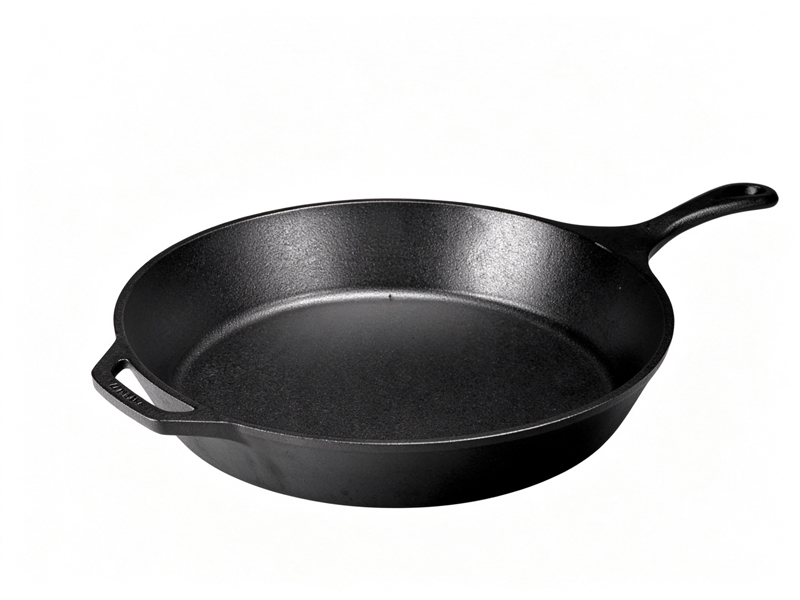
The single most consequential product decision in modern cast iron history belongs to Lodge. In 2002, under president and CEO Bob Kellermann, the company became the first cast iron manufacturer to season its cookware at the foundry, baking soy-based vegetable oil onto every piece before it shipped. Before that, every cast iron pan sold in America arrived raw, and the multi-round home seasoning ritual was the single biggest barrier keeping casual cooks away from the material.
The move did two things at once. It removed the barrier, triggering the cast iron renaissance that made Lodge the default first pan for millions of home cooks — and it quietly reset the industry's baseline, since every competitor now pre-seasons as a matter of course. When reviewers elsewhere on this site praise boutique cast iron brands for shipping seasoned pans, they are praising a Lodge invention.
The catalog: from $20 skillets to Blacklock
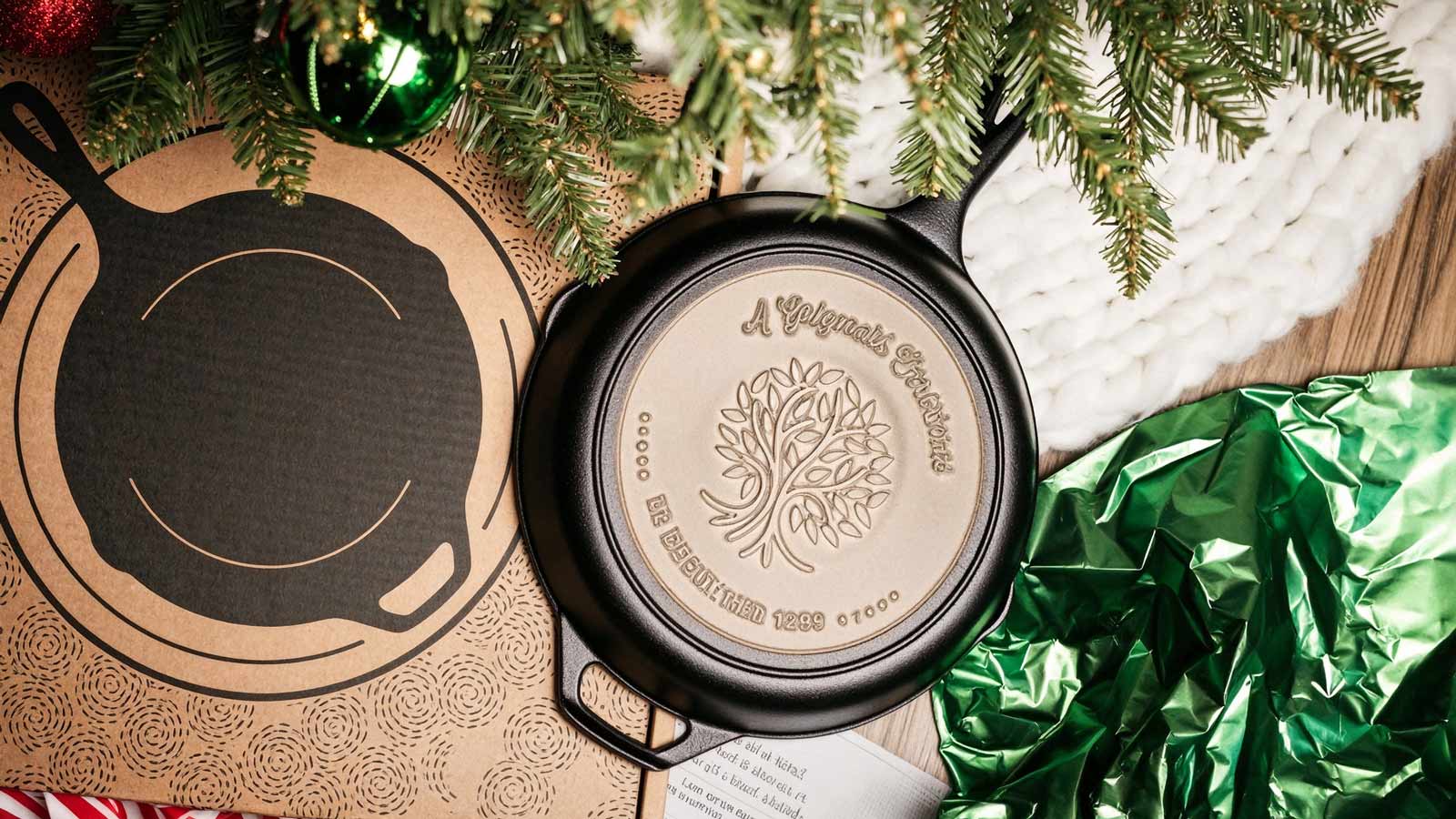
The storefront's catalog is unusually wide for a single-material manufacturer. The classic seasoned line — skillets from around $20, griddles, grill pans, Dutch ovens, woks, and the flanged-lid camp ovens built for coals — accounts for more than 120 items and forms the value core. The Chef Collection adds ergonomic handles and sloped sides designed with working chefs; the carbon steel line, introduced in 2013, targets the high-heat searing crowd with lighter pans seasoned the same way.
Two premium tiers complete the ladder. Blacklock, launched in 2019 under the original foundry's name, is a gourmet line roughly 25 percent lighter with triple seasoning and cool-touch handles — Lodge's answer to the boutique brands charging four times more for machined surfaces. And the USA Enamel line, a more recent addition, brings porcelain-enameled Dutch ovens into the Tennessee foundry's own production. Between the entry skillets, outdoor gear, bakeware, and accessories, the storefront functions as a complete kitchen outfitter rather than a single-pan shop.
Made in USA, except when it isn't
Provenance honesty is where Lodge's product pages earn trust, because the answer varies by line. Seasoned cast iron and carbon steel are unequivocally American — cast and seasoned in South Pittsburg, a claim third-party made-in-USA auditors confirm as "genuine top-tier," not designed-here wordsmithing. The porcelain enameled line introduced in 2005, however, is manufactured in China — Lodge is upfront about this, explaining that enamel-coating capacity barely exists in the United States — which is precisely why the newer USA Enamel line matters as a manufacturing investment.
For buyers, the rule is simple and the storefront helps enforce it: if the pan is black and seasoned, it is Tennessee iron; if it is glossy and colored, check the product page, because it may be the imported enamel or the American USA Enamel. No other major cookware brand makes the distinction this legible, and reviewers who value supply-chain transparency consistently cite it as a reason the store earns loyalty.
The storefront versus Walmart and Amazon
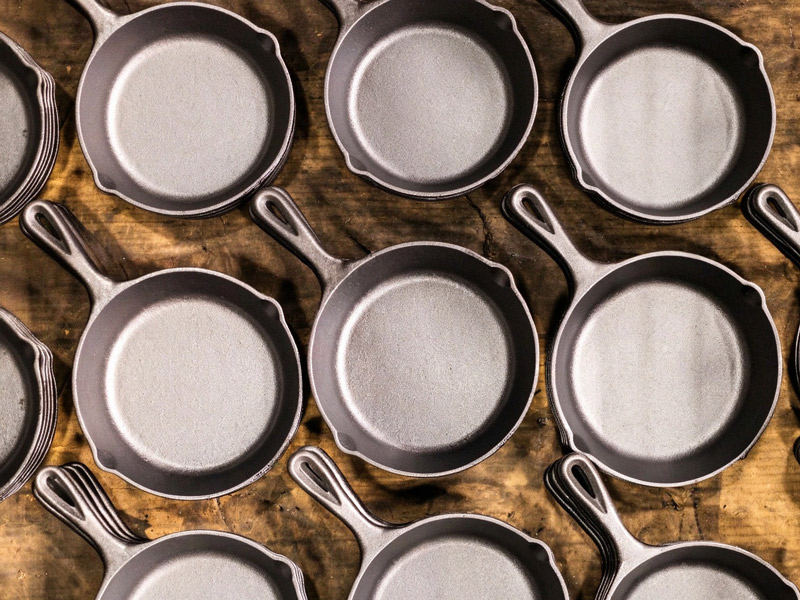
Here is the unusual part of this review: Lodge does not need its own store. Its skillets sit on shelves at Walmart, Target, Costco, hardware chains, and virtually every American supermarket, and its Amazon presence is enormous. The Shopify storefront's job is therefore different from a DTC brand's — it exists to carry the full catalog rather than the retailer's subset: the Blacklock and Chef Collections, camp and outdoor gear, the museum tie-ins, seasonal bundles, and the complete size run of every line.
The trade-offs follow. Prices on the storefront are generally list price — the same skillets are frequently discounted by big-box retailers — so the store wins on selection and story rather than price. Shipping is standard e-commerce rather than the aggressive free-shipping thresholds of DTC startups, and the site sells through cookware education (care guides, recipes, restoration tutorials) more than through promotion. It is, in effect, the brand's flagship museum shop moved online — profitable not because it undercuts retail but because it owns the relationship with the enthusiast minority who buy the premium lines.
What enthusiasts still complain about
The enthusiast ledger is specific. Surface texture tops the list: Lodge pans are cast, not machine-polished, and the slightly pebbly interior that vintage collectors associate with pre-1950s iron annoys buyers who discovered cast iron through sanded-smooth boutique brands. Lodge's position — that seasoning, repeated over years, fills the texture and that polishing adds cost without adding function — is a defensible engineering argument, but the complaint is real and recurring. Weight and short helper handles on the larger skillets, which worsen leverage when a loaded 12-inch pan comes out of the oven, come second.
Third is variance: individual pieces occasionally arrive with casting flaws, warped lids, or patchy factory seasoning, and the fix is either the company's defect handling or a home re-season — annoying on a premium line like Blacklock, trivial on a $20 skillet. Fourth, price drift: Lodge has crept upward as cast iron has trended, and budget buyers increasingly cross-shop imported brands at half the cost. None of these rise to scandal; all of them are the honest cost of buying cast iron at industrial scale.
Closing guidance for first-time iron owners
Lodge's Shopify storefront is the online front door of American cast iron's institution: 130 years of continuous family ownership, two foundries in one Tennessee town, the invention of factory seasoning, and a catalog that spans $20 workhorse skillets and premium Blacklock pieces a boutique brand would charge triple for. The store itself is honest about geography, generous with education, and unapologetically list-priced.
Buy here if you want the full catalog — Blacklock, Chef Collection, camp ovens, USA Enamel — or if you value buying from the foundry directly. Buy at Walmart or Amazon if the same classic skillet is on sale and you don't need the premium lines. And whichever channel you choose, accept the material's terms: cast iron rewards patience, Lodge rewards it more cheaply than anyone, and the pan your grandchildren inherit will almost certainly have an egg logo on it.