Field company and the rise of the machined-smooth cast iron revival

Official homepage: https://fieldcompany.com
In 2016, brothers Stephen and Chris Muscarella — one a woodworker, one a software engineer who had co-founded a private-chef startup — launched a Kickstarter for a cast iron skillet machined smooth like the 1930s Wagner pans their grandmother left them. The campaign sought $30,000 and closed above $1.6 million. A decade later, Field Company is the reference name in the vintage-revival cast iron niche, its skillets praised by Forbes and Food & Wine, and its Shopify storefront the model for how a small American foundry-brand sells online. This review examines the store across its origin science, manufacturing, design partnerships, sales model, and the honest debate its pans provoke.
A grandmother's Wagner and two frustrated brothers
The About page tells it plainly. The company is named after the brothers' maternal grandmother, from whose side of the family they inherited a set of vintage cast iron — including a Wagner skillet from the 1930s — that survived every move and every kitchen. When the brothers tried modern cast iron to supplement the heirlooms, they stopped reaching for it. The new pans were heavier, the surfaces pebbly, the hand-feel wrong. The question that became Field Company was the one every estate-sale shopper asks: why don't they make them like they used to?
Neither brother was a foundryman. Stephen came from woodworking; Chris was a software engineer who had co-founded Kitchensurfing, the private-chef booking platform. What they brought instead was method: a year of research into metallurgy and seasoning, a refusal to accept the first answers foundries gave them, and a family name worth putting on a pan. The company remains what it began as — family-owned, single-material, deliberately small — and the storefront reads accordingly: one product family, deep documentation, no noise.
The Krakow whitepaper and the graphite quest
The founding anecdote that separates Field from every lifestyle cookware brand is a materials-science story. Modern foundries told the brothers that thin-walled cast iron could not be poured anymore; unwilling to accept it, they found an academic whitepaper titled "Thermophysical Properties of Thin Walled Compacted Graphite Iron Castings" by Dr. Marcin Gorny, a materials professor in Krakow, Poland. They emailed him, Skyped him, performed microscopic imaging of vintage pans under his guidance to prove the old iron was not "black magic," and eventually flew to his lab to learn hand-casting the way their favorite pans had been made a century ago.
The science mattered because the product thesis depended on it: vintage pans cooked better partly because of how their iron was cast, not merely because they were old. Compact graphite structures, thinner walls, and smoother surfaces were engineering choices that the industry had abandoned for cost reasons — which meant they could be un-abandoned, at a price. That price became the business model.
Machining smoothness out of Chicago-area iron
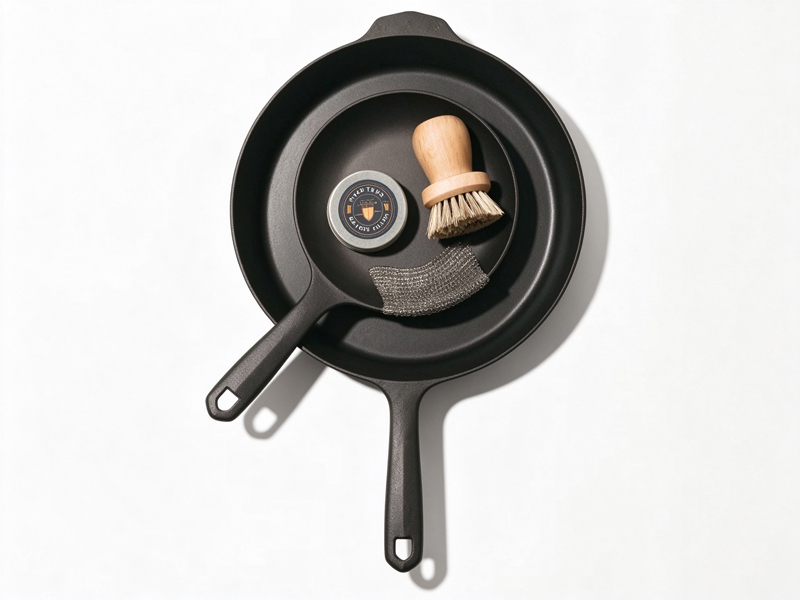
The brothers called hundreds of American foundries before finding one outside Chicago willing to take the risk — their rule was absolute: an American classic had to be made in America. The manufacturing sequence they built there remains the store's core differentiator. Pans are cast thinner than commodity iron, hand-finished to remove casting burrs, then transferred to a machine shop where CNC milling removes excess weight and leaves the cooking surface smooth — the finish that production cast iron abandoned around the 1950s. Scrap iron is recycled back into pours, making each pan roughly 75 to 90 percent recycled iron.
Two consequences define the ownership experience. The lighter walls make the skillets genuinely daily-use — the No. 8 can be wielded with one hand in ways a Lodge cannot — and the machined surface seasons to a darker, slicker patina faster than pebbled iron, provided the seasoning itself holds. Field answers the texture complaint that dominates every Lodge review in this category by making Lodge's skipped step — polishing — the entire point of the product.
Seasoning science and the trade-secret formula
Machining smoothness creates its own problem, and the company's solution is its most closely guarded asset. Smooth steel gives seasoning less texture to grip, which is precisely why commodity foundries leave pans pebbled — cheap to season, easy to label "pre-seasoned." Field's founders took their problem to a friend who happened to be a biological chemist; the multi-stage seasoning formula that resulted is described on their site with genuine pride as a trade secret, applied at the factory so every pan ships ready to cook.
The honest trade-off deserves stating: because the pan arrives machined and seasoned rather than pebbled, first-week stickiness is common if buyers ignore the care instructions, and re-seasoning a smooth pan after abuse is slightly more demanding than re-seasoning a rough one. The store mitigates this the way it mitigates everything — with unusually good documentation on stripping, re-seasoning, and daily maintenance — but the pan rewards the same contract every carbon steel and cast iron purchase signs, just with a smoother signature.
Prime Studio and the expanding Field line
Behind the skillets sits a named industrial-design partner — Prime Studio, whose founder Stuart Harvey Lee began his career as a mechanical engineer in a UK steelworks. The collaboration produced the details enthusiasts cite: longer handles modernized from vintage proportions, a heat-ring nod on the base, and the deliberate removal of side pour spouts on the logic that they dribble anyway. From the original No. 8, the line grew to skillets from No. 4 to No. 12, Dutch ovens with lids sized to double as skillet covers, flat griddles, a massive No. 16 double-handled skillet built for live-fire cooking, and — in the most charming corner of the catalog — cherry wood spoons carved in Vermont with master spoon-maker Emmet van Driesche.
The pace of that expansion is the quiet story: nearly a decade to fill out a cast iron line, with a No. 8 Deep Skillet arriving as late as October 2026. For buyers this means a catalog that never overwhelms and products that arrive fully considered; for the store it means every SKU carries documentation depth a commodity brand cannot match. In October 2025, Forbes and Food & Wine both named the Field skillet among the best cast iron you can buy — a decade-long vindication of the slow line.
Production runs, waitlists, and the Shopify playbook
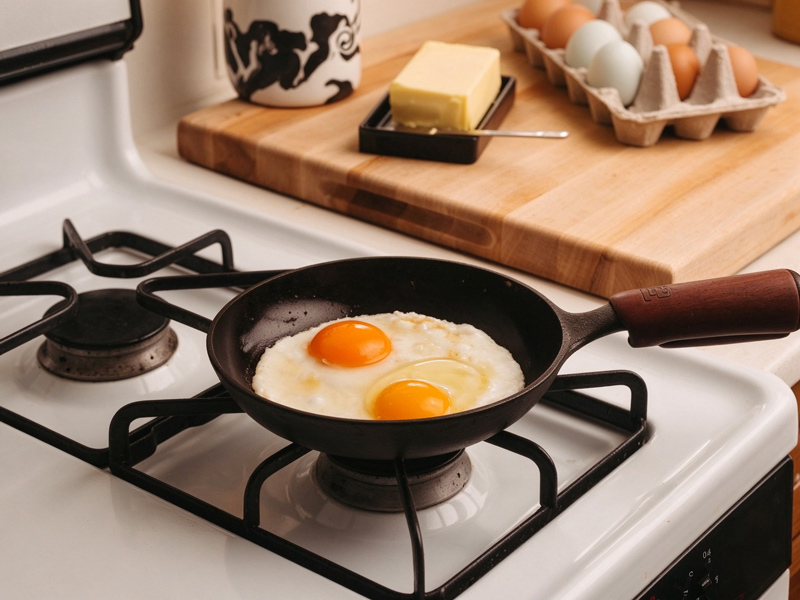
Field sells through limited production runs — the first four sold out entirely in 2016 — and the Shopify storefront is engineered around that rhythm: restock notifications, waitlist emails, and foundry-run announcements that convert scarcity into community rather than frustration. It is the Kickstarter habit industrialized — batch production, transparent capacity, loyal early backers — and it has kept the company independent where most crowdfunding cookware brands ended up acquired or extinct.
The same playbook shows in content marketing. The storefront publishes head-to-head comparison pages — Field versus Made In, Field versus Lancaster Cast Iron, each updated as recently as this month — an SEO strategy that borrows rival search traffic while projecting confidence. Product pages carry the manufacturing story, the science footnotes, and care instructions rather than lifestyle photography, which makes the store read more like an engineer's notebook than a kitchen boutique. For a certain buyer that tone is the entire appeal.
The weight-versus-mass debate, and the price premium
Field's pans sit roughly two to three times the price of Lodge's comparable skillets, and the debate that premium provokes is the cast iron community's oldest argument restaged. Thin walls mean less thermal mass: the pan heats faster and handles easier, but holds less residual heat for the biggest sears, and purists who prize heat retention above all will defend thick iron to the last. Field's position — that a pan you can lift every day beats a pan with theoretical thermal advantages you avoid using — is the same lightness argument vintage collectors have made for decades, now with engineering behind it.
The second critique is price itself: machining, American foundry labor, and small production runs cost money, and buyers who season well will note that a $40 Lodge plus five years of patience converges toward the same cooking surface. The counter is the one the store makes implicitly — smoothness out of the box, weight for daily use, and a made-in-USA supply chain you can audit. Neither side is wrong, which is why the debate never ends.
Final assessment for cast iron traditionalists
Field Company's storefront is the most technically literate in American cast iron: a grandmother's Wagner, a Krakow whitepaper, a Chicago-area foundry, a CNC machine shop, a chemist's secret seasoning, and a design studio that treats a skillet like an heirloom object. Everything the Lodge review in this category flagged as the compromise of industrial scale — rough texture, heft, finish variance — exists here as the product, at two to three times the price.
Buy here if you want vintage-smooth cast iron without the estate-sale hunt, if pan weight has kept you from daily cast iron, or if you enjoy stores that document their own engineering. Buy Lodge if you want the same material at a third of the price and don't mind pebbled texture. And whichever you choose, the contract is identical: season, dry, oil, repeat — the revivalists just start you one machine-shop step closer to done.