He couldn't rewire a rental, so he built a robot instead

Official homepage: https://www.switch-bot.com/
SwitchBot solved the smart home's most unglamorous problem: everything already in your house has a switch, a button, or a remote, and replacing all of it is expensive, invasive, and usually forbidden by landlords. The Shenzhen-born brand's answer was not to replace anything but to retrofit it — starting with a palm-size robot that physically presses wall switches on command. A decade later, that robot anchors an ecosystem of more than nine million connected devices and the top smart-home position in Japan. Here is our review of its store.
A Singapore Engineer Moved Into a Rented Apartment
Connery Lee was working as an engineer for a smart-home company in Singapore when he moved to China and into a rented apartment — and discovered the gap the entire industry was ignoring. He could not control his light switch from his phone without replacing it, and his landlord would never permit the rewiring. So he started sketching something simpler: a small robot that could be stuck onto an existing wall switch and toggle it by app, no electrician, no permanent modification, no permission slip. He founded what became Wonderlabs — with US and Hong Kong entities under that name and the operating company Woan Technology in Shenzhen — and launched the first product, the SwitchBot Bot, on Kickstarter in December 2016. The campaign asked a modest sum and closed with more than $70,000 from 667 backers, validating the thesis that the retrofit market was bigger than the replacement market.
Two Hundred Units Assembled Over Two Nights
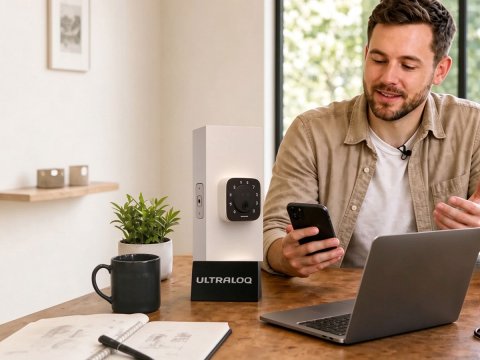
Manufacturing began with the founders' own hands. The first outsourced prototypes came from Shenzhen injection-molding shops, but the team decided to assemble the first batch of two hundred Bots themselves, working through two consecutive nights to control quality — an origin story the company still tells about its engineering culture. Richard Mou, who had run his own gesture-control startup called Welle, joined at the start and co-developed the second-generation thesis: the same retrofit logic applied to everything in a home. The SwitchBot Curtain arrived in 2019 as a wireless motor that rides an existing curtain rail and won both the Good Design Award 2020 and IDEA 2020 for proving that retrofit devices could be genuinely well designed. The product line kept widening — an infrared Hub Mini, a smart plug, thermometers, and eventually a retrofit Lock that bolts over an existing deadbolt without touching the cylinder.

Japan's Remotes Made the Hub a Commodity
The commercial surprise came from Japan, where the company set up its dedicated subsidiary in 2020. Japanese households run on infrared remotes — air conditioners, fans, televisions, heaters — and the Hub Mini, a small infrared blaster with an unusually deep IR code database tuned for the Japanese market, became what Mou has called almost a commodity there. The company leaned in aggressively: the SwitchBot Lock launched through Green House as a Japan-first product in 2022, and by mid-2025 the app counted more than 3.1 million registered users with over 9.1 million connected devices, and SwitchBot held roughly 28 percent of the Japanese smart-home market — first place — with about 60 percent of company revenue coming from Japan. Crowdfunding became a recurring launch mechanism: the robot vacuum K10+ raised roughly 345 million yen on Makuake in 2023, and the floor-cleaning S10 closed a Kickstarter campaign at about $1.28 million later that year.
Matter Arrived First in This Company's Hub
While rivals debated protocols, SwitchBot quietly shipped the first Matter-compatible product in its lineup — the Hub 2 in March 2023, a bridge that converts its Bluetooth devices into Matter-accessible accessories so they work with Apple Home, Google Home, Amazon Alexa, and Samsung SmartThings without a proprietary hub tax. The company's openness runs deeper than certification: it publishes both its cloud API and its Bluetooth Low Energy communication specs on GitHub under permissive licenses, letting DIY home-automation builders integrate SwitchBot gear with Home Assistant, Raspberry Pi, and custom setups — a stance rare among hardware brands and a quiet moat with the enthusiast community. By 2025 the ecosystem had crossed into embodied AI: an AI Hub that interprets camera feeds with a vision-language model, an AI Pet companion robot, and multi-tasking household robots like the K20+ Pro, which won Best in IFA Next and Best in Emerging Tech at IFA 2025.
Ten Million Devices and a Robot Vacuum
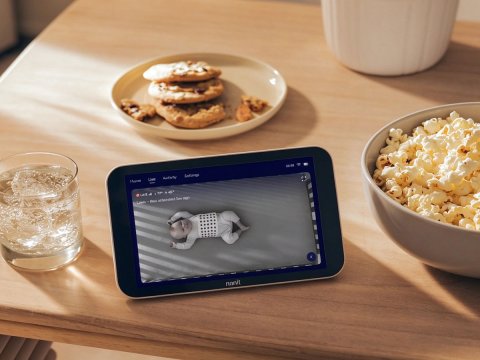
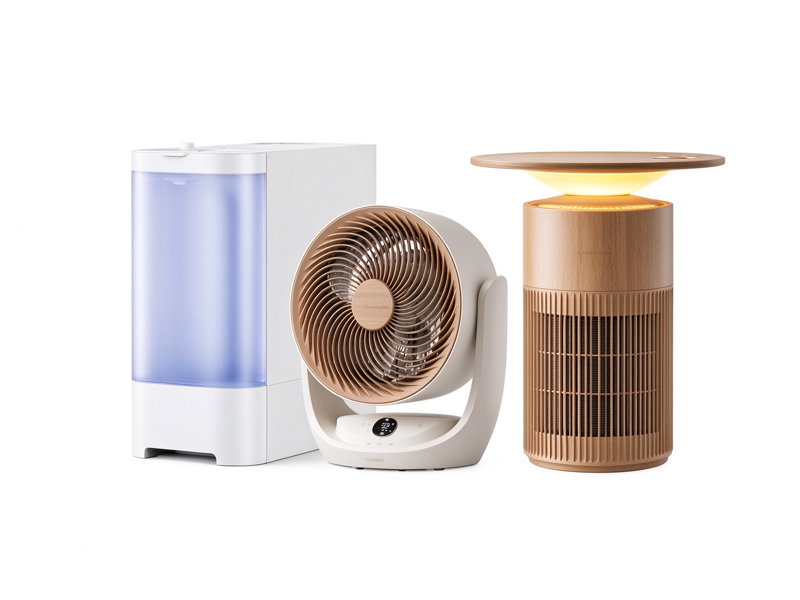
The scale numbers read like a hardware success story from a different era. Products sell under the SwitchBot brand in more than 90 countries, with Japan, Europe, and North America as core markets; the app passed 3.2 million users and approached ten million connected devices by late 2025; and multiple funding rounds — including XbotPark, the venture founded by the chairman of DJI, alongside Hillhouse, Source Code Capital, and others — took the company's post-investment valuation to roughly 4.05 billion yuan. The store itself, switch-bot.com, reflects the portfolio logic: the Bot and Curtain anchor the retrofit story, the Hub family handles connectivity, and newer categories — locks, cameras, meters, robot vacuums, and the AI line — push the average order from a single $29 gadget toward whole-room bundles, with bundles and multi-device kits merchandised throughout the catalog.
The Bottom Line on Button-Pushing Robots
What the store sells is the renter's smart home, and it remains the best expression of that idea on the market. The honest caveats are structural. The company is Shenzhen-based, and shoppers with data-sovereignty concerns should note that devices communicate with company cloud servers; the brand's own materials say it operates international infrastructure, but privacy-sensitive buyers should read the policy rather than assume local hosting. The device lineup is broad enough that quality varies — the Bot and Hub lines are mature, while newer AI and robot-vacuum categories are younger propositions with shorter track records. And the ecosystem's convenience leans on the app and cloud, so households wanting fully local control will find the open APIs helpful but the default experience cloud-first. For anyone who has ever stared at a dumb wall switch and wished it were smart without voiding a lease, though, this store is still the definitive answer.