Hapbee: the neckband promising caffeine's buzz and melatonin's sleep, minus the molecules

Official homepage: https://hapbee.com
Hapbee is the most scientifically contested store on this tag. Its neckband and sleep pad play what the company calls recorded magnetic signatures of molecules — the feeling of caffeine without coffee, melatonin without a pill, THC without cannabis — through ultra-low-frequency energy aimed at your skin. Believers report calmer nights and sharper mornings; physicists call the core premise impossible. This review examines the claims, the subscription machinery, and the only honest way to evaluate it: the 45-day money-back guarantee.
Recorded magnetic signatures, played back on skin
The founding claim is audacious. Hapbee's patented ulRFE technology — ultra-low radio-frequency energy — purportedly records the unique electromagnetic signature of a molecule and plays it back through a neckband or sleep pad, letting the body 'feel' caffeine, melatonin, THC, CBD, or nicotine without ingesting anything. The consumer device debuted at CES 2022, where the company framed signal blends as drug-free alternatives: the focus of nicotine without a cigarette, the relaxation of wine without the glass. The website leads with company-run numbers — up to 48 percent more REM sleep, 28 percent faster sleep onset, 50 percent less stress, 100 percent drug-free — and a Trustpilot badge reading four out of five stars across 195 reviews.
Frequencies named Happy, Alert, and Deep Sleep
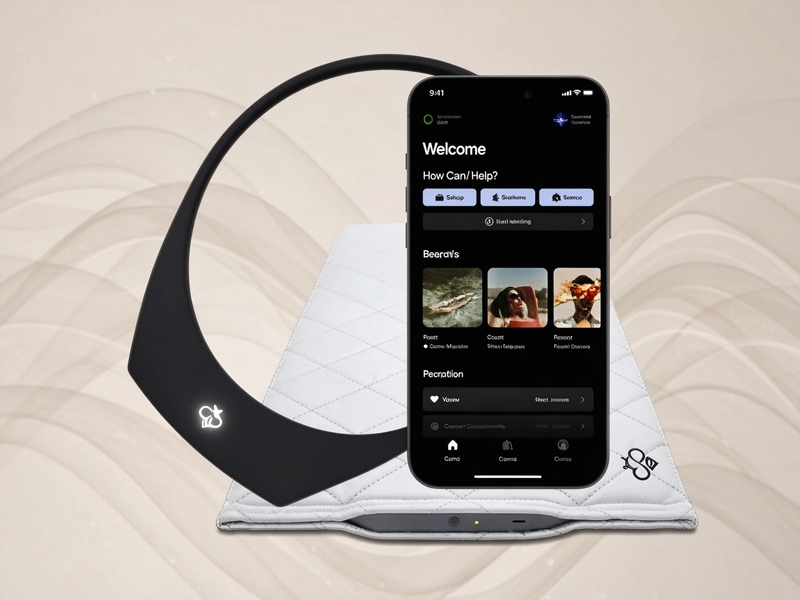
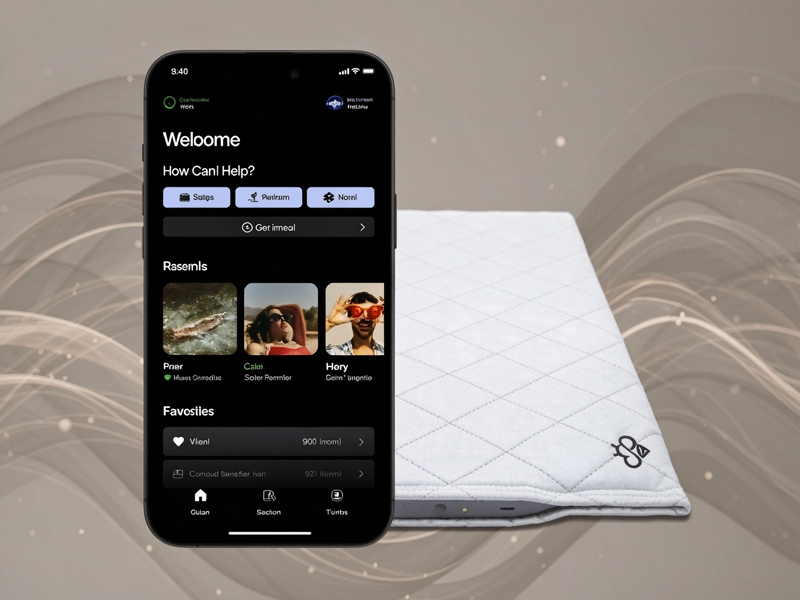
The product layer translates the chemistry into moods. The Limitless Neckband cycles through signal blends with names like Happy, Alert, Focus, Relax, and Deep Sleep, while the Bliss Sleep Pad targets overnight use under a pillow. Companion pages market use cases the way a pharmacy markets aisles: sleep better, focus more, relieve stress, reduce anxiety, ease headaches and pain, increase energy, curb smoking, manage vaping. The breadth is marketing ambition as much as catalog — a single device positioned against insomnia, distraction, stress, pain, and addiction simultaneously, in the wellness category where regulation is lightest and language can stay suggestive rather than clinical.
A membership that gates the signal library
The economics are the first thing skeptics and several Trustpilot reviewers converge on. The neckband starts at $299, and the full signal library lives behind a membership: $199 per year against a $240 list price. Without the subscription, reviewers report, the device plays a single signal — an arrangement one one-star reviewer summarized as paying $300 for one selection and then being asked to rent the rest. The company's public replies are consistently polite and invite support contact, but the gating pattern repeats across complaints: hardware purchased, library locked, renewal surprise. It is the same razor-and-signal model the tag has seen elsewhere, applied to something even more intangible than data.
Forty-five days to decide if it is placebo
The physics objection deserves its own paragraph, stated plainly: molecular vibrational signatures live in the infrared band, and there is no accepted mechanism by which radio-frequency playback of a 'molecule's magnetic pattern' could reproduce a compound's pharmacological effect. Independent scientists classify this family of claims — bioresonance — as pseudoscience, and the company's impressive-looking figures come from its own research rather than independent replication. The fair counterweight is also real: expectation effects are measurable, many users report genuine perceived benefit, and the company leans into the only honest instrument available — a 45-day money-back guarantee that converts the purchase into a controlled personal experiment. Skeptics will feel nothing and resent the invoice; the susceptible may find the ritual transformative. The store, knowingly or not, prices exactly that difference.
Snake oil to some, life-changing to others
The review record is a perfect bell curve of belief. One recent five-star calls the device 'simple to use, effective, and surprisingly calming'; weeks later another owner writes that his sleep never improved and concludes, 'It's snake oil' — while also noting the subscription frustration. The pattern repeats: customers who feel the blends evangelize them; customers who feel nothing ask why they rented frequencies. What separates Hapbee's storefront from less scrupulous operators in this category is the visible engagement — the team answers negative reviews individually, offers support contacts, and honors the guarantee window. For a product whose effects live entirely in the user's nervous system, that service posture may be the most tangible thing the company sells.
HSA approval and an Arabic storefront
Two quiet signals suggest the company expects to be around for scrutiny. The store accepts HSA and FSA payments — flex-spending eligibility that wellness brands increasingly pursue as legitimacy — and the storefront runs bilingually in English and Arabic, an unusual pairing that hints at expansion plans beyond North America. Free US shipping and worldwide shipping round out the commerce layer, with the Bliss Sleep Pad and Limitless Neckband as the only two hardware lines, keeping the catalog deliberately tight. The whole operation reads as a company that knows its claim is extraordinary and has built the store — guarantees, responsive support, tight catalog — to survive on service rather than proof.
The last frequency in the Hapbee library
Hapbee's store sells the purest test on this tag of whether a wellness claim needs to be true to be useful. The neckband is well-built, the guarantees are real, the support is visible, and the premise — recorded molecular feelings played through your skin — is one physicists reject and users keep swearing by. The honest advice writes itself: if the idea intrigues you, the 45-day window and HSA eligibility make this a low-risk personal experiment; if your eyebrow is already raised, no number of five-star reviews will move it, and the $199 annual library fee will feel like renting placebo. Either way, walk in with eyes open — the science debate is not a footnote here, it is the product.