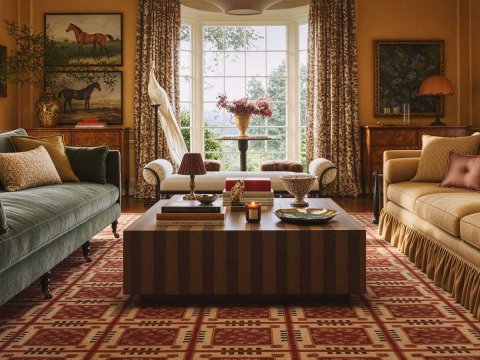
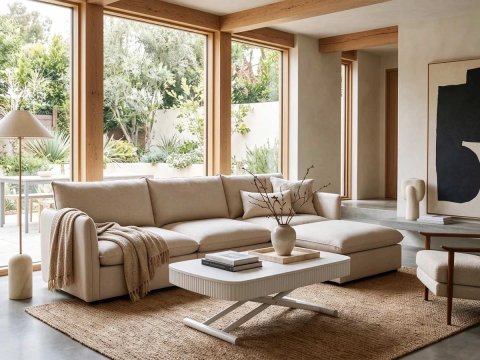
From burger king to the rug world's hall of fame: the loloi store
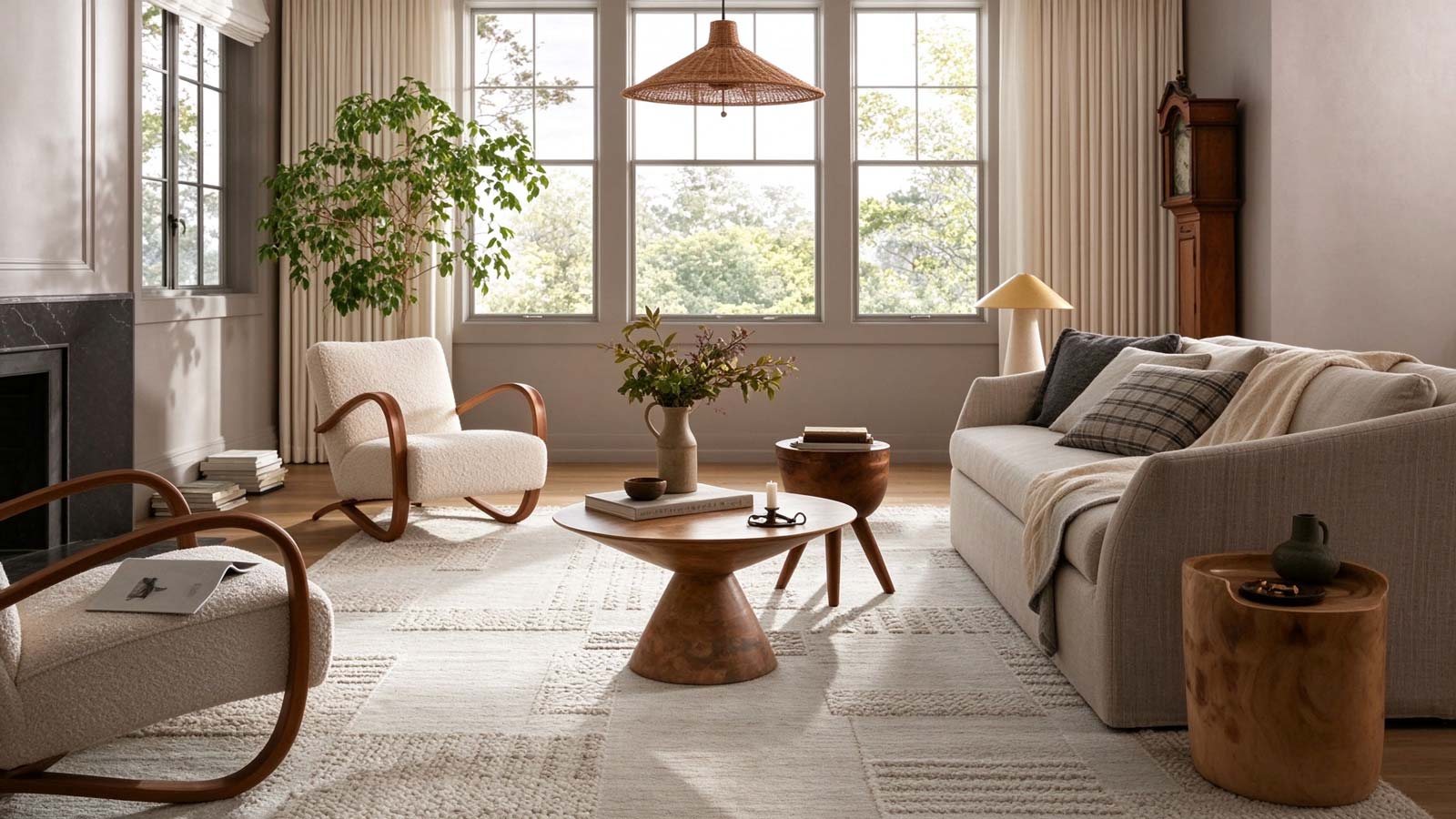
Official homepage: https://loloirugs.com
Amir Loloi arrived in Dallas at sixteen, an Iranian immigrant who barely spoke English, and pushed to work the Burger King front counter because that was where the language was. He drove an ice-cream truck through South Dallas, swept floors at his first rug job in 1979, and spent twenty-five years learning the trade before founding Loloi Rugs in 2004. Today the company employs roughly 650 people, carries GoodWeave and OEKO-TEX certifications on its handcrafted lines, has won rug manufacturing's top award five times, and dresses the floors of Magnolia Home devotees everywhere. This review examines the Shopify storefront of America's great rug-immigrant story.
Sixteen, alone in Dallas, and an ice-cream truck
The founder's biography, told across a long-form podcast interview and the trade press, follows the classic American arc with unusually concrete first chapters. Amir Loloi landed in Dallas in 1976 at age sixteen, the first Iranian student at his school, determined to learn English fast enough to work the front counter at Burger King rather than the back. He progressed through Baskin-Robbins to his own ice-cream route in South Dallas, put himself through Richland College and the University of Texas at Dallas working full-time, and asked his parents to stop sending money halfway through. His father's advice — walk a straight line — became the company's operating philosophy, and his warning that the moment you think you are successful is the moment you lose focus still appears in interviews as a working mantra rather than a plaque.
The family thread runs through the company's modern form: sons Steven and Cyrus joined after their own careers — one arriving from California with a branding perspective the father credits with modernizing the company — and Loloi is routinely described as a fourth-generation rug-family business, the American chapter of a much older trade.
Sweeping floors from 1979 to 2004
The apprenticeship is the part most founder stories skip. Loloi's first rug-industry job, in 1979, began with sweeping floors; he spent twenty-five years rising through every layer of the business — building relationships with designers, learning weaving, dyeing, import logistics, and retail psychology — before leaving to start his own company in 2004, after six months of planning that he describes as emotionally harder than the decades that preceded them. The first showroom opened at the Atlanta Market, the rug industry's proving ground, and early customer loyalty came from the relationships he had spent a quarter century building.
The twenty-five years matter to a store review because they explain the catalog's texture: Loloi sells rugs the way someone who has swept the floors of the industry understands them — by fiber, by dye behavior, by how a batch of wool will take color, by which weaving village does which knot best. The company's design philosophy, "simple but considered," is a craftsman's phrase, not a marketing deck's.
Two weavers, four hours, five square inches
The production ledger is the store's quality argument. Loloi's handcrafted collections are made in company-partnered factories across India, where two experienced weavers working together need roughly four hours to produce five square inches of hand-knotted rug — a pace the trade considers fast. The process runs through four distinct crafts: preparing and spinning the fiber, dyeing the yarn in multiple colors through dip-dyeing, knotting the hand-drawn design one knot at a time on the loom, and finishing the surface with shears. Natural fibers — wool, silk, jute — dominate the heirloom lines.
For buyers, the arithmetic explains the price bands: a $2,000 hand-knotted nine-by-twelve and a $150 power-loomed bedroom accent share a storefront but not a production reality. The store's filters separate them, and the product pages identify the construction — hand-knotted, hand-tufted, or power-loomed — but the burden of reading the label sits with the shopper, as the secondary-market confusion between the three repeatedly demonstrates.
GoodWeave, OEKO-TEX, and the audit trail
The ethics ledger is third-party where it matters. Loloi is a licensed partner of GoodWeave, the nonprofit that audits weaving factories against child, forced, and bonded labor, and its certified collections — the 2020 launch covered the Helena, Rayan, and Nala lines — carry the label on the rug itself. OEKO-TEX certification covers additional textile lines. The founder's public statements on the partnership have been consistent since launch: the weaving communities of India have made rugs for generations and take pride in the craft, and certification exists to protect the vulnerable in those communities — a framing that treats the audit as floor, not ceiling.
In a category whose supply chains have historically been opaque — and where the distinction between audited and self-declared labor practices is the whole story — the license is the closest thing rug retail has to the certification walls that the cookware and furniture brands reviewed on this site wear.
A celebrity collaboration machine built on design trust
The catalog's commercial engine is the designer collaboration. Loloi has built named collections with some of home design's most trusted voices — Magnolia Home by Joanna Gaines, Chris Loves Julia, Amber Lewis, Jeremiah Brent, and Jean Stoffer — each translating a recognizable aesthetic into signature lines like Barrow, Bleecker, and Perry. The mechanism is identical to the one the outdoor furniture brand in this category runs with its magazine and television partnerships: borrowed lifestyle credibility, amortized across thousands of SKUs, at prices the designers' bespoke clients would never see.
The honest tension belongs in the review: a company that designs "for particular people rather than the masses," as its philosophy page claims, also builds the largest mass-market design collaborations in the category. Both statements are true; the collision between them is simply the definition of scaling a craft brand in America.
ARTS Hall of Fame and the award ledger
The institutional validation is unusually deep. Loloi was inducted into the ARTS Awards Hall of Fame after winning Best Rug Manufacturer five times across 2010, 2011, 2015, 2016, and 2017, plus Best Outdoor Manufacturer in 2012 and Green Manufacturer in 2013 — the latter an early signal that the ethics ledger predates its current marketing value. Eight America's Magnificent Carpets Awards and three Atlanta Visual Display Awards round out a trophy shelf that functions, like the GoodWeave license, as third-party verification in a category where taste is otherwise unverifiable.
For the storefront, the awards do quiet work on product pages and in the trade-program pitch, giving retail partners and interior designers an institutional reason to stock the line alongside the aesthetic one.
The omnichannel sprawl and the price drift
Distribution is the store's blessing and its hazard. Loloi sells through its own Shopify flagship, Amazon, Target, Home Depot, Wayfair, thousands of independent rug dealers, designer showrooms in major cities, and hospitality programs — with retail prices drifting from around $50 for small accents to $2,000 for heirloom pieces, and often drifting further between channels. The same rug can carry different tags on the flagship, a marketplace, and a dealer's floor, and grey-market listings complicate the comparison further. The flagship's defense is completeness: the full collaboration catalog, the certification labels, and direct access to the company's guidance live there, even when the lowest price does not.
The practical protocol mirrors the omnichannel furniture brands reviewed in this category: use the flagship to research construction, certification, and design; verify the final number across channels before checkout; and buy certified collections from sellers you can trace.
Closing notes for the layer-it-well household
Loloi's storefront is the rug category's most complete biography-and-catalog hybrid: an immigrant's fifty-year arc from sweeping floors to the industry's Hall of Fame, a weaving ledger documented to the square inch, the category's strongest ethics audit, a collaboration machine that borrows America's design voices, and an omnichannel sprawl that rewards research and punishes impulse. The cons are the cons of scale — channel price chaos, construction-tier confusion, and the gap between artisan story and mass availability — and none of them are hidden.
Buy here if you want a rug with a documented provenance, if a GoodWeave label matters more than a marketplace discount, if a Magnolia or Amber Lewis collection has already chosen your aesthetic, and if you will read the construction label before the lifestyle photograph. Buy from the auction-house tier if hand-knotted provenance is the point itself, or from the marketplace if the lowest number is. For the household layering rooms piece by piece, this Dallas storefront is the straight line its founder's father described — fifty years long and still unwinding.