Chrome industries review: junkyard seatbelts, lifetime promises, and one heavy bag
Official homepage: https://chromeindustries.com
Long before "bike-friendly" became a marketing department, bike messengers were dragging hundred-pound loads through traffic in whatever survived. Chrome Industries built its name on the bags that survived longest, welding truck tarpaulins and bolting salvaged seatbelt hardware into what became the most copied detail in urban cycling. This review takes the official store apart dimension by dimension: the 1995 garage founding, the signature buckle and construction, the brand's migration from Boulder to San Francisco and beyond, the current lineup and pricing, the fine print behind the famous lifetime warranty, and whether a two-and-a-half-pound backpack still earns its keep in 2026.
Three Cyclists, a Garage, and One Juki Sewing Machine
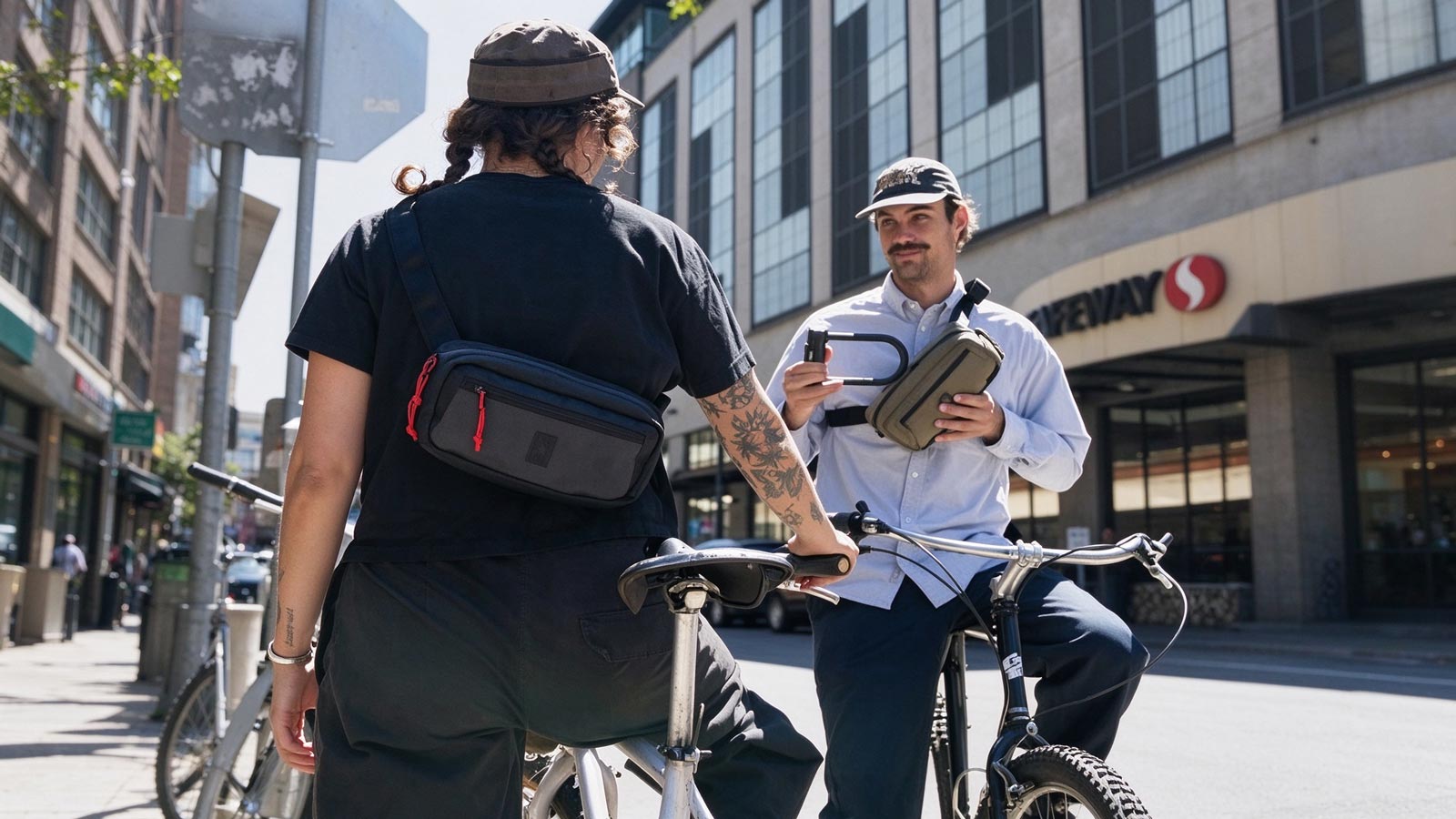
Chrome Industries started in Boulder, Colorado, in 1995, when three urban cyclists who needed better messenger bags could not find anything that met their standards — so they bought a few yards of Cordura and military-grade truck tarpaulin, set up a Juki sewing machine in a garage, and made their own. Word spread the old way: couriers knocked on the door. The early ethic hardened into a design philosophy the company still repeats on its own about page — simple, useful, resourceful — and the garage origin is not folklore; the brand's timeline documents each step, from the first salvaged-material prototypes to the working messengers who stress-tested them on real routes.
Cutting Seatbelts Out of Wrecked Cars for Prototypes
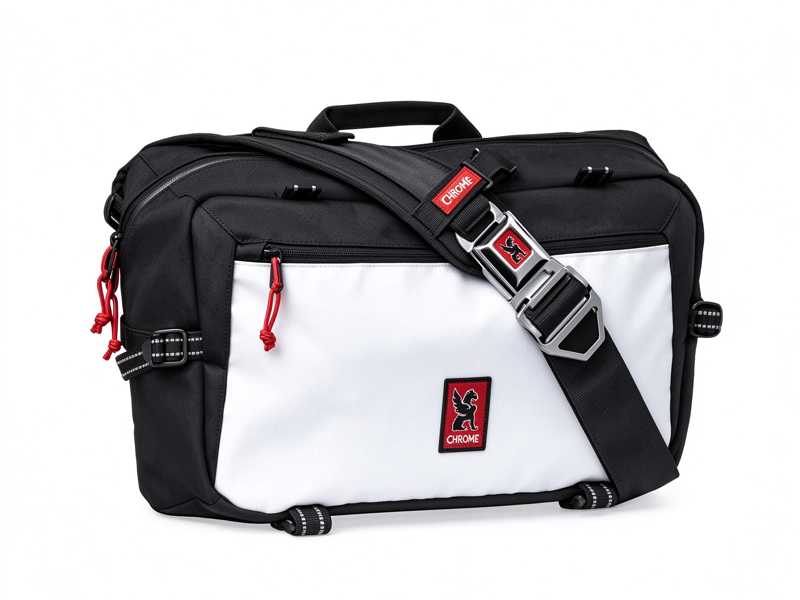
The detail that defined the brand came from frustration: pulling a loaded messenger bag over your head dozens of times a day is miserable, but commercial quick-release buckles were expensive. So the founders went to a salvage yard, cut seatbelts and buckles out of wrecked cars, and built a quick-release closure that worked one-handed under load. The seatbelt-buckle release — doubling, famously, as a bottle opener — became Chrome's signature, joined by a load-stabilizing strap, five-bar webbing, and dual-wall construction. In 2001 Denver graphic designer Stephen Beneski created the Griffin logo, and in 2004 the plastic buckle was replaced with metal "so it's the last one you'll ever need." The construction recipe still reads like a materials manifesto: 1050-denier abrasion-resistant nylon exteriors, welded-waterproof tarpaulin liners, and reflective hits — the same industrial ingredients reviewers have called "probably longer-lasting than I will" for two decades.
From Boulder Garages to the Messenger Capital Itself
Feeling the pull of America's courier scene, Chrome relocated from Colorado to San Francisco in 2002, first into a SoMa warehouse at 7th and Folsom, then a larger headquarters and first retail "hub" at 4th and Brannan. More hubs followed — an 1800s firehouse on Mulberry Street in New York, plus Chicago, Portland, Seattle, Denver, Washington DC, and later Tokyo and Osaka — each doubling as retail store and community gathering point for the urban riding scene. In 2017 the company moved its headquarters from San Francisco to Portland, Oregon. The retail era has since wound down: the stores that once anchored the brand in city centers are gone, and with them went the in-house repair benches that used to patch bags back together — a real loss for a brand whose identity was built on physical presence.
Two and a Half Pounds of Recycled Nylon, Explained
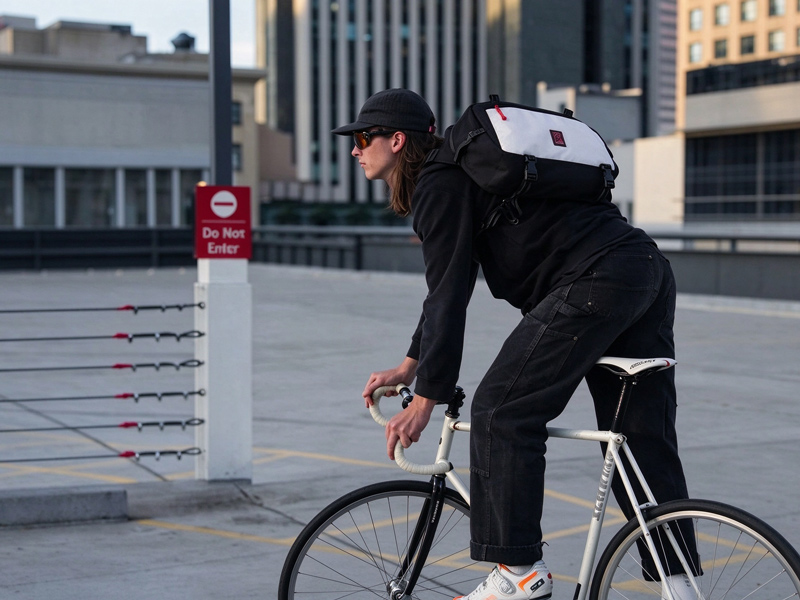
The current store is built around a handful of icons. The Citizen messenger, the direct descendant of the original seatbelt-buckle bag, lists at $180. The Barrage 22L pack — the rugged all-conditions roll-top with a welded waterproof compartment and exterior cargo net — runs about $180 and carries a 4.5-out-of-5 rating from 86 reviews on its product page; its slimmer Urban Ex sibling sits near $150, while the compact Kadet sling and the Bravo 4.0 roll-top (24 to 35 liters depending on the unroll) round out the carry range. Beyond bags, the catalog extends to footwear — the line dates to 2007's Milo, launched at the North American Cycle Courier Championships, and the Kursk street shoe with reflective hits and a lace garage — plus apparel anchored by the Merino Cobra hoodie. The recurring trade-off is weight: the Barrage tips the scales at about 2.5 pounds of 1050-denier recycled nylon and TPE tarp, and long-term testers note the abundance of straps that need managing at speed. Current fabrications are PFAS-free and use recycled nylons throughout.
A Lifetime Warranty With the Repair Shop Closed
The warranty headline is real but worth reading carefully. Chrome bags carry a lifetime guarantee against material and workmanship defects; it explicitly does not cover wear and tear or damage, and footwear and apparel carry only one-year defect coverage. Shipping is free over $110 in the US with 30-day returns, and product pages carry verified buyer ratings. The complication is after-sales infrastructure: the hub stores that once functioned as repair centers are permanently closed, the company no longer offers repair services, and its own FAQ steers owners with torn bags toward local tailors and gear-repair shops. For a brand whose promise was always "built for life," the lifetime warranty now means replacement of defective goods — not the needle-and-thread resurrection the old hubs provided.
Matching the Bag to the Way You Actually Ride
Chrome in 2026 sells attitude as much as hardware: the seatbelt buckle, the black-and-red colorways, the messenger heritage that made it the default bag of couriers from San Francisco to Tokyo. The bags themselves remain genuinely tough — welded liners, metal hardware, fabrics engineered to shrug off shrapnel-grade abuse — and the lifetime defect warranty still beats most of the market. But the honest accounting matters: these bags are heavy, $150 to $200 is real money in a category flooded with lighter options, the warranty excludes the damage that urban use actually inflicts, and the repair network that justified the premium is gone. Choose Chrome if you ride hard through real weather and want one bag that will outlast trends; choose lighter and cheaper if your commute is gentle and your priorities are grams and gadget pockets.