Burrow’s tool-free modularity is real, but fulfillment is where the store breaks down
Official homepage: https://burrow.com
Burrow is a direct-to-consumer furniture brand built around modular sofas, sectionals, sleeper sofas, and shelving, sold through its own Shopify storefront. It has positioned itself as a small-space-friendly alternative to traditional sofa retail, with tool-free assembly and configurations designed to move through narrow hallways and apartment doors. This evaluation covers six dimensions that define the actual shopping experience: modular assembly, seating geometry and small-space fit, delivery reliability, customer service accessibility, warranty and return terms, and fabric durability over time.
Modular Assembly That Mostly Matches the Tool-Free Claim
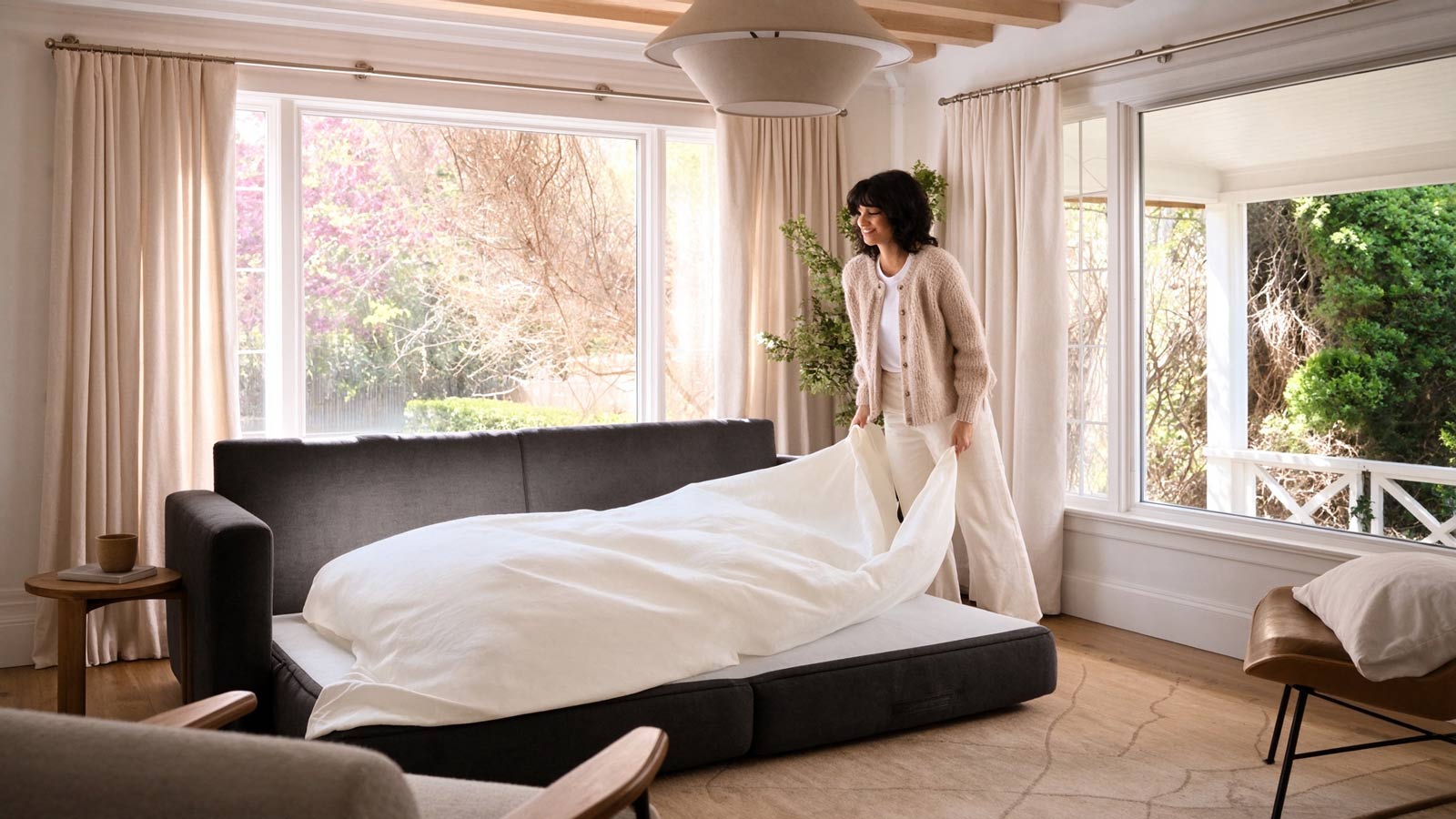
Burrow’s assembly story is one of the few dimensions where the marketing and the majority of user reports align. Reviewers describe sofas coming together in roughly 15 to 30 minutes, with legs screwed on and seat pieces secured by metal latches or large plastic turn screws, no tools required. One long-term reviewer who had owned a modular sofa for five years described the setup as working “wonderfully” for a strangely shaped living room and surviving three apartment moves with seats that “held up quite well”. The caveat is consistency. A Trustpilot reviewer described assembly as “extremely arduous,” with poorly drilled or missing pilot holes and instructions that did not match the hardware provided. The tool-free premise is genuine for most buyers, but it depends on the hardware arriving correctly machined, and that is not guaranteed.
Seating Geometry and Small-Space Fit Divide Buyers Sharply
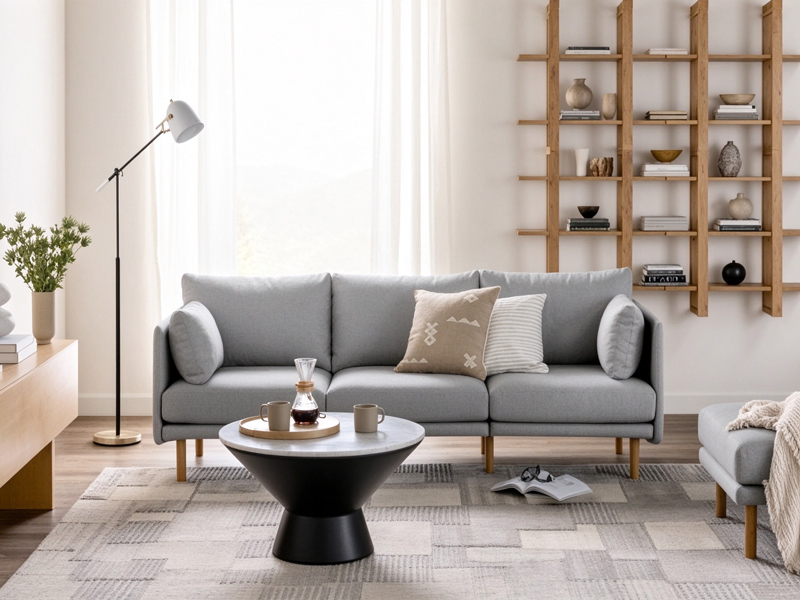
Burrow’s seating dimensions are unusually consequential because the brand’s small-space positioning produces geometry that does not suit every body type or lounging preference. The Nomad three-seater lists a seat depth of 22 inches and a seat height of 17 inches. The New York Times noted that Burrow sofas tend to have “shorter seat heights (16 to 17 inches) and shallower seat depths (21 to 22 inches), which some people may find uncomfortable for lounging”. The counterpoint is that the catalog is not uniform. The Union collection is described by Apartment Therapy as having the “deepest, widest, and plushest seats out of Burrow’s seven modular sofa collections,” with a 27-inch seat depth, a full five inches deeper than the Nomad. The practical lesson is that Burrow is a model-by-model purchase, not a brand-level one; the sofa that suits a six-foot lounger is not the sofa that fits a compact apartment, and the product pages carry the numbers needed to tell the difference.
Delivery Reliability Is the Store’s Most Consistent Failure
If assembly is Burrow’s strength, delivery is its clearest operational weakness. The patterns in public complaints are repetitive rather than scattered. One reviewer documented a sofa order that hit three separate delivery failures—an incorrect first shipment, a delay notice, and then a further two-month-plus delay pushing the expected arrival to late April. Another Trustpilot review from February 2026 described an order placed in December that was still unresolved two months later, with only half the order received, one wrong chair, and “very little information other than being told ‘its coming’”. A separate review noted that customer support confirmed in writing that there was “no physical stock available in any of their warehouses” and that the brand was waiting on an upcoming production shipment. Google store reviews capture the same split: one bed frame reviewer rated the product highly but described the shipping process as “a disaster,” citing incorrect box counts, missing tracking, and a tracking link routed through a carrier that UPS did not recognize. The common thread is not that every order fails, but that when delivery does fail, the information layer fails with it.
Customer Service Is Email-Only and Widely Described as Unreachable
Burrow’s support model is a recurring source of frustration because of what it lacks rather than what it does. Multiple Trustpilot reviews state plainly that there is no phone number available and that emails go unanswered or are handled by chatbot-style responses. A detailed complaint noted “No phone support, No chat support, Email support reps not able to help correct Burrow errors”. Another reviewer described a configuration add-on process that required “DOZENS of emails back and forth and almost 1 MONTH” to resolve, concluding that “if I could have spoken to someone on the phone it could have been handled in 1 day 1 transaction”. The Better Business Bureau records 28 complaints in the last 12 months and 89 over three years, with the business not BBB-accredited. There are countervailing reports—one repeat customer described the team as “attentive, responsive and human”—but the dominant pattern in high-frustration cases is that the absence of a live channel turns a solvable logistics issue into a weeks-long email chain.
Warranty and Return Terms Are Clear but Thin Relative to Price
Burrow’s written policies are clear, which is itself a point in the store’s favor. The return window is 30 days for furniture and 100 days for Lyric mattresses, with a return shipping fee of 10% of paid value if original packaging is kept and 20% without it, capped at $250 per item. Defective or damaged orders are covered by warranty and are not subject to return shipping fees. The warranty itself is one year on materials and workmanship. An independent review notes that this one-year term sits below the site median of five years for furniture. For a sofa that can exceed $2,000, a one-year defect warranty is thin, and the return fee structure means that a buyer who discards the packaging before deciding to return faces a 20% deduction capped at $250. The policies are legible; the issue is that the coverage duration does not match the price positioning or the brand’s emphasis on durability.
Fabric Durability and Cushion Longevity Depend Heavily on the Line
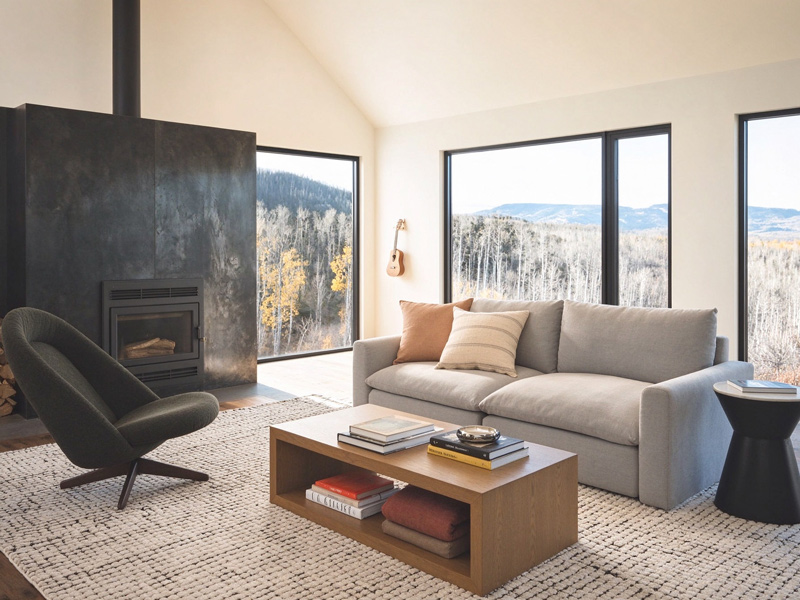
Burrow’s upholstery performance is genuinely strong on its performance fabrics and inconsistent on cushion structure. The brand’s stain-resistant and pet-friendly fabrics are repeatedly cited by long-term owners as holding up against spills, pets, and years of daily use, and one five-year owner reported the fabric remaining in good condition after multiple moves. The weak point is cushion longevity. Thingtesting’s review synthesis flags “noticeable sagging” and “inconsistent cushion longevity” as recurring product-level issues, and a Google reviewer described cushions losing shape faster than expected for the price. The distinction matters because fabric durability and cushion durability are separate questions: a buyer can reasonably expect the upholstery to resist staining while still encountering seat cushions that flatten within a couple of years. For a modular sofa designed to be kept and reconfigured, cushion construction is as much a part of the longevity case as the fabric itself.