A wet cushion, a linkedin cold call, and a thousand backyards: the outer store
Official homepage: https://www.liveouter.com
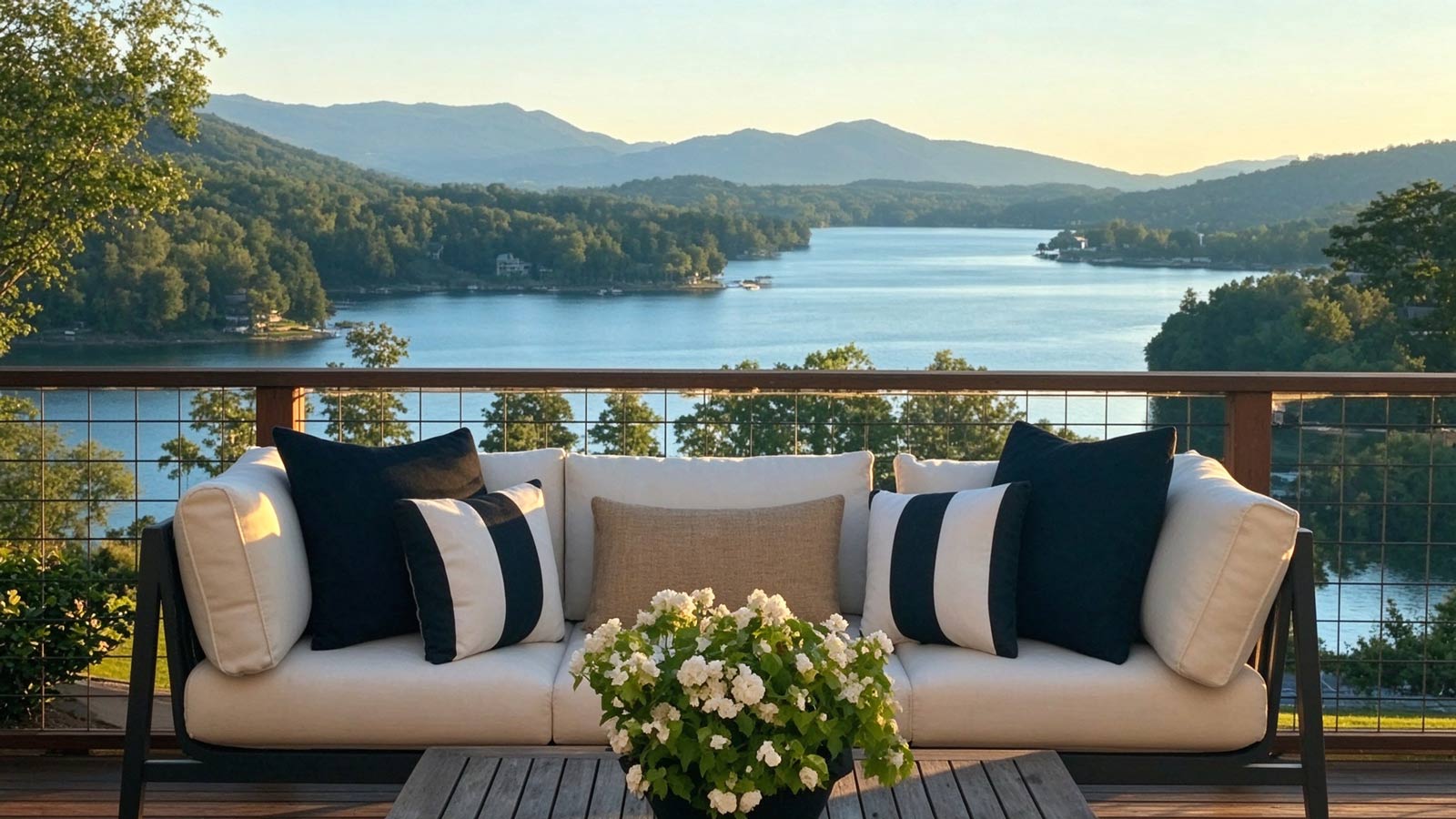
Outer exists because of a wet cushion. Co-founder Jiake Liu sat on his outdoor sofa one morning, coffee in hand, and found the seat soaked through — an indignity he later branded "Wet Bottom Syndrome" and set out to engineer away. The result, launched in 2019, pairs a patented built-in cushion cover with a radical retail idea: a thousand showrooms that are actually customers' backyards. This review examines the Santa Monica storefront across every dimension: the founding partnership, the Shark Tank and venture chapters, the OuterShell engineering, the materials ledger, and the premium price of all-weather comfort.
Wet Bottom Syndrome, and one LinkedIn cold call
The founding pair is a study in complementary skill sets. Jiake Liu grew up in Huntsville, Alabama, studied computer engineering, built a venture-backed software startup helping small businesses adopt technology, and — crucially — comes from a family that owns an outdoor-furniture factory in China, where he had absorbed years of customer complaints about cushions that mildewed, waterlogged, and wore out. Terry Lin is the design half of the partnership: a Rhode Island School of Design graduate who began his career at IDEO — the studio behind Apple's mouse — before serving as lead furniture designer for Pottery Barn and as a product advisor to Casper.
They met the way the modern economy now produces partnerships: Liu cold-called Lin on LinkedIn without a mutual connection, and Lin answered — he has since joked that it helped that the message arrived on his birthday. What united them, per their joint interviews, was a shared refusal to make "a comparable product in a sea of comparable products": Lin had spent two decades making incremental tweaks to proven styles, and Liu had watched his family's factory field the same unsolved complaint for years. The wet cushion was the problem hiding in plain sight.
Shark Tank, Sequoia, and a thousand percent growth
Outer launched in May 2019 with radical focus — two SKUs, two colorways, and a first-year goal of selling one hundred sofas as proof the thesis deserved to keep going. Six months later, a Shark Tank editor spotted the brand on Instagram and invited it to audition; Liu and Lin appeared in November 2019 and closed a deal with Lori Greiner, after which their web traffic graph, in Liu's words, looked like a shark fin. The pandemic then transformed a backyard-furniture startup into a pandemic beneficiary: sales grew more than 1,000 percent in 2020, Business Insider named it the fastest-growing direct-to-consumer brand, and direct traffic to the storefront — about forty percent of visits, an unusually high share — confirmed the brand was being searched by name rather than discovered by ad.
The venture record that followed is among the loudest in this category. A $10.5 million Series A led by Sequoia Capital China closed in January 2021 — with angels including the founders of Harry's, Twitch's Justin Kan, and The Chainsmokers' Mantis fund — and a $50 million Series B arrived later the same year with Tribe Capital, C Ventures, and Upfront Ventures. The company expanded into Australia, began courting hospitality buyers, and pushed its headcount toward a hundred people across five continents.
The OuterShell patent and the five-second fix
The product thesis rests on one elegant mechanism. Every Outer cushion carries a built-in protective cover — the OuterShell — that rolls out from a pocket in the back and wraps the seating surface in seconds, then rolls away just as fast. The alternatives it replaces are the two miserable incumbents of outdoor life: the two-person rain tarp that lives in a heap beside the deck, and the pizza-box carry of cushions indoors at every hint of weather. Because the cover is integrated rather than aftermarket, using it takes one hand and a few seconds — which is the entire behavioral bet: remove the preparation, and people actually use their outdoor rooms daily.
The mechanism earned real intellectual property, and the brand treats it as the load-bearing patent of the catalog. Reviewers consistently identify the OuterShell as the feature that justifies the premium — the difference between furniture that waits for guests and furniture that gets lived on.
The golden triangle of soft, durable, eco
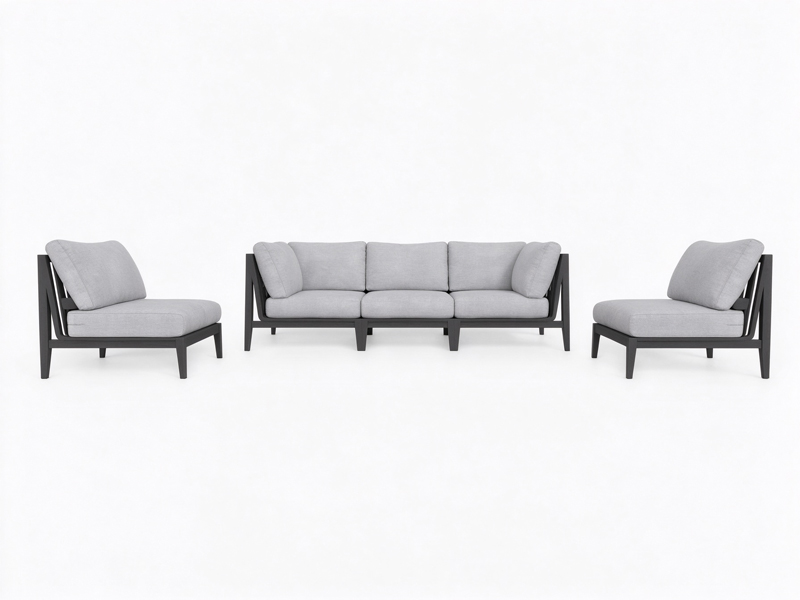
Under the cover, the engineering follows what the founders call the golden triangle: soft, durable, and eco-friendly, with no leg compromised. Seating uses the brand's proprietary OuterCloud memory foam cushions — engineered to feel closer to an indoor sofa than to conventional outdoor foam — on frames of powder-coated aluminum, hand-woven all-weather wicker rated fully recyclable, or FSC-certified teak on the upper lines. The textile program converts recovered plastic into performance fabric: the brand reports diverting more than two million ocean-bound bottles from landfills and waterways, at roughly one hundred bottles per chair and about thirty percent recycled content in its sofas.
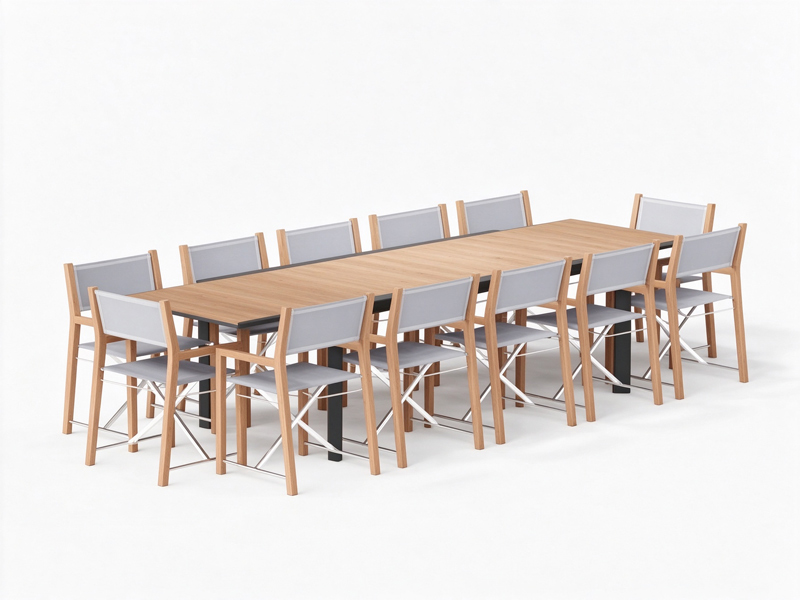
The catalog has grown far beyond the founding sofa: modular sectionals, chaise lounges, dining collections, fire pits, and rugs — including the 1188 collection woven entirely from recycled bottles. The storefront organizes the expansion cleanly, with material explainers beside each collection and an All-Weather Cover program for buyers who want whole-furniture protection beyond the integrated shell.
Neighborhood Showrooms, or Airbnb meets furniture retail
The retail invention deserves its own paragraph because it remains the most imitated idea in the category. Unable to afford showrooms in 2019, Liu posted to Nextdoor asking whether strangers would host viewings in their backyards; dozens of replies arrived within days, and the Neighborhood Showroom program was born. Existing customers apply to become hosts — background-checked, compensated modestly per showing, and given a discount on their own purchases — and prospective buyers enter a zip code on the storefront, browse real backyards near them, and book an appointment to sit on the furniture in its natural habitat.
The network grew from roughly a hundred showrooms in 2020 to more than a thousand across the United States and Australia, with virtual visits added during the pandemic — hosts and visitors sharing a glass of wine over video call, in the company's telling, occasionally becoming friends. The commercial genius is trust at near-zero real-estate cost: the salesperson is a neighbor with no commission at stake, the showroom is a lived-in yard rather than a staged floor, and the brand collects both the sale and a community story it can tell for years.
Ocean bottles, family factory, and one percent
The sustainability ledger is deeper than the usual DTC vocabulary. The fabric supply chain runs on recovered ocean-bound plastic; the cushions are rated one hundred percent recyclable; the wicker contains no virgin petrochemical fiber; and the company is a committed partner of 1% for the Planet, donating one percent of revenue to environmental nonprofits. Manufacturing runs through the founder family's own factory in China — a detail the brand discloses rather than hides, framing it as vertical integration with the weaving craftspeople of Liu's home region and a marriage of Chinese supply-chain craft with American design.
The honesty file is not spotless: the disclosure is genuine, but buyers who treat country of origin as a hard filter will note that Outer is not the made-in-America story of Medley or Floyd's Italian chapter. The brand's counter is traceability — one family-owned facility, audited materials, named craft traditions — rather than distance.
The premium price and the China question
The price sheet is the store's steepest paragraph. A standard three-seat aluminum sofa runs around $4,250, wicker sectionals approach $5,600, and the flagship configurations climb from there — pricing that parks Outer beside the high-end outdoor galleries rather than the big-box patio aisle, and roughly ten times the cost of the entry-level sets whose failure mode inspired the company. Reviewers converge on the same reconciliation: the materials, the patent, the comfort, and the warranty program justify the premium for households that genuinely live outside, and cannot be justified for the twice-a-summer cookout crowd.
The warranty program the storefront advertises — the brand calls it best-in-class — covers the frames and materials for years, and the modular construction means components replace rather than landfill. The realistic complaints recur around logistics like every freight furniture brand: lead times stretching at peak season, delivery-window friction, and cushion care in perpetually humid climates even with the shell deployed. None of these are scandals; all are the physics of outdoor furniture at luxury prices.
Final guidance for the all-weather entertainer
Outer's storefront is the most conceptually complete in this category: a wet-cushion origin story, a patented mechanism that solves it, a materials ledger built on recovered ocean plastic, a venture-backed balance sheet, and a retail model — a thousand borrowed backyards — that turned the industry's highest cost line into its best marketing channel. The Shark Tank episode, the forty percent direct traffic, and the 1,000 percent growth year all say the same thing: this is a brand customers recite to their neighbors, in showrooms that are literally their neighbors' yards.
Buy here if your outdoor room is a daily room, if you entertain often enough to amortize a $4,000 sofa, if the one-handed OuterShell solves the preparation problem that keeps your current set underused, and if eco-audited materials matter more than made-in-America provenance. Buy mainstream patio furniture if the deck sees four weekends a year, or wait for an open-box event if the premium stings. For the household that treats the backyard as square footage, this store remains the category's most convincing answer.