A Google engineer's side brand refused monthly fees from day one
Official homepage: https://www.eufy.com/
Eufy began in 2016 as the smart home arm of Anker, the charging giant founded five years earlier by a former Google engineer with roughly $200,000 and a grudge against bad chargers. Its pitch was contrarian from the start: security cameras and robot vacuums that store footage locally and never demand a monthly fee. Nearly a decade later, eufy claims more than six million households, a robot vacuum line spanning $200 to $1,600, and a public-company parent listed in both Shenzhen and Hong Kong. Here is our review of its store.
From Replacement Chargers to Robots for the Home
The parent company's origin explains the store's discipline. Steven Yang — a Peking University graduate with a computer science master's from the University of Texas at Austin — spent five years as a Google algorithm engineer before leaving in 2011 to start Anker in Shenzhen with about $200,000 in capital. His founding observation was that people were quietly furious at their chargers: cheap ones failed, expensive ones were not much better, and a mid-priced product that simply worked would win. That formula — engineered reliability at honest prices, sold where people already shop — carried Anker to category leadership and, in September 2016, spun out eufy as the dedicated smart-home brand, covering security, cleaning, and eventually baby care and health. The same engineering-first logic has governed it ever since.
The Camera That Promised No Monthly Bill
Eufy's defining bet was a business-model attack, not a spec sheet. Where Ring and Arlo built empires on cloud subscriptions, eufy designed its security cameras around a local hub — the HomeBase — that keeps recordings on the device itself, with no plan, no contract, and no paywall standing between a buyer and their own footage. The original wire-free EufyCam line undercut comparable systems from Arlo and Nest by meaningful margins at purchase, then kept costing nothing for years afterward. Cloud plans exist for those who want off-site backup, but they are optional, and the store's identity rests on the opposite premise: your video belongs on your hardware, not on a company's server.
One Battery Charge Lasting an Entire Year
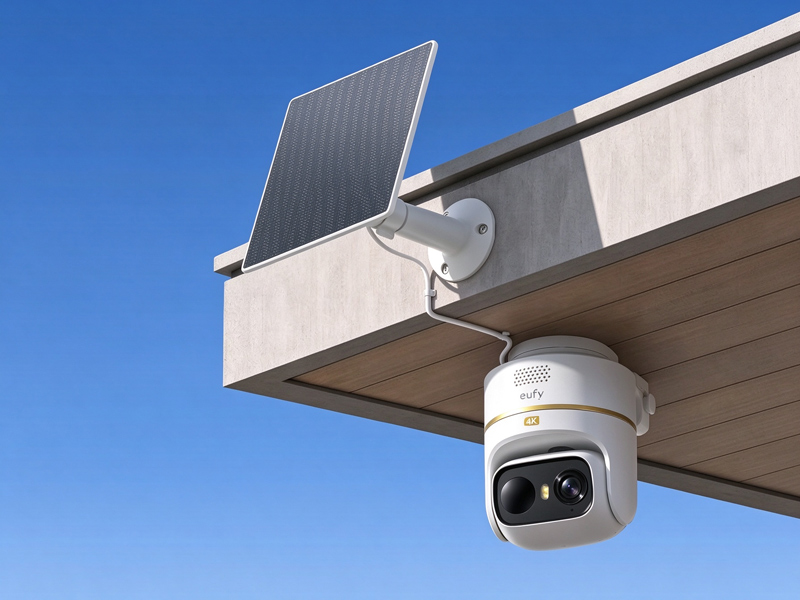
The hardware has repeatedly justified the philosophy. Early EufyCam models offered 1080p streaming, IP67 weatherproofing, and a genuinely remarkable 365-day battery life — a full year between charges — plus free person detection and local storage, in a package reviewers consistently ranked alongside cameras costing more and charging rent forever after. The line matured into the EufyCam 3 era: 4K resolution, a built-in solar panel that trickle-charges the battery outdoors, and BionicMind face recognition processed on the device itself rather than in the cloud. The companion HomeBase 3 ships with 16 gigabytes of storage expandable to 16 terabytes, enough for months of footage from a multi-camera household, and the system supports Amazon Alexa, Google Assistant, and — depending on generation — Apple HomeKit.
Robot Vacuums Climbed From Budget to Flagship
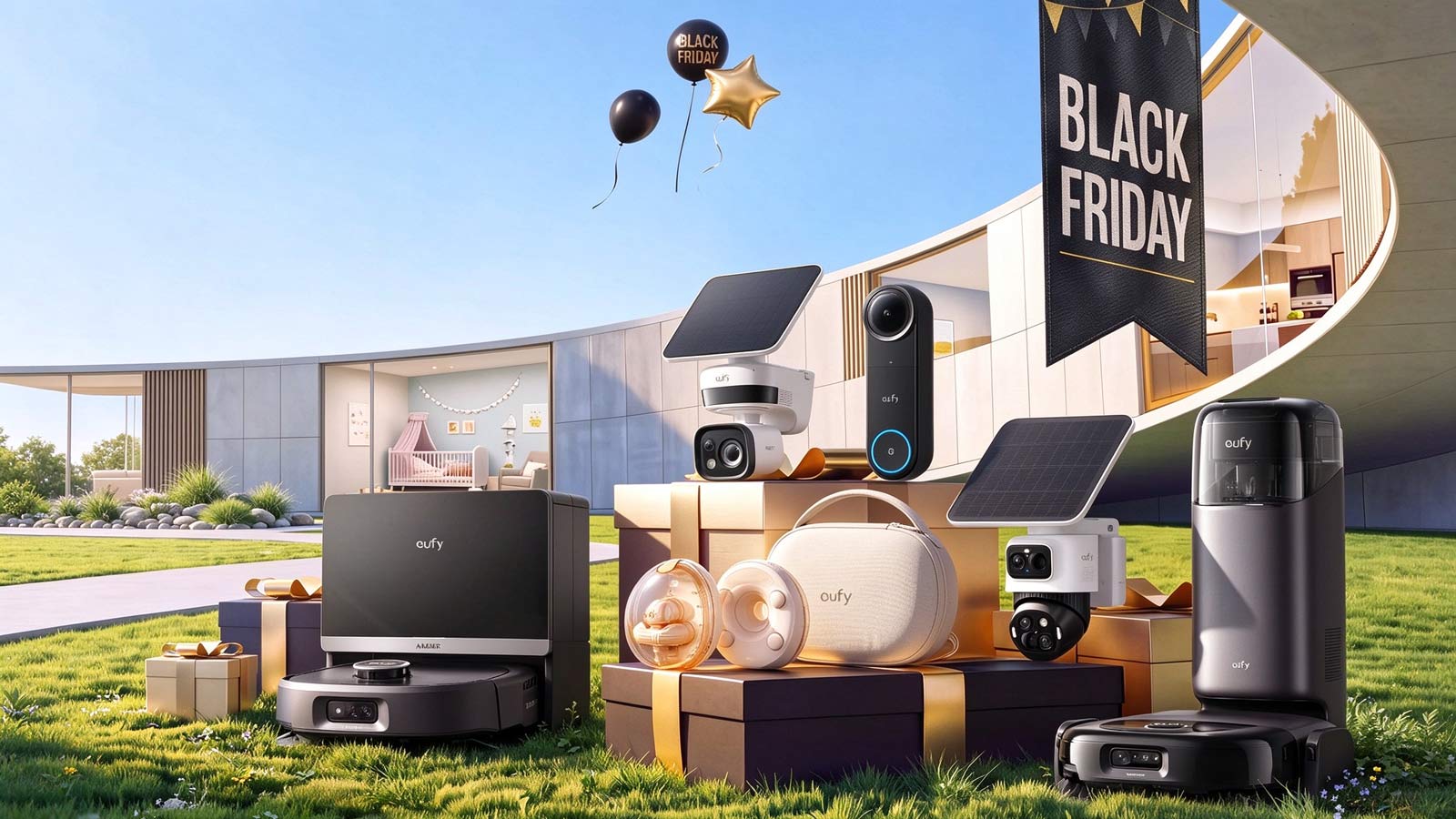
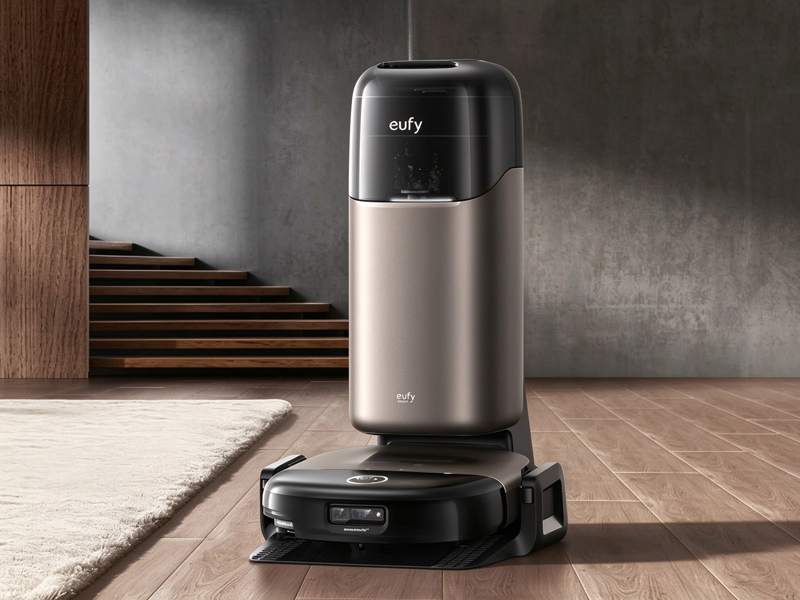
Cleaning is the other pillar, and it followed the same trajectory as the cameras: enter cheap, climb high. Eufy's RoboVac line established itself in 2017 with entry models around $200, and the brand is now the UK's number-one robot vacuum maker, with its battery security cameras also holding number one on Amazon in the UK and top positions in the Netherlands and Australia. The modern range runs from budget units to the X10 Pro Omni — 8,000-pascal suction, self-washing and self-drying mop pads, and a $699.99 list price that routinely sells nearer $450 — up to the Omni S2 flagship launched in May 2026, whose 30,000-pascal suction and HydroJet roller mop command $1,599.99 and anchor the CES 2026 lineup. Alongside cameras and vacuums, the store has quietly grown unusual adjacencies: a dual-camera video doorbell at $119.99, a wearable breast pump at $349.99, and porch-light and floodlight cameras, all under the same no-required-subscription umbrella.
Local-Only Marketing Faced Its Reckoning
The promise of local-only processing was tested publicly in late 2022, when security researchers demonstrated that eufy's software was uploading event thumbnails and data to cloud servers — including facial-recognition data the company had publicly stated never left the device — and that some of it was accessible through web URLs. The coverage, led by The Verge, forced an admission that the company's disclosures had not been sufficiently clear, and eufy responded with security patches, policy changes, and a stated commitment to processing and storing footage locally by default. The episode dented the brand precisely because its entire pitch was privacy; how much it matters depends on whether a buyer reads it as a corrected misstep or a revealed instinct, and it remains the most scrutinized chapter of the company's story.
The Honest Bottom Line for eufy Shoppers
The store's math still favors the buyer who refuses subscriptions: an Indoor Cam C120 at $39.99, a battery SoloCam that needs no hub or wiring, a doorbell at $119.99, and a HomeBase ecosystem where 16 terabytes of local archive beats any cloud plan on lifetime cost. The support structure is equally real — the parent listed on the Shenzhen exchange in 2020 and on Hong Kong's main board in July 2026, with smart home revenue of roughly 8.3 billion yuan in 2025 — though shoppers should know that Amazon still accounts for a large share of sales, that HomeKit compatibility varies by generation, and that the 2022 privacy episode warrants honest weight. At IFA in September 2026 the brand folded into "Anker eufy" under the Anker for Home group, a sign the smart home experiment has graduated from side brand to core business.