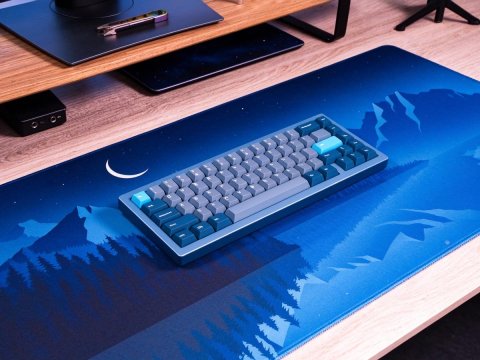
Why the zoom series turned meletrix into the default first aluminum custom
Official homepage: https://meletrix.com
Meletrix was born from Wuque Studio, the Beijing design collective famous for the Ikki68 Aurora, with a mission to bring enthusiast-level mechanical keyboards to everyone. Four years after the Zoom65 debuted in January 2022 to a Tom's Hardware "best entry-level custom" verdict, the line has grown into a family spanning seven mounting systems, LCD screens, and magnetic gaming boards. This review examines the Shopify storefront behind the Zoom phenomenon — the Wuque connection, the kit economics, the software ecosystem, a twenty-two-vendor distribution map, and the honest flaws critics keep finding.
Wuque Studio's manufacturing arm opens its own doors
Understanding Meletrix requires knowing Wuque Studio. The Beijing-based design team earned community devotion with boards like the Ikki68 Aurora before spinning its manufacturing and engineering muscle into a second label. Meletrix's own About page frames the split simply: the same design DNA and the same facility, aimed at a broader audience. Where Wuque Studio experiments with boutique group buys, Meletrix industrializes the results — its own designers, hardware and software engineers, and an in-house manufacturing plant, an unusual degree of vertical integration for a brand at these prices.
The mission statement is almost identical to its Shenzhen rival QwertyKeys — enthusiast-level keyboards for everyone, priced by supply-chain advantage rather than hype. But the execution differs in one important way: Meletrix kits historically ship complete. The original Zoom65 arrived with switches, keycaps, stabilizers, and a braided coiled cable in the box, a deliberate bid to convert prebuilt buyers who had never held a screwdriver, and a genuine differentiator in the kit market.
From the Zoom65 to seven mounting systems
The Zoom line's trajectory is a case study in platform economics. The Zoom65 launched in January 2022 and immediately set the template: CNC aluminum, gasket mounting, multi-layer PORON foam, screw-in stabilizers, and an out-of-box completeness Tom's Hardware praised while awarding it best entry-level custom status — with caveats about plate creaking under force and an assembly process deeper than casual buyers expect.
Each revision widened the funnel. The Zoom65 V2 added a knob; the Zoom75 brought a 75% layout with a customizable LCD screen and interchangeable top-right blockers; the Zoom98 and Zoom TKL covered office and TKL tastes; the Boog75 HE jumped onto magnetic-switch gaming in a fully prebuilt shell; and the Zoom65 V3 — reviewed by gadgetoid in early 2026 — ships with seven interchangeable mounting systems, from magnetic levitation to split o-ring, with accessories for all of them in the box. The constant across the family is configurability: case colors, weights, plates in polycarbonate, aluminum, or carbon fiber, and badge options that let two buyers own ostensibly the same board with nothing in common.
Screens, software, and the Wuque ID ecosystem
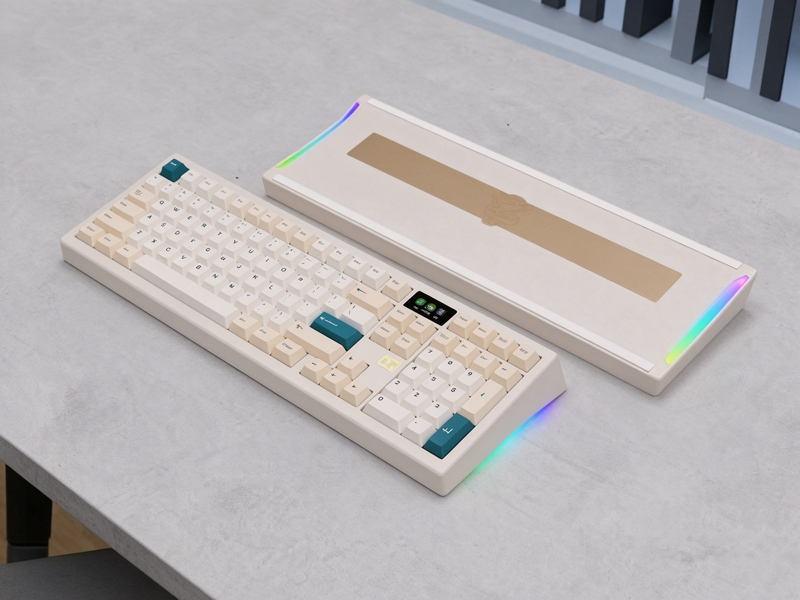
Meletrix's distinguishing toy is the screen. Zoom75-class boards carry an LCD that, through the Wuque ID companion app, can display CPU and GPU temperatures, fan speeds, network activity, weather, and time; the Pocket Wuque app handles custom images and GIFs. It is the most functional implementation of keyboard screens in the hobby — telemetry rather than novelty — and it gives the storefront a software story most aluminum-kit rivals lack.
The keyboard-side firmware is more conventional. Remapping runs through VIA, but not the seamless way: users sideload a board-specific JSON file into VIA rather than finding the board in the official database, an extra step that trips up newcomers and a documented friction point across vendor guides. Wireless firmware updates route through an Android-only BLE app. None of this is unusual for the category, but the gap between the polished screen experience and the fiddly firmware workflow is real — the software team is clearly prioritizing the flashy half of the stack.
Complete kits versus the bare-bones competition
Price the Zoom line against its neighbors and the value argument is nuanced. A fully-optioned Zoom65 V3 build ran one UK reviewer £256 without keycaps — real money that overlaps Keychron's premium Q-series and, at the top of the configurator, starts brushing against QwertyKeys QK territory. The counterweight is completeness: switches, stabilizers, cable, foam, and tools included on many kits, where QK-style kits assume you already own everything else.
The genuine trade-off is quality control variance. Reviewers consistently describe Zoom boards as beautiful but occasionally flawed — a board that needs "more than a little TLC to get it to an acceptable standard," in gadgetoid's words about the V3, with the understanding that tinkering is part of the hobby's appeal. Tom's Hardware flagged plate creak on the original. The pattern is not scandal but calibration: these are affordable aluminum customs with the fit-and-finish lottery that implies, not luxury goods with luxury QA.
Twenty-two vendors and the global fulfillment map
Like QwertyKeys, Meletrix leans on a regional vendor network — the Zoom75 launched through twenty-two vendors simultaneously, a map that includes CannonKeys in the US, MaxGaming in Europe, Yushakobo in Japan, and specialty shops across Asia. Regional partners absorb customs complexity and shorten delivery; the Meletrix Shopify store serves everyone else and holds the full catalog including exclusives, bundles like the ZOOM64 sale, and direct group-buy listings.
Worldwide shipping is advertised plainly, and the storefront publishes its support window without pretense: Monday to Friday, 9 AM to 6 PM Beijing time. That single detail tells international buyers most of what they need to know — asynchronous communication across time zones, China-direct fulfillment times, and the Discord server as the practical front line for build help. Community trackers record no serious unresolved complaints against the vendor, which for a brand shipping this volume is a meaningful data point.
Support hours, warranty, and the reviewer's dilemma
Support runs through email and Discord within Beijing business hours, and the community infrastructure is genuinely strong — vendor partners like CannonKeys maintain extensive product guides for Zoom boards, firmware archives, and troubleshooting pages that function as an unofficial extended warranty of documentation. Warranty terms follow custom-keyboard convention: PCB coverage with cosmetic tolerances published, assembly mistakes falling to the owner, and the standing advice to film your unboxing.
The reviewer's dilemma is disclosure culture. gadgetoid's Zoom65 V3 coverage was refreshingly honest about being supplied by the brand — and about having refused to pay the asking price personally. That epitomizes the Meletrix information environment: most prominent coverage is creator-seeded, most owner sentiment is positive, and the critical voices that exist are specific and technical rather than accusatory. Buyers should weight long-term owner reports over launch-week hype, as with any community-driven brand.
Where Zoom boards divide the enthusiast community
Ask the community about Meletrix and you get a clean split along experience lines. First-time builders praise the completeness, the build guides, the screen novelty, and the feeling of a $300 board that presents like a $500 one. Veterans note the plastic-versus-metal sound ceiling, the sideloaded VIA workflow, the mounting-system proliferation that prioritizes spec-sheet breadth over dialed-in defaults, and a keycap quality that lags dedicated keycap makers.
Against Keychron the argument is ecosystem versus purity; against QwertyKeys it is completeness versus configurator depth. Meletrix sits deliberately in the middle: more hand-holding than the hobbyists' shops, more aluminum credibility than the mainstream brands. That middle is exactly where the hobby's growth lives, which is why the Zoom series keeps selling out its revisions.
Signing off with advice for first-time builders
Meletrix's Shopify storefront is the most accessible on-ramp to aluminum custom keyboards currently on the market: complete kits that need nothing but time, screens and software that justify the category's gadget appeal, Wuque Studio engineering at non-boutique prices, and a vendor network that gets boards to most of the world without import gymnastics. The flaws are the honest ones — QC variance, a fiddly firmware path, Beijing-hours support, and pricing that drifts upward as the configurator tempts you.
Buy a Zoom kit if you want one box that turns into a genuine custom build this weekend, and buy it from your regional vendor if one exists. Skip it if you already own switches and keycaps and want the cheapest aluminum shell, or if you demand database-native VIA and dead-perfect tolerances. For the converting mainstream — the Keychron graduate ready for something more — the Zoom series remains the path of least resistance, and this storefront its front door.