Kinetic labs and the rise of the american in-stock keyboard warehouse model
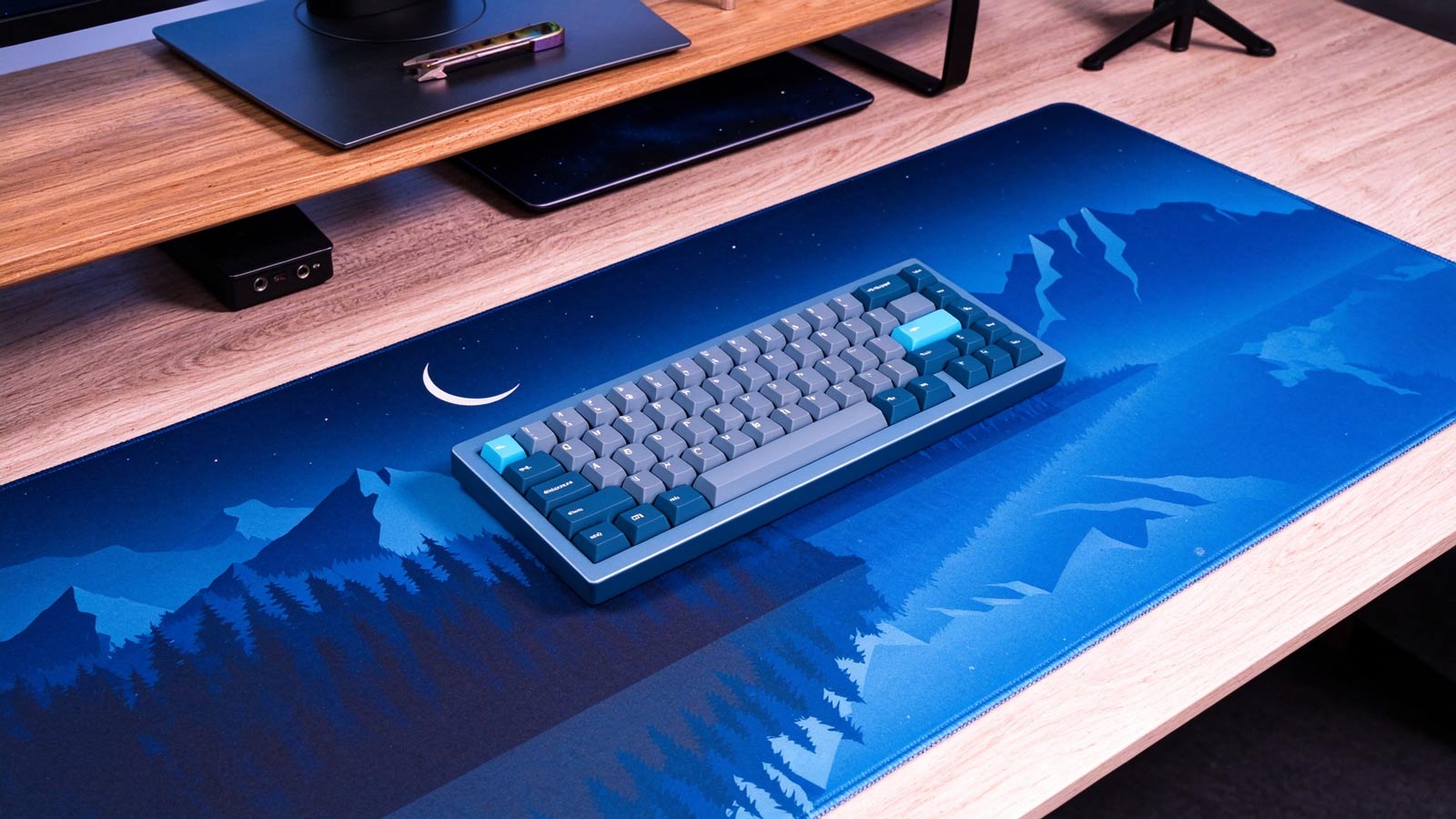
Official homepage: https://kineticlabs.store
Kinetic Labs was founded in 2020 in North Bergen, New Jersey, by Christian — known in the hobby as the YouTube creator keybonbon — with a simple mission: high-end keyboards and accessories kept in-stock and shipped fast from an American warehouse. Six years later the storefront carries a 4.89-star rating, claims more than 100,000 customers, and stocks everything from $8 switch packs to its own PolyCaps keycap line. This review examines the store dimension by dimension: the founder's content-creator roots, the private-label strategy, the beginner funnel, pricing and stockouts, support policies, and how it stacks against America's other keyboard warehouses.
A YouTube creator opens a New Jersey warehouse
Kinetic Labs begins with a media story. Founder Christian built an audience as keybonbon, a keyboard content creator on YouTube, before converting that audience into a retail operation in 2020 — the same pandemic-era window that launched Divinikey in Los Angeles and supercharged CannonKeys in Massachusetts. The vendor database that tracks the hobby's shops records the mission plainly: high-end keyboards and accessories, in-stock, with fast shipping.
The operation is deliberately unglamorous. The warehouse sits at 4001 Dell Avenue in North Bergen, New Jersey, minutes from Manhattan, and most orders are processed and shipped from there. For American buyers conditioned to wait three weeks for parts from Shenzhen, the pitch writes itself: domestic inventory, domestic shipping, no customs roulette. The store claims more than 100,000 customers and a 4.89 aggregate rating on independent review platforms, and its catalog is structured like a parts supermarket rather than a boutique group-buy shop.
The catalog: switches first, keycaps second, boards third
Kinetic Labs' inventory logic is inverted compared to most keyboard stores. Where rivals lead with keyboards, Kinetic leads with switches — its best-seller list is dominated by $8-to-$12 packs of linear, tactile, and silent switches, many of them exclusive collaborations: the Husky and Salmon lines, the Hippo with its UHMWPE stem, the silent Penguin and Turtle, the Gecko silent linear, and hand-lubed variants finished in-house with Krytox 205g0. Switch and Click's long-running vendor guide recommends the store precisely for these house switches plus its Polycaps keycaps.
Keycaps come second, under the PolyCaps private label: sets like Whale PBT V4, Hippo V2, and Octopus V2 arrive as all-in-one kits at $79.99, positioned as complete-coverage packages rather than base-kit-plus-extras pricing. Barebones keyboards — the $64.99 GMK67, the $69.99 wireless GMK87 TKL, the $79.99 Lucky65 V3 — occupy the entry tier, sourced from the same Chinese OEMs as everyone else but stocked domestically. Around the edges sit the high-margin accessories: Krytox lube, coiled aviator cables, desk mats, switch and keycap containers, and tools.

PolyCaps and the private-label keycap strategy
The PolyCaps line is the store's most interesting business decision. Rather than competing purely as a reseller of GMK and PBTfans group buys, Kinetic Labs commissions its own PBT sets and sells them in-stock at a flat $79.99. The trade-off is transparent to enthusiasts: these are not double-shot GMK sets with decade-long group-buy pedigrees, but dye-sublimated or double-shot PBT in cheerful designs with full layout coverage in one box.
For the store's actual customer — the first-time builder upgrading a barebones board — the strategy is smart. One price, one SKU, every keycap the board needs, no group-buy wait, no compatibility anxiety. Review counts on the sets (25 to 41 per product at the time of research) suggest steady turnover rather than cult frenzy, and the keebs101 vendor guide singles out Polycaps as a reason to visit. Veterans will still route their money to group-buy designers, but the store was never built for veterans.
The beginner funnel: tester packs, guides, and containers
The most telling products in the catalog are the smallest ones. The Switch Tester Pack V2 — nine best-selling switches in a sampler for $17.99 — is a pure conversion tool: let a newcomer feel the difference between a creamy linear and a silent tactile before committing to a 90-pack. Guides on the store's blog walk through installing hot-swap switches, pulling them back out, and lubing, written in the plain register of someone who has made YouTube tutorials for a living.
The containers (a switch container at $3.82, a keycap container holding 300-plus caps at $10.99) close the loop on the hobby's logistical reality: building a keyboard generates loose parts, and loose parts need homes. Competitors stock these items; Kinetic Labs merchandises them into the funnel. The result is a store that thinks like a content creator — every product page answers the question a beginner would type into a search bar — which is exactly the SEO behavior that keeps a Shopify storefront visible on Google.
Pricing, shipping thresholds, and the stockout problem
The pricing model is Amazon-shaped: free shipping kicks in at $150, individual switch packs run $4 to $12, and the whole catalog is engineered around basket-stacking. Returns are handled through a 14-day window, honest for the category though tighter than the 30 days mainstream e-commerce has trained buyers to expect — and notably shorter than the policy at the store's Los Angeles rival Divinikey.
The recurring friction is inventory depth. At the time of research, several best-sellers — including the Hippo line that the vendor guide recommends — displayed out-of-stock notices with vague "near future" restock language. Popular switches and themed keycaps cycle in and out of availability, which matters less for a hobbyist planning a build than for a gift buyer on a deadline. The 4.89 rating suggests the warehouse mostly fulfills what it lists, but the stockout pattern is the single most visible weakness across the store's catalog pages.

Support, returns, and a hundred thousand customers
Support is email-first — support@kineticlabs— with the storefront's product pages carrying detailed reviews that the team visibly engages with. Trustpilot's aggregate tells the macro story: a 4.89 score built on a claimed six-figure customer base, with reviewers repeatedly highlighting the build quality of the parts and the speed of domestic fulfillment. Community vendor trackers that log disputes across the hobby's shops show no significant complaint pattern for the store, a clean record it shares with only a handful of American vendors.
The operational maturity shows in the boring places: after-shipping tracking, a consistent 14-day returns policy stated on product pages, blog content kept current, and social channels that answer build questions. Nothing here is world-beating; everything is dependable. For a store whose entire value proposition is "in-stock, fast," dependability is the product.
How Kinetic Labs stacks against Divinikey and CannonKeys
The American vendor tier now has a clear taxonomy. CannonKeys, covered elsewhere on this site through its Bakeneko and Satisfaction75 designs, is the enthusiast's shop — group buys, in-house kits, deep catalog. Divinikey, also reviewed previously, is the import node — Chinese brands warehoused in California under a tariff-proof banner. Kinetic Labs is the third position: the parts supermarket, private-label keycaps and house switches, beginner-first merchandising, and the smallest average order value of the three.
Each model has a failure mode. CannonKeys sells you a wait; Divinikey sells you someone else's branding; Kinetic Labs sells you convenience — and occasionally runs out of the thing you wanted. For the hobby's growth demographic, the person who just watched their first keyboard build video, Kinetic's model is arguably the best on-ramp in America: cheap, fast, complete, and forgiving.
Our recommendation for first-time parts buyers
Kinetic Labs has executed one of the quietest good retail strategies in the keyboard hobby: convert a content audience into a warehouse, stock the long tail of small parts that big vendors ignore, private-label the categories where group buys intimidate newcomers, and keep everything shippable from New Jersey. The storefront's numbers — a 4.89 rating and a claimed six-figure customer base — suggest the strategy is working.
Buy here if you are starting a first build, need switches or lube this week rather than next month, or want a complete keycap set without learning what a group buy is. Check stock status before planning around any specific item, mind the 14-day return window, and route group-buy ambitions to CannonKeys or designer storefronts. As the American keyboard market matures, Kinetic Labs has earned its position as the default parts drawer of the hobby — unglamorous, well-run, and genuinely useful.