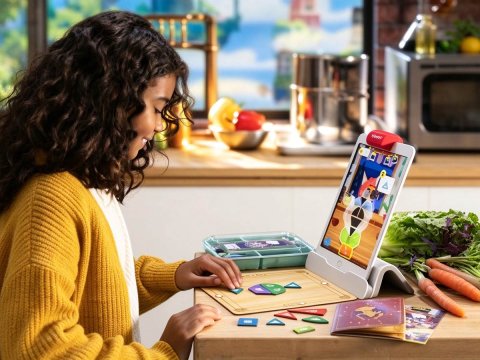
Thirty years, ninety countries, one quiet maths-toy empire
Official homepage: https://edxeducation.com/
Most educational toy brands shout. Edx Education barely raises its voice: for thirty years this Australian-founded, Taiwan-based company has manufactured math manipulatives for children aged three to eleven, quietly exporting to more than ninety countries and supplying classrooms long before it ever sold to parents. Only after the pandemic-era homeschooling boom did it open its doors to families. Here is our review of its online store from several angles.
An Australian Founder Who Built the Company in Taiwan
Edx Education was founded in 1996 by Murray Jackson, an Australian education pioneer who relocated to Taiwan and built the company there. Rather than chasing licensing deals or screens, Jackson focused on a single unglamorous category — hands-on math manipulatives, the linking cubes, sorting counters, and construction sets that teachers use to make numbers physical. For more than two decades the company grew almost invisibly, becoming a major supplier to the international education market with sales and marketing offices across North America, Europe, the Middle East, and Asia. The pandemic changed the customer base: as homeschooling surged, demand for affordable toys with real educational value pushed Edx to extend its offering directly to consumers and toy retailers — and the storefront we see today is the result of that shift.
Selling to Schools First and Families Only Recently
The clearest evidence of this heritage is the catalog's DNA. Edx built its reputation on the B2B side, where purchasing decisions are made by teachers and curriculum buyers rather than by marketing teams, and that instinct still shapes the store. Product pages emphasize age bands in years, activity guides included in the box, and learning outcomes like sorting, patterning, measuring, and early geometry — the vocabulary of the classroom, not the toy aisle. Sets are sized for durability and repeat use, and many products, such as the one-hundred-piece linking cube tubs, are clearly designed to survive a school year of small hands. For parents, this is quietly reassuring: you are buying the same manipulatives that teachers chose, rather than a toy dressed up with an education label.
Manipulatives Instead of Screens: a Deliberate Philosophy
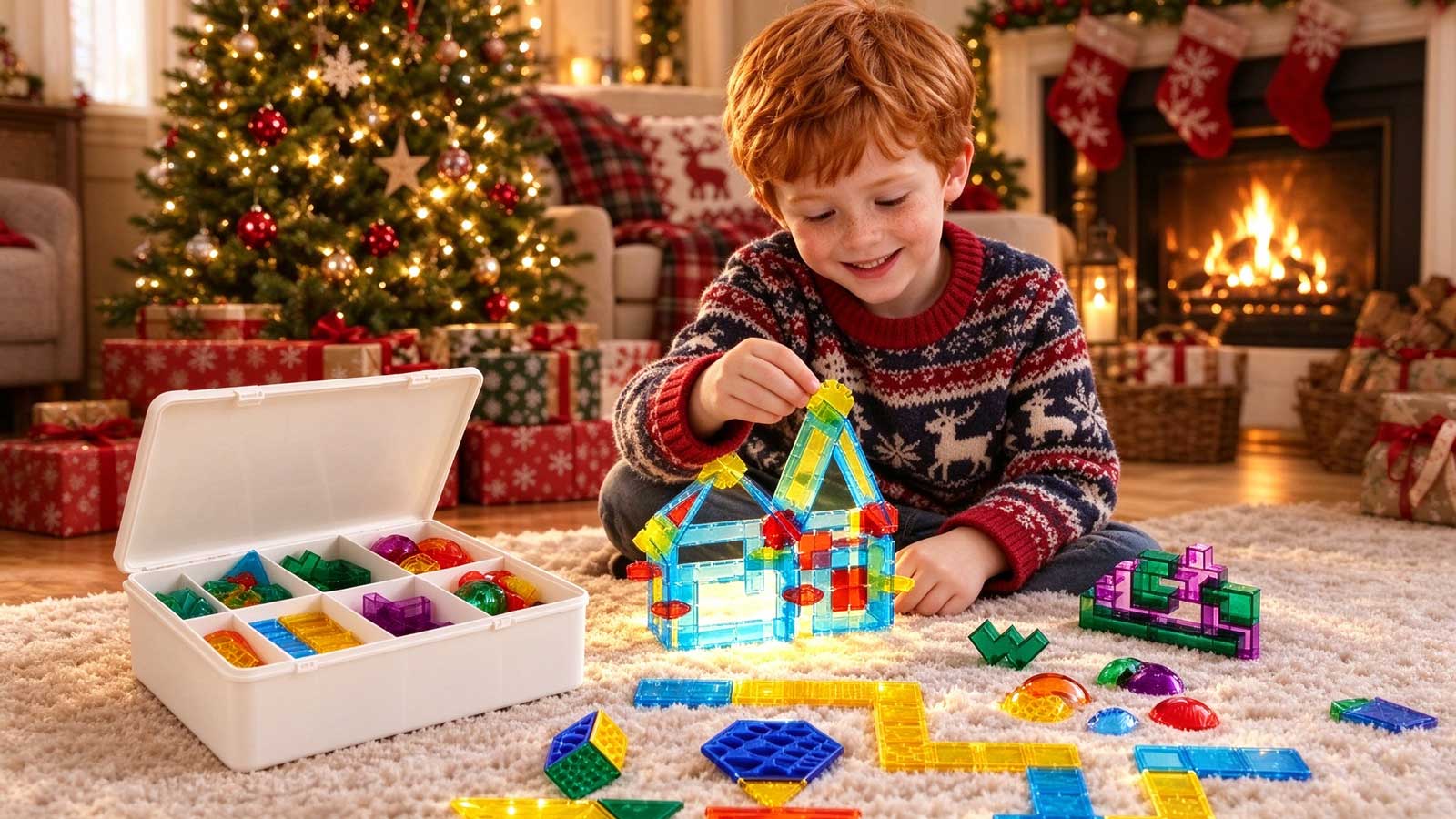
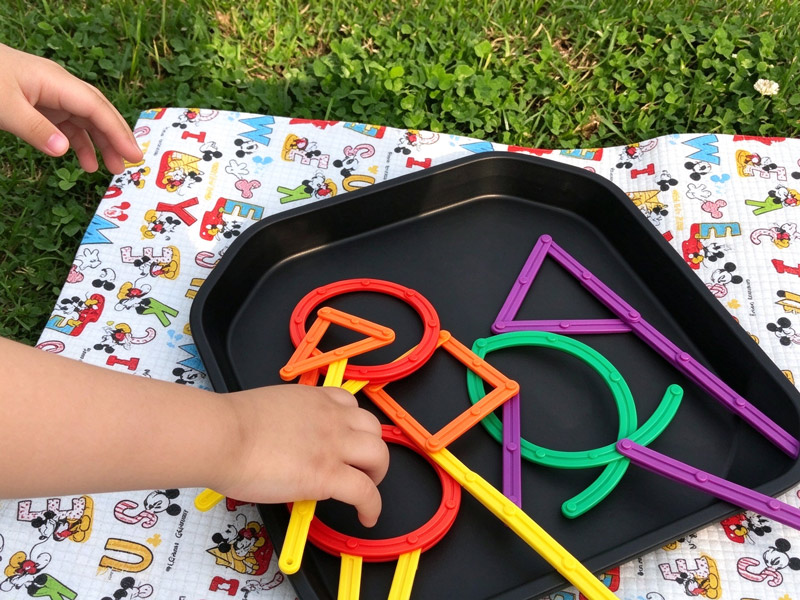
Edx's product philosophy centers on open-ended, screen-free materials. Its flagship math cubes snap together with a soft click, working simultaneously as fine motor tools, construction pieces, and counting aids. The 3D GeoStix sets let children build houses, towers, and bridges while absorbing spatial reasoning and geometry. Even the sensory line — sand and water trays, pumps, funnels, and scoops — is engineered around measurable early learning: full and empty, heavy and light, floating and sinking, cause and effect. The company's stated mission, "Play, Learn & Create," sounds generic until you browse the store and realize there is not a battery or an app in sight. In an educational toy market crowded with tablets in disguise, that refusal is arguably the brand's strongest differentiator.
The Shelves Favor Open-Ended Play Over Prescribed Lessons
Browsing the store, the range is broader than the "math manipulatives" label suggests. Yes, linking cubes, translucent cubes, and counters form the backbone, but the aisles extend into construction sets, early years resources tied to frameworks like EYFS, dominoes, dice, and classroom-style play accessories. Prices sit in the affordable middle — most sets fall well below what a licensed character toy costs — and the UK storefront even offers free delivery on staples like the hundred-cube packs. The trade-off is presentation: product photography is functional rather than glossy, and the storytelling is thinner than at design-led competitors such as Lovevery. You shop here for substance, not for a beautifully staged brand world.
A Family Continues After the Founder's Sudden Passing
The human story behind the storefront deserves mention. Murray Jackson, the founder who ran Edx Education Taiwan for more than twenty-seven years without ever laying off a staff member, died suddenly in January 2024 — the year after he had personally established the UK arm of the business. Industry obituaries remembered him as a mentor who preferred the "trenches" of customer problems to the podium, and who believed that challenging times breed innovation. The company he built passed to the next generation: his son David Jackson became CEO in late 2024, twin daughter Heather Welch runs Edx Education UK, and longtime general manager Pony Wong steers the Taiwan operation. The founder's community work, including an after-school center for aboriginal children in Hualien, Taiwan, survives in the company's sustainability commitments.
The Last Word on Screen-Free, Hands-On Learning
Edx Education is not the flashiest store in the educational toy category, and it does not try to be. What it offers is three decades of classroom credibility, a genuinely screen-free catalog, family-friendly prices, and products built to endure — strengths that matter enormously for early-years math and sensory play. The weaknesses are equally real: branding and product storytelling lag behind the category's leaders, the shopping experience feels more trade-catalog than boutique, and children seeking character-driven excitement will find the shelves plain. For parents and teachers who value substance over sparkle, though, this quiet maths-toy empire is one of the most trustworthy shops in the space.