Step2: the little tikes founder's second empire, rotomolded in ohio
Official homepage: https://www.step2.com
Step2 is the quiet giant of the American backyard — the largest US manufacturer of preschool and toddler toys and, by its own account and several trade profiles, the world's largest rotational molder of plastics. It was founded in 1991 by the same man who built Little Tikes and sold it to Rubbermaid, launched the first water table in 2006 and watched the category swallow the toy aisle, and still stamps most of its wares in four Ohio, California, and Georgia plants. This review examines the second-act arc, the rotomolding machine, and the grown-up aisles funding it all.
A barn in Aurora and a sale to Rubbermaid
To understand Step2 you must start with its founder's first act. Thomas Murdough Jr. built Little Tikes in a 1969 Ohio barn, pioneering the use of rotational molding — a process that pours powdered plastic into a slowly rotating mold through an oven — to make toys bigger and more durable than anyone thought possible. The Cozy Coupe and Turtle Sandbox made him famous; the 1984 sale to Rubbermaid, reportedly around fifty million dollars, made him patient. After a five-year leadership transition and a non-compete window, he founded Step2 in Streetsboro, Ohio, in 1991 — five employees, roughly half a million dollars in first-year sales, and a motto borrowed from the company's name: almost anything can be done better the second time around. His third act, the boutique-style Simplay3 launched in 2016 with the original Cozy Coupe designer on staff, came after induction into both the Toy Industry Hall of Fame and the rotational molding hall of fame — a rare double that tells you which mattered more.
Five employees, five hundred thousand, then seventeen million
By its second year Step2 was doing seventeen million dollars in sales and employing several hundred people; trade profiles describe it passing 800 employees within a few years of founding. The growth rode the same conviction as Little Tikes — rotational molding makes products that last a generation — but aimed at a slightly older child and a wider home. Murdough retired in 2007, selling the company to private equity (the Liberty Partners-backed holding company) and handing the presidency to Jack Vresics, who remains the public face. A 2006 acquisition of the Infantino infant-gear brand briefly widened the umbrella. The founder's culture, though, is the one employees still quote: on-site child care, profit sharing, and a boss who visited the night shift — a manufacturing paternalism that survived the PE transition better than most.
The Waterwheel table and a category born in 2006
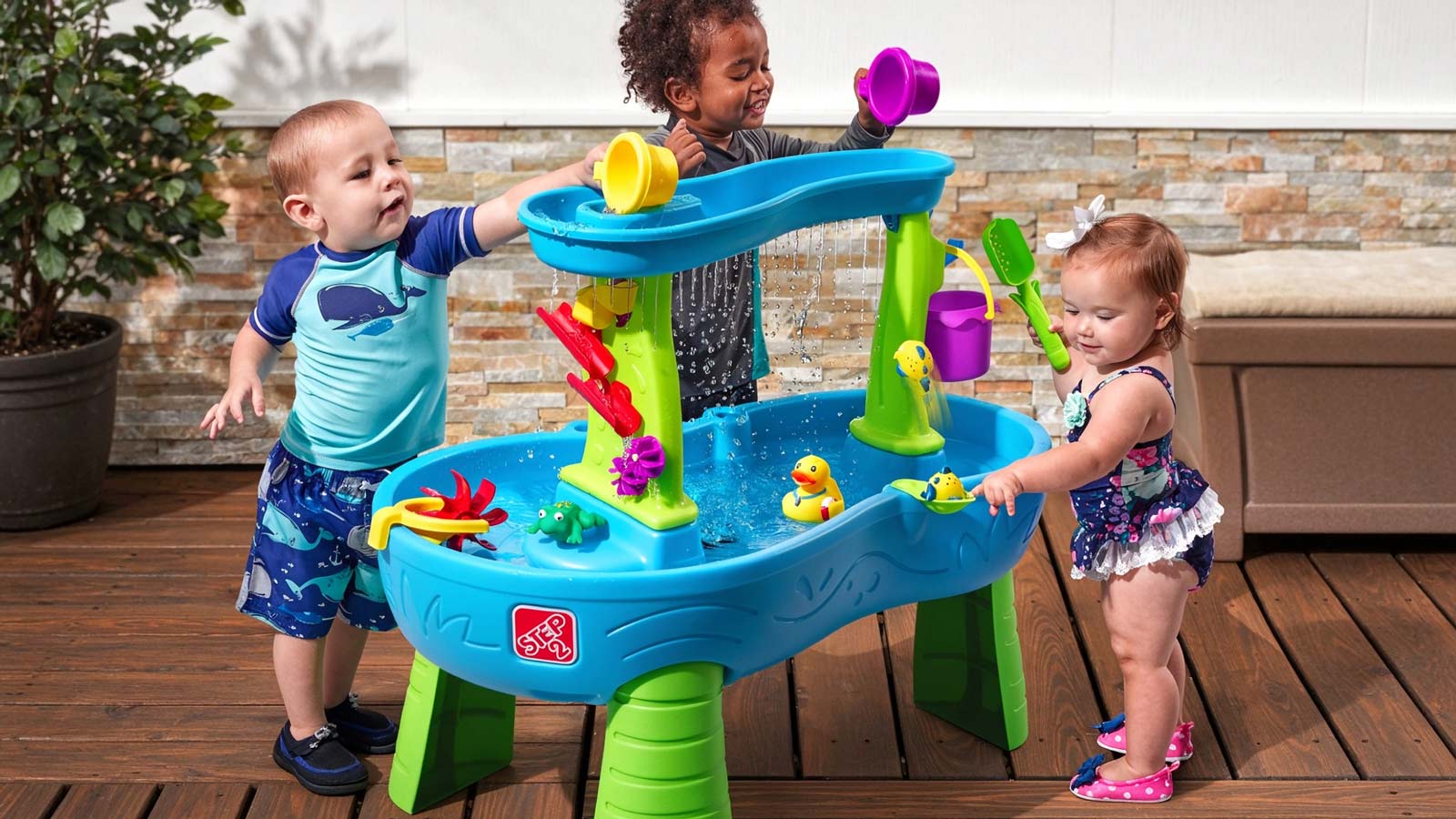
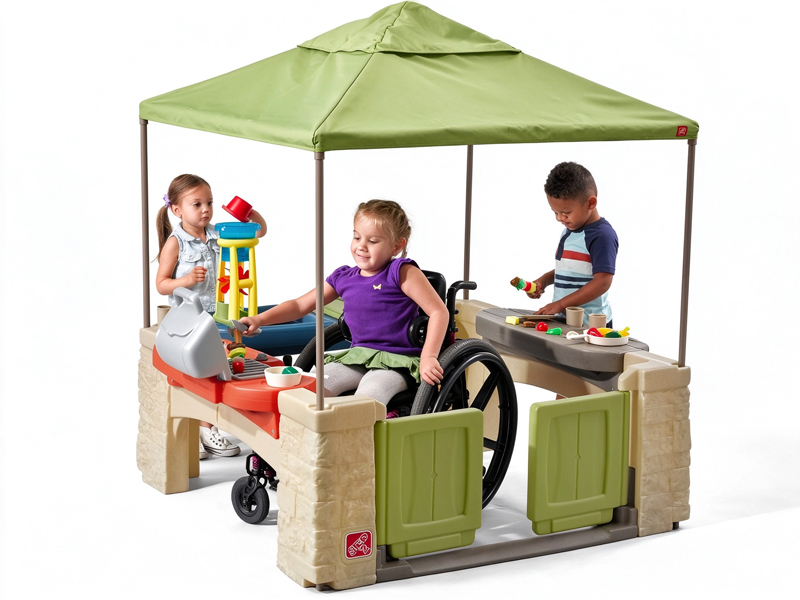
Step2's most consequential invention is hiding in plain sight: the water table. The company's own history page dates the first-of-its-kind Waterwheel Play Table to 2006 and credits it with propelling an entirely new way to play — and anyone who has shopped for a toddler birthday since knows the claim holds. The modern Rain Showers Splash Pond, a two-tier waterfall table listing under eighty dollars at mass retailers, carries over fourteen hundred Walmart reviews at a 4.6 average, and its dozens of siblings — pirate ships, high-seas adventures, cascading splash ponds — blanket the aisle every spring. Sand-and-water combinations, umbrella-shaded picnic tables, and sensory tables extend the line indoors and out, and the category's annual refresh rhythm gives the brand a gift calendar most toy companies envy.
The world's largest rotational molder, with four plants
The manufacturing claim is industrial rather than marketing: Step2 operates two plants in northern Ohio — Streetsboro and Perrysville — plus facilities in Bakersfield, California and Fort Valley, Georgia, totaling well over a million square feet, with a licensed Korean partner supplying Asia. The process remains Murdough's: ground polyethylene melts against the inside of a rotating mold, producing hollow, seamless, UV-resistant shells that shrug off a decade of backyard weather and can be recycled at end of life. The honest counterweight to the made-in-America aura is that Asian-market supply comes from the licensed Korean operation, and that private-equity ownership — not the founder's family — has held the company since 2007. The Ohio employment and plant investment, however, are current and substantial, not nostalgic.
Coasters, climbers, and fourteen-hundred-review water tables
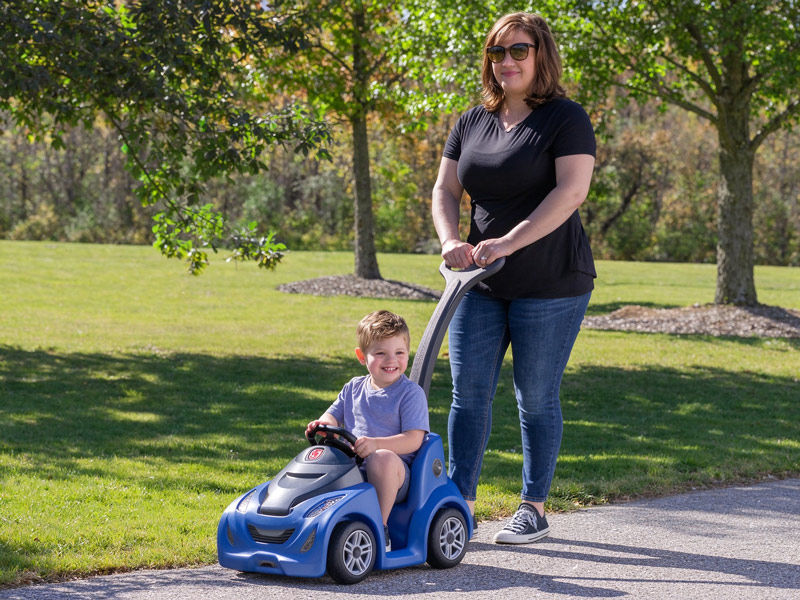
The toy catalog spans the full preschool-to-preteen backyard. Sand and water tables anchor it. Playhouses run from forty-dollar corners to the Naturally Playful Woodland Climber topped with a slide at four hundred and fifty. The Anniversary Edition Up and Down Roller Coaster — a plastic track with a riding car that toddlers push up and ride down — is a doorbuster staple around $135 to $175 and collects adjectives like sturdy and easy assembly in its reviews. Swing sets, ride-ons and wagons, pretend-play kitchens, art desks and easels, and My First holiday collections round the child side, while a dedicated Parts category — replacement slides, wheels, umbrellas, hardware — keeps older sets alive, a quiet sustainability play most toy rivals skip.
Mailboxes, planters, and pool slides: the grown-up aisles
What separates Step2 from a pure toy store is the home and garden business the founders stumbled into from day one: the MailMaster mailbox was among the company's first products and now graces millions of American curbs. The modern store devotes entire aisles to outdoor storage benches, planters and rain barrels launched in 2021, trash and recycling stations, outdoor Christmas and Halloween decorations, and — since 2023 — pool games and slides that have, per the company, been met with great enthusiasm. This grown-up catalog smooths the toy industry's brutal seasonality and gives the rotomolding plants year-round volume. Shoppers should know the channels as well: the direct store is only one door, with Walmart, Target, and Amazon carrying deep assortments and localized storefronts serving Canada and Mexico.
The last splash of the water table
Step2's store sells the industrial backbone of American backyard childhood: the tables that taught a generation of toddlers the word waterfall, the playhouses weathering their third siblings, the coaster tracks still rolling twenty years on. Its trade-offs are the honest ones of a manufacturer its size — private-equity stewardship where a founder once stood, Asian-licensed supply beneath the Ohio story, and freight logistics that favor buyers near a big-box aisle over a porch. But as the company that invented the water table and still molds most of its line within a day's drive of its first factory, Step2 remains the default answer to the backyard question — and the quiet giant the tag needed.