Radio flyer: the little red wagon born when a family sold its mule
Official homepage: https://www.radioflyer.com
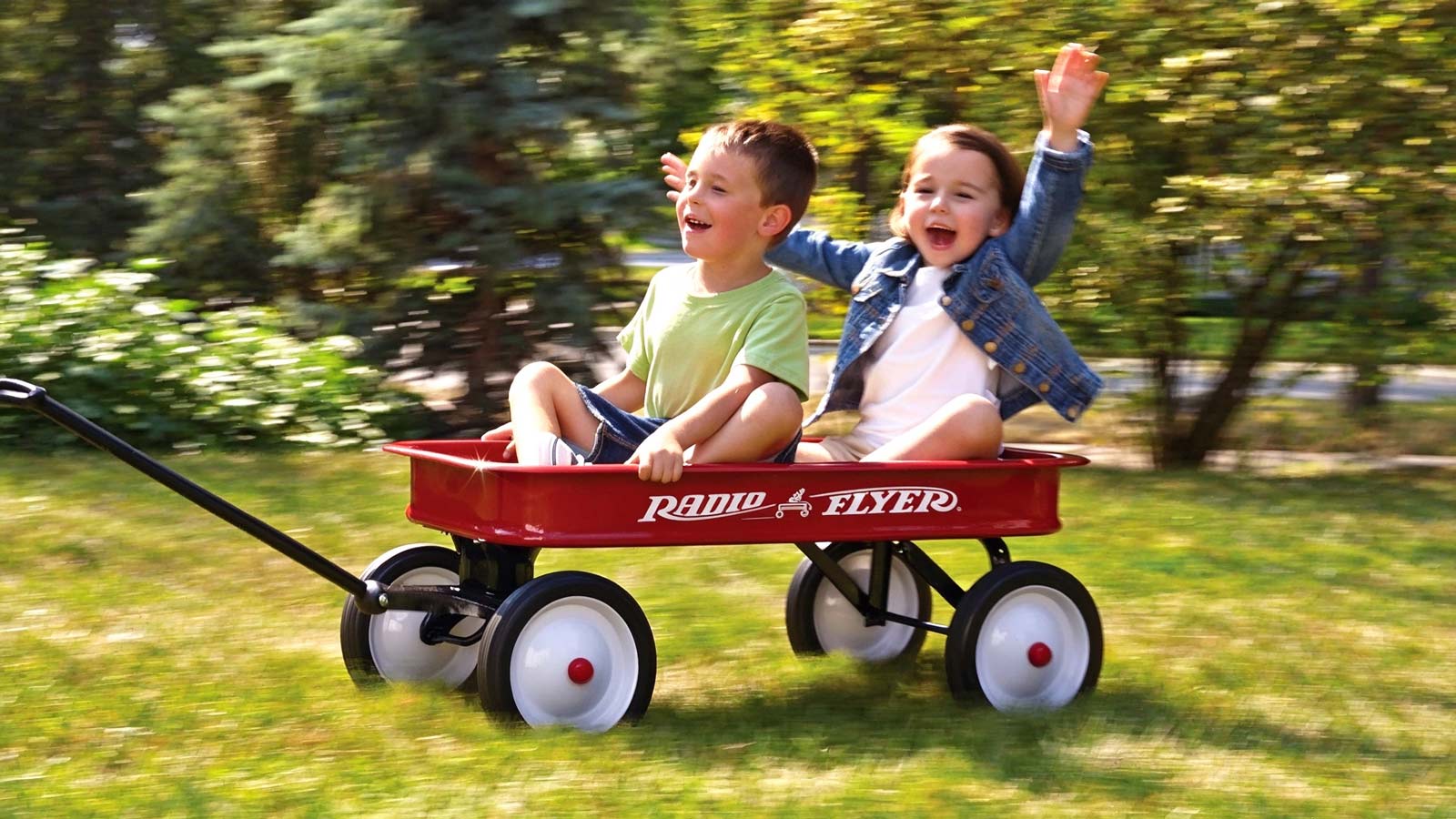
Radio Flyer is the oldest story on this tag — a 109-year-old Chicago institution that began when an Italian family sold its mule to send a sixteen-year-old to America. From a one-room garage where Antonio Pasin built wagons beside phonograph cabinets, it became the little red wagon of the American century, fell behind plastic competitors, and then reinvented itself through retro tricycles, Tesla-powered ride-ons, and now eBikes — all under a third-generation Chief Wagon Officer. This review traces the immigrant arc, the turnaround, and the modern catalog.
A Venetian carpenter, a celery-washing job, and one garage
The founding detail most retellings skip is the mule. Antonio Pasin's family sold it to help pay the sixteen-year-old's voyage from a small town outside Venice, and he arrived in Chicago with his father's carpentry training and nothing else. He washed celery for a vegetable distributor, toted water for sewer-digging crews, hauled railroad ties, and saved every penny until 1917, when he rented a one-room workshop on the city's West Side. There he built furniture, wine presses, and phonograph cabinets — and a sturdy wooden wagon to haul his tools. Customers kept asking for the wagon instead of the cabinets, and like any good entrepreneur he pivoted to what sold. He named the first wagon the Liberty Coaster, after the Statue of Liberty that had greeted his arrival. The retail strategy was equally handmade: he would disassemble a wagon into a battered suitcase, walk it to a hardware store, and assemble it on the counter with smiles and body language until one owner finally said yes.
Liberty Coaster, Little Ford, and a 45-foot statue
Scale arrived with borrowed industrial genius. Visiting an equipment supplier, Pasin was introduced to metal-stamping technology pioneered by the auto industry, realized he could stamp wagons from steel instead of crafting them from wood, and — as Forbes recounts — earned the nickname 'Little Ford' from suppliers for his assembly-line audacity. He incorporated the Liberty Coaster Company in 1923, went all-steel in 1927, and renamed the company Radio Steel & Manufacturing in 1930. Then came the gamble that built the brand: for the 1933 Chicago World's Fair he took out a $30,000 loan — more than his company was worth — to erect a 45-foot art-deco statue of a boy riding a wagon, with a miniature wagon shop below selling 25-cent souvenirs. The exhibit paid the loan back many times over and turned the wagon into a national icon, Depression be damned; at peak the company stamped 1,500 wagons a day.
Marconi, Lindbergh, and the naming of a century
The name itself is a time capsule: 'Radio' for Guglielmo Marconi, the radio pioneer, and 'Flyer' for Charles Lindbergh, who had just crossed the Atlantic solo — the two most futuristic words of the late 1920s, chosen by an immigrant who had arrived with nothing. The company formally adopted the Radio Flyer name only in 1987, fifty-seven years after the wagon debuted. Son Mario Pasin ran the company from the 1970s into the 1990s as a steward rather than a maximizer — he famously offered employees zero-interest home loans, and his 2025 obituary at ninety-five remembered him chatting with strangers about how their wagons were holding up, sometimes mailing a new one to families he met. When Mario's son Robert took over in 1997, the iconic steel wagon was losing to cheaper plastic rivals, and the company that had survived the Depression was stagnating.
The tricycle Radio Flyer never made, but should have
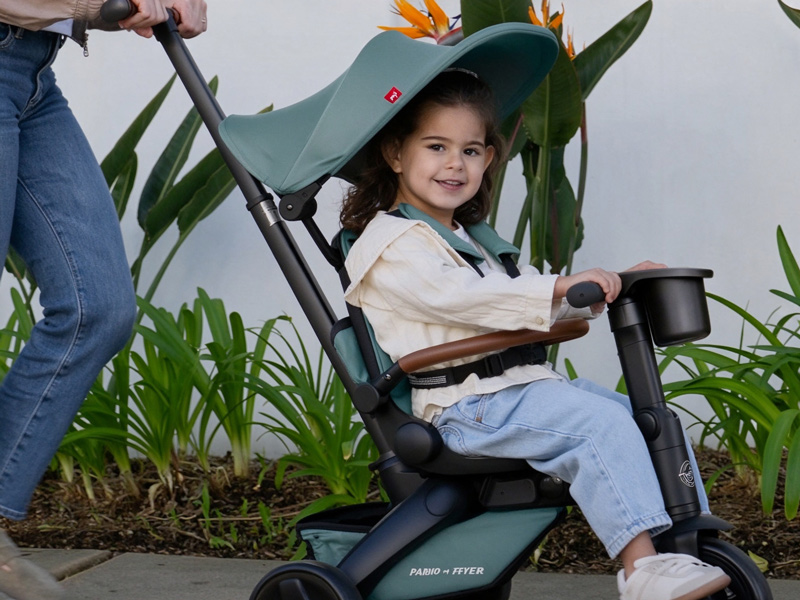
Robert Pasin's turnaround began with an act of listening. Studying at Kellogg while running the company, he asked parents which Radio Flyer products they remembered — and again and again they described a red, shiny tricycle with a big bell and chrome handlebars that Radio Flyer had never actually made. The phantom memory told him the brand was bigger than its catalog: he built the retro-styled steel tricycle customers had confabulated, it became a bestseller, and it rocketed the company to market leadership in the category. The same playbook produced the Pathfinder wagon with flip-up seats — still a bestseller — and expanded the line into scooters and trikes until wagons fell from 100 percent of sales to about a third. Revenue grew fivefold under his leadership, and Fortune named the company the number-one workplace in America. Outside the Chicago headquarters stands the world's largest wagon, a statue Robert commissioned over his father's objection — in a family business, he likes to say, you can go against the CEO because it's your dad.
Tesla batteries and a Chief Wagon Officer
The most surprising chapter is electric. Researching battery ride-ons, the team found a universal frustration: kids loved the cars, but the lead-acid batteries were always dead. The fix — lithium-ion — was expensive, so Radio Flyer did the unthinkable for a toy company: it approached Tesla. The result was the Tesla Model S for Kids, a faithful miniature with genuine lithium power, which became a sales and public-relations smash and anchored a licensed ride-on line. Robert's title remains the one he gave himself: Chief Wagon Officer. The honest manufacturing footnote belongs here too: since opening a Shenzhen office in 2002, roughly two-thirds of inventory is made in China, with design and prototyping kept in Chicago — the heritage story and the supply-chain reality sharing the same brand.
Hero Wagons, a 15,000-square-foot store, and eBikes
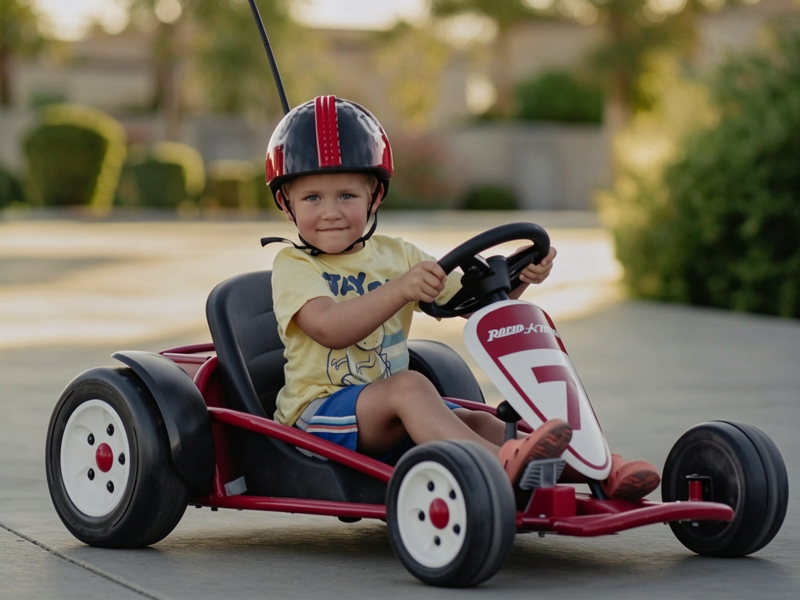
The modern institution spends its equity as generously as it earns it. Since partnering with the Starlight Children's Foundation in 2001, Radio Flyer has designed the Hero Wagon for hospitals — one-hand folding, seatbelt, IV-pole bracket, wipeable medical-grade fabric — and donates a thousand units a year. In 2023 the 106-year-old company opened its first-ever retail store, a 15,000-square-foot Woodfield Mall flagship with an indoor racetrack and bike shop. The catalog has kept moving up the age ladder: Voya stroller wagons now outsell the original steel wagon, the Ultimate Go-Kart and Extreme Drift feed the power-hungry, and the Flyer Loop and Via Pro eBikes carry the brand into teenage commutes. A 2025 agency engagement signals the next repositioning around exactly that stretch — from little red wagon to family mobility.
The last pull of the little red wagon
Radio Flyer's store sells something no competitor can manufacture: a century of American childhood compressed into red steel. The catalog behind the nostalgia is genuinely modern — stroller wagons and jogging strollers for parents, go-karts and eBikes for older kids, the Hero Wagon for hospitals — and the third generation running it understands the tension at the brand's heart, as Robert Pasin puts it, between nostalgia and the latest coolest thing. The trade-offs are equally clear: premium prices, two-thirds overseas manufacture beneath a flag-waving origin story, and a heritage line that now anchors the catalog rather than leading it. But for the family that wants the wagon — or the tricycle, or the go-kart — with 109 years of receipts behind it, this remains the store where the American driveway starts.