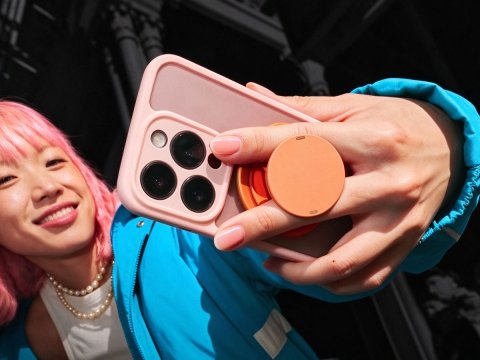
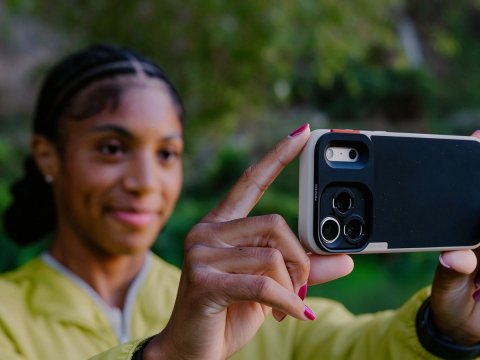
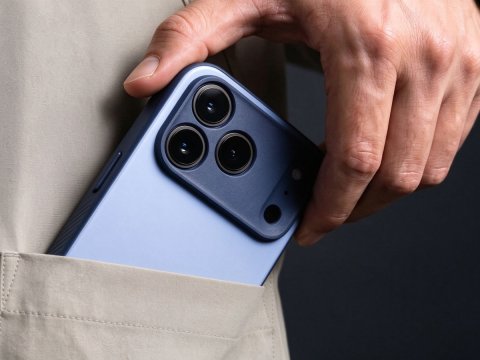
Pitaka makes phone cases out of bulletproof-vest material, and it works
Official homepage: https://www.ipitaka.com
Pitaka is the phone-case store run like a materials lab. Founded in Shenzhen in 2015 by a founder who assembled designers, materials scientists, and structural engineers, it built its name on aramid fiber — the same family of material as bulletproof vests — and a magnetic ecosystem that has broken crowdfunding records. This review examines the science, the product tiers, the service record, and what the premium prices buy.
Shenzhen, 2015, and a founder with a materials obsession
PITAKA — Sanskrit for 'container' — was founded in November 2015 in Shenzhen under founder Zheng Yanghui, who staffed the company from day one with a deliberately unusual mix: materials scientists, structural engineers, industrial designers, and fashion practitioners. The company timeline reads like a lab notebook: an aramid phone case invented in July 2015, the MagEZ Wallet — billed as the world's first modular carbon fiber card holder — in May 2016, and a steady stream of 'world's firsts' since. By mid-2020 the company counted thirty-three patents, and by 2024 the team passed two hundred people. The stated mission is minimalist to the point of poetry: a simple, smooth, light lifestyle that frees you from unnecessary burdens. The store is the retail expression of that sentence.
Aramid: five times steel's strength, none of its weight
The material is the brand. Aramid fiber — the aromatic polyamide family that includes Kevlar — is, by weight, up to five times stronger than steel, heat resistant past five hundred degrees, chemically stable, and crucially non-conductive, which is why Pitaka chose it over carbon fiber: it will not interfere with phone signals or wireless charging. Cases are woven from fine 600D aramid yarn, finished in twill and gradient colorways, and lined with what the company calls Amber Magnet Film — an embedded magnetic layer that delivers full-speed MagSafe charging without the ugly steel patches older magnetic cases needed. Newer tiers add proprietary resins the company claims boost impact resistance; as with all company-published material figures, treat the multipliers as directional rather than independent findings.
Kickstarter records and the MagEZ empire
Pitaka validated its ecosystem in public. The MagEZ Wallet's 2017 Kickstarter campaign finished at nearly seven times its goal; the MagEZ Dock three-in-one charger hit fourteen times its target the following year; the Air Omni six-in-one cleared ten times its goal in 2020; smaller campaigns for the Air Pal and Air Quad finished around five and a half times and nearly five times respectively. The MagEZ Juice two-in-one power bank and stand took a Red Dot contemporary good design award in 2019, and the company exhibited at CES from 2018 through 2020. The lesson for shoppers: this is a brand whose products were repeatedly pre-sold by communities of enthusiasts before retail ever stocked them — a different kind of product validation than an advertising budget.
Ultra-Slim, ProGuard, and the hinge caveat
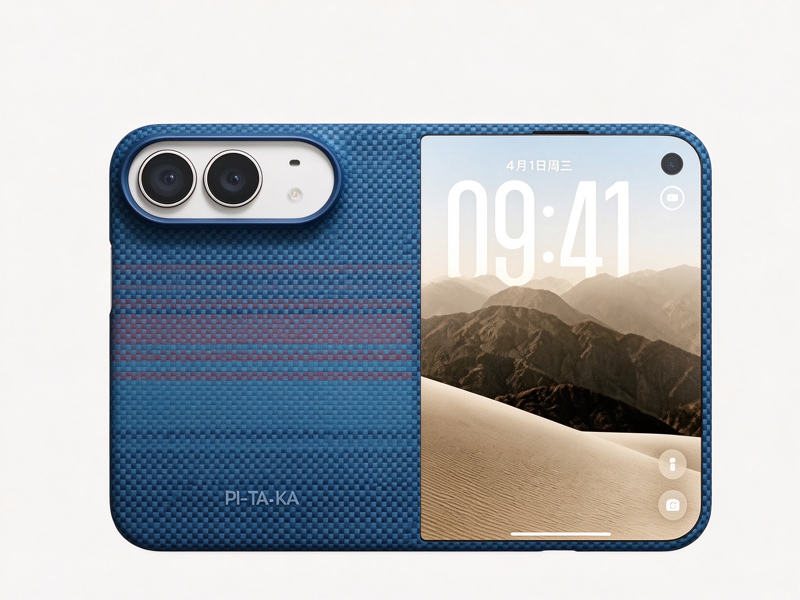
The current case lineup is a three-tier ladder, tested recently across iPhone 17 models and foldables. The Ultra-Slim, around $50, is for people who hate cases: aramid skin, button cutouts, minimal edge raise — reviewers note the screen needs a protector and the corners are the trade-off. The Aramid ProGuard, around $60, adds reinforced arched corners and button covers, hitting a middle weight reviewers call protective without unwieldy. The UltraGuard, around $80, layers proprietary resin over the weave for maximum protection in a still-sleek profile — at the cost of smudge-prone surfaces, as one reviewer complained. Long-time owners on forums describe the honest use case: daily drops onto pavement survive fine, often with only a cracked screen protector, but these are not the case for a jet ski or a rowdy cruise — Pitaka's own community says so. The foldable Duo cases, gorgeous as they are, currently leave the hinge exposed, which reviewers flag as the one real design compromise.
The accessory ecosystem: wallets, mounts, and watch bands
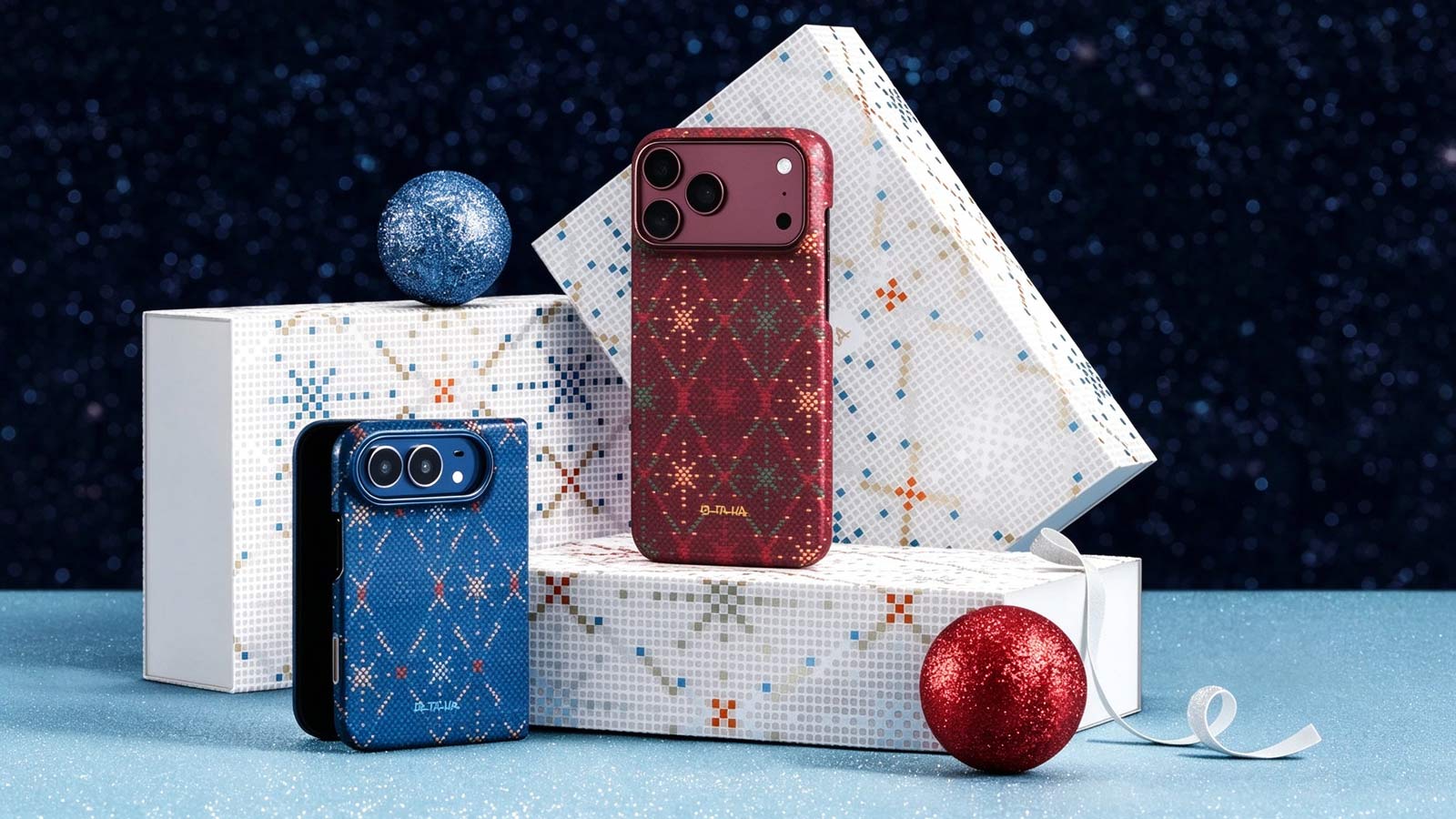
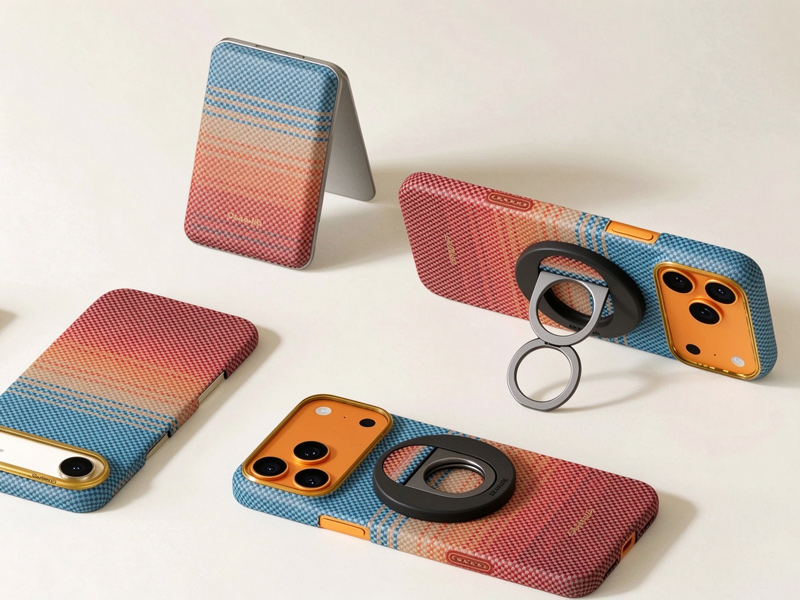
Around the cases sits the MagEZ ecosystem: modular carbon fiber wallets that snap to the case back, magnetic car mounts and desk stands, power banks that dock into chargers, grips, and in January 2021 what the company billed as the world's first carbon fiber watch band. The iPad line was an early pioneer of cases that stay on while the Magic Keyboard attaches. The store merchandises this as a system — cases, wallets, mounts, power, and wearables sharing one magnetic grammar — and refreshes the palette through named collection drops: Sunset, Moonrise, Milky Way, California Dream, Luminous Ode. It is the most vertically integrated accessory ecosystem on this tag.
A 4.7-star record with one famous empty box
Service is where the store's reputation compounds. On Trustpilot, four hundred seventy-seven reviews average 4.7 stars, and the recurring testimonial pattern is almost comical in its consistency: an issue, an email, a named support agent — Freya, Susan, Tina — and a free replacement within days, sometimes for items the company was not obligated to replace. The notable exception is instructive: a customer received an empty box containing paperwork but no case; the company cited warehouse weight logs and a clean proof of delivery, and pointed the buyer to the Worry-Free package protection purchased at checkout. Whether that outcome satisfies is debatable — but it shows the support machinery operating by policy, not whim. The storefront's 30-day return guarantee appears in the top banner, and seasonal sales run to thirty percent.
The last weave in the Pitaka fabric
Pitaka's store is the material-science counterpoint on this tag: thin and light as an engineering virtue, magnets as an ecosystem rather than a feature, and a service record that third-party reviewers keep verifying. The prices are premium, the protection is honestly mid-tier — armor-adjacent, not armor — and foldable owners should wait for hinge coverage. But for buyers who want the closest thing to caseless while keeping their phone safe from everyday physics, this is the store that treats that contradiction as a design brief.