Ohsnap's founder won the super bowl twice before fixing your phone grip
Official homepage: https://ohsnap.com
Ohsnap is the phone-accessory store with the strangest founder resume in the category: Dale Backus twice won Doritos' Crash the Super Bowl contest, built and sold a cinema-monitor company, then spent four years prototyping a grip he believes makes every phone better. His Kickstarter launches keep breaking records — and his first product run broke too, in what became the company's defining customer-service story. This review examines the products, the campaigns, and the store.
Doritos commercials, cinema monitors, and a grip epiphany
Dale Backus's route to phone grips runs through a Doritos bag. He won the Crash the Super Bowl contest twice — the second victory, in 2010, came with a $600,000 prize he used to co-found SmallHD, a North Carolina maker of on-camera monitors that became standard equipment on film sets worldwide. Vitec acquired SmallHD in 2014 for $4.7 million in cash plus an earnout. At CES in 2017, walking the floor as a free agent, Backus stopped at the LoveHandle booth, where an entrepreneur showed him an elastic-band grip and mentioned, casually, that he had sold about a million of them. The next day a PopSocket arrived in a conference swag bag, and Backus had his second act: four years of prototyping after hours until the mechanism felt inevitable. Ohsnap launched from Apex, North Carolina, in 2019.
Four years, hundreds of prototypes, one slide mechanism
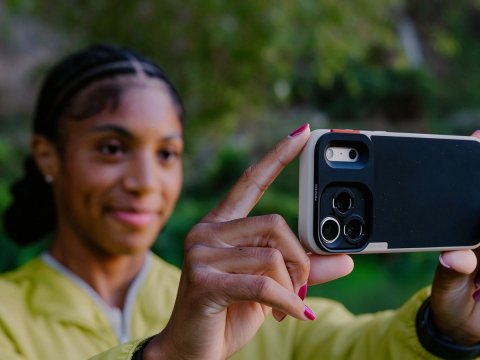
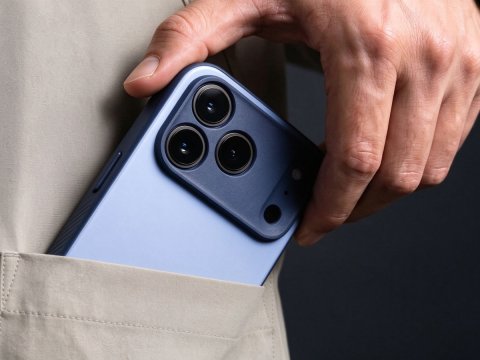
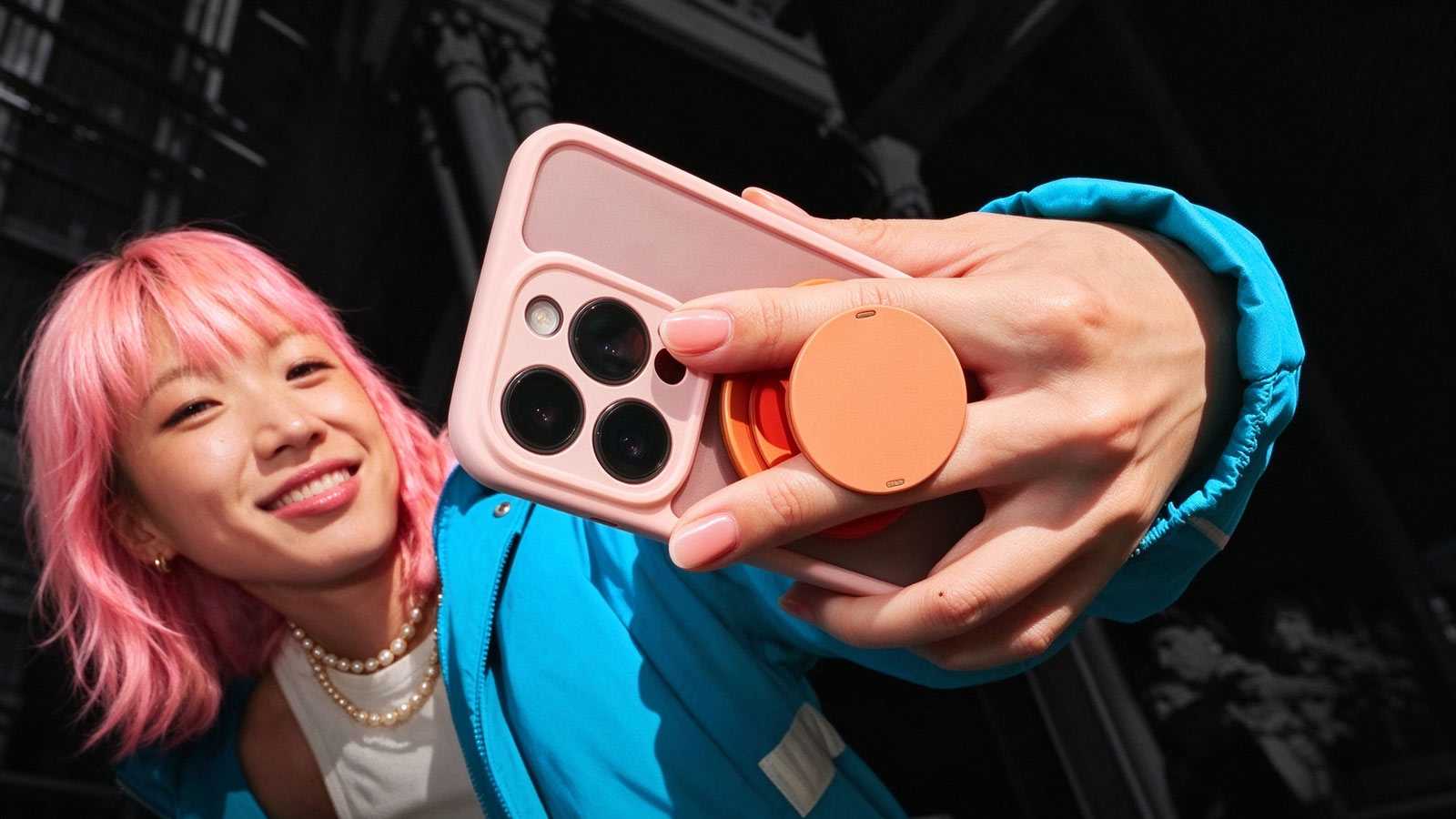
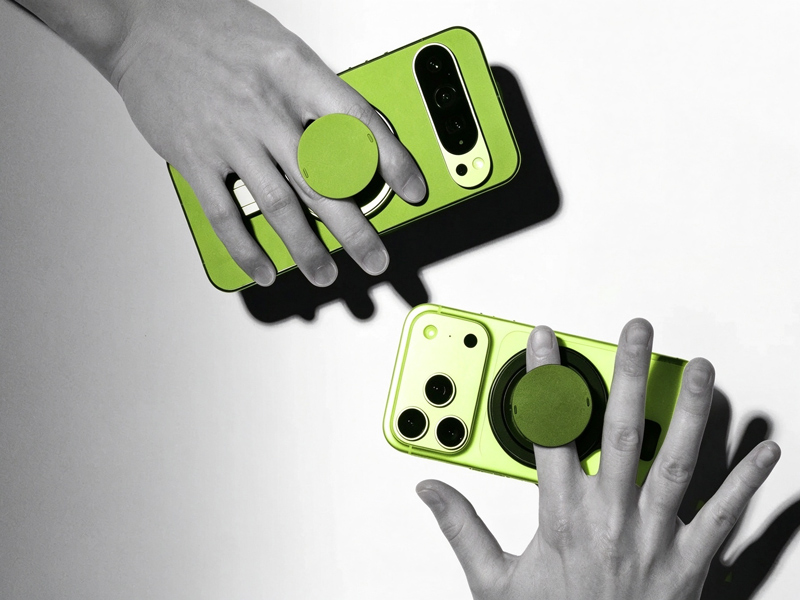
The product logic is compression. At three millimeters thin, the Ohsnap sits nearly flush on the back of the phone; press its center and the band warps outward into a finger loop, press again and it flattens away. The band slides up and down for thumb reach, rotates between portrait and landscape, doubles as a kickstand, and the magnetic backing snaps onto car mounts, gym equipment, and fridges. It is wireless-charging friendly by sliding out of the coil's way, and — in the detail Backus clearly loves — it twirls like a fidget toy. The company's pitch, printed on its own Kickstarter, is the tagline the whole brand stands on: the phone grip that doesn't suck. Around the grip, the store has since grown cases with aluminum buttons, mounts, wallets, chargers, and screen protectors.
The failure point, and the worldwide replacement
The launch story nearly ended the company. The first grips shipped to a global backer base with a mechanical failure point, and units began breaking — a recall-scale problem made worse by international shipping economics, since every defective unit carried a cross-border postage bill. Backus has said publicly the company could have gone dark. Instead it redesigned the part, manufactured the fix, and shipped replacements to every customer on its own dime — an undisclosed but plainly expensive decision that his SmallHD years, where a dead monitor could stall a five-million-dollar shoot, had prepped him to treat as mandatory. The support operation that emerged is the company's quiet moat: Ohsnap's own community describes the team as responsive to the point of replacing pre-production units that broke during reviewer testing, no questions asked.
Three Kickstarters, three and a half million dollars
The crowdfunding record is the store's loudest credential. The 2019 launch asked for ten thousand dollars and closed at $466,820 from nearly fourteen thousand backers; the 2020 second-generation grip campaign raised $1,220,034 from 27,493 backers — one hundred and twenty-two times its goal; and the 2025 MCON gaming controller finished at $1,776,917 from sixteen thousand seven hundred backers against a $25,000 target. Only 881 of Kickstarter's 650,000-plus launched projects have ever crossed a million dollars, and Backus has been behind two of them; MCON was his fourth consecutive funded campaign. The retail channel followed the crowd: by mid-2024, Best Buy and Target stocked the grips, moving Ohsnap from direct-only into the aisle it once mocked.
MCON: the basement controller that ate CES
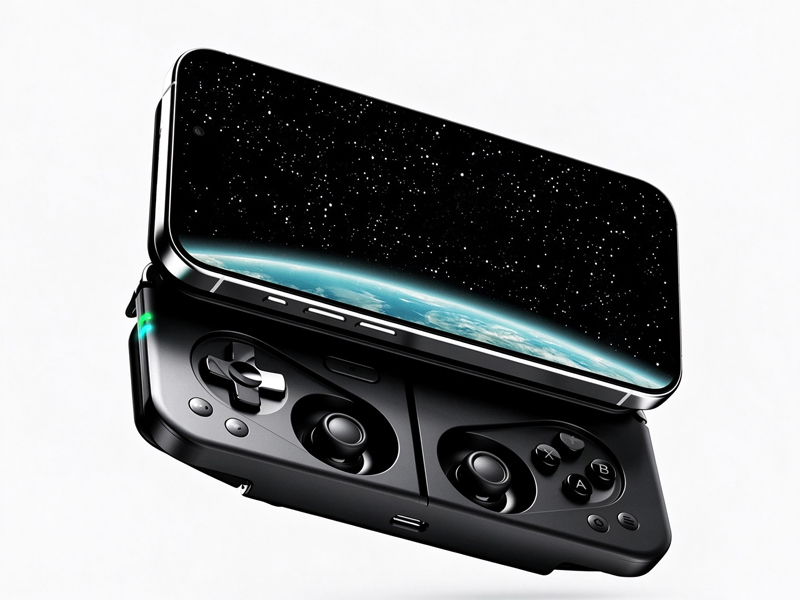
The MCON is the brand's leap from accessory to platform. The concept came from Josh King, a nineteen-year-old who 3D-printed a sliding controller prototype in his parents' basement and posted the videos; Backus partnered with him to turn it into product. The result magnetically attaches to any phone — MagSafe or included adapter — and presses open like a switchblade: hall-effect joysticks, tactile buttons, fold-out grips, Bluetooth 5.4 with USB-C fallback, and a dock mode that pushes 4K60 to a television. It is deliberately repairable — a Torx screwdriver opens the shell for stick and button swaps — a stance almost nobody in mobile gaming takes. The campaign's social clips passed thirty million views, CES gave it Best of Show nods across a half-dozen publications, and general availability arrived in early 2026, a few months past the original 2025 ambition — a delay the company owns in its own materials.
Grips, wallets, mounts, and a Qi2 power bank
The storefront is an accessories system organized by the grip's magnetic grammar. The flagship Snap Grip anchors cases and wallets with integrated loops; the mount family covers car dashes, desks, and walls — the wall unit repositions with nanosuction rather than adhesive; the Snap Pack is a dual-MagSafe Qi2 power bank, and Snap Charge handles the puck. Cables, 35-watt wall bricks, and 65-watt car adapters fill the charging shelf, an HDMI cable serves the MCON's dock mode, and an all-metal Key Loop sold out entirely, its product page promising it is fidgetable. Black Friday brings thirty percent off for newsletter signups and free shipping over $79. The ladder is designed so one grip purchase becomes a mounting ecosystem within a year.
The last snap on the Ohsnap store
Ohsnap's store is a hardware founder's playground run with unusual candor: it will tell you its first product failed, its controller shipped late, and its grip is the one accessory your phone has been missing — all in the same breath. Its limits are the limits of enthusiast hardware: prices sit at the premium end of accessories, new products arrive on crowdfunding schedules rather than retail ones, and the catalog is only as broad as the magnetic idea allows. But as a case study in how to build a Shopify store on prototypes, failed batches, and fixed mistakes, there is nothing else like it on this tag.