Not a toy but a tool: the STEM kits teachers keep coming back to

Official homepage: https://teachergeek.com/
TeacherGeek occupies an unusual corner of the educational toy market: its own product pages insist that what it sells is not a toy at all, but an educational tool. The company makes hands-on STEM activity kits — Wiggle-Bots, hydraulic claws, mousetrap vehicles — sold individually, in classroom packs, and even on wheeled maker carts. Teacher workshops at Penn State and science-teacher conferences have adopted its materials for years. Here is our review of this maker-focused shop from several angles.
The Product Pages Warn You This Is Not a Toy
Every TeacherGeek listing carries the same disarming disclaimer: this is an educational product and not a toy, and adult supervision is required. That honesty sets the tone for the whole store. These are not boxed entertainment with a learning sticker; they are engineering kits in which the child does the real work — connecting wires, threading cylinders, trimming parts, and testing designs that will fail before they succeed. The age ranges stretch unusually wide, with activities adaptable from around age four through high school, so a single kit can grow with a child or serve a whole classroom of different abilities. For parents accustomed to toys that do the teaching through a screen, the framing can feel austere. But it is also the clearest signal in the category that the thinking happens in the child's hands, not in the product.
One Kit Turns Into Many Different Engineering Builds
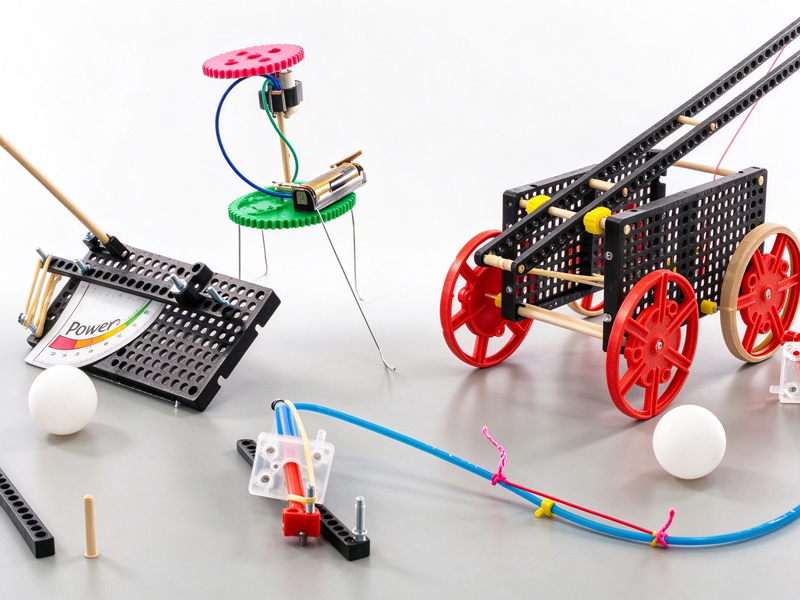
The signature offering is the build system itself. Instead of one model per box, TeacherGeek kits are designed around a set of reusable components — gears, wheels, connectors, motors, syringes and tubing — that can be assembled, tested, taken apart, and rebuilt into something new. The Claw/Bot/Launch/Race combo kit, for example, walks a builder through four distinct projects: a hydraulic claw that grips like an arcade machine, a motorized Wiggle-Bot that scoots and doodles across the table, a launcher, and a racer. Finish one, deconstruct it, and the same parts become the next challenge. The company layers on dozens of optional labs and challenges per kit, so the "one and done" problem that plagues most build kits — where the fun ends when the model is complete — largely disappears. This reconfigurability is the store's smartest design decision.
Free Documents Turn Every Kit Into a Full Curriculum
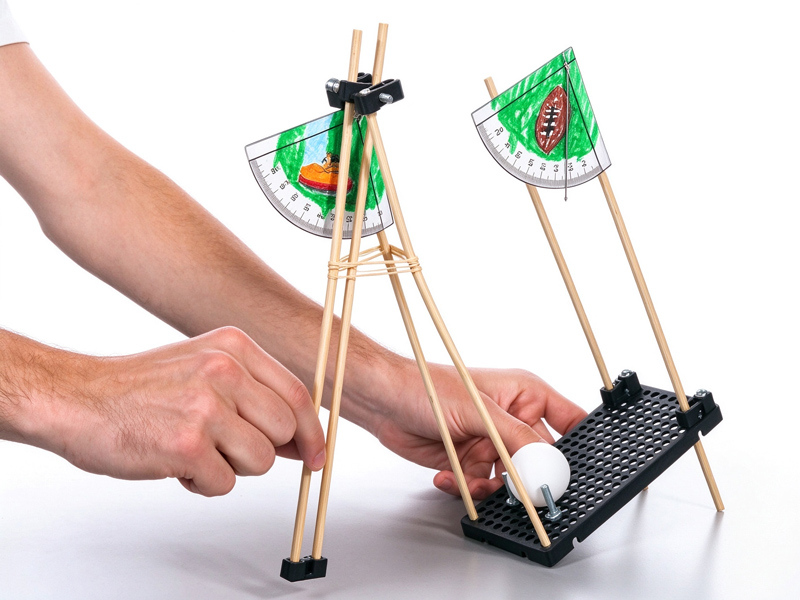
A TeacherGeek purchase does not end at the doorstep. Each activity comes with a substantial library of free downloadable documents — build guides in PDF and editable Word format, overview sheets, labs, and challenges — maintained in a public document master log and updated over the years. The documents are tiered by level, with simplified builds for elementary students and open-ended engineering challenges for older builders, and many activities map to the Next Generation Science Standards, including specific practices like communicating information. In practice, a $12 mousetrap vehicle kit arrives with the raw material for weeks of structured lessons: build it to the guide, measure and graph its performance, then modify and compete. Few stores in this category give away this much instructional scaffolding for free.
Teachers Adopted It Before Families Ever Heard of It
The store's DNA is visibly classroom-first. University outreach programs have run professional development workshops around TeacherGeek materials — Penn State Harrisburg trained two dozen elementary and middle school teachers on its STEM design challenges in a single 2019 session — and state science-teacher associations have featured its kits in conference workshops as recently as 2025. The catalog leans into that identity with multi-kit packs for groups, a maker cart stocked with tools and hundreds of components for schools building dedicated makerspaces, and bulk pricing that treats a class of thirty as the normal order size, not an exception. Individual families are welcome to buy single kits, but the assortment, packaging, and documentation all speak to the educator first. That is a compliment: the same material a teacher trusts for a semester is what arrives at your kitchen table.
Reusable Parts and Classroom Packs Keep Costs Under Control
Pricing reflects the reusability thesis. Individual activities start around $11.50 — the classic mousetrap vehicle, for instance — with ten-packs near $97.50 for groups, and larger topic bundles climbing from there. Because the components are deliberately generic and reconfigurable, a modest collection of kits covers far more engineering ground than the same money spent on single-purpose kits elsewhere. The trade-offs are aesthetic more than functional: packaging and product photography are utilitarian, there are no licensed characters or rainbow color schemes to seduce a child at first glance, and kits assume an adult is present to supervise. For families who judge a purchase by hours of engagement per dollar, the economics are among the best in the STEM category.
The Last Word on Kits That Refuse to Be Toys
TeacherGeek is a specialist's store, and it knows it. The strengths are concrete: genuinely reconfigurable engineering kits, an unusually generous free curriculum library, classroom-proven materials used in university teacher training, and per-activity pricing that respects tight budgets. The weaknesses are equally concrete: the plain presentation will not sell itself to a child, adult involvement is assumed rather than optional, and shoppers looking for polished, app-connected gadgetry will find the catalog spartan. For families and educators who want kids to experience real engineering — sketch, build, fail, improve — this is one of the most honest and capable shops in the entire educational toy space.