Meet autobrush: the u-shaped sonic toothbrush promising clean teeth in thirty seconds
Official homepage: https://www.autobrush.com
AutoBrush sells a toothbrush that looks wrong on purpose: a U-shaped mouthpiece you bite down on, which vibrates sonic energy through nylon bristles and claims to clean every tooth at once in thirty seconds. The devices dominate parent-group conversations and have earned something no competing U-shaped brush holds — the ADA Seal of Acceptance — while a sizeable faction of dentists remains unconvinced. This review examines the device, the evidence, the storefront, and the fine print.
Brushing every tooth at once, in thirty seconds flat
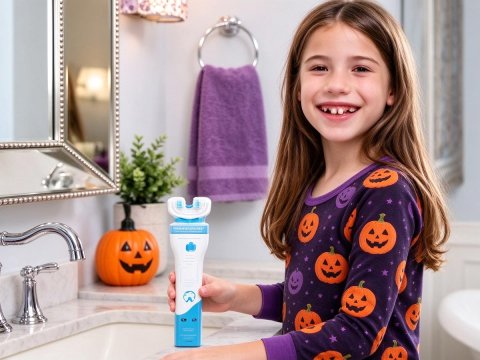
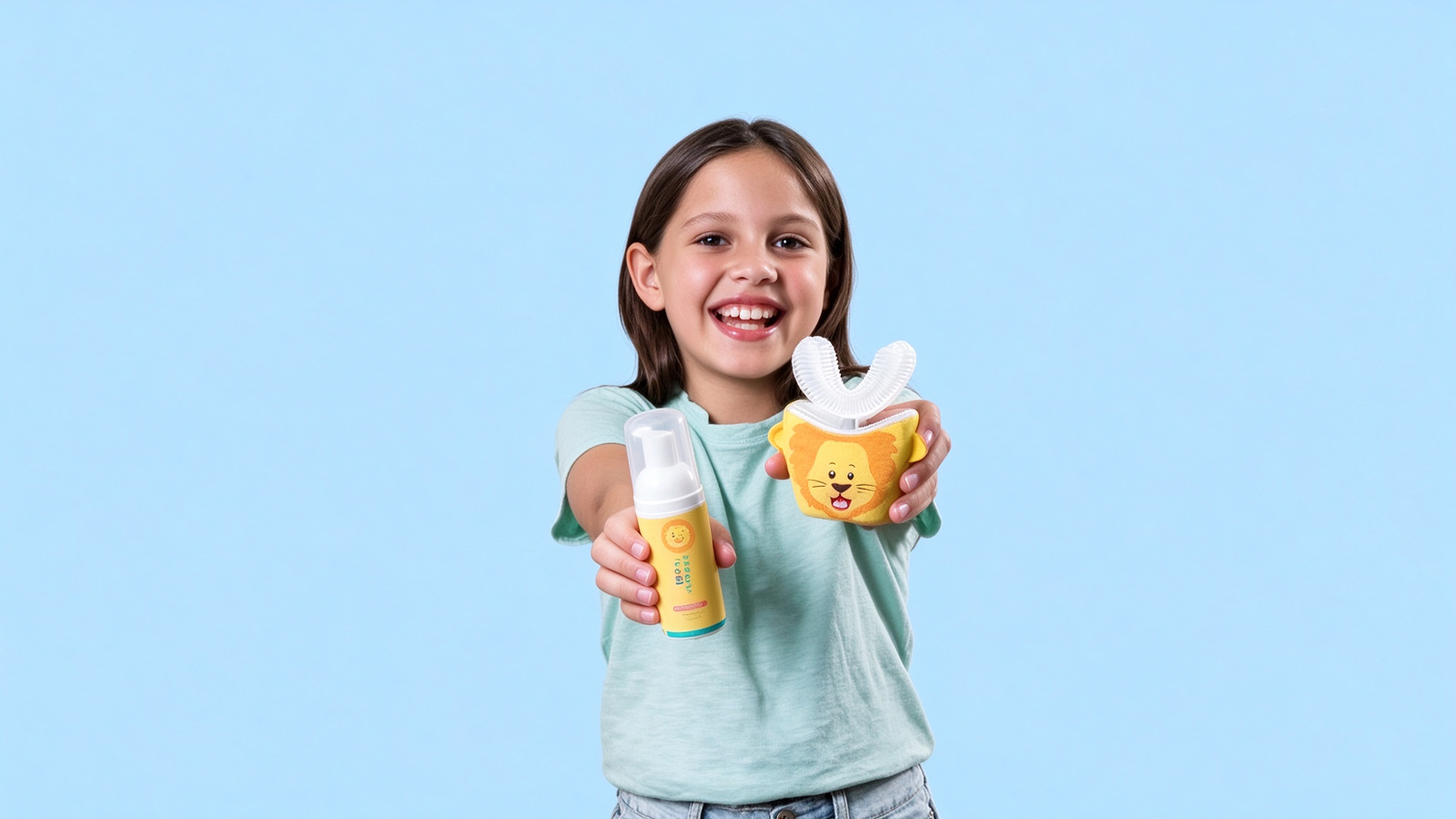
The pitch is disarmingly simple. Instead of guiding bristles across one or two teeth at a time for the recommended two minutes, you apply foaming toothpaste to a U-shaped mouthpiece, squeeze your dental arch into it, and let sonic vibration do the work while a timer runs thirty seconds. The store sells adult versions plus a sizing system that treats children as first-class citizens: brush heads come in age bands 3-5, 6-8, and 9-12, plus Women, Men, and XL, with replacement packs sold on two-, six-, and twelve-month schedules. Prices have hovered around a $129 bundle historically, with brush heads currently from $25. It is a radical bet that convenience and compliance matter more than tradition — and for exhausted parents, that bet usually lands.
Nylon bristles, built-in Bass angles, and blue-red lights
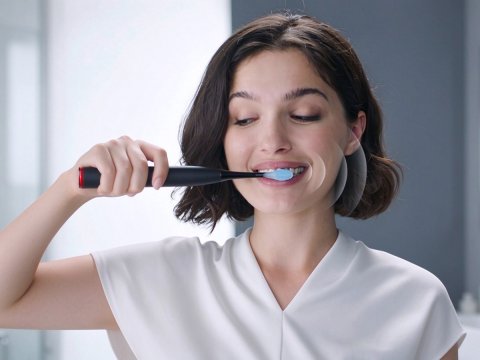
U-shaped brushes were once dismissed by dentists because early versions used soft silicone bristles too gentle to break up plaque. AutoBrush's engineering answer is nylon: roughly fifty-eight thousand bristles angled to replicate the ADA-endorsed modified Bass technique, so users who cannot master a 45-degree wrist angle get it built into the hardware. The handle offers deep-clean, sensitive, and massage modes, and the Pro line integrates blue LED light marketed toward whitening support and red LED toward gum health. Moving the handle in small circles or a figure-eight helps the bristles reach back molars — a trick the store's own guidance and pediatric reviewers both recommend, and the clearest sign that some technique still matters.
The ADA seal, the Salus studies, and the skeptics
The credibility fight is the most interesting thing about this store. AutoBrush carries the American Dental Association's Seal of Acceptance, which its listings describe as unique among U-shaped brushes, and it funds clinical research through Salus Research — a February 2022 study reporting kids brushed up to twenty-seven times better than with a manual brush, a February 2023 study claiming up to 5.1 times better plaque removal across ages, and an April 2025 comparison against a leading ADA-accepted sonic brush. Skeptics have fair points: the studies are small and company-commissioned, the data sits on file rather than in broad publication, and dentists quoted in major outlets note the mouthpieces fit small mouths loosely, the bristles do not replicate true brushing motion, and the real benefit may be compliance — kids who will not brush any other way. The honest reading: it is a genuine adjunct, and possibly a breakthrough, not a proven replacement.
Kids' characters, music timers, and the compliance trick
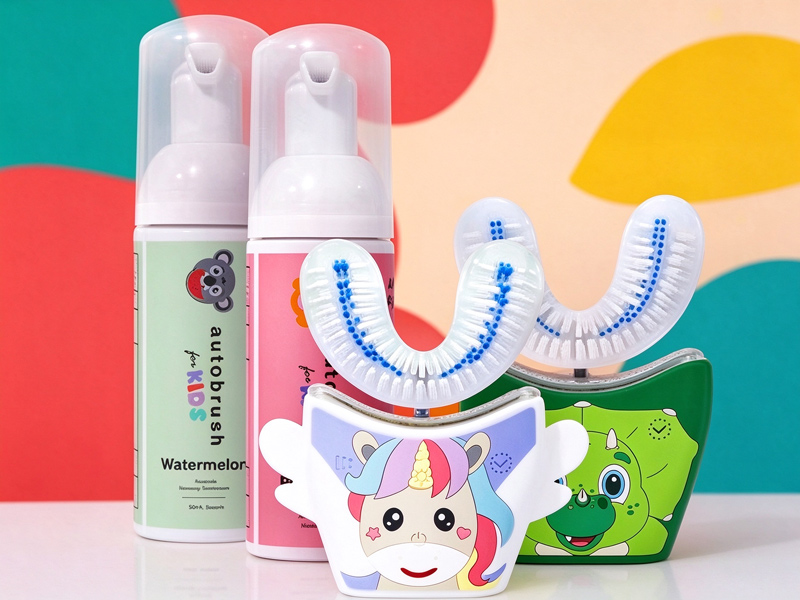
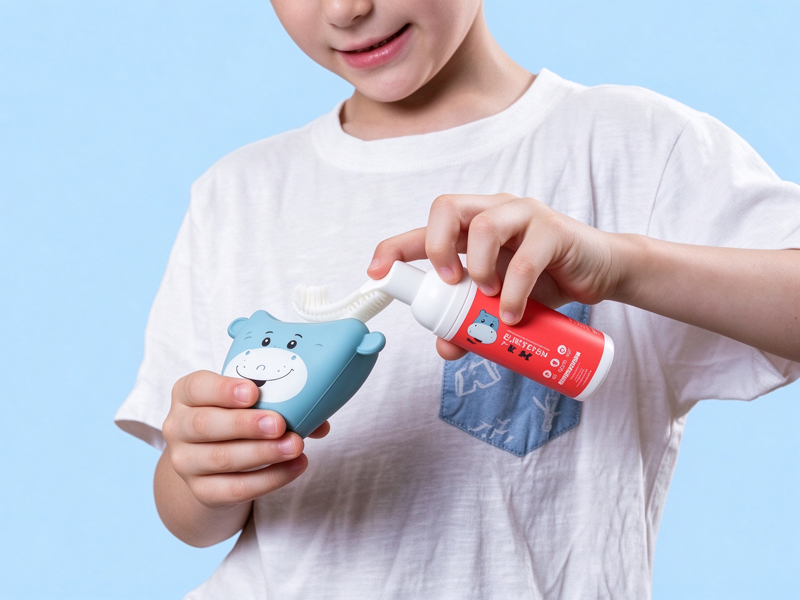
The children's line shows the store understands its actual customer. Brush handles come wrapped in characters kids name-drop at preschool, cycles can play songs, and LEDs turn the routine into a light show. Foaming toothpaste flavors — bubblegum, strawberry, watermelon, mint — come in both fluoride and nano-hydroxyapatite versions, an unusually modern ingredient choice for a kids' product. Parents report children asking to brush, a sentence that rarely survives contact with a manual toothbrush. Pediatric dentists quoted in coverage land where you would expect: the brush wins at building a habit and reaching molars small hands miss, but dexterity still needs to be learned, so alternating with manual brushing remains the professional recommendation.
Subscriptions, gift tiers, and $25 brush head refills
Revenue logic is razor-and-blade. The device is the hook; the twelve-month head subscription is the annuity, and the store pushes it with free shipping on subscriptions and any order over $99. Checkout nudges escalate: free shipping, a free brush-head case at $109, free toothpaste at $129. Around the core sit accessories — a $13 automatic tongue scraper, oral probiotics from $15, refresh bundles, whitening pens — that lift basket sizes. The social proof is unusually transparent for the category: the store displays roughly a thousand customer reviews averaging 4.2 out of 5, and third-party Trustpilot data shows hundreds more, skewing positive on customer service even where cleaning results divide opinion.
Two warehouses, one-day processing, and thirty-day refunds
Operations look deliberately mainstream. Orders ship Monday through Friday from California and Pennsylvania warehouses via USPS, with about one business day of processing even on expedited orders; pre-sale items hold the whole shipment until stock lands, a policy framed as environmental. International buyers are warned that duties and brokerage fees are their responsibility. The refund policy is the friendliest on this tag: a full 30-day money-back guarantee, free exchanges if a brush-head size fits poorly, a seven-day window on subscription renewals, and defect handling direct with the support team. For a product whose fit is inherently personal, the size-exchange policy is the quietly most important line on the page.
The last brushstroke on the AutoBrush store
AutoBrush is a store built around one question: what if brushing worked even when technique did not? Its answers — nylon over silicone, ADA seal, kid-first sizing, subscription refills, and a genuinely generous fit policy — are more coherent than the novelty of the shape suggests. The device's limits are equally clear: the science is thin and company-funded, small mouths fit loosely, and dentists keep recommending it as a supplement rather than a successor. For parents of reluctant brushers, travelers, and anyone whose two minutes always become forty-five seconds, it may be the most effective compromise in the aisle; for purists, the manual brush stays on the shelf.