Lofree: the shenzhen studio selling nostalgia for $200 a keyboard
Official homepage: https://lofree.co
Lofree is the keyboard store for people who photograph their desk more than they type on it. Founded in Shenzhen by an industrial designer who concluded that a good design service sells only once while a good product sells countless times, Lofree turned retro typewriter nostalgia into a million-unit keyboard, a two-square-meter lifestyle philosophy, and a global business that escaped China's keyboard price wars by selling beauty at $150 to $200. This review examines the design thesis, the going-global math, and the typists' complaints its looks keep attracting.
A good design service sells only once
Minghua Chu spent the 2000s doing exactly what Shenzhen did best: founding an industrial design house in 2006, then an electronics firm in 2008, sketching and engineering products for Lenovo, ASUS, Philips, and Johnson & Johnson as the city's tech boom roared. The insight that changed his trajectory is now the brand's founding quote: a good design service sells only once, while a good product can sell countless times. Lofree — the name a play on low fidelity, a less-is-more lifestyle — was registered around 2013. The team spent years experimenting with speakers and cables before the keyboard supply chain caught their eye, and in 2016 the first DOT Bluetooth mechanical keyboard shipped: round typewriter keycaps, Gateron Blue switches, a crowdfunding campaign, and an aesthetic no one else was selling. By 2019 the DOT had sold more than a million units and the company cleared nine figures in yuan, with two thousand boutiques stocking the line.
The DOT and a million retro dreams
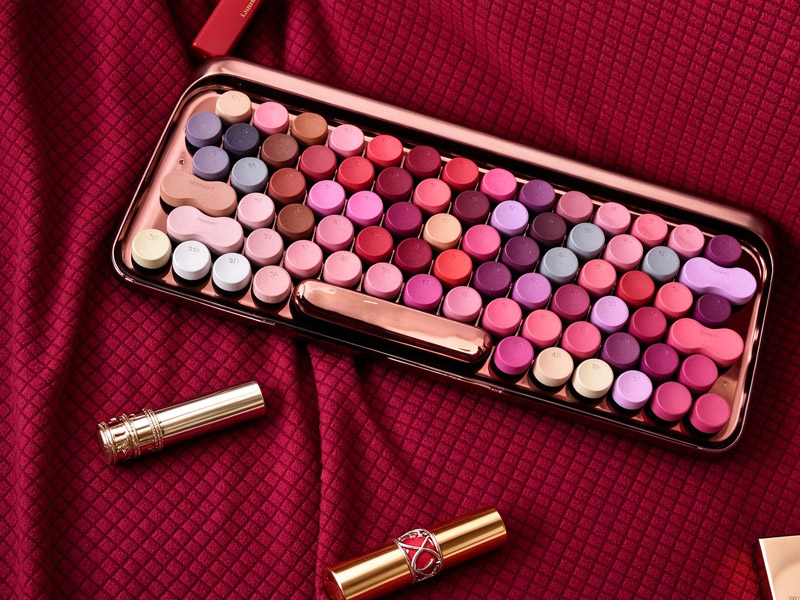
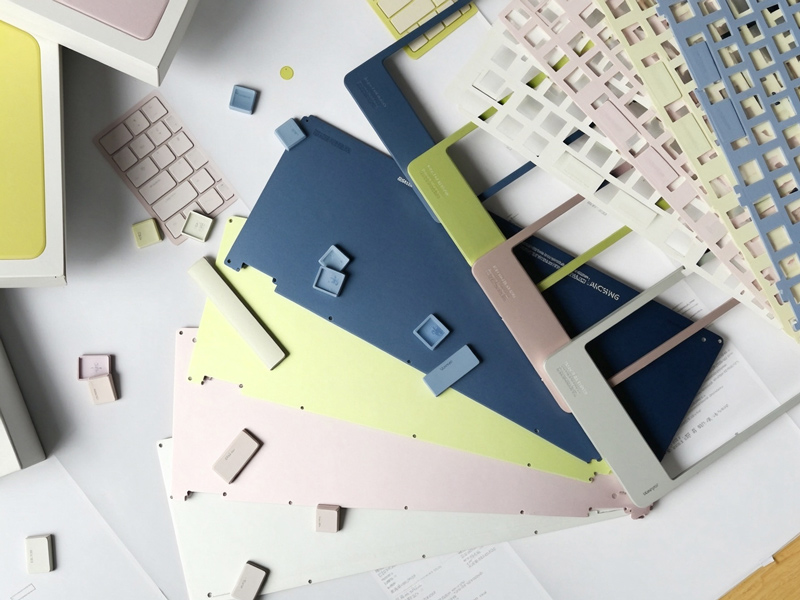
The DOT worked because it sold a feeling rather than a specification: the clack of a typewriter summoned for office workers who had never touched one, stress-relief disguised as nostalgia. Its two-tone plastic shells — white, turquoise, lipstick red, sandstone black — photographed like props from a Wes Anderson film, which turned out to be the distribution strategy: lifestyle bloggers and desk-tour videos did what spec sheets could not. The compromises were real from day one, and reviewers said so: an odd layout that forced relearning, spacing hostile to touch typing, a heavy actuation that fatigued fingers, and a noise profile that delighted the user and annoyed the office. The DOT's success proved the thesis that would govern everything after: aesthetics could carry a keyboard whose ergonomics apologized.
Two square meters of lifestyle
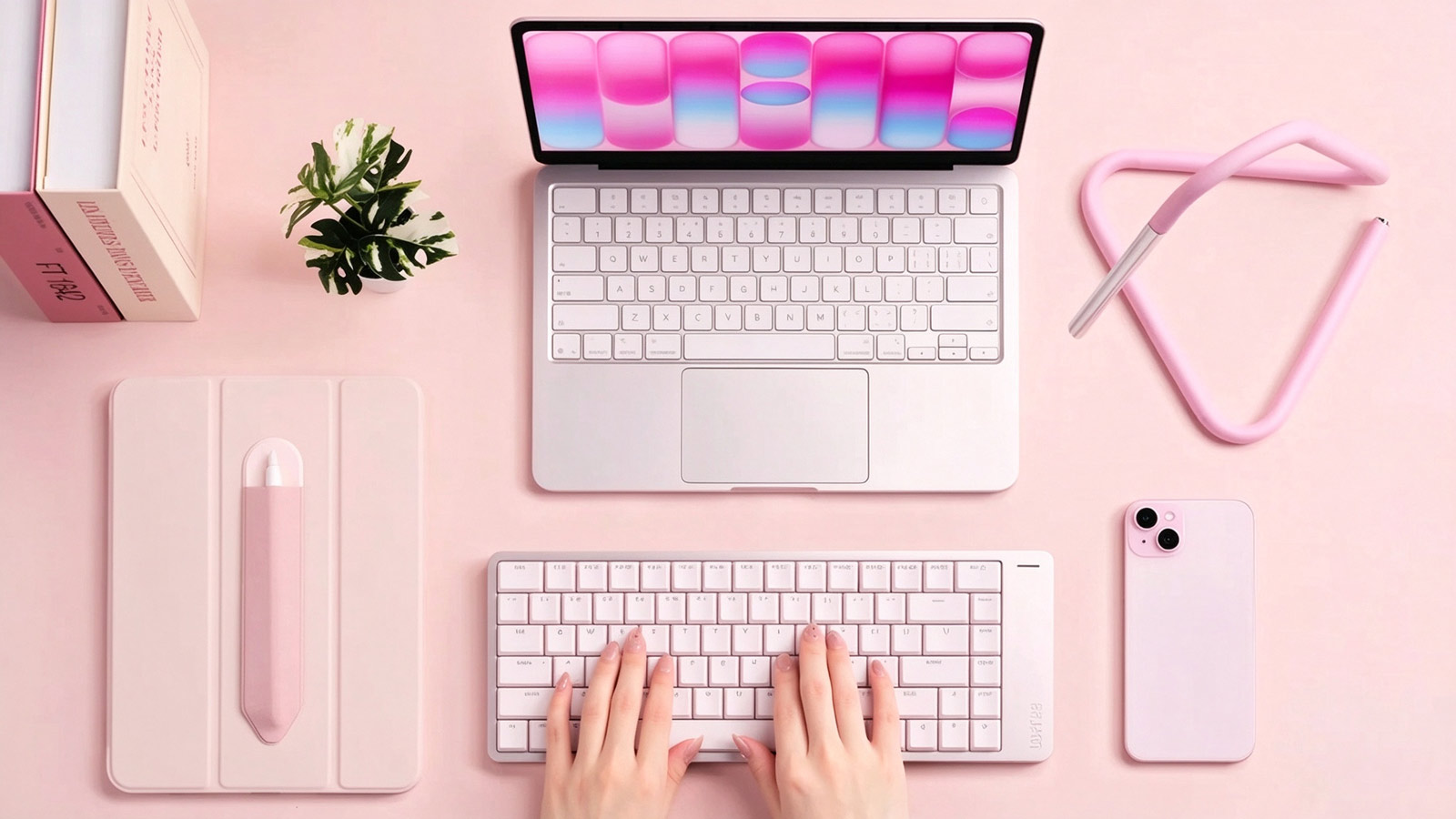
Chu's organizing idea is the two-square-meter philosophy: the desk, the vanity, the bedside — the small personal spaces where life actually happens — deserve curation, not clutter. Lofree therefore does not sell products; it sells scenes. The DOT pairs with a matching calculator, a mouse, a lamp, a speaker, and a candle-light, each object designed to complete the retro office tableau. Limited bundles tested the ceiling: a Mocha Gold set at 1,999 yuan sold out on aesthetic coherence alone, and a Starbucks co-branded keyboard extended the lifestyle into coffee culture. The strategy inverts the category: where Keychron sells customization and KBDfans sells parts, Lofree sells the photograph — a keyboard as decor that happens to accept keystrokes.
Escaping the price war, one Amazon launch
The international chapter reads like a case study in avoiding involution — the Chinese term for the exhaustion of competing harder in a race to the bottom. While domestic brands fought hundred-yuan price wars, Lofree held $150-to-$200 pricing abroad and won: the 2023 launch on Amazon's US and Japan platforms reached four hundred ten thousand dollars a month within a year, two hundred sixty thousand from America alone, and by 2024 overseas revenue passed one hundred million yuan. Analysts credit fine manufacturing — self-developed low-profile switch technology, refined materials — and a deliberate blue-ocean bet that white-collar buyers in the US, Europe, and Japan would pay desk-jewelry prices for desk jewelry. It worked because the product was never competing with the gaming keyboards; it was competing with the vase.
Round keycaps and the typists' complaints
The honest ledger is unusually consistent across five years of reviews. MacRumors found the 2017 DOT beautiful and frustrating in equal measure; LaptopMag flagged awkward spacing; a widely shared 2025 creator review declared the Dot Foundation 'made for aesthetic enthusiasts and not for people who need a keyboard to type with,' citing keycap shapes that sacrifice accuracy. The newer lines fix much and keep some: the Block earned 'phenomenal typing, best-sounding' from LaptopMag at $169 while conceding single-color backlight, middling battery, and no gaming ambitions; the Touch PBT mouse impressed Notebookcheck with build quality, customizable keycap-buttons, and an OLED DPI screen, then lost the recommendation on Bluetooth interference, laggy 2.4GHz, and a $69.99 price that better-performing rivals undercut. The verdict across reviewers is the same sentence in different words: if you type for a living, look elsewhere; if you curate a desk, few brands photograph better.
Foundation keycaps and polar moss
The current catalog keeps the philosophy loud. The Flow and Flow Lite lines offer low-profile boards for Mac and Windows, thin as a paperback; the Edge aims at travelers; the Hyzen chases gamers with magnetic Hall-effect speed — a first for a brand that never chased gamers; the Block anchors the normal-profile range; and the headline acts are pure theater: the Foundation, whose transparent ABS keycaps hold actual liquid foundation for a makeup-bottle shimmer at $199.99, and the 432Hz Polar Moss, named for the healing frequency and finished like a terrarium ornament. Black Friday runs a month long, keyboards at twenty percent off and accessories at thirty, because even lifestyle brands respect the season. Around them sit keycaps, switches, mice, and accessories — everything the two square meters require.
The last keystroke of the typewriter dream
Lofree's store sells the most beautiful keyboards on this tag and some of the most honestly criticized: a design studio that turned nostalgia into a global business, a two-square-meter philosophy that sells scenes instead of specs, and a catalog where the Foundation's cosmetic keycaps make as much sense as the Block's POM switches. Its trade-offs are legible in every review: layout quirks for looks, battery and wireless compromises for thinness, a design tax over half-priced rivals, and typing ergonomics that typists keep politely declining. But for the desk-curation crowd — the Instagram workspace, the MacBook-matching minimal setup, the gift that must photograph well — this is the store where the typewriter dream was packaged, priced at $200, and shipped worldwide. Type carefully, and frame the photo.