Into the wind: forty-five years of kites from two burned-out architects
Official homepage: https://intothewind.com
Into The Wind is the great general store of kite flying. Founded in 1980 by two architects fleeing architectural burnout, it has spent forty-five years on Boulder's Pearl Street Mall doing three things obsessively: curating the industry's deepest catalog, teaching strangers to fly, and keeping a builder's bench stocked with carbon spars, sail cloth, and repair supplies. This review examines the burnout origin, the catalog's impossible breadth, and the old-school service machinery behind a store that still answers the phone like a neighbor.
Architectural burnout and a 350-square-foot kite shop
The founding story is one of the hobby's best. In 1980, architects George Emmons and Jim Glass, burned out on building design, opened a kite shop in a 350-square-foot Boulder space next to a natural foods restaurant — and nearly starved. Kites alone would not pay the rent, so they did what desperate shopkeepers do: they added toys, many of which did not fly at all, started making kites of their own, and launched a mail-order catalog. For years they were Into The Wind, personally testing, flying, and photographing every kite, producing the catalog, packing orders, and working seven days a week. A 1985 order to IBM and the United Way — six thousand dollars for a You Make It Fly campaign — proved the business could fly, and the Pearl Street Mall became its permanent home. The founders' own designs still sell on the site today, four and a half decades on.
Fine art of enjoying the wind, since 1980
The company's self-description has never changed: kites as the fine art of enjoying the wind. The specialty, as the founders told a trade interview, is toys that make adults feel like kids — and Into The Wind was stocking toys long before kite shops discovered the upsell. The curation philosophy is visible in the catalog's shape: this is not a manufacturer store pushing one line, but a generalist that has always carried the field's widest selection, judging everything by whether it flies well and delights. The own-brand kites — deltas, sleds, diamonds, and the famous box designs sketched in the founders' spare hours — persist alongside the best of everyone else's, a rare retailer whose house brand survived by being good, not by being pushed.
Every kite type, plus the line and the laundry
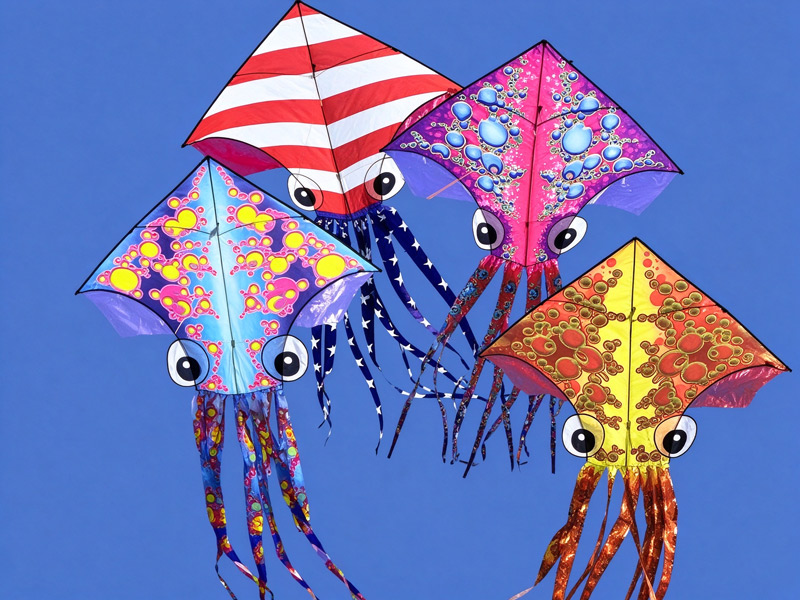
The catalog taxonomy is a kite education in itself. Single-line kites split into beginner-friendly deltas and DCs, foils and sleds, box kites, diamonds, dragon-and-octopus showpieces, creative designs, gliders, and bulk DIY kits. The stunt section ladders from beginner through intermediate to advanced, then branches into quad-line, trick, power, speed, and light-wind specialties. Around the kites sits a complete infrastructure aisle: single and stunt lines, hoops, reels, winders, straps, tails, ground displays, line laundry, stakes, anchors, cases, gloves, and even AKA Kiting Magazine. Wind art and decor — windsocks, flags, lawn spinners, chimes — and a toy floor covering arts and crafts to children's books complete a store that has quietly become a department store for the sky.
Carbon spars, sail material, and repair supplies
The builder's bench is where the store outclasses boutique rivals. Repairs and kitemaking supplies occupy their own top-level aisle: pultruded carbon and fiberglass tubing and rods, sail fabric and tape, endcaps, nocks, fittings, and hardware — everything needed to rebuild a crashed kite or design one from scratch. Educational content runs parallel: the Stunt Kite 101 series walks from bridle adjustment through ballet flying, team formation, radical tricks, and zero-wind discipline, treating skill-building as part of the product. For a retailer, stocking the raw materials of your own products' repair is a quiet act of confidence: Into The Wind assumes customers keep flying, keep crashing, and keep coming back.
Free shipping at two hundred dollars, satisfaction guaranteed
Commerce terms are old-school and legible. Free standard shipping arrives at two hundred dollars domestically — high by the standards of this tag, but consistent with a catalog whose average order skews toward complete setups rather than impulse toys — and worldwide shipping dispatches from the same Boulder building as the retail floor. The satisfaction guarantee is printed plainly: return anything you do not like for a refund or exchange. Support runs phone-first — a toll-free line answered by people who fly — plus a kites@ email address and a real FAQ. There is no franchise, no marketplace listing, and no flash-sale machinery; a dozen or so staff run the store, website, and wholesale out of one turn-of-the-century building on the mall.
Bulk kits for classrooms and National Kite Month
The institutional business shows the same philosophy scaled up. Tyvek kite kits ship with easy instructions for group builds, designed for classrooms and workshops where each child paints and personalizes a kite that then actually flies — the store explicitly ties them to April's National Kite Month and to throwing your own kite festival. Bulk pricing, durable material, and paint-ready surfaces make these a teacher favorite, and they embody the founders' original desperation move turned mission: getting more people, especially kids, into the wind. For the family buyer, the same aisle logic means one cart can hold a grandfather's box kite, a kid's first delta, the line, the tails, and a classroom's worth of craft supplies.
The last kite down from the Pearl Street sky
Into The Wind's store sells something its specialist rivals cannot: the whole sky in one cart. Forty-five years after two architects burned out of drafting and nearly starved behind a kite counter, the store remains the hobby's broadest catalog, its friendliest phone line, and its best-stocked builder's bench — with a satisfaction guarantee that still reads like a handshake. Its trade-offs are the honest ones of an institution: the two-hundred-dollar free-shipping bar prices out impulse buyers, the website carries the patina of a mail-order house rather than a startup, and the sheer breadth can overwhelm a shopper who wanted one kite, not a curriculum. But for anyone standing at the start of the hobby — or returning to it decades later — this is the store where the wind first makes sense.